Connecticut Sales Tax Rate by City & County
Navigating sales tax can feel like trying to find your way through a maze, especially when you're just trying to figure out what you owe in your local area. Many business owners and shoppers assume sales tax varies by city or county, but Connecticut handles things a little differently, which can be confusing. This guide will clarify Connecticut's sales tax landscape, explaining its uniform statewide rate and what that means for both businesses and consumers.
Understanding Connecticut's Statewide Sales Tax Rate
When you think about sales tax, your mind might immediately jump to the idea of different rates in different cities, like what you see in states like Colorado or Louisiana. But Connecticut has a different approach entirely. The state operates on a largely uniform statewide sales tax rate, meaning that whether you're buying a new gadget in Greenwich, grabbing groceries (which are generally exempt, we'll get to that!) in Hartford, or shopping for clothes in Stamford, the general sales tax rate on taxable items is consistent.
The Standard Rate in Connecticut
As of 2026, the general statewide sales and use tax rate in Connecticut is 6.35%. This rate applies to the sale of most tangible personal property and certain services within the state. It’s a flat rate that you'll find virtually everywhere, from the smallest mom-and-pop shop to the largest retail chains. This consistency is actually a relief for many businesses, as it simplifies compliance considerably compared to states with hundreds or even thousands of local tax jurisdictions.
For consumers, this means less guesswork when estimating the final price of an item. For businesses, it translates to a more straightforward process for calculating, collecting, and remitting sales tax. There aren't any hidden layers of city or county sales taxes to factor in on top of this 6.35% state rate, which is a major point of departure from how sales tax works in many other parts of the country.
What Goods and Services Are Generally Taxable?
In Connecticut, the 6.35% sales tax generally applies to the sale of most tangible personal property. This includes things like electronics, home furnishings, cars (though these often have specific rules), and most general merchandise you'd find in a retail store. Beyond physical goods, certain services are also subject to sales tax in Connecticut.
For instance, dry cleaning, repair services, data processing services, and even certain digital goods can be taxable. The exact definition of a taxable service can sometimes be a bit tricky, and it's always evolving with technology and new business models. For a comprehensive overview of what falls under the tax umbrella, it's wise to consult the Connecticut Department of Revenue Services (DRS) guidelines. Businesses often use sales tax software like Avalara to ensure they're correctly applying tax to the right goods and services, helping them stay compliant without constantly having to interpret complex regulations.
The Myth of City and County Sales Tax in Connecticut
This is often where the biggest confusion arises for people unfamiliar with Connecticut's tax structure. Many states across the U.S. have a base state sales tax rate, and then cities, counties, or special districts layer their own sales taxes on top. This leads to wildly varying rates from one town to the next, sometimes even block by block. However, Connecticut explicitly does not follow this model for general sales tax.
Why You Won't Find Varying Local Sales Tax Rates
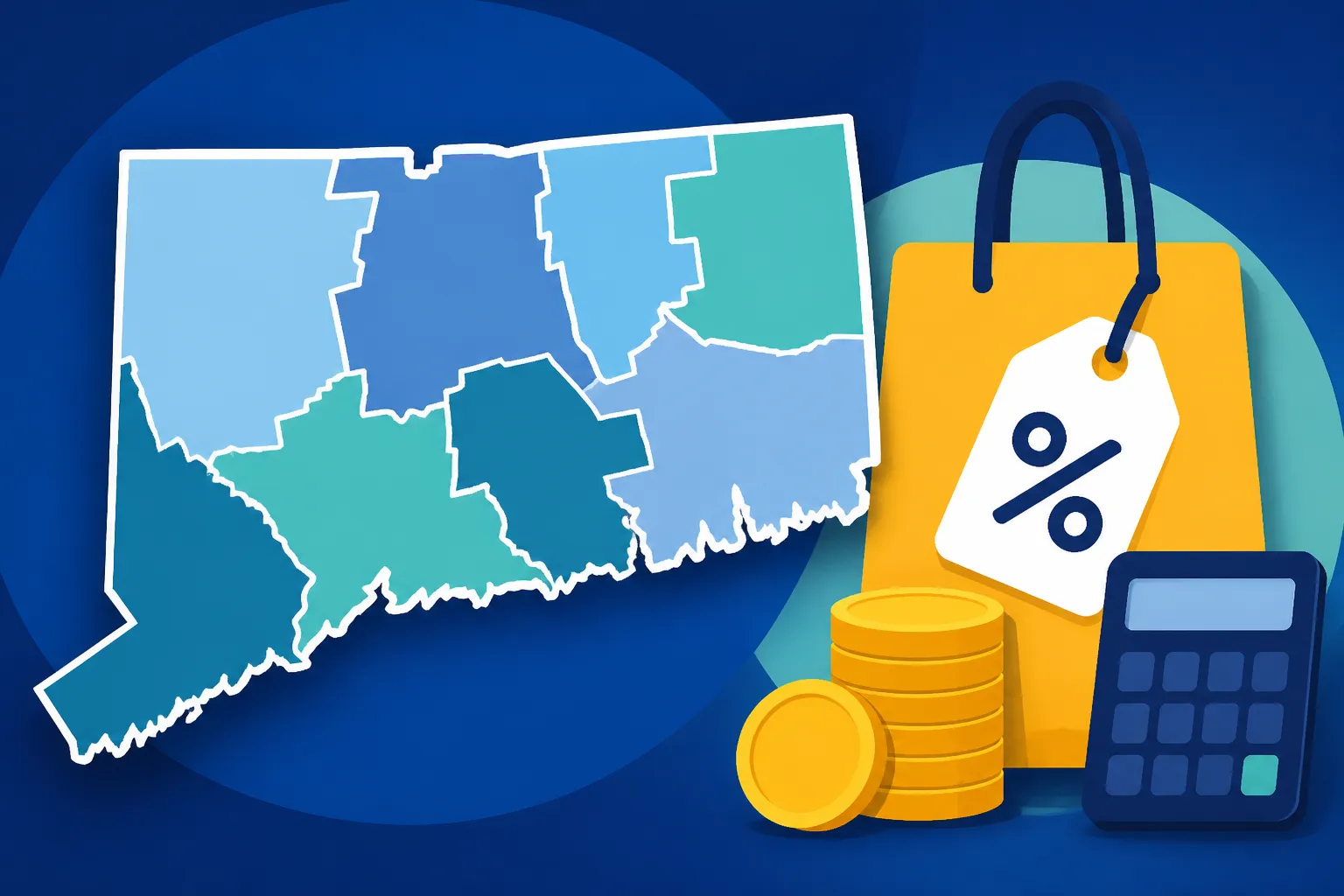
Connecticut is what’s known as a "single-rate" sales tax state when it comes to general sales and use tax. This means the 6.35% state sales tax rate is the only sales tax rate applied to taxable transactions throughout the entire state. There are no additional city sales taxes, no county sales taxes, and no district sales taxes that add percentages to your purchase price based on your exact location within Connecticut.
So, if you're searching for "Hartford sales tax rate" or "Fairfield County sales tax," you'll consistently find the 6.35% state rate. This uniformity is a deliberate choice by the state to simplify its tax administration and compliance for businesses. It removes the burden of tracking hundreds of different local rates, which can be a huge operational headache for businesses, especially those operating across multiple towns or selling online to customers statewide. You can really see how this differs from the complexities found in states like Louisiana Parish Sales Tax Complexity.
Distinguishing from Other States' Systems
Imagine you're a business operating in Texas, where the state sales tax is 6.25%, but local rates can add up to 2% more, bringing the combined rate to 8.25% in cities like Houston or Dallas. Or consider Alabama, which has over 200 different sales tax jurisdictions, each with its own local rates. These states require businesses to pinpoint the exact location of a transaction down to the street address to determine the correct combined sales tax rate.
In contrast, Connecticut offers a breath of fresh air. While some other states might have Mandatory Statewide Local Add-Ons or California District Taxes Explained, Connecticut simply doesn't. This lack of local sales tax variation is a significant advantage for businesses in terms of compliance. It means that whether you’re physically selling in a brick-and-mortar store or shipping goods to customers throughout Connecticut, you're always dealing with that same 6.35% sales tax rate for taxable items.
Important Exceptions and Exemptions to Sales Tax
While Connecticut maintains a consistent sales tax rate, it's important to remember that not everything is taxable. Like most states, Connecticut has a range of exemptions for specific goods, services, or purchasers. Understanding these can save both businesses and consumers money and prevent compliance headaches.
Common Sales Tax Exemptions in Connecticut
Connecticut offers several key exemptions that are worth noting. One of the most talked-about is the exemption for most food products purchased for home consumption, often referred to as "groceries." This means your weekly trip to the supermarket for staples like milk, bread, and fresh produce won't incur sales tax. However, prepared foods or meals consumed on-premises, or hot food sold for takeout, are generally taxable, just like they are in many other states. You can learn more about this in our guide on Sales Tax on Groceries & Food by State.
Another significant exemption for consumers is on certain clothing and footwear items. In Connecticut, individual articles of clothing and footwear that cost less than $50 are exempt from sales tax. So, if you're buying a shirt for $45, you won't pay sales tax on it. But if that shirt is $55, the entire purchase becomes taxable. This exemption can be a pleasant surprise for shoppers, especially during back-to-school season. For a deeper dive into how apparel is taxed across the country, check out our article, Is Clothing Taxable? Sales Tax on Apparel by State. Other notable exemptions include prescription medicines, certain medical equipment, and newspapers.
Use Tax and Its Role in Connecticut
Even though Connecticut has a consistent sales tax rate, the concept of "use tax" is still very relevant. Use tax is essentially a compensating tax on items purchased outside of Connecticut and then brought into or used within the state, where sales tax wasn't collected by the seller. The rate for use tax is the same as the sales tax rate: 6.35%.
This often comes into play when Connecticut residents purchase items online from out-of-state retailers who don't have a sales tax nexus in Connecticut and therefore don't collect Connecticut sales tax. For instance, if you buy a piece of furniture online from a retailer in Oregon (a state with no sales tax) and have it shipped to your home in Connecticut, and that retailer doesn't collect Connecticut sales tax, you as the consumer are technically responsible for remitting use tax directly to the state. Businesses also have a responsibility to self-assess and remit use tax on purchases of tangible personal property or services used in their business when sales tax wasn't paid at the time of purchase. Understanding Use Tax Explained: What It Is & When You Owe It is crucial for both individuals and businesses to maintain compliance.
Practicalities for Businesses and Consumers
Knowing the sales tax rate is one thing, but understanding how to apply it, collect it, and remit it is another. For businesses operating in Connecticut, even with a single statewide rate, there are still crucial steps to ensure compliance.
How Businesses Handle Sales Tax in Connecticut
Any business making taxable sales in Connecticut must first register with the Connecticut Department of Revenue Services (DRS) to obtain a sales tax permit, also known as a Certificate of Authority. This is a non-negotiable step before you even make your first sale. For detailed instructions, you can refer to our guide on How to Get a Sales Tax Permit in Connecticut. Once registered, you are then authorized and required to collect sales tax from your customers on all taxable transactions.
The collected sales tax is considered trust money—it belongs to the state, not your business. You hold it in trust until it's time to remit it to the DRS. Businesses typically file sales tax returns and remit the collected tax on a periodic basis, which can be monthly, quarterly, or annually, depending on their sales volume. The DRS assigns a filing frequency once you register. Missing deadlines or making errors can lead to penalties, so many businesses rely on automated solutions to handle these calculations and filings. Software providers like Avalara help streamline this entire process, from rate calculation at the point of sale to preparing and filing returns, making it much easier to manage your obligations.
Calculating Sales Tax on a Purchase
Calculating sales tax in Connecticut is straightforward due to the single statewide rate. Here's how it generally works for a taxable item:
Sales Tax Calculation Formula:
- Item Price x Sales Tax Rate (6.35%) = Sales Tax Amount
- Item Price + Sales Tax Amount = Total Price
Let's say you're buying a taxable item priced at $100.
- Sales Tax Amount = $100 x 0.0635 = $6.35
- Total Price = $100 + $6.35 = $106.35
If you purchase multiple taxable items, you calculate the sales tax on the total subtotal of all taxable items. For instance, if you buy three taxable items costing $20, $30, and $50 respectively, your subtotal is $100. The sales tax would still be $6.35, and the total would be $106.35. For more examples, you can consult our detailed guide on How to Calculate Sales Tax (Step by Step).
Keeping Up with Changes
While Connecticut enjoys a stable, uniform sales tax rate, tax laws can and do change. Rates might be adjusted, new items or services could become taxable, or exemptions might be modified. It's vital for businesses to stay informed about any potential 2026 Sales Tax Rate Changes by State or shifts in taxability. The Connecticut DRS website is the official source for all such updates. Utilizing sales tax compliance software can also be incredibly helpful, as these systems are regularly updated with the latest tax laws, ensuring that businesses are always applying the correct rules. This proactive approach helps avoid costly errors and keeps your business in good standing with the state.
| Feature | Connecticut Sales Tax | Comparison to Many Other States |
|---|---|---|
| Statewide Sales Tax Rate | 6.35% | Varies (e.g., 2.9% in CO, 7.25% in CA) |
| Local Sales Tax (City/County) | None | Often present, adding to state rate |
| Combined Sales Tax Rate | 6.35% (Uniform) | Highly variable by jurisdiction |
| Taxable Goods | Most tangible personal property | Similar, but specific rules vary |
| Taxable Services | Select services (e.g., data processing) | Varies greatly by state |
| Grocery Exemption | Yes, most food for home consumption | Common, but some states tax groceries |
| Clothing Exemption | Yes, for items under $50 | Less common, thresholds vary |
| Use Tax Rate | 6.35% | Matches sales tax rate in most states |
| Compliance Complexity | Relatively low due to uniformity | High due to numerous local jurisdictions |
In conclusion, for those wondering about specific sales tax rates for cities and counties within Connecticut, the answer is refreshingly simple: there aren't any. The entire state adheres to a consistent 6.35% sales and use tax rate on taxable goods and services. This uniformity streamlines operations for businesses and provides clarity for consumers, a welcome relief in the often-complex world of sales tax.
Disclaimer
Please remember that sales tax laws are subject to change, and while this guide provides current information as of 2026, it is not legal or tax advice. For the most accurate and up-to-date guidance, always consult the Connecticut Department of Revenue Services (DRS) directly or a qualified tax professional.