Which States Have No Sales Tax?
It’s a common frustration, isn't it? You're trying to figure out how much something will truly cost, only to get tangled in the complexities of sales tax. Maybe you've heard whispers about a few magical states where sales tax simply doesn't exist, and you're wondering if it's too good to be true. Well, you're in the right place! This guide is here to untangle that knot for you, clearly outlining which states genuinely have no sales tax and, more importantly, revealing the often-overlooked nuances and hidden truths that can still impact your wallet.
The Core Five: States Without a Statewide Sales Tax
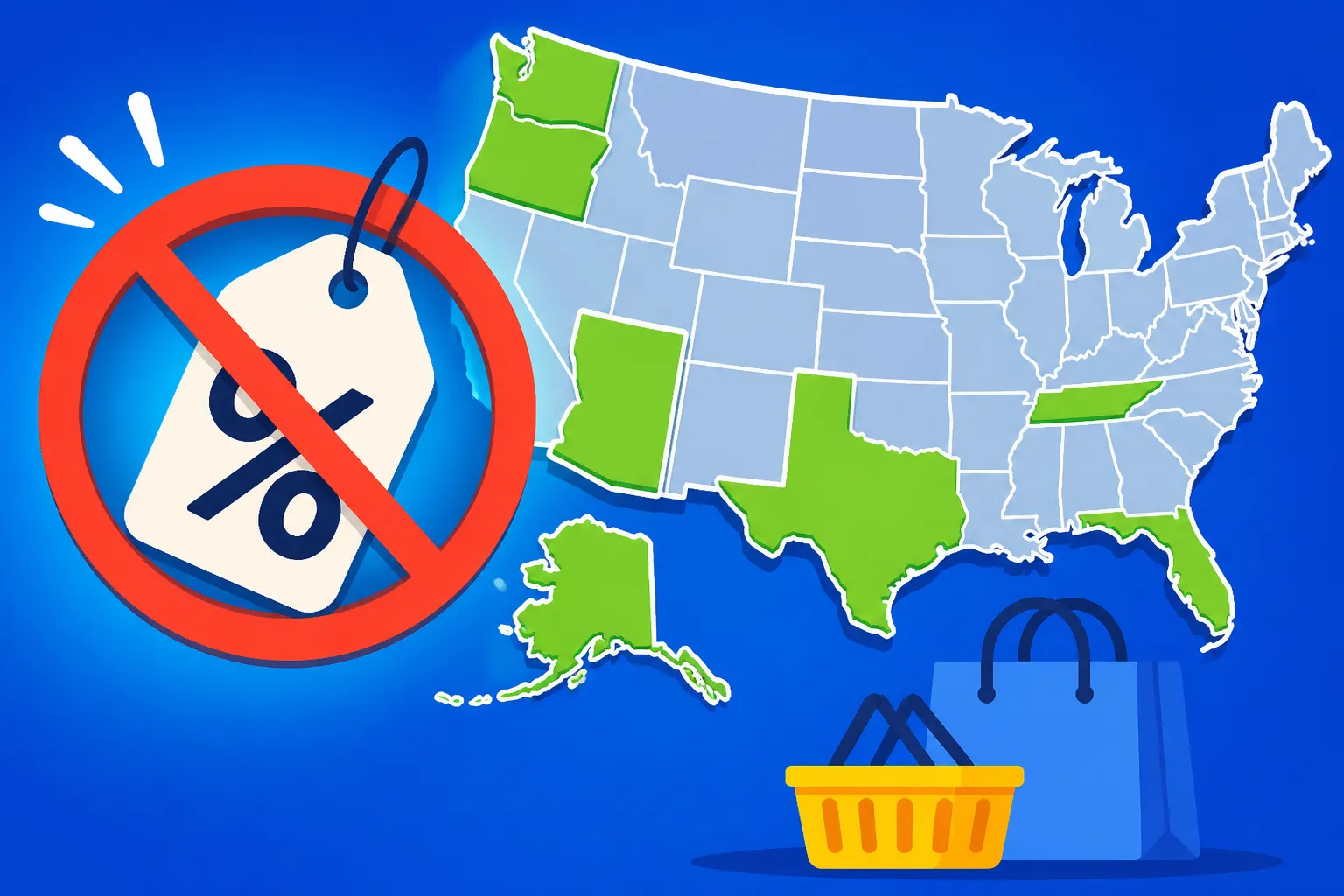
When people talk about states with no sales tax, they’re usually referring to a specific group of five. These states have made a deliberate choice not to levy a general statewide sales tax on most goods and services. You might even hear them referred to by the acronym "NOMAD" to help remember them: New Hampshire, Oregon, Montana, Alaska, and Delaware. While it sounds simple, each of these states has its own unique approach to revenue generation, and some still have forms of local taxation that can catch you off guard.
Delaware: Truly Sales Tax Free
Let's start with what many consider the purest "no sales tax" state: Delaware. If you're looking for a state where you can truly avoid sales tax, Delaware is generally your best bet. Here, not only is there no statewide sales tax, but you also won't find any local sales taxes imposed by cities or counties either. This makes it a popular destination for shoppers, especially those looking to make larger purchases like electronics or jewelry, as the advertised price is almost always the final price you'll pay at the register.
This absence of sales tax is a significant draw, but it doesn't mean the state operates without revenue. Delaware relies heavily on other forms of taxation, such as corporate franchise taxes, which are a big reason why so many businesses choose to incorporate there. For the everyday consumer, however, shopping in Delaware truly feels like a tax-free experience, a welcome relief from the dizzying array of rates you might encounter elsewhere.
Montana: No Statewide Sales Tax, But Local Options
Montana is another state that often makes the "no sales tax" list, and for good reason—there's no general statewide sales tax on purchases. This is great news for residents and visitors alike who appreciate the sticker price being the final price for most items. However, Montana introduces a bit of a twist: while there's no general sales tax, certain resort areas and tourist towns do impose local option taxes.
These local taxes aren't always called "sales tax," but they function similarly, often applying to specific services like lodging, rental cars, or even certain recreational activities. For example, popular destinations like Whitefish or Big Sky might have a resort tax on certain purchases. So, while you won't pay sales tax on a new pair of hiking boots at a sporting goods store in Helena, you might encounter an extra charge on your hotel stay or a meal in a high-tourism area. It’s always smart to double-check if you’re traveling to a specific locale within the state, as these exceptions can add up.
New Hampshire: A Twist on "No Sales Tax"
New Hampshire proudly proclaims "Live Free or Die," and part of that freedom includes living without a general statewide sales tax. Like Delaware and Montana, you won't be charged sales tax on most goods you buy, from clothing to appliances. This makes New Hampshire a popular shopping destination, especially for those crossing over from neighboring states like Massachusetts or Maine, where sales taxes are common.
However, New Hampshire does have its own unique tax structure. They levy a "Meals and Rooms Tax," which is essentially an excise tax on prepared food, restaurant meals, and hotel accommodations. If you dine out or stay overnight, you'll see this tax added to your bill. Furthermore, the state has an Interest and Dividends Tax. So, while your retail purchases are sales tax-free, the state finds its revenue through other means, often impacting residents through different avenues. It's a key distinction to understand, especially if you're thinking of moving or operating a business there.
Oregon: No Sales Tax, But High Income Tax
Oregon is another member of the no-statewide-sales-tax club. Shoppers in Oregon enjoy the benefit of seeing the final price right on the tag for most items, a simple pleasure that many in other states envy. This lack of sales tax often makes Oregon an attractive place for retail businesses and consumers.
But how does Oregon fund its public services without a sales tax? The answer lies in its income tax. Oregon has one of the highest marginal income tax rates in the country, especially for higher earners. This revenue structure means that while everyday purchases are exempt from sales tax, residents contribute a significant portion of their earnings to the state through income taxes. It’s a different philosophical approach to taxation, shifting the burden from consumption to income, and it's a crucial factor to consider when comparing overall tax burdens across states.
Alaska: The Most Complex "No Sales Tax" State
Alaska is perhaps the most nuanced and potentially confusing state on the "no sales tax" list. While it truly has no statewide sales tax, this doesn't mean shopping there is always tax-free. In fact, Alaska stands out because it allows local jurisdictions—cities, boroughs, and special districts—to impose their own sales taxes. And many of them do, often at significant rates! You might be surprised to find that some local sales tax rates in Alaska can reach 7.5% or even higher in places like the borough of Ketchikan.
This means that whether you pay sales tax in Alaska depends entirely on where you are within the state. You could buy an item in Anchorage with no sales tax, but drive a few hours to another town, and suddenly you’re paying a local sales tax. For businesses, this creates a complex compliance challenge, as they need to accurately track and remit sales tax based on the specific local jurisdiction of each sale. Understanding the varied landscape of local sales taxes is crucial when thinking about "Alaska Local Sales Tax (No State Tax)". This makes it essential for businesses to have robust systems in place to determine the correct rates, a task that solutions like Avalara are built to simplify.
Beyond the Basics: Understanding the Nuances of "Tax-Free"
It's easy to get excited about the idea of a "no sales tax" state, but the reality is often more complex than a simple label suggests. These states don't magically fund their infrastructure and services; they simply use different methods to generate revenue. And for consumers and businesses alike, understanding these nuances is key to avoiding surprises.
The Myth of "Completely Tax-Free" Shopping
The biggest misconception about states like Delaware or Oregon is that all shopping there is completely tax-free. While the general statewide sales tax is absent, this doesn't mean you're entirely immune from other taxes on goods and services. For example, even in these states, you'll still pay federal excise taxes on things like gasoline, tobacco, or alcohol. These are federal levies, not state, but they still add to the final price you pay.
Moreover, as we saw with New Hampshire's Meals and Rooms Tax or Montana's resort taxes, specific categories of goods or services can still be subject to state or local taxes, even if they aren't called a "sales tax." This is particularly important for businesses making sales into these states. Just because a state has no general sales tax doesn't mean you can ignore your sales tax nexus obligations entirely, especially if local taxes apply or if you're selling a taxable service. Understanding "Economic Nexus by State 2026: Thresholds Guide" is still crucial for remote sellers, even in these unique state scenarios.
How These States Generate Revenue Differently
If these states aren't collecting sales tax, how do they keep the lights on? It all comes down to their alternative revenue streams, which can vary significantly and often have direct impacts on residents and businesses.
- Income Taxes: States like Oregon and New Hampshire (which taxes interest and dividends, essentially a form of income) rely more heavily on income taxes. For residents, this means less money coming out of their pocket at the point of sale, but more taken from their paychecks or investment earnings.
- Property Taxes: All states rely on property taxes to some extent, but those without a sales tax might have slightly higher property tax burdens to compensate. This affects homeowners directly and can indirectly affect renters through higher rents.
- Excise Taxes: Many of these states utilize excise taxes on specific goods or services, such as fuel, tobacco, alcohol, or even specific industries. New Hampshire's Meals and Rooms Tax is a prime example of this, where tourists and diners contribute to state revenue in lieu of a general sales tax.
- Corporate Taxes: Delaware is famous for its favorable corporate tax laws, attracting many businesses to incorporate there. The revenue generated from these corporate taxes helps offset the lack of sales tax revenue.
- Natural Resources: Alaska, with its vast natural resources, particularly oil and gas, generates a significant portion of its revenue from severance taxes and royalties on these industries. This unique situation allows the state to provide services and even a Permanent Fund Dividend to residents without a statewide sales or income tax.
The choice to forgo a statewide sales tax is a strategic one, balancing different forms of taxation to fund public services. What might seem like a "tax break" in one area is often offset by higher taxes in another, creating a different overall tax landscape for residents and businesses.
Implications for Businesses and Remote Sellers
For businesses, especially those selling online or across state lines, the concept of "no sales tax states" isn't as straightforward as it sounds. Even if a state has no statewide sales tax, local sales taxes (as in Alaska) or other specific excise taxes might still apply. This complexity can be a huge headache for e-commerce businesses that need to determine the correct tax rate for every transaction, based on the customer's location. The need for precise sales tax calculation doesn't disappear just because the state has a low or zero statewide rate.
Moreover, the concept of economic nexus, born from the South Dakota v. Wayfair Supreme Court decision, means that if your business meets certain sales or transaction thresholds in any state, you could still be obligated to register and collect sales tax—even if that sales tax is only a local one, as is the case in Alaska. This means that businesses need to keep track of their sales volume and transactions in all states, regardless of their statewide sales tax status. Using tools like "Sales Tax Calculator: How to Calculate Sales Tax" becomes critical for businesses operating in a multi-state environment. Companies like Avalara offer solutions to automate these complex calculations, ensuring businesses remain compliant by accurately determining sales tax rates for every transaction, even in states with intricate local tax rules.
Navigating Sales Tax Beyond the "No Sales Tax" States
While it’s fascinating to explore the states that don't have a statewide sales tax, the vast majority of U.S. states do. And even within those states, the sales tax landscape can be incredibly intricate, making it a constant challenge for consumers and especially for businesses.
The Importance of Local Sales Tax Rates
Even in states that do have a statewide sales tax, local rates often add another layer of complexity. Take a state like Louisiana, for example, which is known for having some of the highest combined state and local sales tax rates in the nation. The statewide rate might be 4.45%, but when you factor in parish (county) and city taxes, the combined rate can easily soar past 11% in some areas, like New Orleans. This phenomenon is why understanding "Combined State + Local Sales Tax Rates Explained" is paramount.
For businesses, this means that simply knowing the state sales tax isn't enough. They need to pinpoint the exact location of the customer (often down to the street address) to apply the correct local sales tax rate. This is where tools that provide accurate "Sales Tax by ZIP Code (and Why ZIP Isn't Enough)" become indispensable, as ZIP codes alone often encompass multiple tax jurisdictions. This level of granularity is a significant operational challenge, and failing to get it right can lead to audits and penalties. It's a stark reminder that sales tax compliance is rarely a "one size fits all" endeavor.
Tools and Resources for Sales Tax Lookup
Given the sheer complexity of sales tax rates across the country, both consumers and businesses need reliable ways to find accurate information. For individuals simply curious about how much they'll pay on a purchase, a quick online search or a visit to the state’s department of revenue website can provide general rates. However, for businesses, the stakes are much higher. They need precise, up-to-the-minute data to ensure they collect and remit the correct amount of tax.
This is where dedicated sales tax lookup tools and compliance software become invaluable. Many platforms offer services that allow you to input an address and get the exact combined state and local sales tax rate for that location. These tools are often far more accurate than relying solely on ZIP codes, which can sometimes cover areas with different local tax rates. Services like those offered by Avalara are designed specifically to handle this complexity, providing real-time rate lookups and automating the sales tax calculation process. For any business, big or small, trying to figure out "How Do I Find My Local Sales Tax Rate?" for every transaction, investing in such a solution can save an immense amount of time and prevent costly errors.
Common Misconceptions and What to Watch For
Even with a clearer understanding of "no sales tax" states, there are still a couple of critical points that often cause confusion. It's important to differentiate these situations from the permanent absence of a general sales tax.
Sales Tax Holidays Are Not the Same
Some states, particularly during certain times of the year, offer "sales tax holidays." These are temporary periods, usually a weekend or a week, during which specific items are exempt from sales tax. Often, these holidays are timed for back-to-school shopping, severe weather preparedness, or energy efficiency purchases. For instance, you might find clothing, school supplies, or certain appliances are temporarily tax-free up to a certain price limit.
While these holidays provide a welcome reprieve for shoppers, they are fundamentally different from a state having no general sales tax. During a sales tax holiday, the state's sales tax framework is still very much in place; certain items are just temporarily made exempt. Once the holiday passes, the tax applies again. It’s a nice bonus, but it doesn't change the underlying tax structure of the state. You can find a comprehensive list of these events in guides like "Sales Tax Holidays by State 2026: Full Calendar".
Use Tax Still Applies
Even if you live in a state with no sales tax, you might still encounter something called "use tax." Use tax is essentially a sales tax on purchases where sales tax wasn't collected by the seller. This most commonly happens when you buy something online from an out-of-state retailer who doesn't have nexus in your state and therefore doesn't collect sales tax. Your state expects you, the consumer, to report and pay the "use tax" on that item.
While enforcement for individual consumers has traditionally been difficult, many states now include a line on their income tax forms where you can report and pay your use tax. For businesses, use tax is a much more significant concern, as they often purchase supplies or equipment from out-of-state vendors without paying sales tax. Businesses are typically expected to self-assess and remit use tax on these purchases. Understanding "Use Tax Explained: What It Is & When You Owe It" is critical, whether you're an individual or a business, because even in states without a general sales tax, the concept of use tax can still be relevant for interstate purchases.
Here's a quick summary of the five states with no statewide sales tax and their primary alternative revenue sources or tax quirks:
| State | Statewide Sales Tax | Local Sales Tax Allowed? | Primary Alternative Revenue Sources / Tax Quirks |
|---|---|---|---|
| Delaware | No | No | Corporate franchise taxes, business taxes, personal income tax |
| Montana | No | Yes (Resort/Tourist) | Property taxes, personal income tax, specific local option taxes in tourist areas |
| New Hampshire | No | No (General) | Business taxes (BPT, BET), Meals and Rooms Tax, Interest and Dividends Tax, property taxes |
| Oregon | No | No | High personal income tax rates, property taxes |
| Alaska | No | Yes (Many jurisdictions) | Oil and gas severance taxes, local sales taxes (can be significant), property taxes |
It's clear that while the idea of "no sales tax" states is appealing, the reality is a little more nuanced. Each state has its own way of balancing the books, and it’s important to look at the whole picture when considering where to shop, live, or do business.
Disclaimer
The information provided in this guide is for general informational purposes only and does not constitute tax advice. Sales tax laws are complex and subject to change. Always consult with a qualified tax professional or the appropriate state tax authority for advice tailored to your specific situation.