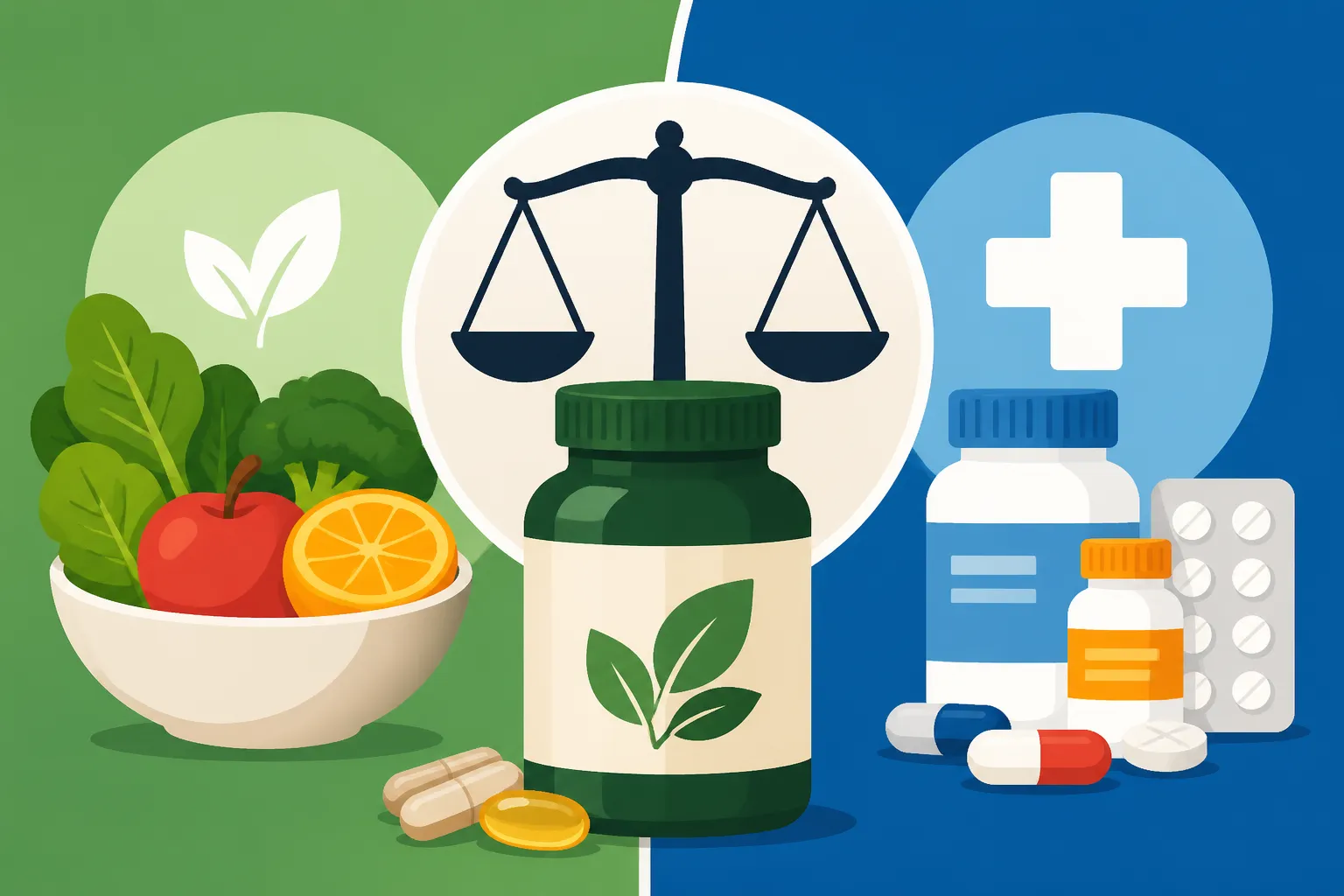
Are Supplements Taxable as Food or Drugs?
Dealing with sales tax on dietary supplements can feel like trying to solve a riddle wrapped in a mystery, especially for small businesses and consumers alike. You're standing in the aisle, looking at a bottle of multivitamins or a tub of protein powder, and thinking, "Is this food? Is it medicine? Will I pay tax on it?" This guide aims to clear up that confusion, diving deep into how different states classify and tax supplements, whether you're a shopper or an online seller.
The Murky Waters: Defining Food, Drug, and Dietary Supplement for Sales Tax
The biggest hurdle in understanding sales tax on dietary supplements is the sheer lack of a universal, straightforward definition across all states. What one state considers a "food ingredient" another might deem a "drug," and a third could have an entirely separate category for "dietary supplements." This inconsistency leads to a lot of headaches, particularly for businesses selling nationwide.
What Exactly Counts as "Food" or "Food Ingredients"?
When states talk about "food" for sales tax purposes, they're often referring to what we commonly call groceries. Most states exempt or apply a reduced rate to "food for home consumption" to help families afford necessities. But here's where it gets tricky: is a protein bar considered a grocery item? What about a kale supplement powder?
Typically, "food" means items purchased for consumption off-premises, excluding prepared foods, candy, and soda in many jurisdictions. For example, a bag of apples from a grocery store is generally tax-exempt in states that exempt groceries. However, if you buy a pre-made sandwich from the deli counter, that might be considered "prepared food" and therefore taxable, even in a state that exempts basic groceries. The lines are drawn based on factors like how much preparation the retailer did, whether utensils are provided, and if it's meant for immediate consumption. When looking at what's taxable, it's always helpful to understand your state's general rules around items like Sales Tax on Groceries & Food by State because supplements sometimes fall into similar categories.
Distinguishing Between Over-the-Counter Drugs and Prescription Medicines
Sales tax treatment for actual medicines is usually clearer. Prescription drugs are almost universally exempt from sales tax across all states. This makes sense; states don't want to add a burden to essential healthcare. Over-the-counter (OTC) drugs, however, are a different story. Many states do tax OTC medications because they aren't prescribed by a licensed medical professional.
The distinction often comes down to the prescription. If a doctor writes a script for it, it's exempt. If you can pick it up off the shelf at Walgreens or CVS without a prescription, it's often taxable. But even this isn't absolute. Some states, in an effort to provide relief, might specifically exempt certain OTC items, especially those that treat common ailments. The challenge with supplements is that they often feel like OTC drugs, but legally, they're often categorized quite differently. To gain a broader understanding of how these items are taxed, you can explore guides like Are Dietary Supplements & OTC Drugs Taxable?.
The Special Classification of "Dietary Supplement"
This is where the real complexity kicks in. Federal law, specifically the Dietary Supplement Health and Education Act of 1994 (DSHEA), defines "dietary supplements" broadly. However, state sales tax laws don't always align with federal definitions. Many states have adopted their own sales tax definitions, often influenced by the Streamlined Sales and Use Tax Agreement (SSUTA) or individual state interpretations.
A dietary supplement is generally understood to be a product taken orally that contains one or more "dietary ingredients" intended to supplement the diet. These can include vitamins, minerals, herbs or other botanicals, amino acids, and other substances. The crucial part for sales tax is whether a state treats these items as "food," "drugs," or as a distinct category of "tangible personal property" that happens to be taxable. If a state doesn't specifically exempt dietary supplements or classify them as an exempt food item, then they are typically subject to sales tax like any other retail good. This means a bottle of vitamin C might be taxed, while a loaf of bread from the same store is not. It’s a detail that can really catch you off guard if you're not paying close attention.
State-Level Approaches to Taxing Dietary Supplements
Because there's no federal sales tax, each state gets to make its own rules regarding what's taxable and what's not. This leads to a patchwork system where the taxability of a dietary supplement can vary wildly depending on where it's purchased.
States Following the Streamlined Sales Tax Definition
Many states, especially those that are members of the Streamlined Sales and Use Tax Agreement (SSUTA), try to standardize their definitions. The SSUTA defines "dietary supplement" as a product sold in tablet, capsule, powder, softgel, gelcap, or liquid form that is labeled as a dietary supplement or contains a "dietary ingredient" like a vitamin, mineral, herb, or amino acid, and is intended to supplement the diet.
For SSUTA states, if an item meets this definition, it's often taxed differently than "food" or "medicine." In most SSUTA states, if food is exempt or taxed at a reduced rate, dietary supplements are still generally taxable at the full sales tax rate. This is a common point of confusion for consumers and businesses alike. For example, in a state like Ohio, which is an SSUTA member, groceries are exempt, but dietary supplements generally are not, because they don't fall under the definition of "food" for sales tax purposes. This means a simple vitamin D supplement would be taxed, even though your sandwich might not be.
States Treating Supplements as Taxable Tangible Personal Property
Beyond SSUTA states, many others simply classify dietary supplements as standard tangible personal property, meaning they're taxable unless specifically exempted. These states don't necessarily have a nuanced definition of a "dietary supplement"; they just look at it as a product being sold. If it's not food, not a prescription drug, and doesn't have a special exemption, it's taxable.
Consider a state like Texas, for instance. Texas has a 6.25% state sales tax, and most tangible personal property is taxable. While "food products for home consumption" are generally exempt, dietary supplements don't typically qualify under this exemption. So, whether you're buying a protein shake mix or a bottle of fish oil, you're likely paying the full sales tax rate on it. This approach simplifies things in one sense—if in doubt, tax it—but it often frustrates consumers who feel a nutritional supplement should be treated similarly to food. It's a pragmatic stance, but it certainly adds to the cost for those trying to maintain their health.
States with Conditional Exemptions or Special Rules
Some states offer more conditional or specific exemptions. For example, a state might exempt a dietary supplement if it's specifically prescribed by a medical professional, essentially treating it like a prescription drug for sales tax purposes. However, if the same supplement is purchased over the counter without a prescription, it remains taxable.
Another scenario involves states that might exempt certain ingredients or types of supplements, or apply a reduced rate. For example, certain medical foods might be exempt, or states might have specific rules for infant formula or nutritional drinks used for specific medical conditions. It’s a very intricate landscape that requires careful attention to detail. These state-specific carve-outs make it incredibly difficult for sellers to ensure compliance without robust sales tax software that can handle these granular differences. Businesses need to know not just the state sales tax rate, but also local add-ons, which can vary significantly by Sales Tax by ZIP Code and Why ZIP Isn't Enough.
To illustrate the varied landscape, here's a table showing general sales tax treatment of dietary supplements in a few key states:
| State | General Sales Tax Rate | Groceries Taxability | Dietary Supplements Taxability (Typical) | Notes |
|---|---|---|---|---|
| California | 7.25% | Exempt | Taxable | Most food products are exempt. Dietary supplements, including vitamins, minerals, and protein powders, are generally considered taxable tangible personal property, even if sold in a grocery store alongside exempt food. |
| Texas | 6.25% | Exempt | Taxable | Food for home consumption is exempt. Dietary supplements, vitamins, and similar items are generally taxable as they are not classified as "food products." |
| Florida | 6% | Exempt | Taxable | Most groceries are exempt. Dietary supplements (pills, capsules, powders, liquids) are generally taxable as they are not "food products" and do not meet the definition of exempt medicines unless specifically prescribed. |
| New York | 4% | Exempt | Taxable (above $110 for clothing) | While many food items and clothing under a certain price point are exempt, dietary supplements are generally subject to state and local sales tax unless prescribed by a medical professional. |
| Illinois | 6.25% | Reduced Rate (1%) | Taxable | Groceries, drugs, and medical appliances are generally taxed at a reduced rate of 1%. However, dietary supplements typically do not qualify for this reduced rate and are taxed at the full state and local sales tax rate. |
| Pennsylvania | 6% | Exempt | Taxable | Food and beverages for home consumption are generally exempt. Dietary supplements are considered taxable tangible personal property, not exempt food or medicine. |
Disclaimer: This table provides a general overview and is not exhaustive. Specific rules and exemptions can apply, and local sales tax rates will vary.
The "Purpose" Test and How Labels Matter
Sometimes, it's not just what the product is, but how it's marketed and what it claims to do that influences its sales tax category. This is often referred to as the "purpose test."
Intent of Use: General Wellness vs. Specific Ailment
The distinction between general wellness and treating a specific medical condition can be a major factor. If a product is marketed as a general health aid—say, a multi-vitamin for overall well-being—it might be more likely to be taxed. However, if a product explicitly states on its label that it's for the treatment or prevention of a specific disease, it might lean closer to being classified as an exempt drug, especially if a prescription is involved.
For example, a bottle of "Joint Support" supplements might be taxable, but if the same ingredients were formulated and prescribed by a doctor to treat a diagnosed arthritic condition, it might become exempt. The intent of use, as communicated by the manufacturer and, sometimes, by the healthcare provider, can really sway the taxability. This puts a significant burden on both sellers and consumers to understand these often subtle differences.
The Impact of Form and Packaging on Taxability
Believe it or not, the physical form and packaging of a supplement can sometimes influence its sales tax status. States often define "food" by certain characteristics, such as whether it's sold in a form commonly consumed as food, or if it requires preparation.
For instance, a vitamin in pill or capsule form is almost never considered "food." But what about a protein powder? Some states might argue that a protein powder, when mixed with liquid to create a beverage, is more akin to a prepared food item or a dietary supplement, rather than an exempt grocery. However, a protein bar might be seen as similar to a candy bar (which is often taxable) or a snack food. The container also matters: if it's clearly labeled as a "dietary supplement" or "supplement facts," it typically steers it away from being classified as a basic food item. This is why a protein bar sold at a convenience store alongside other snack items is almost certainly taxable, whereas a bag of flour is not.
Labeling and Marketing Claims: A Sales Tax Trap
The way a product is labeled and marketed plays a surprisingly critical role in its sales tax classification. Tax authorities often look to the product's packaging, ingredient list, and any health claims made to determine its primary purpose. If a supplement is marketed with drug-like claims, such as "cures insomnia" or "treats hypertension," it might unintentionally push it into a different tax category, sometimes even requiring different regulatory oversight.
Conversely, if a product is marketed more broadly as a "healthy snack" or "nutritional support," it might be more likely to fall under a general taxable tangible personal property category. This means businesses have to be incredibly careful with their product descriptions and claims, not just for regulatory compliance but also for sales tax accuracy. A change in wording on a website or packaging could inadvertently change its taxability status, leading to under-collection of tax and potential penalties down the road. It’s a subtle but powerful influence on your tax obligations, and understanding how to How Combined Sales Tax Rates Work means you need to get the product classification correct first.
Specific Scenarios: When Supplements Are Taxed (or Not)
Let's dive into some practical examples to make this a bit more concrete. It's in these real-world applications that the complexities truly manifest.
Common Taxable Supplement Categories
Most dietary supplements you find on the shelves today are, unfortunately, taxable in the majority of states. This includes your daily multivitamins, individual mineral supplements (like calcium or magnesium), herbal remedies (such as echinacea or turmeric), and popular fitness supplements like protein powders, creatine, and pre-workouts. Even items like fish oil capsules or probiotics generally fall into this taxable category.
The rationale, as discussed, is that these items typically don't meet the state's narrow definition of exempt "food for home consumption" or universally exempt "prescription drugs." For a small business selling these online, this means calculating and collecting sales tax based on the customer's shipping address. If you’re a consumer in, say, Nashville, Tennessee, and you pick up a bottle of elderberry syrup, expect to pay the 7% state sales tax plus any local sales taxes that apply in Davidson County, bringing the total to a higher percentage, as explored in guides like Tennessee Sales Tax Rate 7% + Local.
Conditional Exemptions for Medical or Prescription Needs
There are situations where supplements might become exempt. The most common is when a licensed medical practitioner explicitly prescribes them. For example, if a doctor diagnoses a patient with a specific vitamin deficiency and prescribes a high-dose vitamin D supplement, that specific purchase, with the prescription, might be exempt from sales tax in some states, just like other prescription medications.
Another, less common, exemption might apply to "medical foods" – products specifically formulated and intended for the dietary management of a disease or condition for which distinctive nutritional requirements, based on recognized scientific principles, are established by medical evaluation. These are often used under medical supervision and are distinct from general dietary supplements. Think of specialized formulas for specific metabolic disorders; these are very different from your typical mass-market protein shake. It's a niche area, but it's important to know the distinction as it can mean the difference between collecting and not collecting tax. For sellers, this often means needing to collect a valid exemption certificate from the buyer.
Navigating the Gray Areas: Meal Replacements and Performance Drinks
Some products blur the lines so much it's hard to tell what they are. What about meal replacement shakes or energy drinks that contain a significant amount of vitamins and minerals? Are they food? Are they supplements?
For meal replacement shakes, states often look at their marketing and nutritional content. If they're clearly branded as a "meal replacement" and provide substantial calories and nutrients to substitute a full meal, some states might treat them closer to food, potentially even exempting them if the state generally exempts groceries. However, if they're marketed primarily for weight loss or muscle gain alongside other dietary supplements, they're more likely to be taxable. Similarly, energy drinks are almost universally taxable, even if they boast added vitamins, because they are typically classified as "soda" or a "prepared beverage." The "flour test" for candy, as explored in Candy & Soda Sales Tax The Flour Test, provides a similar analogy for distinguishing true food from taxable treats. These gray areas require businesses to err on the side of caution or seek expert advice to ensure they're collecting the right amount of sales tax.
Ensuring Compliance for Your Supplement Business
For businesses selling dietary supplements, especially online, the landscape is incredibly complex. Getting it wrong can lead to serious headaches, including audits, penalties, and back taxes.
Understanding Your Sales Tax Nexus Obligations
Before you even think about taxing supplements, you need to know where you're required to collect sales tax. This concept is called "nexus." Historically, nexus was based on physical presence, like having a store or an employee in a state. However, since the 2018 South Dakota v. Wayfair Supreme Court decision, "economic nexus" has become the primary driver for online sellers.
Economic nexus means that if your sales into a state exceed a certain threshold (typically $100,000 in sales or 200 transactions annually, though thresholds vary by state), you are required to register for a sales tax permit and collect tax from customers in that state. This applies even if you have no physical presence there. So, if you sell supplements online from California but exceed the economic nexus threshold in Texas, you'll need to register in Texas and collect their sales tax. It’s crucial to track your sales into every state to avoid falling out of compliance, and resources like Economic Nexus by State 2026: Thresholds Guide can help you navigate this. Once you've established nexus, the next step is often to secure a How to Get a Sales Tax Permit by State.
The Role of Sales Tax Automation Software
Given the intricate and ever-changing nature of sales tax laws, especially for product-specific categories like supplements, relying on manual processes or spreadsheets is a recipe for disaster. This is where sales tax automation software becomes an absolute lifesaver. Tools like Avalara specialize in keeping up with the thousands of sales tax rates, rules, and product taxability matrices across all taxing jurisdictions.
These platforms integrate directly with your e-commerce store or accounting system. When a customer adds a supplement to their cart, the software instantly calculates the correct sales tax based on the customer's shipping address and the product's taxability in that specific state and local jurisdiction. This not only ensures accuracy but also frees up countless hours that would otherwise be spent researching and updating tax tables. For businesses with a wide array of products, some of which might be taxable differently (e.g., clothing, digital products, or services), automation is non-negotiable. It allows you to focus on growing your business rather than drowning in tax compliance worries.
Best Practices for Supplement Sellers
To stay compliant, supplement sellers should adopt several key practices:
- Monitor Nexus Regularly: Continuously track your sales volume and transaction count into every state to identify where you're establishing economic nexus.
- Product Taxability Matrix: Maintain a clear internal matrix of how each of your products is classified for sales tax purposes in the states where you have nexus. This is where automation software truly shines.
- Accurate Product Descriptions: Ensure your website and product labels are accurate and avoid making misleading claims that could alter taxability or regulatory status.
- Register for Permits: Once nexus is established, promptly register for a sales tax permit in that state. Don't collect tax until you're properly registered.
- Stay Informed: Sales tax laws change frequently. Keep an eye on updates, especially for product-specific categories like dietary supplements. Resources on topics like 2026 Sales Tax Rate Changes by State can be invaluable.
- Seek Professional Advice: When in doubt, consult with a sales tax expert or tax attorney. It's an investment that can save you significant money and stress in the long run.
Navigating sales tax for dietary supplements is undoubtedly challenging due to the lack of uniformity and the nuanced definitions involved. However, by understanding the key distinctions between food, drugs, and supplements, monitoring state-specific rules, and leveraging technology, businesses can confidently manage their compliance obligations.
Disclaimer
Please remember, the information provided in this guide is for educational purposes only and should not be considered legal or tax advice. Sales tax laws are complex and constantly changing. Always consult with a qualified tax professional or your state's revenue department for specific guidance related to your business or situation.