Is Clothing Taxable in New Jersey?
Figuring out the exact sales tax rules for different products can feel like trying to solve a complicated puzzle, especially when it comes to something as fundamental as clothing. Many shoppers and small business owners in New Jersey often scratch their heads wondering if that new jacket or pair of jeans is going to have an extra percentage tacked on at the register. This comprehensive guide is here to untangle the complexities of clothing sales tax in the Garden State, making it clear for everyone from fashion enthusiasts to local boutique owners.
Understanding New Jersey's Clothing Sales Tax Exemption
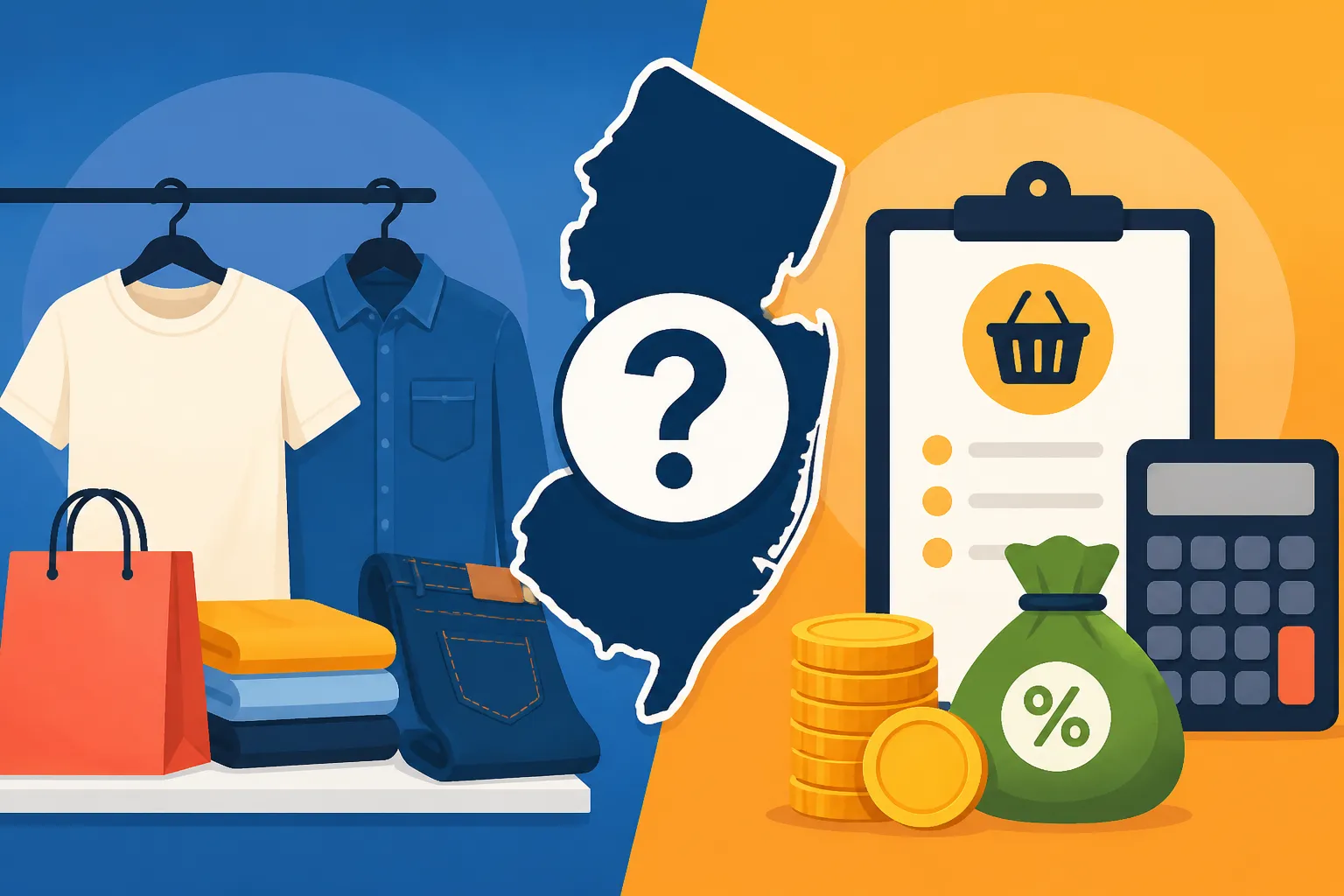
New Jersey stands out as one of the states that offers a significant break to consumers and a unique selling point for its retailers: a widespread sales tax exemption on most clothing and footwear. This isn't a temporary holiday or a special promotion; it's a long-standing policy embedded in the state's tax law.
The General Rule: No Sales Tax on Most Apparel
When you walk into a store in Newark, Cherry Hill, or anywhere else across New Jersey, and pick up a shirt, a pair of pants, or a new dress, you'll generally find that no state sales tax is added to the price. This is a huge advantage, especially when comparing prices with neighboring states. The idea behind this exemption is often to stimulate consumer spending and provide relief on essential items, acknowledging that clothing is a necessity for everyone. This policy makes shopping for apparel in New Jersey particularly appealing, especially for larger purchases where a 6.625% sales tax would typically apply.
The beauty of this rule is its simplicity for the vast majority of transactions. You don't need to worry about price thresholds or specific dates like during a Sales Tax Holidays by State 2026: Full Calendar or a limited-time Tax-Free Weekend Back-to-School Guide 2026. If it's considered general clothing or footwear, it's almost certainly sales tax exempt, making budgeting for your wardrobe much more straightforward.
What Qualifies as Exempt Clothing
So, what exactly falls under this generous exemption? New Jersey's definition of exempt clothing and footwear is quite broad, covering most items designed to be worn on the human body. Think everyday apparel: shirts, pants, skirts, dresses, coats, underwear, socks, and shoes. It also extends to items like belts, hats, gloves, scarves, and even swimsuits. Essentially, if it's generally considered part of your daily wardrobe, it's probably exempt.
The key here is the general purpose of the item. An item's material, size, or cost doesn't typically change its taxability status if its primary function is to clothe or adorn the body. This broad interpretation makes it easier for both consumers and retailers to identify what's tax-free without needing a highly specialized understanding of tax codes for every single product. This consistent approach helps eliminate much of the ambiguity that can arise in states with more complex rules.
Common Misconceptions and What Is Taxable
While New Jersey's clothing exemption is expansive, it's not absolutely universal. There are specific categories of items that, despite being worn on the body, are still subject to the standard 6.625% sales tax. This is where some confusion can arise for shoppers and retailers alike.
One major category that remains taxable is accessories that aren't considered "clothing." This typically includes items like jewelry, handbags, umbrellas, briefcases, and luggage. While you might wear a necklace or carry a purse as part of your outfit, the state differentiates these from core apparel. Another significant area is sports or recreational equipment. If an item is specifically designed and primarily used for a sport or a particular recreational activity, it's generally taxable. This means things like ski boots, football pads, wet suits, and specialized cycling shoes will have sales tax applied, even though they are worn. Furthermore, items like protective masks, safety goggles, and certain medical devices, despite being worn, are often categorized differently and thus subject to tax.
It's also important to remember that any item that is not clothing, such as home goods, electronics, or non-apparel gifts, will be taxed at the regular state sales tax rate. The exemption is very specifically tied to "clothing and footwear," not to all retail purchases. Understanding these distinctions is crucial for both shoppers avoiding unexpected charges and businesses ensuring they accurately charge and remit sales tax. You can find more general information about which items are taxable in our guide, Is Clothing Taxable? Sales Tax on Apparel by State.
Navigating the Nuances: Shoppers and Sellers
The tax-exempt status of clothing in New Jersey has a ripple effect, influencing everything from individual shopping habits to how businesses operate within the state. It's a significant factor in the retail landscape.
Benefits for Consumers and the Local Economy
For consumers, the most immediate and obvious benefit is savings. When you're buying a new winter coat or kitting out your kids for school, not having to pay sales tax on those purchases can add up significantly. For example, a $300 purchase of clothing would save you $19.88 in sales tax. These savings can make a real difference in household budgets, especially for families with growing children who constantly need new clothes and shoes. This exemption can also make shopping in New Jersey more attractive to residents of neighboring states like Pennsylvania, where most clothing is also exempt, but also New York, where clothing items over $110 are taxable.
From an economic standpoint, the exemption acts as an incentive for people to shop within New Jersey. It encourages retail activity, supports local businesses, and can even draw cross-border shoppers who are looking to save money on apparel. This increased foot traffic and sales volume can strengthen the local economy, create jobs, and make New Jersey a more competitive market for clothing retailers. This helps local malls and main street shops thrive by providing a clear advantage over areas where sales tax applies to clothing.
What Retailers Need to Know for Compliance
For businesses selling clothing and footwear in New Jersey, compliance with this exemption is paramount. While it simplifies things by generally eliminating the need to collect sales tax on these items, it also means that retailers must correctly identify what falls under the exemption and what doesn't. Misclassifying an item could lead to either overcharging a customer (and risking negative reviews) or undercollecting tax (and facing penalties from the state).
Retailers must ensure their point-of-sale (POS) systems are accurately programmed to apply the sales tax only to taxable items. This typically means setting up individual product categories or SKUs with the correct taxability status. For a business that sells both exempt clothing and taxable accessories, this distinction is critical at the checkout counter. Businesses also need to be aware of the state's official guidelines and be prepared to justify their taxability decisions if audited. Many businesses turn to specialized sales tax software, like solutions offered by Avalara, to manage these complexities, ensuring accurate tax calculation for every transaction. These tools can automatically apply the correct tax rules, reducing human error and keeping businesses compliant.
When Clothing Might Be Taxable
Even with the broad exemption, there are very specific, less common scenarios where clothing or footwear might indirectly become subject to sales tax in New Jersey. One such instance is if clothing is sold as part of a taxable service where the clothing item itself is incidental to the service. For example, if a specialized uniform is provided as part of a service contract (e.g., a rental uniform service where the primary charge is for the service of providing and cleaning the uniform, not the sale of the garment itself), the taxability might follow the service.
Another area of potential confusion arises with items that serve dual purposes or have specialized features. While a basic t-shirt is exempt, a t-shirt embedded with electronics for fitness tracking might be considered "equipment" rather than simple apparel, potentially making it taxable. The general rule remains: if it's primarily designed for ordinary wear, it's exempt. But if it crosses into the realm of specialized equipment or is part of a non-exempt service, retailers should exercise caution and consult state guidance or their sales tax solution provider. Understanding these edge cases is vital for robust Sales Tax Compliance for Shopify Sellers or any other e-commerce platform.
New Jersey's Stance Compared to Other States
New Jersey's sales tax policy on clothing is a notable differentiator, especially when looking at the broader national landscape and its immediate neighbors. This makes it a compelling topic for cross-border shopping and understanding regional retail dynamics.
Neighboring States and Their Clothing Tax Rules
New Jersey's position as a tax-exempt clothing state certainly influences shopping patterns with its neighbors. Let's take a quick look:
- New York: Just across the Hudson, New York has a more nuanced approach. Clothing and footwear items priced under $110 are exempt from the state's 4% sales tax, but local sales taxes may still apply in some jurisdictions. However, items over $110 are fully taxable. This means a high-end coat purchased in Manhattan could incur significant sales tax, whereas the same coat in a Jersey City boutique would be tax-free. Our guide, Is Clothing Taxable in New York? ($110 Rule), dives deeper into this specific rule.
- Pennsylvania: To the west, Pennsylvania is similar to New Jersey in that most clothing and footwear are generally exempt from state sales tax. This creates a contiguous zone of tax-free clothing shopping, diminishing the tax advantage New Jersey might otherwise have over its western neighbor, but still providing an edge over New York. You can learn more about Pennsylvania's policy in our article, Is Clothing Taxable in Pennsylvania? (Exempt).
- Delaware: Although not a direct land neighbor, Delaware is often considered a "tax-free" shopping destination because it has no state sales tax on any goods, including clothing. This makes it a popular choice for large purchases, but for typical clothing, New Jersey offers the same tax benefit without the longer drive.
This regional comparison highlights New Jersey's competitive edge for clothing retail, especially when compared to states that tax apparel, or those with complex thresholds.
National Landscape: States with Exemptions vs. Taxation
Looking across the U.S., states fall into a few categories regarding sales tax on clothing:
- States with no statewide sales tax: Alaska (though many localities have sales tax), Delaware, Montana, New Hampshire, and Oregon. These states offer a complete tax break on all purchases, including clothing. Our guide, States With No Sales Tax (NOMAD Explained), provides a full overview.
- States with full exemptions on clothing: New Jersey, Massachusetts (for items under $175), Minnesota, Pennsylvania, Rhode Island (for items under $250), Vermont. These states offer significant relief on apparel purchases.
- States with partial exemptions or specific rules: New York (under $110), Connecticut (during specific tax-free weeks).
- States that fully tax clothing: The majority of states with sales tax, including California, Texas, Florida, and Illinois, tax clothing at their standard state and local rates. This is where New Jersey's policy truly shines, as shoppers in these states will always pay extra for their apparel.
| State | General Clothing Sales Tax Status | Notable Thresholds / Rules |
|---|---|---|
| New Jersey | Exempt | Most clothing & footwear are tax-free |
| New York | Partially Exempt | Exempt under $110 per item; taxable above |
| Pennsylvania | Exempt | Most clothing & footwear are tax-free |
| Massachusetts | Partially Exempt | Exempt under $175 per item; taxable above |
| Connecticut | Taxable | Tax-free week typically in August |
| California | Taxable | Standard state + local rates apply (e.g., What Is the Sales Tax in California?) |
| Texas | Taxable | Standard state + local rates apply (e.g., What Is the Sales Tax in Texas?) |
This table clearly illustrates how New Jersey’s policy is quite favorable to consumers compared to many other states.
The Impact on Cross-Border Shopping
The varying sales tax rules on clothing can significantly impact cross-border shopping, creating what's sometimes called a "tax border effect." For instance, a resident of New York City might be inclined to drive to a mall in Paramus, New Jersey, for a major clothing shopping spree, especially if they're purchasing multiple items or high-value garments that would easily exceed New York's $110 per-item exemption. The savings on sales tax alone could justify the travel time and gas costs for substantial purchases.
This dynamic also presents a challenge and an opportunity for retailers. New Jersey businesses can market their tax-free clothing as a major draw, attracting customers from surrounding states. Conversely, retailers in states that tax clothing might see some of their potential customer base diverting to New Jersey. Understanding these regional shopping patterns is crucial for businesses aiming to optimize their sales and marketing strategies. This competition among states for consumer dollars makes policies like New Jersey's clothing exemption a significant economic lever.
Tools and Tips for Accurate Sales Tax Management
While New Jersey's clothing exemption simplifies things in one area, managing sales tax across various product types and potentially multiple states can still be complex for businesses. Utilizing the right tools and staying informed are critical for compliance.
Leveraging Sales Tax Software for Retailers
For any business, especially those selling a mix of taxable and exempt items, manually tracking sales tax can be a nightmare. This is particularly true if you're an online seller reaching customers in various states with different tax rules, or if you sell items like clothing (exempt in NJ) alongside accessories (taxable in NJ). That's where sales tax software becomes an invaluable asset. Platforms like Avalara are specifically designed to automate the process, from determining the correct tax rate based on location and product type to calculating, collecting, and even remitting sales tax.
These sophisticated systems integrate with most e-commerce platforms and POS systems, ensuring that when a customer checks out, the right sales tax (or lack thereof, in the case of exempt clothing in New Jersey) is applied instantly. This automation drastically reduces the risk of errors, saves countless hours of manual reconciliation, and helps businesses stay compliant with ever-changing tax laws across all jurisdictions where they have Sales Tax Nexus Explained (Physical vs Economic). For growing businesses, this is not just a convenience, but a necessity for scaling without compliance headaches.
Staying Informed About Tax Law Changes
Tax laws are not static; they evolve. While New Jersey's clothing exemption has been in place for a long time, vigilance is still key. States might adjust definitions of what constitutes "clothing," introduce new taxable categories, or even, in rare cases, change an exemption entirely. For businesses, this means regularly checking updates from the New Jersey Division of Taxation and staying connected with tax news and resources.
Subscribing to tax alerts, participating in industry webinars, and working with a trusted tax professional are all proactive steps to ensure you're always operating under the most current regulations. For instance, knowing How Often Do Sales Tax Rates Change? or when 2026 Sales Tax Rate Changes by State might come into effect for other goods you sell, ensures you're never caught off guard. This proactive approach helps prevent costly penalties and ensures that your pricing and tax collection practices remain accurate and compliant.
The Role of Sales Tax Permits and Registration
Even with clothing being exempt, businesses operating in New Jersey (and selling taxable goods or services) still need to properly register for a sales tax permit. This is your official authorization from the state to collect and remit sales tax on the taxable items you sell. Without a valid permit, any sales tax collected is done so illegally, and businesses can face severe penalties.
The process to How to Get a Sales Tax Permit by State in New Jersey, often referred to as a Certificate of Authority, involves applying with the Division of Revenue and Enterprise Services. It typically requires providing basic business information, federal employer identification numbers (EIN), and details about your business structure. Once registered, even if all your sales are exempt clothing, you may still be required to file "zero returns" to maintain your compliance status and report that no taxable sales were made. This confirms to the state that you are indeed monitoring your tax obligations, even when no tax is due. It's a fundamental step for any business, regardless of what they sell.
Disclaimer
This article is for general informational purposes only and does not constitute professional advice. Laws and regulations vary by location and change over time. Consult a qualified professional for guidance on your specific situation.