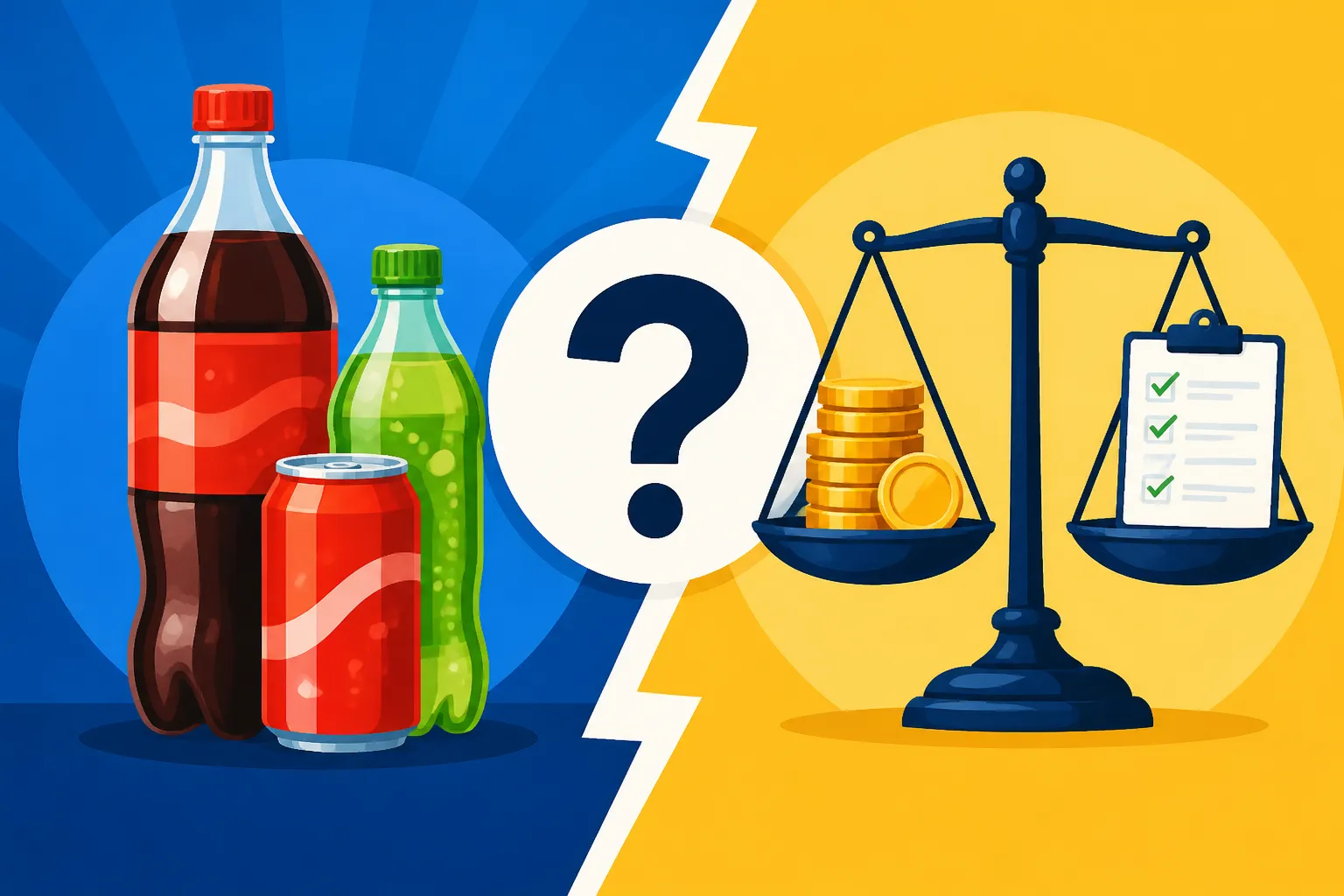
Is Soda Taxable? Soft Drink Sales Tax
It’s truly astounding how something as common as a can of soda can throw a wrench into the seemingly straightforward world of sales tax. As a business owner, you might assume all food items are treated one way, or all beverages another, only to find out that a sugary drink can have its own special category, making compliance a real headache. This guide will dive deep into the nuanced world of soft drink sales tax, helping you understand why these bubbly concoctions often defy simple categorization and what that means for your business.
The Murky Waters of Sales Tax on Beverages
Let's be honest, figuring out sales tax on anything can feel like navigating a swamp blindfolded, and beverages, particularly soda, are no exception. You'd think a product found in almost every grocery store and convenience mart would have a clear-cut tax rule, but alas, it's far from it. Many states have carve-outs, special definitions, or even entirely separate taxes dedicated to soft drinks. It's not just about the state's base sales tax rate; it's about what the state considers taxable in the first place, and where soda fits into that grand scheme.
Why Soda Isn't Always Treated Like Other Groceries
The primary reason soda often gets singled out for different tax treatment comes down to a few factors, mainly public health initiatives and historical definitions. For decades, many states have offered sales tax exemptions for "food for home consumption." This usually means your milk, bread, and fresh produce are exempt from sales tax, or at least taxed at a reduced rate. The idea is to reduce the tax burden on essential goods. However, policymakers and health advocates often argue that soda isn't an "essential" grocery item and, due to its high sugar content, contributes to public health issues like obesity and diabetes. This perspective leads to legislative decisions to exclude soda from general food exemptions, or even to impose additional taxes on it.
Think about it from a legislative standpoint: if you're trying to make healthy food more affordable, you might exempt fresh fruits and vegetables. But then, should a gallon of sugary soda get the same break? Many states say no. This philosophical difference is at the heart of why your checkout experience can vary wildly depending on what you’re buying. For businesses, this means you can't just apply a blanket "grocery tax" rule; you have to know which items qualify for an exemption and which don't, and soda is frequently caught in this complex crossfire.
The "Food vs. Beverage" and "Prepared vs. Unprepared" Divide
The distinction doesn't stop at just "groceries." States also draw lines between "food" and "beverages," and sometimes, even more critically, between "prepared food" and "unprepared food." For instance, a bottle of water bought in a grocery store might be exempt as an "unprepared food item" (or simply a basic necessity), while a fountain drink from a fast-food restaurant is almost always taxed as "prepared food" or a "restaurant beverage."
Where does soda fit here? Often, it’s treated as a beverage, and depending on the state, beverages might not qualify for the same exemptions as solid food items, even if they're sold in a grocery store for home consumption. Some states define "food for home consumption" to explicitly exclude soft drinks, alcohol, and candy. The nuances can be maddening. For a retailer selling a diverse range of products, this means needing to understand specific definitions for categories like "prepared food sales tax explained" versus standard groceries, and then applying those rules granularly to each product, especially to those like soda that fall into a grey area. It’s a constant battle to keep up, especially with states sometimes altering these definitions without much fanfare, leading to potential compliance missteps for even the most diligent businesses.
Understanding "Soft Drink" Definitions by State
The term "soft drink" itself isn't uniformly defined across states, and these definitions are crucial because they dictate taxability. What one state considers a soft drink, another might classify differently, leading to a patchwork of regulations that can feel like a game of legislative whack-a-mole for businesses. This variability adds layers of complexity, especially for online sellers who deal with customers in many different jurisdictions.
Sugar-Sweetened Beverage Taxes (SSBTs)
Beyond general sales tax, several cities and counties, and even a few states, have implemented specific "Sugar-Sweetened Beverage Taxes" (SSBTs), often referred to as "soda taxes." These are excise taxes, typically levied at the distributor or manufacturer level, but often passed down to the consumer. The aim of these taxes is explicitly public health – to reduce consumption of sugary drinks and generate revenue for related health initiatives.
Cities like Philadelphia, Seattle, and Boulder have notable SSBTs. Philadelphia's sugary drink tax, for example, is 1.5 cents per ounce on distributors of sweetened beverages, including soda, sports drinks, and sweetened teas. This isn't a sales tax, but it is an additional cost that gets baked into the final price consumers pay, often making soda significantly more expensive. For businesses selling into these areas, it's not just about collecting sales tax; it's about understanding and factoring in these additional excise taxes when pricing products and managing inventory. It’s a distinct tax, separate from the sales tax you might also collect, and it requires careful tracking and remittance to the correct authorities.
The Role of Artificial Sweeteners and Other Additives
Another fascinating wrinkle in the "soft drink" definition often revolves around artificial sweeteners, milk content, and even fruit juice percentages. Some state laws or SSBT ordinances specifically target sugar-sweetened beverages, meaning drinks with artificial sweeteners might be exempt. For example, diet soda often escapes the SSBT in many jurisdictions that have them. However, in other states, the general sales tax definition of "soft drink" might not differentiate between sugar and artificial sweeteners, taxing both equally.
Then there's the question of juice content. Many states specify that a beverage must contain less than a certain percentage of natural fruit juice (say, 50%) to be classified as a "soft drink" for sales tax purposes. If it has more than that threshold, it might be reclassified as a "food product" and potentially exempt. This gets even more complicated with products like smoothies or kombucha, which can blur the lines between a prepared beverage, a health drink, and a juice. Businesses have to scrutinize the ingredient list and the specific wording of each state's tax code to ensure they are classifying products correctly. This granular level of detail makes sales tax compliance a true challenge, highlighting the need for accurate product categorization and up-to-date tax data.
State-by-State Breakdown: Where Soda is Fully Taxable, Exempt, or Reduced
The reality of soda sales tax is truly a mixed bag across the United States. There's no single, universal rule. While some states treat soda just like any other taxable tangible personal property, others grant it specific exemptions or impose additional targeted taxes. Understanding these variations is paramount for any business operating across state lines or selling online.
States Where Soda is Taxed Like Other Tangible Goods
In a good number of states, soda is simply treated as a taxable item, just like a new pair of shoes or a piece of furniture. It doesn't receive any special food exemption, nor does it typically have an additional "soda tax" beyond the standard sales tax rate. In these states, whether you buy a six-pack of cola at the grocery store or a single bottle from a vending machine, you'll generally pay the prevailing sales tax rate.
For example, states like California or New York generally include soft drinks in their definition of taxable tangible personal property. While California has a base state sales tax rate of 7.25%, local district taxes can push the combined rate much higher, and soda will be subject to this full combined rate. Similarly, in New York, the state's 4% sales tax plus local county and city taxes (like New York City Sales Tax Rate (8.875%) Explained) would apply to soft drinks without any specific exemption. For businesses in these states, the sales tax calculation for soda is relatively straightforward: it's taxable at the full rate, just like many other goods. However, even here, understanding the exact boundaries of what constitutes a "soft drink" versus a juice or other beverage can still present challenges.
States With Specific Soda or SSBT Taxes
As we touched upon earlier, some jurisdictions have gone a step further by implementing specific taxes on soda or sugar-sweetened beverages. These are typically local taxes, though the idea has been debated at the state level in places like Colorado. These taxes are often aimed at public health and revenue generation.
A prime example is the city of Philadelphia, which implemented its "Philadelphia Beverage Tax" in 2017. This is an excise tax of 1.5 cents per ounce on distributors of sweetened beverages, including most sodas, sports drinks, and sweetened teas. This tax applies whether the drink is sweetened with sugar or artificial sweeteners, a distinction from some other SSBTs. Another example was Cook County, Illinois, which briefly had a penny-per-ounce sugary drink tax before it was repealed due to public backlash. When considering the local complexity, it's worth understanding the specifics of Chicago Sales Tax Rate, for instance, which is already one of the highest big city rates, and then layering on such a beverage tax makes the product even more expensive for consumers. For businesses operating in these areas, it means an extra layer of compliance, tracking, and remittance, often separate from their regular sales tax filings. These taxes require specific accounting and reporting, making sales tax automation solutions increasingly vital for accurate compliance.
States Where Soda is Generally Exempt or Reduced
On the flip side, some states offer either a full exemption or a reduced sales tax rate for soda, often treating it more akin to other food items. These are typically states that have a broader "food for home consumption" exemption that doesn't specifically exclude soft drinks or at least has a less stringent definition.
For instance, in states that exempt most groceries, if their definition of "food for home consumption" is broad enough to encompass soda, then soda would be exempt. However, this is becoming less common as states seek to generate more revenue and address public health concerns. It's more likely that a state will have a general grocery exemption, but then specifically carve out "soft drinks," "candy," and "prepared foods" as taxable. For a clear understanding, businesses might need to consult resources like Sales Tax on Groceries & Food by State to see how their specific state approaches broader food exemptions and whether soda falls into that category. The trend, however, often leans towards taxing soda, or at least not exempting it, given its perceived non-essential nature compared to staples like bread or milk. This constant evolution in tax policy means businesses must regularly review their product categorization and sales tax application.
Here's a simplified look at how sales tax on soda can vary across a few states, keeping in mind local rates can add complexity:
| State/Jurisdiction | State Sales Tax Rate | Treatment of Soda (General) | Notes |
|---|---|---|---|
| California | 7.25% | Fully Taxable | Local district taxes apply. |
| New York | 4% | Fully Taxable | Local rates vary, can be much higher (e.g., NYC). |
| Texas | 6.25% | Fully Taxable | Local rates can add up to 2%. |
| Florida | 6% | Fully Taxable | County surtaxes may apply. |
| Massachusetts | 6.25% | Fully Taxable | Does not qualify for general food exemption. |
| Pennsylvania | 6% | Exempt | Food for home consumption is generally exempt, including soda. |
| Philadelphia (City) | N/A (local tax) | Subject to SSBT | 1.5 cents per ounce excise tax, in addition to PA state sales tax on the original product price. |
| Cook County (IL) | N/A (local tax) | (Tax Repealed) | Previously had a penny-per-ounce SSBT. |
This table provides a snapshot, but it's crucial to remember that local taxes, specific definitions, and any additional excise taxes can significantly alter the actual rate a consumer pays.
The "Candy and Soda" Distinction: The Flour Test and Beyond
When we talk about sales tax on food items, two categories often get special (and confusing) treatment: candy and soft drinks. States frequently group them together as non-essential, indulgent items that are taxable even when other groceries might be exempt. The rationale usually comes back to public health or simply finding more avenues for revenue. But how do states actually define these categories, and what happens when products blur the lines?
How the Candy Flour Test Impacts Soda
While the "flour test" is famously associated with distinguishing candy from other food products, it indirectly sheds light on the legislative mindset behind taxing items like soda. The idea, often used by states under the Streamlined Sales Tax Agreement, is that "candy" is a preparation of sugar, honey, or other natural or artificial sweeteners in combination with chocolate, nuts, or fruits, that does not contain flour as a principal ingredient. So, a chocolate bar without flour is candy and taxable, while a chocolate chip cookie (containing flour) is generally considered a "bakery item" and might be exempt as a grocery staple.
Now, how does this relate to soda? The principle is similar: states are looking for bright lines to separate taxable "treats" from tax-exempt "essentials." Just as the flour test carves out candy, explicit legislative definitions often carve out "soft drinks" from the broader "food for home consumption" exemption. Soda, by its very nature, does not contain flour, and its primary ingredients are often water, sugar (or artificial sweeteners), and flavorings. This aligns it more with the "treat" category, similar to candy, rather than a basic food item. Understanding The Candy Flour Test Explained gives you insight into the legislative approach to taxing indulgences, which is directly mirrored in how many states approach soda.
The Logic Behind Taxing Treats Differently
The decision to tax items like candy and soda differently from staple groceries is rooted in several policy considerations. Firstly, it’s a source of revenue. When states need to bolster their budgets, expanding the sales tax base to include items that were previously exempt is a common strategy. Treats like soda and candy are widely consumed, making them an attractive target for tax collection without necessarily impacting the affordability of basic necessities for lower-income households (though this point is often debated).
Secondly, as mentioned, public health plays a significant role. By taxing sugary drinks and high-calorie snacks, states aim to discourage their consumption, with the hope of reducing rates of obesity, diabetes, and other related health issues. The revenue generated from these taxes is sometimes earmarked for health education programs, nutrition initiatives, or even recreational facilities. While the effectiveness of these taxes in changing consumer behavior is a subject of ongoing study, the intent is clear. For businesses, this means being acutely aware of the specific definitions and categories your state employs for various food and beverage items. What might seem like a simple transaction to a customer can be a complex compliance puzzle for you, requiring precise application of sales tax rules for every item, especially those designated as "treats."
Common Scenarios and Complexities for Businesses
Navigating sales tax on soda isn't just about knowing the state law; it's about applying those laws to real-world business operations, which can vary dramatically. From a small diner to a large e-commerce platform, the same product (a can of soda) can trigger different tax obligations based on how and where it's sold. These complexities demand vigilance and often, specialized tools.
Restaurants, Vending Machines, and Prepared Food Rules
When you sell soda in a restaurant, a fast-food establishment, or even from a vending machine, it almost always falls under "prepared food" rules, making it taxable. Many states differentiate between "food for home consumption" (often exempt or reduced) and "prepared food" (almost always taxable at the full rate). A fountain drink at a diner, a bottled soda with a takeout meal, or a can from a vending machine are generally considered part of a "prepared food" transaction.
For example, if you own a small café in Seattle and someone orders a sandwich and a soda, both would typically be subject to the full combined sales tax rate (which can be over 10% in Seattle). The soda, in this context, is part of a meal or a consumption-on-premises sale, automatically rendering it taxable. The challenge for these businesses isn't just knowing that soda is taxable, but correctly programming their Point of Sale (POS) systems to apply the tax automatically to every relevant item, regardless of whether it's a gourmet entrée or a simple soft drink. This also applies to items sold from vending machines, where the entire sale is typically subject to sales tax, including beverages. This distinction between "prepared" and "unprepared" sales tax is critical and can vary by local jurisdiction, making the process even more challenging for multi-location businesses.
Bundled Sales and Mixed Carts
What happens when soda is part of a larger transaction, like a meal deal, a gift basket, or a grocery cart with both taxable and non-taxable items? This is where "bundled sales" and "mixed carts" come into play, adding another layer of complexity. If a state taxes soda but exempts other groceries, a checkout scan needs to be precise.
For instance, if a customer at a grocery store buys milk (exempt in many states), fresh produce (exempt), and a six-pack of soda (taxable), the POS system needs to accurately identify and tax only the soda. This seems simple on the surface, but when you consider different brands, sizes, and variations of soda, and the constant possibility of miscategorization, it quickly becomes an operational challenge. For bundled sales, like a "burger, fries, and drink" combo, if the soda component is clearly separable, some states might require you to allocate a portion of the price to the taxable soda. However, many states treat bundled "prepared food" items as a single taxable unit. If you're bundling soda into a gift basket with other items, you might need to apply sales tax based on the "true object" of the sale or allocate the price of each item, which can be a nightmare without robust sales tax software. Accurately managing "how combined sales tax rates work" across different items in a single transaction is crucial.
The Impact on E-commerce and Remote Sellers
For online sellers, the complexities are amplified exponentially. Not only do you have to contend with varying state and local rules on soda taxability, but you also need to manage economic nexus. Every state has different thresholds for sales volume or transaction count that trigger a requirement for remote sellers to collect and remit sales tax. This means a seller in California might suddenly have to collect sales tax in Florida if their sales to Florida residents exceed that state's economic nexus threshold, and then they need to apply Florida's specific rules for soda.
Consider a subscription box service that includes various snacks and drinks. If that box is shipped to 20 different states, the seller needs to know how each state classifies and taxes every single item within that box. Is the craft soda taxable? What about the sparkling water? What if one state exempts water but taxes soda? This is where manual tracking becomes impossible. Services like Avalara are specifically designed to handle these kinds of complex, multi-state, item-level tax calculations, ensuring that remote sellers accurately charge the right amount for items like soda, regardless of the shipping destination. The sheer volume of constantly changing rules, especially those related to Economic Nexus by State 2026: Thresholds Guide, makes automated solutions not just a convenience, but a necessity for e-commerce businesses to remain compliant.
Navigating Compliance for Sellers
The varied and often confusing tax treatment of soda, coupled with the differing state and local regulations, creates a significant compliance burden for businesses. Whether you're a small local shop or a large online retailer, ensuring you collect and remit the correct amount of sales tax on soft drinks can be a daunting task.
Manual Tracking vs. Automated Solutions
Historically, smaller businesses might have tried to manage sales tax manually, relying on spreadsheets or basic POS systems. For simple scenarios, like a single retail store in a state where all items are taxed at a flat rate, this might be feasible. However, with product-specific exemptions or additional taxes like SSBTs on soda, manual tracking quickly becomes prone to error. Imagine having to look up the sales tax treatment for every variant of soda, juice, and sweetened beverage across multiple jurisdictions where you have nexus, then manually updating your pricing or checkout system. It’s a recipe for mistakes, audits, and potential penalties.
Automated sales tax compliance software, like Avalara, has become an indispensable tool for businesses facing these challenges. These platforms integrate directly with your e-commerce site, ERP system, or POS, automatically determining the correct sales tax rate based on the customer's location (using things like Sales Tax by ZIP Code (and Why ZIP Isn't Enough)) and the specific taxability rules for each product, including those complex distinctions for soda. This means when a customer adds a soda to their online cart, the system instantly calculates the state, county, city, and any special district taxes, including any applicable SSBTs, ensuring accuracy and saving countless hours of manual research and data entry.
Keeping Up with Ever-Changing Definitions
One of the biggest frustrations for businesses is the dynamic nature of sales tax laws. State legislatures and local councils frequently revise their tax codes, introduce new taxes (or repeal old ones, as Cook County did with its soda tax), and clarify or redefine product categories. The definition of a "soft drink" today might be different next year, or a new SSBT might be introduced in a key market. These changes often come with effective dates that require immediate implementation, leaving businesses scrambling.
For example, 2026 Sales Tax Rate Changes by State indicates that tax landscapes are constantly shifting, and these changes aren't just about rates, but also about what items are taxable. Keeping up with these legislative shifts, especially concerning nuanced items like soda, is nearly impossible without dedicated resources. Automated sales tax solutions constantly monitor these changes, updating their databases in real-time. This ensures that your business is always applying the most current and accurate tax rules, mitigating the risk of under-collection (which you'd owe out of pocket) or over-collection (which can lead to customer dissatisfaction and potential legal issues). Embracing such a solution allows businesses to focus on growth and serving customers, rather than getting bogged down in the minutiae of sales tax regulations.
Disclaimer
Please remember, the information provided in this guide is for informational purposes only and does not constitute professional tax advice. Sales tax laws are complex and constantly changing. Always consult with a qualified tax professional or refer to your specific state and local tax authorities for advice tailored to your business's situation.