Are Groceries Taxed Differently Than Restaurant Food?
Navigating the world of sales tax can feel like deciphering a secret code, especially when it comes to something as fundamental as food. Many of us have experienced that moment at the checkout, wondering why the rotisserie chicken from the deli costs more in tax than the raw chicken in our basket, or why that coffee from the grocery store cafe is taxed when a bag of beans isn't. This guide is here to untangle that confusion, explaining precisely why and how sales tax differs between groceries and restaurant food across the United States.
The Core Distinction: Prepared Food vs. Unprepared Food
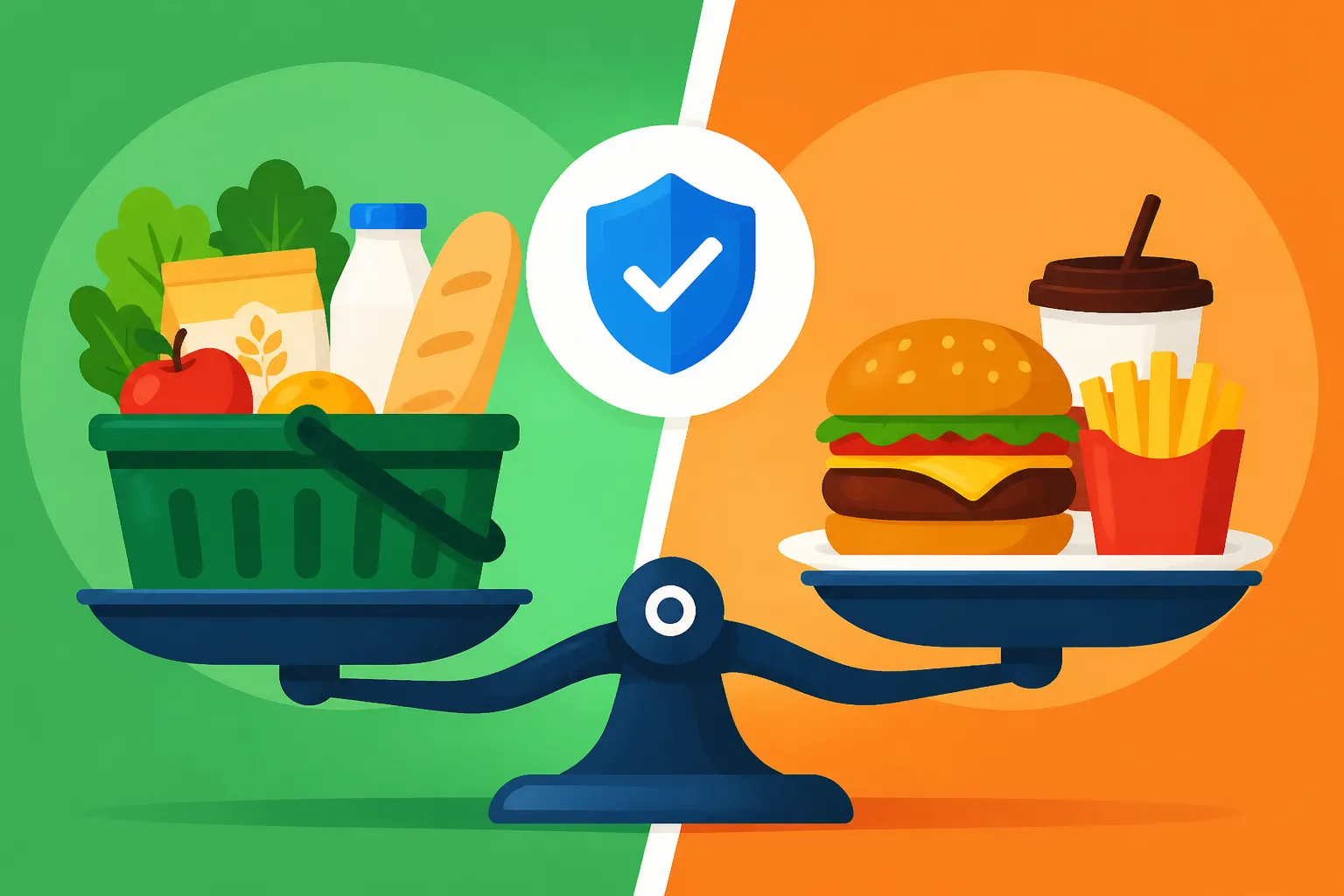
The fundamental reason behind varying sales tax rates on food items boils down to a single, often blurry line: whether the food is considered "prepared" or "unprepared." States generally view unprepared food, or what we commonly call groceries, as a necessity, and therefore, many offer exemptions or reduced rates. Prepared food, on the other hand, is seen as a convenience or a service, and is almost universally subject to sales tax.
Why the Difference Matters
This distinction isn't just an arbitrary tax rule; it's rooted in policy. Legislators often aim to ease the burden on household budgets for essential items. Basic ingredients like fresh produce, raw meat, milk, and bread are typically intended for home consumption, requiring further preparation. Taxing these items at a lower rate, or not at all, is a way to make healthy, home-cooked meals more accessible. However, when food is prepared for immediate consumption, especially in an establishment designed for dining, it’s treated more like a service. Think of it this way: you’re not just buying ingredients; you’re buying the convenience of someone else cooking, serving, or preparing it for you, which incurs a higher sales tax. This difference impacts everything from your weekly grocery bill to how businesses, particularly hybrid establishments like grocery stores with hot bars, configure their point-of-sale systems.
Common Frustrations and Ambiguities
Let's be real, this distinction can be incredibly frustrating and confusing for both consumers and businesses. Imagine grabbing a cold sandwich from a grocery store's grab-and-go section versus buying the exact same sandwich from their hot deli counter. Often, one is taxed and the other isn't, or they're taxed at different rates. What about a pre-packaged salad? Is that "prepared" because someone chopped the lettuce, or is it "unprepared" because you still have to mix the dressing yourself? These gray areas are plentiful. For instance, the "flour test" for candy (does it contain flour? If so, it might be considered food, not candy, and taxed differently) is a classic example of the bizarre nuances states employ. It makes you wonder, "Why is sales tax different in every city?" or even within different aisles of the same store. It feels unnecessarily complicated, and you're not wrong for feeling that way. Businesses also grapple with these intricacies, trying to ensure their systems correctly apply taxes to thousands of different SKUs, which can be a real headache without the right tools.
What Exactly Qualifies as "Prepared Food"?
Defining "prepared food" isn't as simple as cooked versus raw. Each state has its own specific set of criteria, and these definitions can vary significantly. Generally, prepared food is anything sold in a ready-to-eat form, suitable for immediate consumption, or requiring minimal further preparation.
The "Heated, Served, or Ready to Eat" Rule
Most states lean heavily on the "heated, served, or ready to eat" rule to classify food for sales tax purposes. If an item is sold hot, it’s almost always considered prepared food. Think of the piping hot coffee from your local cafe, a slice of pizza from a restaurant, or even that tempting rotisserie chicken you grab from the grocery store deli. These items are heated and intended for immediate consumption, making them fully taxable. Similarly, food served with eating utensils, even if it's cold, often falls into this category. A pre-made salad with a fork included, a deli sandwich wrapped and ready to unwrap and eat, or a single-serving yogurt with a spoon attached are common examples. The key here is the readiness for consumption without significant additional work from the buyer. This doesn't apply to staple groceries that you'd take home to cook a meal with, like a bag of potatoes or a carton of eggs.
The "Eating Utensil" Test and Other Nuances
Beyond being hot or "ready to eat," some states introduce additional layers of complexity. The "eating utensil" test is one such nuance. If the seller provides or makes available eating utensils (like plates, forks, spoons, knives, or cups), the food is often classified as prepared food, regardless of whether it's hot or cold. This is because the provision of utensils implies that the seller intends for the food to be eaten on-site or immediately. Consider a convenience store selling a soda with a cup and ice; that might push it into the "prepared" category.
Another tricky area is the "combination rule" or "two-ingredient rule" used by some jurisdictions. This rule states that if a food item is made by combining two or more food ingredients by the seller, and is sold in a way that suggests it's for immediate consumption, it might be deemed prepared. For instance, a sandwich made from bread, meat, and cheese is considered prepared. However, if you buy the bread, meat, and cheese separately to make the sandwich at home, those individual components might be exempt. Even items like Candy & Soda Sales Tax (The Flour Test) have their own specific tests, like checking for flour content to distinguish them from "food." This often means that an item like a candy bar with flour might be taxed differently than one without, even if both are clearly "candy" to a consumer. It's these kinds of granular details that really highlight the convoluted nature of sales tax laws across states.
The Landscape of Grocery Sales Tax
When it comes to basic groceries – the stuff you buy to cook meals at home – states take wildly different approaches to sales tax. It’s not a uniform system by any stretch, which can be confusing if you move or travel frequently.
States That Fully Tax Groceries
While the vast majority of states offer some form of exemption for groceries, a handful still apply their full statewide sales tax rate to these essential items. As of early 2026, states like Alabama, Hawaii, Idaho, Kansas, Mississippi, Oklahoma, and South Dakota are known to fully tax groceries. This means that when you buy a gallon of milk, a loaf of bread, or a bag of apples in these states, you’ll pay the same sales tax rate as you would on a non-food item, like a new pair of shoes. For a family on a tight budget, this can significantly impact their purchasing power, as these are staple items. Imagine living in rural Mississippi where the combined state and local sales tax can easily exceed 7-8%; every grocery trip adds a substantial amount to the total. This approach contrasts sharply with the broader trend of states reducing or eliminating grocery taxes due to their regressive nature, meaning they disproportionately affect lower-income households. You can dive deeper into this topic by exploring States That Tax Groceries at Full Rate.
States With Reduced or Exempt Grocery Tax
The good news is that most states recognize the burden of taxing essential groceries and either offer a full exemption or apply a reduced sales tax rate to them. For example, states like Illinois recently phased out its grocery tax, while others like Utah and Virginia apply a reduced rate. California, on the other hand, generally exempts most unprepared food items from sales tax entirely. This means that a cart full of fruits, vegetables, raw meats, and dairy products will often ring up tax-free. However, this exemption typically only applies to unprepared food. As soon as you grab a hot meal or a ready-to-eat sandwich, you'll likely see sales tax added. This split treatment is why many states detail what constitutes "food for home consumption" versus "prepared food." It's a complex patchwork, and understanding the specific rules for your state is key, as highlighted in our comprehensive guide, Sales Tax on Groceries & Food by State. Even something as simple as Is Bottled Water Taxable? can have different answers depending on where you are and how it's packaged or consumed.
When Groceries Become "Restaurant Food" (and Vice Versa)
One of the trickiest aspects of sales tax on food is how items can shift categories depending on their preparation, packaging, and the context of the sale. It's not always black and white, and grocery stores have become veritable minefields of these subtle distinctions.
Deli Counters and Self-Serve Bars
Grocery store deli counters and self-serve food bars are prime examples of where the "prepared food" rules kick in. That mouth-watering hot rotisserie chicken, a scoop of potato salad from the deli case, or a build-your-own salad from the salad bar are almost universally treated as prepared food, and thus, subject to sales tax. Even if you're taking these items home, the fact that they are prepared and ready for immediate consumption means they often fall under the same tax rules as a meal from a restaurant.
Think about a Saturday afternoon shopping trip. You pick up ingredients for dinner: raw chicken, pasta, and sauce. These are typically tax-exempt or reduced-rate groceries. But then, you grab a slice of pizza from the store's in-house pizzeria, a hot soup from the self-serve station, and a pre-made sushi roll. All three of these items, even though purchased within a grocery store, will likely be subject to full sales tax because they are "prepared food." The distinction isn't just about where you buy it, but how it's presented and intended for consumption. This can be particularly confusing for shoppers who expect all purchases from a grocery store to follow the same tax rules. For businesses, this means their point-of-sale (POS) systems need to be incredibly sophisticated to distinguish between these items at checkout, ensuring the correct tax is applied automatically.
Combination Purchases and Bundles
Another area of confusion arises when customers combine different types of food items in a single purchase, or when food is sold in bundles. Imagine you're at a convenience store. You grab a hot dog (prepared food, definitely taxable) and a bag of chips (typically unprepared grocery, often exempt or reduced rate). How is that transaction taxed?
Many states have rules for combination sales. If a significant portion of the sale is taxable prepared food, the entire bundle might become taxable. Conversely, some states might allow for individual item taxation, but only if the items are clearly distinguishable and the POS system can handle it. For example, a "meal deal" at a convenience store that includes a hot sandwich, a bag of chips, and a soda might be entirely taxable as a prepared food meal, even if the chips and soda might be untaxed if sold separately. These rules are particularly common in places like gas stations, cafes, and smaller markets where both prepared meals and packaged snacks are sold side-by-side. The rule of thumb tends to be that if the "prepared" component is dominant or makes the whole offering convenient for immediate consumption, the entire purchase often gets taxed at the higher, prepared food rate. It's a subtle but significant difference that can catch both consumers and retailers off guard, requiring careful adherence to Prepared Food Sales Tax Explained in each jurisdiction.
The Role of Seating and Facilities
Beyond the nature of the food itself, the physical environment where food is sold and consumed can play a significant role in determining its sales tax status. The presence (or absence) of seating and eating facilities often pushes items from the "grocery" category into the "restaurant food" realm.
Eating on Premises vs. To-Go Orders
Many states, especially those that exempt groceries, levy sales tax on food consumed on the seller's premises. This is a clear indicator that the transaction involves a "service" aspect, much like a traditional restaurant. If a grocery store has a small cafe area with tables and chairs, or even just a few high-top counters, any food purchased and consumed in that area will almost certainly be subject to sales tax, even if it might be tax-exempt if taken to go. This applies to your coffee, a pastry, or a sandwich bought from their in-store cafe.
However, the "to-go" aspect doesn't automatically mean it's untaxed either. As we've discussed, if it's hot prepared food, it's usually taxed regardless of whether you eat it there or take it home. The key differentiator for sales tax is often the intent of consumption. If the seller provides the environment and amenities for immediate consumption (like seating), it typically signals a prepared food transaction. This is a common rule used to distinguish between a regular grocery purchase and something more akin to a dine-in experience. Consider a scenario where you buy a fresh baguette from the bakery section (untaxed) and then go to the in-store cafe, buy a coffee, and eat the baguette with your coffee (baguette now potentially taxable because it's consumed on-premises with a prepared drink). This can sometimes feel arbitrary, but it's how states attempt to categorize various food transactions.
Convenience Stores and Gas Stations
Convenience stores and gas stations are notorious for blurring the lines between grocery and restaurant food. These establishments typically sell a wide array of products, from packaged snacks and beverages to hot dogs, coffee, and pre-made sandwiches. This mixed inventory makes sales tax compliance particularly challenging.
For example, a cold pre-packaged soda from a cooler might be tax-exempt in states that exempt groceries, or it might be taxed at a standard rate if beverages are generally taxable. But if that same soda is poured over ice at a self-serve fountain, it very quickly becomes a "prepared beverage," making it subject to sales tax. Similarly, a candy bar might be exempt or taxed at a low rate, but a hot pretzel or a nacho from a roller grill will be fully taxable. The defining factors often include whether the food is heated by the seller, whether it's served with utensils, and if there are any on-site facilities for consumption. The complexity of these rules means that businesses like 7-Eleven or Buc-ee's need robust systems to correctly apply sales tax to each item, which can vary not just by state, but by county and city. Many smaller retailers struggle with these complexities, sometimes leading to incorrect tax collection, which can result in penalties down the line.
How Businesses Navigate These Complexities
For businesses, ensuring accurate sales tax collection on food is a monumental task. The varying definitions of "prepared food," the state-by-state differences in grocery exemptions, and the nuances of combination sales mean that a single food item could have a dozen different tax treatments across the country.
POS Systems and Tax Automation
This is where robust Point of Sale (POS) systems and sales tax automation software become indispensable. Trying to manually keep track of every sales tax rule for every food item, especially for businesses operating across multiple jurisdictions, is simply impossible. Modern POS systems are designed to categorize products and apply the correct sales tax rate based on location, item type, and sometimes even the method of sale (e.g., in-store vs. online, or dine-in vs. takeout).
However, even the best POS system needs accurate tax data. This is where specialized sales tax compliance software truly shines. Companies like Avalara specialize in providing real-time, accurate sales tax rates and rules for virtually every product and location in the US. They integrate with POS systems and e-commerce platforms to automatically determine if a food item is taxable, at what rate, and if any local surcharges apply. For a grocery chain like Kroger or a multi-state restaurant group, this automation is critical. It ensures they comply with complex laws, reduce audit risk, and prevent over- or under-collecting from customers. Without such tools, businesses would face an overwhelming administrative burden and a high likelihood of errors, which could lead to significant fines. If you're running a business, investing in a solution that can handle Sales Tax by ZIP Code (and Why ZIP Isn't Enough) or even specific rules for California District Taxes Explained is a game-changer. This kind of automation is not just a convenience; it's a necessity for modern commerce, making sales tax collection less of a guessing game and more of a streamlined process. For more information on making the right choice, check out our guide on the Best Sales Tax Compliance Software 2027.
Training Staff and Clear Labeling
Beyond technology, human elements like thorough staff training and clear product labeling play a crucial role in managing food sales tax complexity. Even with the smartest POS system, if a cashier misidentifies an item or a store employee isn't aware of the specific rules for a new promotional bundle, errors can occur.
Effective training programs for staff, especially those working at checkout, deli counters, or cafe areas, are vital. This training should cover not just the basics of scanning, but also the nuances of what constitutes prepared food, how to handle combination sales, and the importance of ensuring the correct tax code is applied. For example, a cashier should know that a cold sandwich from the grab-and-go might be untaxed, but the hot soup next to it is fully taxable.
Clear labeling of products can also help both staff and customers. Signs indicating "Taxable Prepared Food" or "Grocery Item – Sales Tax Exempt" can eliminate confusion before it even reaches the checkout. This is especially true for items that walk the line, like a deli salad that could be "prepared" or "unprepared" depending on how it's packaged or if utensils are included. For businesses, the consequences of incorrect sales tax collection can range from customer dissatisfaction to costly audits and significant Sales Tax Penalties & Late Filing by State. Therefore, a combination of cutting-edge technology and well-informed human staff is the best defense against the complexities of food sales tax.
Sales Tax on Common Food Items: A Comparison
To illustrate the distinctions we’ve discussed, let's look at how sales tax might apply to a few common food items, depending on whether they are considered "unprepared" (grocery), "prepared but not for on-premises consumption," or "prepared for on-premises consumption" in a hypothetical state with a 6% sales tax that exempts groceries but taxes prepared food.
| Food Item Category | Example Item | Typical Grocery Store (Unprepared) | Deli Counter / Cafe (Prepared, To-Go) | Restaurant / On-Premises (Prepared, Dine-In) |
|---|---|---|---|---|
| Raw Ingredients | Fresh Apples | 0% (Exempt) | N/A | N/A |
| Raw Chicken | 0% (Exempt) | N/A | N/A | |
| Packaged Staples | Bag of Chips | 0% (Exempt) | 0% (Exempt) | 6% (Taxable, if part of a meal) |
| Bottled Water | 0% (Exempt) | 0% (Exempt) | 6% (Taxable, if part of a meal) | |
| Deli/Hot Bar | Rotisserie Chicken | N/A | 6% (Taxable) | 6% (Taxable, if eaten in store) |
| Pre-made Salad | 0% (Exempt, if no utensils) | 6% (Taxable, if w/ utensils) | 6% (Taxable) | |
| Prepared Beverages | Hot Coffee | N/A | 6% (Taxable) | 6% (Taxable) |
| Fountain Soda | N/A | 6% (Taxable) | 6% (Taxable) | |
| Candy | Chocolate Bar (with flour) | 0% (Exempt, due to "flour test") | 0% (Exempt) | 6% (Taxable, if part of a meal) |
| Gummy Candy (no flour) | 6% (Taxable, considered "candy") | 6% (Taxable) | 6% (Taxable) |
Note: This table represents a general scenario. Actual taxability can vary significantly by state, local jurisdiction, and specific legislative definitions.
This table highlights just how nuanced the rules can be, even for seemingly simple items. The presence of flour in candy can change its tax status, and the context of sale (e.g., getting a bottled water with a sit-down meal vs. grabbing it from a convenience store cooler) can also shift whether tax is applied. For an even more detailed look at specific rules, our article on Is Restaurant Food Taxed Differently? might be a helpful resource.
Disclaimer
Please remember, sales tax laws are incredibly complex and subject to change at any time. The information provided in this guide is for general informational purposes only and does not constitute tax advice. Always consult with a qualified tax professional or refer to your state's official tax guidelines for specific advice regarding your situation.