The Candy Flour Test Explained
Navigating the labyrinthine world of sales tax can often feel like trying to solve a riddle, especially when it comes to seemingly simple items like candy. Many small business owners and even everyday shoppers are left utterly bewildered when a chocolate bar is taxed, but a muffin isn't, or a bag of M&M's gets the sales tax treatment while a bag of chocolate chip cookies passes through unscathed. This guide is here to demystify one of the most curious distinctions in sales tax law: the "Candy Flour Test," a quirky yet critical rule many states use to determine if your sweet treats are taxed as candy or considered an exempt (or reduced-rate) food item.
Understanding the Elusive Candy Flour Test
The "Candy Flour Test" sounds almost mythical, doesn't it? Like something conjured up in a whimsical kitchen rather than a legislative chamber. Yet, this simple criterion often holds the key to whether your favorite sugary indulgence gets an extra charge at the checkout or not. For retailers, understanding this test is paramount to ensuring compliance and avoiding costly mistakes.
What is the "Flour Test" Anyway?
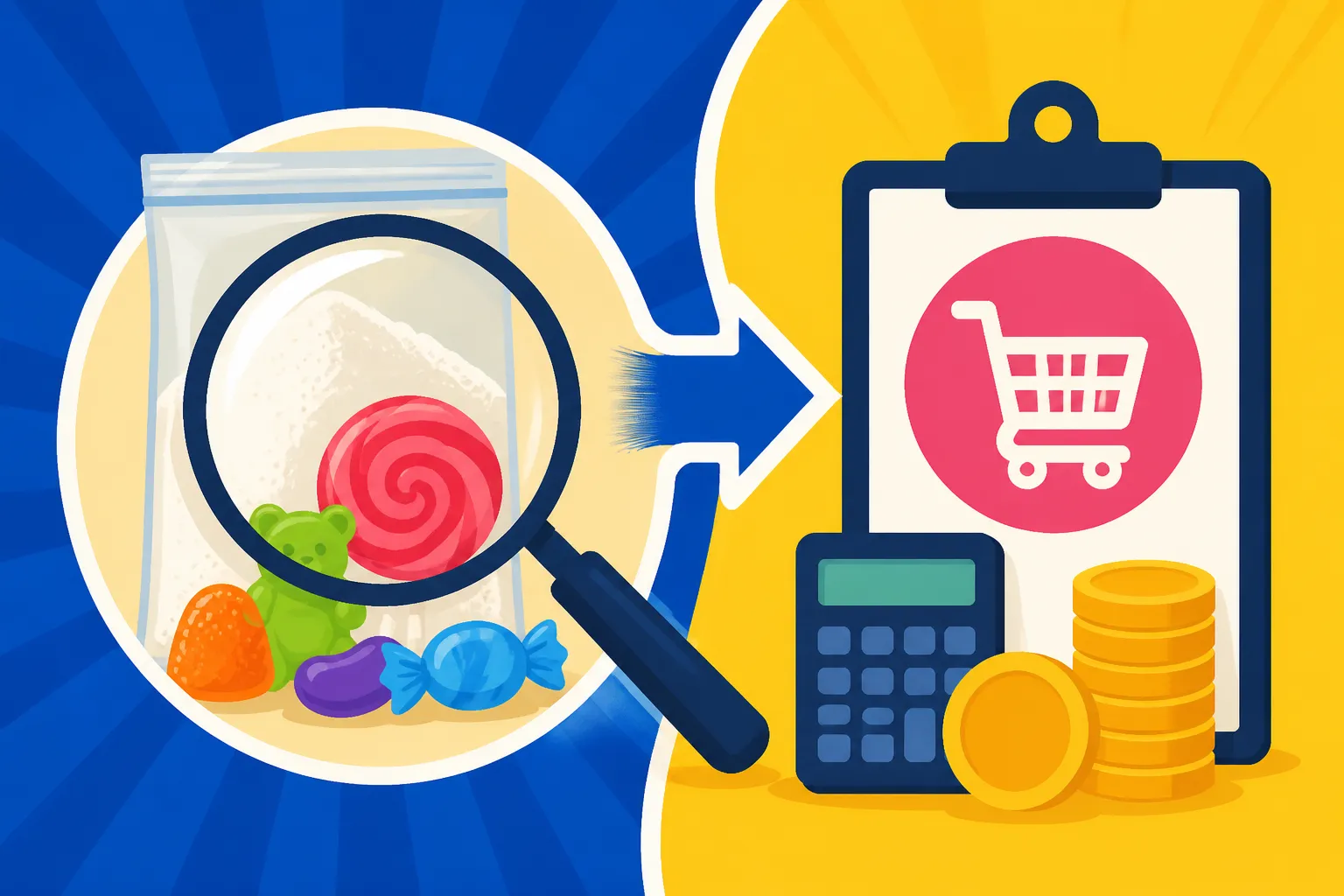
At its core, the "Candy Flour Test" is a sales tax guideline used by a number of states to differentiate between "candy" and "food" items for tax purposes. The rule hinges on a single, seemingly arbitrary ingredient: flour. If a product contains flour as a significant ingredient, it is generally not considered "candy" and might qualify for a food exemption or a reduced sales tax rate. Conversely, if a product does not contain flour as a primary ingredient, it's often classified as "candy" and is fully taxable.
Imagine a small artisanal shop in Austin, Texas, selling both freshly baked cookies and handmade chocolate truffles. Under Texas sales tax law, which generally applies the flour test, the cookies, made with flour, would typically be considered "food" and exempt from sales tax if sold for off-premises consumption. However, the chocolate truffles, made primarily of sugar, cocoa, and cream – with no flour – would be classified as "candy" and subject to the full state and local sales tax rate. It's a subtle distinction that has real financial implications for both the business and the consumer. The idea behind this is to create a bright-line rule, even if it feels a little strange when you first hear it.
The Rationale Behind This Peculiar Distinction
You might be wondering, why on earth would lawmakers choose flour as the linchpin for such an important distinction? The rationale, while sometimes debated, generally boils down to an attempt to draw a clear line between what's considered a "staple food" and what's viewed as a "discretionary treat." Groceries and essential food items are often exempt from sales tax or taxed at a lower rate in many states to ease the burden on consumers, particularly those with lower incomes. Candy, however, is typically seen as a luxury item, and therefore, an easier target for full taxation.
Historically, this distinction evolved as states grappled with how to define "food" broadly enough to exempt groceries, but narrowly enough to tax items that are more indulgent. The flour test became a somewhat crude but widely adopted method to achieve this. Products with flour are generally associated with baked goods, which are often considered more fundamental "food" items than pure sugar confections. It's an imperfect system, to be sure, and one that has caused no end of headaches for retailers trying to program their point-of-sale (POS) systems or for online sellers trying to keep up with varying state rules, but it provides a line in the sand, however peculiar it may seem.
Why Sales Tax Codes Play Favorites with Candy
It's not just about flour; the underlying philosophy behind taxing candy differently from other food items is rooted in broader economic and social objectives. States aren't just trying to make things complicated for fun; there are specific reasons for these distinctions.
The Battle of the Snack Aisle: Food vs. Candy
The primary driver for separating candy from other food items for sales tax purposes is the desire to exempt or reduce the tax burden on what are considered "staple groceries." Most states recognize that taxing essential food items places a disproportionate burden on low-income households, and therefore, many implement exemptions for unprepared food items sold in grocery stores. Think about it: a bag of rice, a carton of milk, fresh vegetables – these are almost universally exempt from sales tax.
Candy, on the other hand, is generally categorized as a "non-essential" item. It's often viewed as an indulgence rather than a necessity, and therefore, states feel less compelled to offer a tax break. This creates the "battle of the snack aisle" where you might buy a loaf of bread and a bag of apples tax-free, but that irresistible candy bar you grab at the checkout counter is fully taxed. This distinction can be a significant point of confusion for consumers and a source of compliance challenges for businesses like your local supermarket or online grocery delivery services, as they need to accurately classify thousands of products. If you're wondering Is Candy Taxable in My State?, these distinctions are precisely why it's not a straightforward answer.
Revenue Generation and Public Health Objectives
Beyond the staple food argument, there are two other significant objectives behind the differential taxation of candy: revenue generation and public health. For states looking to boost their coffers without raising income or property taxes, "sin taxes" or taxes on perceived luxuries like candy and soda can be an attractive option. These taxes generate substantial revenue that can be allocated to various public services, from education to infrastructure.
Furthermore, some states utilize higher taxes on candy (and often soda) as a public health initiative. The idea is that by making these sugary products more expensive, consumers might be discouraged from purchasing them, potentially leading to healthier dietary choices. This approach is similar to how some jurisdictions tax tobacco or alcohol. While the effectiveness of such taxes in significantly altering public health outcomes is a subject of ongoing debate, it remains a stated rationale for many of these taxing schemes. This trend can be clearly seen in how states handle beverages, with many discussions around Sales Tax on Soda by State reflecting similar policy goals. Businesses need to stay on top of these shifting legislative landscapes, as even minor changes can impact their bottom line and their compliance obligations.
State-by-State Scrutiny: How the Flour Test Varies
While the concept of the "Flour Test" provides a general framework, the reality is that its application is far from uniform across the United States. Each state that employs it often has its own specific nuances, definitions, and sometimes, outright exceptions. This patchwork of regulations is where things truly get complicated for businesses operating across state lines or selling online.
The "Flour Test" in Action: Key State Interpretations
Let's dive into how a few states interpret and apply the "Flour Test." In a state like Texas, the rule is relatively straightforward: if a product is commonly considered "candy" and does not contain flour as an ingredient, it's taxable. This means that a standard chocolate bar like a Hershey's Milk Chocolate bar (which typically contains no flour) would be taxed. The same goes for gummy bears, lollipops, or hard candies. However, a chocolate-covered cookie, because the cookie itself contains flour, would generally be exempt as a food item. This can be particularly confusing for consumers who see both items as "sweets."
Ohio is another state that uses a flour-based definition for candy. Here, "candy" is defined as a preparation of sugar, honey, or other natural or artificial sweeteners in combination with chocolate, fruits, nuts, or other ingredients or flavorings, and does not require refrigeration. Crucially, it must not contain flour as an ingredient. So, a candy bar without flour is taxable, but a Snickers bar, which contains nougat made with flour, is generally considered a "food item" and exempt. This creates a fascinating scenario where identical-looking products might have different tax treatments based solely on their ingredient list. Businesses selling in these states must be meticulously aware of ingredient lists for every product, which can be an administrative nightmare. This is also where understanding the broader Sales Tax Rates by State 2026: All 50 States comes into play, as the specific rate will be applied to correctly classified items.
When the Flour Test Isn't the Only Factor
To make things even more interesting (or frustrating, depending on your perspective), some states introduce additional criteria that go beyond a simple flour test. These can include factors like packaging, whether the item is intended for immediate consumption, or even a more subjective "common understanding" of what constitutes candy.
Take New York, for example. While not strictly adhering to a flour test, New York sales tax law generally exempts most food products and beverages sold for off-premises consumption. However, "candy and confectionery" is taxable. New York's definition focuses more on whether the item is commonly understood to be candy, rather than relying solely on the presence of flour. So, a chocolate bar is taxable, and so are gummy bears. A chocolate-covered pretzel, while containing flour in the pretzel, might still be considered a taxable "confectionery" if it's primarily sold as a sweet treat rather than a staple food. This illustrates that even when a "flour test" isn't explicitly used, states are still trying to differentiate between what they perceive as essential food and indulgent sweets. For a local deli in New York City, accurately distinguishing between a taxable candy bar and a tax-exempt bagel can be a daily challenge, highlighting the complexity of NYC Sales Tax Rate Explained.
This table provides a quick look at how a few states approach candy taxation, illustrating the variability:
| State | Candy Definition Standard | Example Taxable Candy (No Flour) | Example Non-Taxable Food (With Flour) | Other Considerations |
|---|---|---|---|---|
| Texas | Primarily sugar, no flour; generally taxable. | Chocolate bars, gummies, lollipops | Cookies, doughnuts, cakes | Prepared foods may be taxed differently. |
| Ohio | Sugar/sweetener based, no flour; generally taxable. | Hard candies, licorice, pure fudge | Snickers (nougat contains flour), brownies | Must not require refrigeration. |
| Arizona | No flour; generally taxable. | Marshmallows, mints, most chocolate bars | Crackers, bread, cereal bars | Broader "food" exemption for groceries. |
| New York | "Candy and confectionery" is taxable. Focus on common understanding rather than strict flour test. | Gummy bears, M&Ms, most chocolate bars | Pretzels, cakes, cookies (unless primarily confectionery) | Exempts most food sold for off-premises consumption. |
| Illinois | Confections and snacks are taxed at a higher rate (1% higher than groceries). Flour test is not the primary factor, rather categorization. | Candy bars, potato chips, soft drinks | Most baked goods, plain crackers | Reduced rate for groceries. |
As you can see, the mere presence or absence of flour isn't always the sole determinant. Businesses operating across state lines or selling online need to be aware of these subtle differences for every state where they have Economic Nexus by State 2026: Thresholds Guide, or they risk miscalculating sales tax, which can lead to audits and penalties.
Real-World Implications for Businesses and Consumers
The "Candy Flour Test" and its variations aren't just obscure legal curiosities; they have tangible, everyday impacts on how consumers shop and how businesses operate. The nuances of these laws create both dilemmas for shoppers and significant operational headaches for retailers.
Navigating the Supermarket Aisle: A Consumer's Dilemma
For the average consumer, walking down the supermarket aisle can be a subtle minefield of sales tax confusion. Imagine picking up a bag of peanut butter cups (no flour, usually taxable) and a package of peanut butter cookies (contains flour, usually exempt). Both are sweet, peanut butter-flavored treats, but one will likely have sales tax added at the register while the other won't. This can lead to frustration and a sense of unfairness. Why is one sweet treat considered a "food" and another a "candy," purely based on an ingredient they might not even realize is present or absent?
This dilemma is compounded when consumers shop at convenience stores or gas stations, where the lines between "food" and "candy" can seem even blurrier. A shopper might grab a muffin (flour-based, generally untaxed) alongside a candy bar (no flour, taxed), and then a pre-made sandwich (prepared food, often taxed differently) and a bottle of water (taxability varies by state). Without a clear understanding of the local sales tax laws, every purchase becomes a guessing game. This consumer-level confusion often trickles back to the retailer, who then has to explain these complex rules to a possibly annoyed customer, underscoring the need for clear communication and accurate pricing.
The Operational Headache for Retailers
For businesses, especially those like grocery stores, convenience stores, or online retailers selling a wide array of products, the "Candy Flour Test" and related distinctions represent a colossal operational challenge. Every single item sold must be correctly classified according to the sales tax laws of the jurisdiction where the sale occurs.
Consider an independent grocery store in Ohio. They stock hundreds of candy bars, bagged candies, and various baked goods. For each of these, they need to know if it contains flour as a primary ingredient, if it requires refrigeration, and how it's ultimately defined by Ohio's sales tax code. This isn't a one-time task; new products are constantly introduced, and ingredient lists can sometimes change. Their point-of-sale (POS) system must be meticulously programmed to apply the correct tax rate to each item. If an item is misclassified, the business could either overcharge customers (leading to complaints) or, more critically, undercharge and under-remit sales tax to the state. Under-remitting can result in significant penalties and interest during an audit.
For online sellers, this headache multiplies exponentially. If you're selling custom candy boxes across the country, you're not just dealing with one state's flour test; you're dealing with potentially dozens of states' unique interpretations, or lack thereof. This means understanding not only if an item is considered candy but also how each state defines Sales Tax on Groceries & Food by State versus other consumables. This complex web of rules is why many online businesses turn to automated solutions, which we'll discuss later. Manual tracking and classification for a large inventory, especially when selling nationally, becomes virtually impossible to do accurately. For a detailed exploration, check out our guide on Sales Tax for Online Sellers: Complete Guide.
Beyond the Flour Test: Other Factors Influencing Candy Taxability
While the "Flour Test" is a significant determinant in many states, it's crucial to understand that it's not the only factor influencing candy taxability. Sales tax laws are rarely simple, and legislators have introduced other criteria to further refine the distinction between taxable treats and exempt food. These additional layers of complexity can make compliance even more challenging.
Packaging, Weight, and Intended Use
Some states look beyond just the ingredients and consider how a product is packaged, its net weight, or its "intended use" to determine its taxability. The rationale here is to distinguish between bulk food items meant for household consumption and individual servings designed for immediate gratification.
For instance, a single-serving candy bar sold at a gas station checkout might be taxed at the full rate, while a large, multi-pound bag of the exact same candy sold in the bulk foods section of a supermarket might be considered a "grocery item" and potentially exempt or taxed at a reduced rate. The logic is that the larger package is more likely to be taken home and consumed over time, akin to other groceries, whereas the small package is an impulse buy. This approach impacts businesses that sell items in various sizes, forcing them to assign different tax codes to the same product based solely on its packaging. A small confectionary shop that sells both individual gourmet chocolates and larger gift boxes of those same chocolates would need to be acutely aware of how their state differentiates based on packaging and quantity.
Furthermore, the concept of "intended use" can muddy the waters. Is a package of chocolate chips considered candy (taxable) or an ingredient for baking (exempt food)? Most states would consider them an ingredient and exempt them, but the distinction relies on this inferred "intended use." These nuances force businesses to not only analyze ingredients but also to consider the context in which their products are typically purchased and consumed, adding another layer to the already complex process of How to Calculate Sales Tax.
The "Prepared Food" Overlap
One of the trickiest areas where candy taxability can overlap with other sales tax categories is with "prepared food." Many states have different sales tax rules for prepared foods, which are generally items sold for consumption on the premises or heated, sliced, or otherwise prepared by the seller. These items are almost always taxable, even if their raw ingredients would be exempt.
Consider a caramel apple. The apple itself is usually an exempt food item. The caramel, made of sugar (no flour), would typically be classified as candy and taxable. But when you combine them and sell them as a ready-to-eat treat, it transforms into a "prepared food." In most states, this caramel apple would be fully taxable as a prepared food, regardless of the individual tax status of its components. The same logic often applies to items like chocolate-dipped strawberries, custom-decorated cakes that heavily feature candy, or even a fancy dessert with candy garnishes from a restaurant.
This overlap means that businesses like bakeries, cafes, or specialized dessert shops need to understand not only the "Candy Flour Test" but also the specific rules for Prepared Food Sales Tax Explained in their state. An ice cream parlor selling scoops (prepared food, taxable) might also sell packaged candy bars (taxable due to the flour test) and perhaps even some pre-packaged cookies (exempt if flour-based). The intricacies demand careful attention to detail and a robust system for classification.
Streamlining Sales Tax Compliance for Confectioners
Given the dizzying array of rules, definitions, and exceptions surrounding candy sales tax, it's easy to feel overwhelmed. For businesses, especially those expanding their reach online, manual compliance becomes a monumental task. This is where modern solutions and strategic thinking truly shine.
The Challenge of Multi-State Sales
The complexities of candy sales tax are amplified exponentially for businesses engaging in multi-state sales, particularly online retailers. If your business has established economic nexus in multiple states – perhaps by exceeding a sales volume or transaction count threshold – you are then obligated to collect and remit sales tax in each of those states. This means you must apply the specific candy definition and tax rules of the destination state for each sale.
Imagine you're an online gourmet chocolate retailer based in Oregon (a state with no sales tax). You sell chocolate bars (no flour), chocolate-covered pretzels (flour in the pretzel), and gourmet fudge (no flour). If you ship an order to a customer in Texas, you need to apply Texas's flour test to each item. If you ship to Ohio, you apply Ohio's rules. If you ship to New York, you apply their "confectionery" interpretation. This isn't just about knowing the different tax rates, but understanding how each state defines the taxability of the product itself. Tracking these nuances for every product and every potential shipping destination is simply not feasible without help. Furthermore, staying on top of 2026 Sales Tax Rate Changes by State adds another layer of dynamic complexity that needs constant monitoring.
This isn't just theoretical; it's a daily reality for e-commerce businesses. A misclassification in just one state, over many transactions, can accumulate into a significant tax liability. This risk is why understanding your obligations, especially when you have nexus in many different jurisdictions, is absolutely vital. Our guide on Economic Nexus by State 2026: Thresholds Guide can help clarify these baseline requirements.
Leveraging Technology for Accuracy
Trying to manually manage the sales tax implications of the "Candy Flour Test" and all its permutations across multiple states is a recipe for error and stress. This is precisely why sales tax automation software has become an indispensable tool for businesses of all sizes, especially those in industries with complex product taxability like confectioneries.
These software solutions integrate directly with your e-commerce platforms (like Shopify or WooCommerce), POS systems, or accounting software. When a sale is made, the software instantly determines the correct sales tax rate based on the customer's location (down to the street address), the taxability of the specific product being sold (applying rules like the "Flour Test"), and any applicable exemptions. This means that a chocolate bar, a cookie, and a soda can all be correctly taxed (or not taxed) in real-time, even if they're part of the same order going to different states. For businesses handling a diverse inventory, this automation is a game-changer.
Companies like Avalara are at the forefront of this technology, offering solutions that continuously update with the latest sales tax rates and rules for thousands of jurisdictions across the U.S. Their platforms can classify products based on detailed attributes, ensuring that the "Candy Flour Test" (or any other state-specific rule) is applied accurately. This frees up businesses from the time-consuming and error-prone task of manual tax calculation and classification, allowing them to focus on what they do best – making and selling delicious treats! Not only does this ensure accuracy at the point of sale, but it also streamlines the entire sales tax compliance lifecycle, from collection to filing. If you're looking to simplify your compliance, delving into resources like Best Sales Tax Compliance Software 2027 is a smart first step. Automated solutions don't just calculate; they often prepare and file your returns, ensuring you meet all your Sales Tax Filing Frequency Explained obligations without missing a beat.
Disclaimer
The information provided in this article is for general informational purposes only and does not constitute professional tax or legal advice. Sales tax laws are complex and constantly changing. Businesses should consult with a qualified tax professional or use reputable sales tax automation software to ensure compliance with all applicable state and local sales tax regulations.