Candy & Soda Sales Tax (The Flour Test)
Navigating the labyrinth of sales tax can be incredibly frustrating, especially when it comes to seemingly simple items like candy and soda. You'd think a chocolate bar is just a chocolate bar, right? But the reality is, states and even local jurisdictions have wildly different definitions, leading to confusion for both consumers at the checkout and businesses trying to stay compliant. This comprehensive guide will demystify the complex world of sales tax on candy and soda, particularly focusing on the infamous "flour test" and other critical distinctions that determine what gets taxed and what doesn't.
The Sweet Dilemma: Why Candy and Soda Sales Tax is So Confusing
It feels almost ridiculous, doesn't it? Standing in line, wondering if that bag of gummy bears or that can of sparkling soda will be taxed, while the granola bar next to it sails through untaxed. This isn't just a random act of bureaucratic whimsy; it stems from a patchwork of state laws, varying definitions, and sometimes, historical legislative quirks that have been around for decades. The core issue often revolves around whether an item is considered a "food for home consumption" (which is often exempt or taxed at a reduced rate) or a "prepared food," a "snack," or specifically, "candy" or "soda," which are typically fully taxable.
More Than Just a State-by-State Issue
While the state is the primary player in setting sales tax rates and rules, it's crucial to remember that things get even more granular. Many states allow local jurisdictions – counties, cities, and special districts – to levy their own sales taxes on top of the state rate. This means that even if a state has a clear definition for candy or soda, the total tax rate you pay can vary dramatically depending on where you are. Imagine selling online to customers across the country; not only do you have to understand each state's definition of candy, but you also need to factor in the local rates for every single delivery address. This can make calculating the exact sales tax for every single transaction a monumental task, and why understanding the Combined State + Local Sales Tax Rates Explained is so critical.
Consider a small mom-and-pop candy shop. If they're operating solely in their local city, they might only need to worry about one set of rules. But if they expand to an online store, suddenly they're staring down the barrel of potentially hundreds, if not thousands, of unique sales tax rates and rules, all hinged on the nuanced definitions of what constitutes "candy" or "soda" in each individual location. It's enough to make your head spin, and it's a very real frustration for businesses trying to compete.
The "Food vs. Treat" Debate
At its heart, the varied taxation of candy and soda often boils down to a legislative attempt to distinguish between essential groceries and discretionary "treats" or "luxury" items. Many states aim to keep basic food items more affordable by exempting them from sales tax or taxing them at a reduced rate. The problem arises when legislators have to draw a line in the sand between, say, a loaf of bread and a candy bar. Both provide calories, but society generally views one as a staple and the other as an indulgence.
This philosophical debate leads to arbitrary-sounding rules that baffle consumers. Why is a cookie typically exempt as a food item, but a chocolate bar might be fully taxable as candy? Why does plain water generally go untaxed, while a sugary soft drink is almost always fair game for sales tax? These distinctions are rarely clear-cut and are often the result of compromises and lobbying efforts during the legislative process. The goal, at least ostensibly, is often to create a more equitable tax system or to promote public health, but the execution can feel anything but equitable or logical to the average person or business owner.
Decoding "The Flour Test" for Candy
Ah, "The Flour Test." If you've ever delved into the minutiae of sales tax, you've likely heard this peculiar term. It's one of those sales tax rules that sounds like something straight out of a whimsical legislative children's book, but it has very real implications for how certain sweets are taxed across the country. And for many small businesses, it's a huge pain point to implement correctly.
What Exactly is the Flour Test?
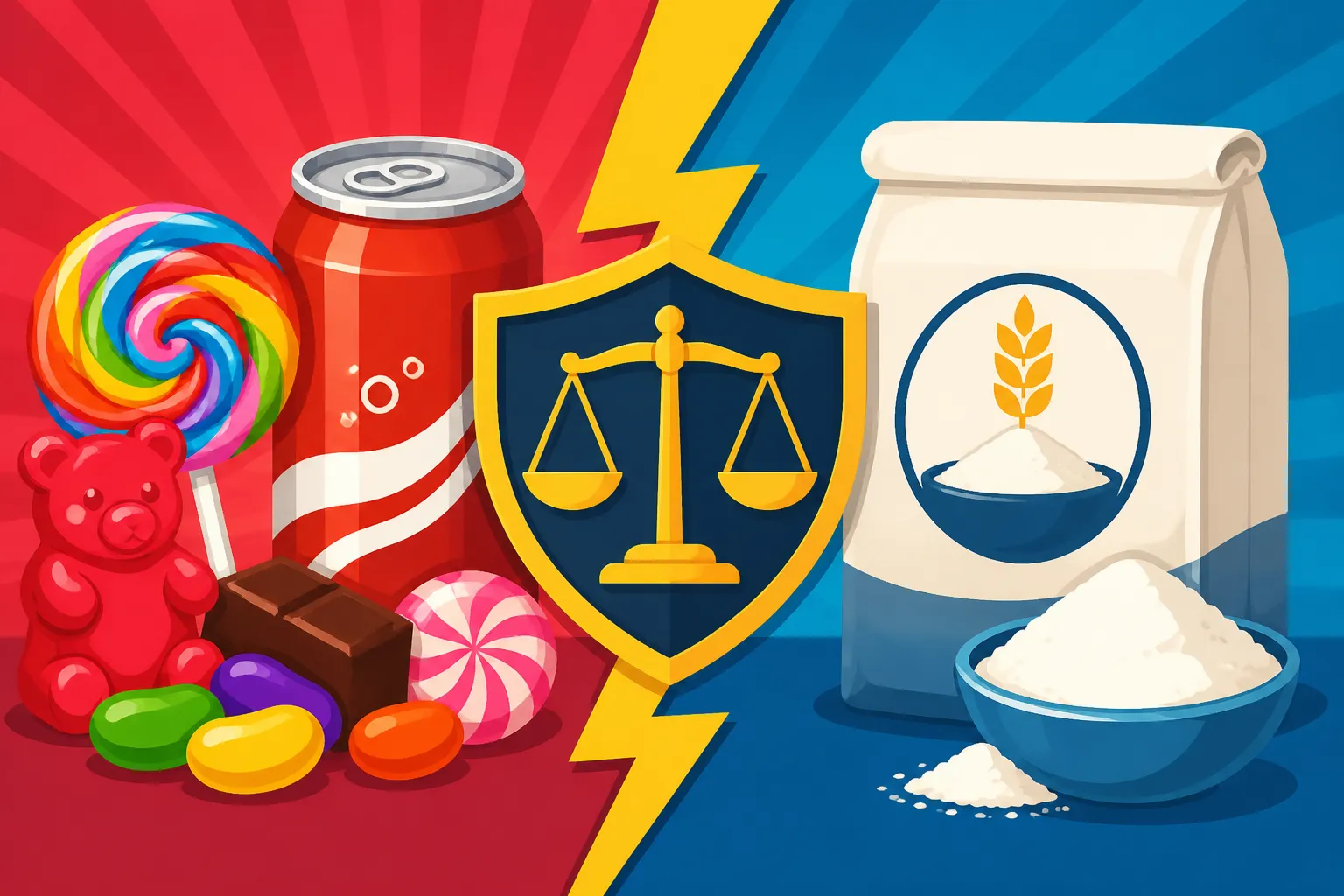
Simply put, "the flour test" is a criterion some states use to determine whether an item is classified as "candy" (and thus taxable) or as "food" (and potentially exempt or taxed at a lower rate). The general idea is this: if a product contains flour as a primary ingredient, it's often not considered "candy" for sales tax purposes. If it doesn't contain flour, it is considered "candy."
The logic behind this is an attempt to differentiate between traditional confectionery items (like hard candies, chocolates, caramels, gummies – which typically don't contain flour) and baked goods (like cookies, cakes, pastries, chocolate-covered pretzels – which do). For states that exempt groceries from sales tax, the flour test helps ensure that items like a pack of cookies are exempt, while a chocolate bar might not be. It's an arbitrary line, yes, but it's one that many state tax departments have adopted. States like Texas, for instance, apply the flour test. So, while a Snickers bar (no flour) might be taxed, a Kit Kat bar (contains flour in the wafer) might be considered a food product and therefore exempt, depending on how strictly the state applies the rule. It's a key distinction when trying to figure out Is Candy Taxable in My State?
Real-World Examples and Ambiguities
Let's dive into some common scenarios to highlight the confusion this creates. Imagine you're at the grocery store, staring at a display of treats.
- Chocolate Bar vs. Chocolate-Covered Pretzel: A classic solid milk chocolate bar typically has no flour. Under the flour test, this would be classified as candy and fully taxable. However, a chocolate-covered pretzel, because the pretzel itself contains flour, would often be classified as a "food" item and potentially exempt. This seems counter-intuitive to many consumers who view both as "treats."
- Gummy Candies vs. Fruit Snacks: Most gummy candies are flour-free and are clearly taxed as candy. But what about fruit snacks that might contain some flour-based binders or are marketed as a "healthier" snack? The lines become very blurry here, and businesses often need to consult specific state guidelines or even product ingredient lists meticulously.
- Cookies vs. Candy Bars with Inclusions: A chocolate chip cookie is generally exempt because it contains flour. But what if a chocolate bar has cookie bits in it? Does the presence of flour in the inclusion change the classification of the entire bar? This is where the ambiguity really kicks in. States often have specific rulings on these kinds of hybrid products, but it can be a constant battle for retailers to keep up.
The difficulty for retailers, especially those selling a wide variety of snacks, is that their point-of-sale (POS) systems need to be programmed with these nuanced rules. What might be candy in Ohio could be food in Texas, and vice versa. And with new products constantly hitting the market, a business needs a robust system to accurately apply the correct tax, every single time. This is where tools from companies like Avalara become incredibly valuable, helping businesses automate these complex calculations.
The Carbonation Conundrum: Sales Tax on Soda and Soft Drinks
Just like candy, soda and other soft drinks present their own unique set of sales tax challenges. It’s rarely as simple as "all drinks are taxed." The distinctions often come down to ingredients, nutritional value, and even how the drink is packaged or prepared.
Defining "Soft Drink" for Sales Tax Purposes
When states talk about taxing "soft drinks," they're usually referring to beverages that are artificially sweetened or carbonated, often excluding those with a high percentage of fruit juice or milk. The specific definitions vary wildly, which, as you can imagine, causes all sorts of headaches.
- Carbonated Beverages: Almost universally, carbonated beverages like colas, lemon-lime sodas, and root beer are considered "soft drinks" and are fully taxable. This is the clearest category.
- Non-Carbonated Sweetened Beverages: This is where it gets trickier. Many sports drinks, energy drinks, and sweetened iced teas are also often included in the "soft drink" category, even if they aren't carbonated. The key is usually the sugar content or artificial sweeteners.
- Juice Content Thresholds: Some states exempt beverages that contain a certain percentage of natural fruit juice (e.g., 50% or more). This means a bottle of 100% orange juice would be exempt, but a fruit punch that's only 10% juice and heavily sweetened might be fully taxable as a "soft drink."
- Milk and Dairy Alternatives: Beverages containing milk or milk substitutes (like almond milk or soy milk) are almost always exempt, falling under the "food for home consumption" category, even if they are flavored and sweetened.
- Coffee and Tea: Unsweetened coffee and tea, whether brewed or in ready-to-drink containers, are usually exempt. However, if you add substantial sugar and cream at a coffee shop, or if it's a heavily sweetened, pre-packaged coffee drink (like a Frappuccino), it might fall into the prepared food or soft drink category, depending on the state and the specific product. This is a common confusion point for consumers trying to understand Is Soda Taxable? Soft Drink Sales Tax or even sales tax on coffee.
These precise definitions are crucial for grocery stores and convenience shops. A shopper might buy a gallon of milk (exempt), a bottle of 100% apple juice (exempt in some states), and a six-pack of cola (taxable). The cashier or POS system needs to correctly identify each item.
States with Specific Soda Taxes (Beyond General Sales Tax)
Beyond the standard sales tax, some jurisdictions have implemented additional, specific taxes on soda and other sugary beverages. These are often referred to as "sugar taxes" or "sweetened beverage taxes," and they are usually enacted with public health goals in mind, aiming to reduce consumption of sugary drinks and generate revenue for health initiatives.
- City-Level Taxes: Several major cities have implemented these additional taxes. For example, Philadelphia levies a "sweetened beverage tax" on distributors, which is then passed down to consumers. Berkeley, California, was one of the first to implement such a tax. These taxes are often calculated per ounce, adding a fixed amount on top of the regular sales tax.
- State-Level Initiatives: While less common than city-level taxes, some states have considered or implemented broader taxes on sugary drinks. These are distinct from general sales tax and often apply to a wider range of sweetened beverages, including sports drinks, energy drinks, and even some sweetened teas, in addition to traditional sodas.
- Impact on Pricing: For consumers, these taxes mean that the final price of a soda can be significantly higher than just the advertised price plus general sales tax. For businesses, it adds another layer of complexity to pricing, collection, and remittance. They need to ensure their systems can handle both the standard sales tax and any additional, specific per-ounce or percentage-based taxes that apply. It's yet another factor that makes it difficult for a business to know How Much Is Sales Tax on a $100 Purchase by State when it includes various types of beverages.
State-by-State Breakdown: Who Uses What Rules?
The real complexity of sales tax on candy and soda shines through when you look at how different states approach these definitions. There's no single, harmonized rule, which is a major source of frustration for anyone operating across state lines.
States Applying the Flour Test for Candy
Several states have adopted some variation of the "flour test" to distinguish between candy and other food products.
- Texas: Texas is a prime example of a state that applies the flour test. If an item contains flour or requires refrigeration, it's generally not considered "candy" and may be exempt as a grocery item. This is why a Kit Kat bar (contains flour in the wafer) might be treated differently than a Hershey's milk chocolate bar (no flour) in Texas.
- New York: New York also uses a similar principle. While most candy is taxable, items that are commonly viewed as baked goods or that contain flour might be exempt. However, New York also has specific rules, such as its exemption for clothing and footwear priced under $110, which shows how specific states can get with exemptions, even if they don't directly apply to candy.
- Pennsylvania: Interestingly, Pennsylvania has a statewide exemption for most food purchases, but specifically carves out "candy and gum" as taxable. They generally define candy as a preparation of sugar, honey, or other natural or artificial sweeteners, in combination with chocolate, fruits, nuts, or other ingredients or flavorings in bar, drop, or other form. If it does contain flour, it’s usually seen as a cookie or snack and thus exempt. So, a chocolate bar without flour is taxed, but a cookie or a chocolate-covered pretzel is not.
- Illinois: While Illinois recently eliminated its grocery tax, historically the state has had its own definitions. Many states, including Illinois, generally distinguish between food items sold for home consumption, which are exempt or taxed at a reduced rate, and candy or prepared food, which is fully taxable. The removal of the Illinois Grocery Tax Eliminated 2026 changes the landscape for other food items but the core definitions for candy often remain distinct.
This table offers a simplified look at how some states approach candy taxation. Always consult specific state guidelines for the most accurate information.
| State | Candy (General Rule) | Flour Test Used? | Example (Taxable) | Example (Potentially Exempt) |
|---|---|---|---|---|
| California | Generally taxable | No (broad definition) | Snickers, Kit Kat, Gummy Bears | Most baked goods, grocery food |
| Texas | Taxable if no flour | Yes | Hershey's Milk Chocolate Bar | Kit Kat, chocolate-covered pretzels |
| New York | Taxable if no flour | Yes | Hard candies, M&Ms | Cookies, certain snack bars |
| Pennsylvania | Taxable (specific carve-out) | Yes (exemption for flour) | Hershey's Kisses, Jelly Beans | Cookies, brownies, chocolate-covered nuts (if flour-based) |
| Florida | Generally taxable | No (broad definition) | All standard candies | Most baked goods, grocery food |
States with Broader Candy Definitions
On the flip side, many states take a more straightforward approach, simply defining "candy" broadly as any confectionary product primarily made of sugar and other sweeteners, regardless of flour content. In these states, a chocolate bar with or without flour, gummies, and hard candies are all treated the same – they're generally taxable.
- California: California's sales tax regulations generally define "candy" quite broadly, meaning most confectionery items are taxable, irrespective of flour content. This simplifies things for retailers in one way, but it also means fewer exemptions for "borderline" items that might be considered food in other states.
- Florida: Florida, too, generally taxes all candy. Their focus is less on the ingredients and more on the intended use as a confectionery. This can make compliance easier in that you don't need to scrutinize ingredient lists for flour.
For businesses operating in these states, the "flour test" isn't a concern for candy, but they still need to navigate other distinctions, such as prepared food rules or the taxation of different types of beverages.
How States Approach Soda Taxation
When it comes to soda, the distinctions often revolve around carbonation, juice content, and whether it's classified as a "food ingredient" or a ready-to-drink beverage.
- Most States (General Rule): The vast majority of states consider "soft drinks" (typically carbonated and/or artificially sweetened) to be taxable. This includes sodas, sports drinks, and most energy drinks. The argument is usually that these are not essential grocery items.
- Exceptions for Juice/Milk Content: Many states provide an exemption for beverages that contain a significant percentage of real fruit juice (e.g., 50% or more) or milk. The idea here is to encourage consumption of more nutritious drinks by making them tax-free. So, a bottle of 100% apple juice is likely exempt, while a fruit-flavored soda is not.
- Water and Other Basics: Plain bottled water, unsweetened tea, and coffee are almost universally exempt from sales tax across all states that tax groceries. They are considered essential food items.
- Specific "Sugar Taxes": As mentioned earlier, some cities and counties, like those in California or the city of Philadelphia, impose additional specific taxes on sweetened beverages. These are separate from the general sales tax and must be calculated and remitted accordingly. This is an added layer of complexity that can surprise businesses, especially new online sellers who might not be aware of hyper-local tax rules beyond statewide rates.
Understanding these state-specific nuances is paramount for accurate sales tax collection. A business that simply applies a blanket "tax all sweets and drinks" rule could be overcharging customers or, worse, undercharging and facing a hefty bill during an audit.
The Impact on Businesses: Challenges and Compliance
For businesses, especially those selling groceries, convenience items, or food service, the complexity of candy and soda sales tax rules is more than just an academic exercise. It translates into real operational challenges and compliance risks.
Navigating Point-of-Sale (POS) System Configuration
The front line of sales tax collection for most retailers is their point-of-sale (POS) system. This is where the rubber meets the road. Each product in inventory needs to be assigned the correct taxability code.
- Manual Entry Nightmares: For small businesses with limited inventory, manually assigning tax codes might seem manageable. But as inventory grows, or if they sell products that fall into ambiguous categories (like those chocolate-covered pretzels), the risk of error skyrockets. A clerk might mistakenly ring up a taxable candy bar as an exempt food item, leading to under-collection. Conversely, over-collecting can alienate customers.
- Ingredient Scrutiny: The "flour test" means that a retailer might need to look at the ingredient list of every single confectionery item to determine its tax status in a given state. Imagine doing this for hundreds, or even thousands, of different products. It's time-consuming and prone to human error.
- System Limitations: Older or basic POS systems might not have the functionality to handle such nuanced tax rules automatically. This forces staff to remember which items are taxable, which is an open invitation for mistakes, especially during busy periods or with new employees. A system that can dynamically apply the correct tax based on product attributes and shipping location is a game-changer.
- Software Solutions: This is precisely why many businesses, from small online shops to large grocery chains, turn to sales tax automation software. Solutions like those offered by Avalara integrate with POS and e-commerce platforms to automatically apply the correct sales tax rates and rules based on product type, customer location, and prevailing state laws. This alleviates a massive burden and significantly reduces the risk of error. It's often considered one of the Best Sales Tax Compliance Software 2027 options for businesses dealing with complex product taxability.
The Headache of Multi-State Sales
The challenges compound exponentially for businesses engaged in multi-state sales, particularly online sellers.
- Economic Nexus: Thanks to the South Dakota v. Wayfair Supreme Court decision, online sellers now have to collect sales tax in any state where they meet certain economic nexus thresholds (typically a dollar amount of sales or number of transactions). This means a small online candy shop in California selling nationwide might suddenly find themselves needing to comply with the candy and soda tax rules of Texas, New York, Florida, and many other states. Understanding Economic Nexus by State 2026: Thresholds Guide is foundational for online businesses.
- Shipping Destination Rules: Sales tax is almost always based on the destination of the buyer, meaning the tax applied depends on the customer's address, not the seller's. So, if your online store is in a state that doesn't use the flour test, but you ship a chocolate bar to a customer in Texas (which does), your system needs to know to apply the Texas rule. This is a monumental task without automation.
- Marketplace Facilitator Laws: While marketplaces like Amazon and Etsy often handle sales tax collection and remittance for their sellers, if you also sell on your own website, you're still responsible for your own compliance. Even if a marketplace covers a portion of your sales, you still need to understand Sales Tax for Online Sellers: Complete Guide for the sales you handle directly.
- Constant Monitoring: State sales tax laws, including definitions for candy and soda, can change. How Do Sales Tax Rate Changes Take Effect? is a question businesses constantly need to answer. Keeping up with these changes across potentially dozens of states manually is virtually impossible for most small to medium-sized businesses.
The complexity here is not just about knowing the current rules but having systems in place to adapt quickly and accurately as rules evolve.
Best Practices for Sales Tax Compliance on Candy and Soda
Given the intricate nature of sales tax on candy and soda, businesses need a robust strategy to ensure compliance. It's not just about avoiding penalties; it's about building trust with customers and maintaining financial health.
Staying Informed About Rate Changes and Definitions
The sales tax landscape is anything but static. States frequently update their statutes, issue new guidance, or clarify existing rules.
- Regular Review of State Tax Websites: Business owners, or their accounting teams, should regularly visit the official websites of state revenue departments in every state where they have nexus. These sites often publish tax bulletins, FAQs, and rule changes that directly impact product taxability. This is the most authoritative source of information.
- Subscribing to Tax Newsletters: Many tax compliance experts, accounting firms, and software providers offer newsletters specifically focused on sales tax changes. Subscribing to these can provide timely alerts about upcoming rate adjustments or definitional shifts for products like candy and soda.
- Trade Associations: Industry-specific trade associations (e.g., for grocers, convenience stores, or online retailers) often provide tailored compliance guidance and keep members informed about relevant tax issues affecting their niche.
- Seeking Professional Advice: When in doubt, especially with complex product lines or multi-state operations, consulting with a qualified tax professional is invaluable. They can offer specific guidance tailored to your business model and product offerings.
Staying informed isn't a one-time task; it's an ongoing commitment to ensure your business remains compliant and avoids unexpected tax liabilities.
Leveraging Technology for Accuracy
Trying to manually keep up with the differing definitions and local rates for candy and soda across multiple states is a recipe for disaster. This is where sales tax automation technology becomes not just a convenience, but a necessity for many businesses.
- Automated Tax Calculation: Modern sales tax software integrates directly with your e-commerce platform, POS system, or accounting software. When a customer makes a purchase, the software instantaneously determines the correct sales tax rate based on the product type (is it candy, is it soda?), the customer's exact location (down to the street address), and the prevailing state and local tax rules, including things like the "flour test" or specific soda taxes.
- Product Taxability Matrices: Advanced software solutions maintain extensive databases of product taxability rules for every jurisdiction. This means you don't have to manually research if a chocolate bar is "candy" in Texas or "food" in California; the software already knows. You simply assign a product category, and the system handles the rest. This feature is a core offering from leading providers like Avalara, allowing businesses to map their products to the correct tax codes, dramatically simplifying compliance with nuanced rules like those for candy and soda.
- Rate Updates and Rule Changes: These software providers continuously monitor sales tax legislation and automatically update their databases when rates or rules change. This means your system is always using the most current information, freeing you from the burden of tracking Sales Tax Rate Changes by State 2026 across 45+ states.
- Reporting and Remittance: Beyond calculation, these tools also help with accurate reporting and even automated remittance of collected sales tax, making it easier to meet your filing obligations. This also streamlines the process of How to File a Sales Tax Return: Step by Step.
Investing in reliable sales tax automation is arguably the single most effective step a business can take to ensure accurate and compliant handling of candy and soda sales tax.
Audits and Avoiding Penalties
The last thing any business wants is a sales tax audit. Misclassifying candy or soda can lead to significant penalties, interest, and even fines.
- Documentation is Key: Maintain meticulous records of all sales, tax collected, and remittances. If you're using product taxability matrices or relying on specific state guidance for classifying items, keep clear documentation of your reasoning. For example, if you classify a chocolate-covered pretzel as exempt due to its flour content in Texas, have the ingredient list and the relevant Texas tax bulletin on file.
- Regular Internal Checks: Periodically review your POS system's tax programming for candy and soda items. Conduct "mock audits" on a small sample of transactions to ensure everything is being taxed correctly. This proactive approach can catch errors before they become major liabilities.
- Understand Penalty Structures: Be aware of the penalties for under-collection or late filing in the states where you operate. These can vary significantly but often include interest on underpaid taxes, late filing penalties, and even substantial fines for negligence or fraud.
- Voluntary Disclosure Agreements (VDAs): If you discover that you've been under-collecting sales tax for an extended period, especially in a state where you've recently established nexus, a Voluntary Disclosure Agreement (VDA) might be an option. This allows businesses to come forward, pay back taxes, and often get a waiver of penalties, provided the state hasn't already contacted them for an audit.
By being proactive, maintaining excellent records, and leveraging technology, businesses can significantly reduce their risk of audit issues and navigate the tricky waters of candy and soda sales tax with confidence.
Understanding Exemptions and Special Cases
Even after grappling with the flour test and soda definitions, there are still special situations and exemptions that can alter the sales tax landscape for candy and soda. These are less common but equally important to be aware of.
Food Stamp Programs (SNAP/EBT)
One major exemption that impacts the sale of food items, including some candies and sodas, is related to federal food assistance programs like the Supplemental Nutrition Assistance Program (SNAP), often referred to as food stamps or EBT.
- Federal vs. State Rules: SNAP benefits are designed to help low-income individuals and families purchase food for home consumption. Federally, most "food for home consumption" is eligible for SNAP benefits and is therefore sales tax exempt at the point of sale. This means if an item is eligible for SNAP, a retailer cannot charge sales tax on it, regardless of the state's standard taxability rules.
- What's Eligible for SNAP? Generally, "food for home consumption" includes most groceries. However, there are exceptions. Hot, prepared foods ready for immediate consumption are usually not eligible. So, a hot dog from the deli counter isn't eligible, but a package of hot dogs from the refrigerated section is.
- Candy and Soda under SNAP: Here's where it gets interesting for our topic. Most states consider candy and soft drinks to be "food for home consumption" for SNAP purposes, even if they are taxable under state sales tax laws. This means if a customer pays for a candy bar or a soda with their EBT card, that specific transaction is sales tax-exempt. However, if they pay with cash or a regular credit card, the sales tax would apply if the item is typically taxable in that state.
- Retailer Burden: Retailers need POS systems that can identify whether an item is SNAP-eligible and then, if an EBT card is used, automatically exempt it from sales tax, even if it's normally taxable. This adds another layer of programming complexity.
Bulk Sales and Vending Machines
How items are packaged or sold can also sometimes affect their sales tax status.
- Bulk Sales: Some states have specific rules for food items sold in bulk. For example, if a store sells candy by weight from a bulk bin, it might be treated differently than pre-packaged candy bars. However, these distinctions are less common for candy and soda specifically and more often apply to things like nuts, grains, or dried fruit.
- Vending Machines: Sales from vending machines often have their own set of sales tax rules, which can vary significantly by state.
- Lower Thresholds: Some states have specific exemptions or different tax rates for items sold through vending machines if the price is below a certain threshold (e.g., 75 cents or $1.00). The idea is that these are low-cost, convenience items.
- Combined Rate: Other states might require a flat, combined tax rate to be applied to all vending machine sales, regardless of the individual item's normal taxability. This simplifies accounting for vending machine operators but can mean that an otherwise exempt item (like a water bottle) gets taxed.
- "Prepared Food" Implications: If a vending machine sells hot food or heated beverages, those might fall under "prepared food" rules, which are generally taxable.
It's clear that the world of sales tax for candy and soda is far from straightforward. The nuances in definitions, the geographical variations, and the specific sales contexts all contribute to a complex environment that demands careful attention from businesses. For anyone selling these items, understanding these rules, staying informed, and leveraging technology are not just good practices—they're essential for survival and compliance.
Disclaimer
Please note that the information provided in this guide is for general informational purposes only and does not constitute professional tax advice. Sales tax laws are complex, constantly changing, and vary by state and local jurisdiction. It is crucial to consult with a qualified tax professional or the appropriate state taxing authority for advice tailored to your specific business situation. Relying solely on general information without professional guidance could lead to compliance errors and potential penalties.