Do I Need to Collect Sales Tax in Tennessee?
Navigating the labyrinth of sales tax requirements can feel like an impossible task, especially when you're trying to figure out if your business needs to collect sales tax in a specific state like Tennessee. It's not always as simple as a flat rate, and the rules about when and how you collect can be confusing. This comprehensive guide is here to demystify Tennessee's sales tax laws, helping you understand your obligations, from determining nexus to filing your returns accurately and on time.
Understanding Sales Tax Nexus in Tennessee
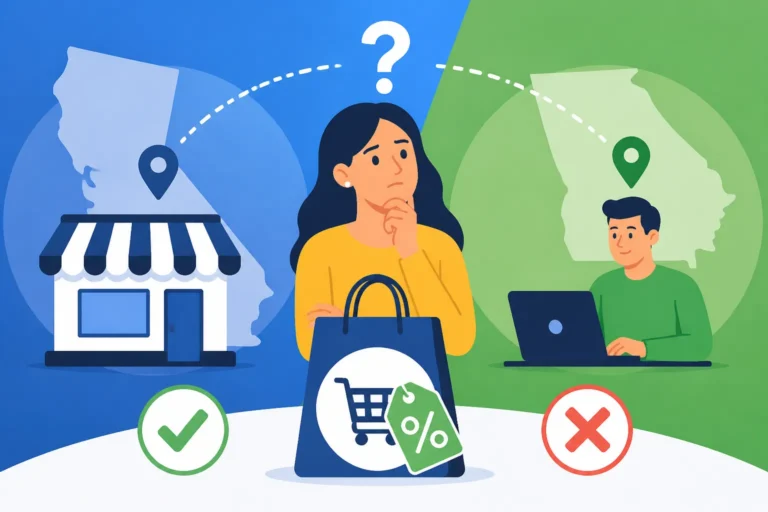
The first, and arguably most critical, step in determining your sales tax obligations in Tennessee is to understand what "nexus" means. Nexus is essentially a legal term for sufficient physical presence or economic activity in a state that obligates your business to collect and remit sales tax. Without nexus, you generally don't have to collect sales tax from customers in that state. With Tennessee's distinct rules, figuring this out is paramount. For a broader view, you can delve into Sales Tax Nexus Explained Physical vs Economic.
Physical Presence Nexus
Historically, sales tax obligations were tied solely to a physical presence. If you had a brick-and-mortar store in Memphis, a warehouse in Knoxville, or even an employee working from their home office in Nashville, you clearly had a physical presence. Tennessee is no different in this regard; any significant physical tie to the state will trigger nexus.
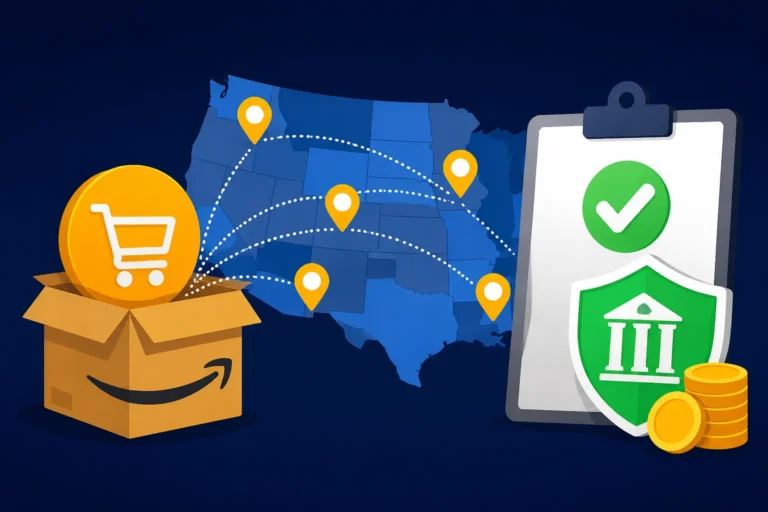
Consider a small online retailer, "Volunteer Vintage," based out of Chattanooga. If they open a pop-up shop in a Nashville market for a weekend, that temporary physical presence is enough to establish nexus. Similarly, if they hire a part-time marketing assistant who works from home in Murfreesboro, that single employee creates a physical nexus for the business, even if all sales are conducted online. Inventory stored in a third-party warehouse or fulfillment center, like those used by Amazon FBA sellers, also constitutes a physical presence, creating nexus in Tennessee. It’s crucial to understand that even a seemingly minor physical connection can have significant sales tax implications.
Economic Nexus in Tennessee
The landscape of sales tax changed dramatically with the 2018 South Dakota v. Wayfair Supreme Court decision, which introduced the concept of "economic nexus." This means that even if you don't have a physical presence, your economic activity alone can create a sales tax obligation. Tennessee was quick to implement its own economic nexus law, which went into effect on October 1, 2019.
For businesses without a physical presence in the state, you establish economic nexus in Tennessee if, in the previous calendar year or current calendar year, you have:
- More than $100,000 in gross sales of tangible personal property or services into Tennessee.
It’s important to note that Tennessee, unlike some other states initially did, does not have a transaction count threshold. The focus is purely on the sales dollar amount. For instance, if your business, located in Georgia, sold $120,000 worth of specialty jams to various customers across Tennessee in the past year, you would have economic nexus. This means that for all subsequent sales into Tennessee, you'd be required to register for a sales tax permit and begin collecting sales tax from your Tennessee customers. This rule applies whether those sales are to individuals or businesses, as long as they are taxable. Understanding this threshold is critical; more specific information can be found in Economic Nexus Threshold in Tennessee.
Marketplace Facilitator Laws
Another significant development in sales tax compliance for online sellers is the rise of marketplace facilitator laws. These laws shift the responsibility of sales tax collection and remittance from individual sellers to the marketplace platforms themselves, like Amazon, Etsy, eBay, or Walmart. Tennessee's marketplace facilitator law also became effective on October 1, 2019.
What this means for you depends on where and how you sell. If you exclusively sell through a marketplace facilitator that is collecting sales tax on your behalf for sales into Tennessee, you might not need to worry about collecting sales tax for those specific transactions. The marketplace does it for you. However, this doesn't absolve you entirely. If you also sell through your own website, a separate platform, or have a physical presence in Tennessee, you'll still need to register and collect sales tax for those direct sales. For instance, if you sell artisanal candles on Etsy (which collects Tennessee sales tax) and through your own online shop, you only need to collect for sales made directly through your shop once you establish nexus. To learn more about how these laws work across different states, check out Marketplace Facilitator Laws by State.
Calculating and Remitting Sales Tax in Tennessee
Once you've determined that your business has nexus in Tennessee, the next steps involve understanding the state's tax rates, registering for a permit, and then filing and paying the collected taxes. This process can be quite detailed, given Tennessee's complex local sales tax structure.
Tennessee's Sales Tax Rate Structure
Tennessee has a state sales tax rate of 7%, which is one of the higher state-level rates in the country. However, that's just the beginning. Most cities and counties in Tennessee impose their own local sales taxes, which are added on top of the state rate. These local rates can vary significantly, typically ranging from 2.25% to 2.75%. This means the combined state and local sales tax rate in Tennessee can be as high as 9.75% or even a bit more in some areas.
For example, a purchase made in Nashville (Davidson County) will have the 7% state rate plus a local rate, resulting in a specific combined rate. If you sell to a customer in Gatlinburg (Sevier County), the combined rate could be different. This variability is why accurately determining the correct local rate for each transaction, based on the customer's location, is absolutely essential. It's not enough to just know the state rate; you need to know the destination-based rate. For more details on this, see Tennessee Sales Tax Rate 7% + Local. You can also generally explore Sales Tax Rates by State 2026 All 50 States for a wider perspective.
Registering for a Sales Tax Permit
If you've established nexus in Tennessee, your next step is to register for a sales tax permit (sometimes called a seller's permit or resale certificate) with the Tennessee Department of Revenue. You cannot legally collect sales tax until you have this permit. Registering is usually done online through the Tennessee Taxpayer Access Point (TNTAP) portal.
The application will require details about your business, such as your legal business name, physical address, mailing address, federal employer identification number (FEIN), and the type of business you operate. You’ll also need to provide an estimated monthly sales tax liability, which helps the state determine your filing frequency. The process is generally straightforward but requires accurate information. Be prepared with all your business details before you start. It’s important to complete this step promptly once nexus is established to avoid penalties. For a general guide on how to navigate this process, you can refer to How to Get a Sales Tax Permit by State.
Filing and Payment Requirements
Once registered, the Tennessee Department of Revenue will assign you a filing frequency—typically monthly, quarterly, or annually—based on your estimated sales tax liability. Most businesses start with monthly filing. Regardless of your filing frequency, returns are generally due on the 20th day of the month following the reporting period. For instance, if you're a monthly filer, the sales tax collected in January would be due by February 20th.
Even if you have no sales tax to report for a given period (e.g., you had no sales in Tennessee), you are still required to file a "zero return." Failing to file on time or filing inaccurately can result in penalties and interest. Many businesses use sales tax software, such as that offered by Avalara, to automate the calculation, collection, and filing process, which can be invaluable given the complexities of varying local rates. These tools can integrate with your e-commerce platform or accounting software, making the entire process more manageable. For a broader understanding of filing schedules, read Sales Tax Filing Frequency Explained and keep an eye on Sales Tax Due Dates by State 2026 for specific Tennessee deadlines.
Common Scenarios and Exemptions for Tennessee Sales Tax
Beyond the basic nexus and rate rules, specific types of goods, services, and transactions have their own nuances in Tennessee. It's vital to understand these to ensure full compliance.
Sales of Digital Products and Services
The taxation of digital products and services is a constantly evolving area, and Tennessee has specific rules. As of July 1, 2017, Tennessee generally imposes sales tax on certain electronically delivered products and services, sometimes referred to as "digital products." This includes things like:
- Digitally delivered music, movies, and e-books: If your business sells downloadable music tracks, streamed movies, or electronic books to Tennessee customers, these are generally taxable.
- Software as a Service (SaaS): Tennessee considers many SaaS offerings as taxable. If your business provides cloud-based software subscriptions to customers in Tennessee, you'll likely need to collect sales tax on those services. This is a common area of confusion for many tech-focused businesses.
- Other digital goods: This can extend to digital games, online subscriptions for content, and other products delivered electronically without a physical component.
However, not all services are taxable. Generally, professional services like legal or accounting advice are not subject to sales tax, but services that result in the creation of tangible personal property or involve maintenance and repair can be. It's always best to consult the Tennessee Department of Revenue's guidelines or a tax professional if you're unsure about a specific digital product or service. For more general information, you can check out Digital Products Sales Tax by State.
Sales Tax Exemptions
Tennessee, like all states, provides certain exemptions from sales tax. These can apply to specific types of buyers or specific types of goods. Understanding these exemptions can prevent you from over-collecting tax or incorrectly charging customers who are actually exempt.
Common exemptions in Tennessee include:
- Resale exemption: If you sell goods to another business that intends to resell those goods, those sales are generally exempt, provided the purchasing business provides a valid resale certificate. This prevents double taxation.
- Manufacturing exemptions: Businesses involved in manufacturing may qualify for exemptions on certain equipment and raw materials used directly in the manufacturing process.
- Agricultural exemptions: Farmers often receive exemptions on purchases of machinery, equipment, and other items used directly in agricultural production.
- Certain food items: While prepared food (like restaurant meals) is fully taxable, many staple groceries are taxed at a reduced rate in Tennessee. However, candy, soft drinks, and dietary supplements are generally taxed at the full state and local rates. It's a nuanced area, and you can learn more about it in Sales Tax on Groceries & Food by State.
- Non-profit and government exemptions: Qualified non-profit organizations and governmental entities are typically exempt from paying sales tax on their purchases, but they must provide a valid exemption certificate.
It’s crucial for businesses to properly document any exempt sales with valid exemption certificates from their customers. Without proper documentation, the burden of proof is on the seller if an audit occurs.
Out-of-State Sales and Use Tax
What happens if a Tennessee resident buys something from an out-of-state vendor who doesn't have nexus in Tennessee and therefore doesn't collect sales tax? This is where "use tax" comes into play. Tennessee's use tax is essentially the same rate as the sales tax and applies to purchases of taxable items from out-of-state vendors where Tennessee sales tax wasn't collected.
The responsibility for paying use tax falls on the consumer. For individual consumers, this is often reported on their annual income tax returns, though compliance can be low. For businesses, however, use tax compliance is much more rigorously enforced. If a Tennessee business buys office supplies online from a retailer in Oregon (a state with no sales tax) and that retailer doesn't have Tennessee nexus, the Tennessee business is obligated to self-assess and remit use tax to the Tennessee Department of Revenue. Keeping accurate records of all purchases, both taxable and non-taxable, is key to managing use tax obligations. Tools like those provided by Avalara can often assist businesses in tracking and reporting both sales and use tax across different jurisdictions.
Here's a quick overview of key Tennessee sales tax details:
| Feature | Details |
|---|---|
| State Sales Tax Rate | 7% |
| Local Sales Tax Rates | Vary by city/county, typically 2.25% – 2.75%. Added on top of the state rate. |
| Combined Rate Range | Up to ~9.75% |
| Economic Nexus | $100,000 in gross sales of tangible personal property or services into Tennessee in the current or previous calendar year. No transaction count threshold. |
| Physical Nexus | Includes having an office, store, warehouse, employees, agents, or inventory in the state, even temporarily. |
| Marketplace Facilitator | Platforms like Amazon, Etsy, and eBay collect and remit sales tax on behalf of third-party sellers for sales made through their marketplace. Sellers still need to collect for direct sales if they have nexus. |
| Taxable Goods | Most tangible personal property. Certain digital products (e.g., e-books, streamed music, SaaS) are also taxable. Prepared food is taxable; many staple groceries are taxed at a reduced rate. |
| Common Exemptions | Sales for resale, manufacturing equipment/materials, agricultural items, purchases by qualifying non-profits and government entities, some prescription medications. |
| Registration | Required via the Tennessee Taxpayer Access Point (TNTAP) portal once nexus is established. |
| Filing Frequency | Monthly, quarterly, or annually, determined by the state based on estimated tax liability. |
| Due Date | Generally the 20th day of the month following the reporting period. Filing a zero return is required even with no sales. |
Determining your sales tax obligations in Tennessee requires careful attention to detail, from understanding various nexus triggers to correctly applying the state and local rates to each sale. While the complexities can be daunting, especially with the unique local sales tax add-ons, resources like a Sales Tax Calculator How to Calculate Sales Tax and comprehensive tax compliance solutions can certainly help. Staying informed and compliant will protect your business from potential penalties and ensure smooth operations in the Volunteer State. Consider exploring Best Sales Tax Compliance Software 2027 if you find yourself overwhelmed by the manual processes involved.
Disclaimer
The information provided in this guide is for general informational purposes only and does not constitute professional tax advice. Sales tax laws are complex and subject to change. Always consult with a qualified tax professional or the Tennessee Department of Revenue for advice tailored to your specific business situation.