Do I Need to Collect Sales Tax in Washington?
Navigating the labyrinth of sales tax rules can feel like trying to solve a Rubik's Cube blindfolded, especially when you're doing business across state lines or online. The thought of accidentally running afoul of tax laws in a state you've never even physically visited is enough to give any entrepreneur sleepless nights. If you're wondering, "Do I need to collect sales tax in Washington?", you're not alone. This comprehensive guide is here to untangle the complexities of sales tax nexus in Washington State, helping you understand your obligations and providing clear steps to stay compliant.
Understanding Sales Tax Nexus in Washington State
Let's be honest, the term "nexus" sounds intimidating, doesn't it? But at its core, it simply means a sufficient connection between your business and a state that triggers a sales tax collection obligation. Before the digital age, this was pretty straightforward: if you had a physical shop, an office, or employees in Washington, you had nexus. However, thanks to the explosion of e-commerce and a landmark Supreme Court case, things have gotten a bit more nuanced.
Physical Nexus: The Traditional Connection
Even in our online-first world, physical presence remains a primary trigger for sales tax nexus. If your business has any sort of tangible footprint in Washington State, you're almost certainly required to collect and remit sales tax. This isn't just about having a brick-and-mortar store; it can include a variety of activities.
For instance, imagine you run a small online boutique based in Oregon, a state with no sales tax. But perhaps you decide to participate in a popular craft fair in Seattle or Spokane for a weekend. That temporary presence, even for just a few days, could establish a physical nexus for your business in Washington. Similarly, if you store inventory in a third-party warehouse in Vancouver, Washington, through a service like Fulfillment by Amazon (FBA) or a local logistics provider, that inventory creates a physical presence. Having remote employees working from their homes in Olympia or Tacoma, owning property, or even regularly delivering goods in your own company vehicles within the state are all classic examples of activities that establish physical nexus. It's about having that tangible link, however small or temporary it might seem.
Economic Nexus: The Post-Wayfair Reality
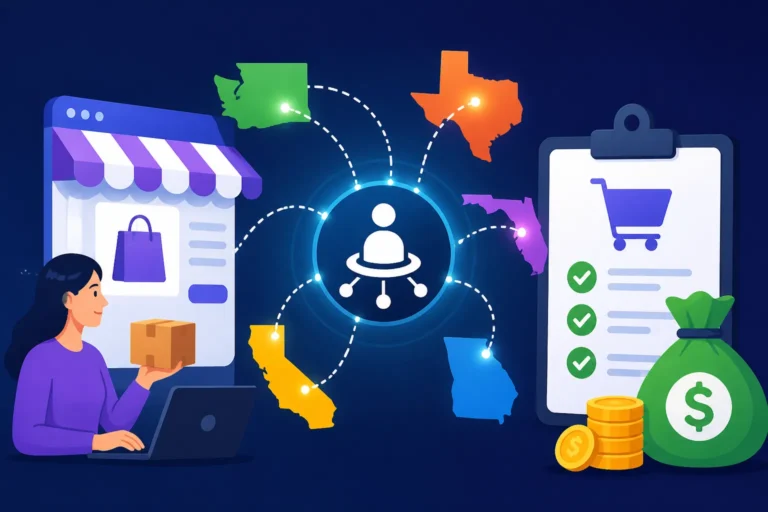
The internet changed everything, and the Supreme Court's 2018 South Dakota v. Wayfair decision was the seismic shift that redefined sales tax obligations for remote sellers. Prior to this, if you didn't have a physical presence, you generally weren't required to collect sales tax from out-of-state customers. That's largely gone now. This ruling allowed states to require out-of-state businesses to collect sales tax if they met certain economic thresholds, even without a physical presence. This concept is what we call "economic nexus."
Washington was quick to adopt economic nexus laws, recognizing the need to level the playing field between local businesses and remote sellers, and to capture revenue from the growing digital economy. For businesses selling into Washington from outside the state, understanding this threshold is absolutely critical. It means that even if you're based in a state like Idaho or California and only sell to Washington residents online, you could still have a sales tax obligation there. For a deeper dive into the broader landscape of these rules, check out our guide on Economic Nexus by State 2026: Thresholds Guide.
Washington's Economic Nexus Threshold: What You Need to Know
Washington State's economic nexus threshold is designed to capture significant out-of-state sellers. As of July 1, 2023, Washington streamlined its rules, removing the 200-transaction count. Now, the focus is solely on sales volume.
To trigger economic nexus in Washington, you must meet one specific criterion:
- $100,000 in gross retail sales into Washington in the current or prior calendar year.
It's important to clarify what "gross retail sales" means in this context. For Washington's economic nexus rules, this generally refers to your total taxable retail sales into the state. This includes sales of tangible personal property, digital products, and certain services that are subject to sales tax in Washington. It's not just your profit, but the total amount charged to customers before sales tax is applied. Non-taxable sales, like wholesale transactions where a valid resale certificate is provided, are typically excluded from this calculation, but it's always wise to confirm specific interpretations with the Washington Department of Revenue (DOR) or a tax professional.
Calculating Your Washington Sales Threshold
Let's consider a few scenarios to make this more concrete. Suppose your e-commerce business, based out of Oregon, sells unique handmade jewelry.
- Scenario 1: Steady Growth. In 2025, your sales to Washington customers totaled $90,000. You didn't hit the threshold. However, by April 2026, your sales to Washington have already reached $110,000. At this point, you've established economic nexus for 2026, as you crossed the $100,000 threshold in the current calendar year. You would need to register and begin collecting sales tax as soon as you hit that mark, or certainly by the next sales period.
- Scenario 2: Year-End Surge. Your sales to Washington customers were low throughout most of 2025, reaching only $40,000 by November. But then a viral social media post in December drives a massive surge, and you rake in another $70,000 in Washington sales before the year ends. Your total for 2025 is $110,000. This means you established economic nexus for 2025, and your obligation to register and collect sales tax would carry over into 2026. You'd need to consider your collection obligations retroactively for 2025 sales once you breached the threshold, and certainly going forward in 2026.
- Scenario 3: The Look-Back Period. The "current or prior calendar year" is key. If your 2025 sales to Washington were $120,000, you have nexus in 2025. Even if your 2026 sales drop significantly, say to only $50,000, you still have economic nexus in 2026 because you met the threshold in the prior calendar year (2025). This trailing nexus means you can't just stop collecting if your sales dip; you need to keep an eye on your sales for both periods. This is often where businesses trip up, assuming nexus disappears if current sales are lower.
It's clear that monitoring your sales figures is not a once-a-year task; it needs to be an ongoing process. Many businesses use specialized software, like Avalara, to automatically track sales into various states and alert them when they approach or cross nexus thresholds. This automation can be a lifesaver, preventing costly errors and ensuring you comply with varying state rules, helping you understand How to Know If You Have Sales Tax Nexus.
The Importance of Registering and Collecting Once Nexus is Established
Once you've determined your business has sales tax nexus in Washington State, whether through physical presence or economic activity, your next step is to officially register with the state and begin collecting sales tax. Ignoring this obligation can lead to significant penalties, interest, and even legal action from the Washington Department of Revenue (DOR).
Registering with the Washington Department of Revenue (DOR)
The first crucial step is to obtain a Washington State business license, which includes registering for a sales tax permit. You can do this through the Washington DOR's MyDOR portal. The application will require details about your business, such as your federal Employer Identification Number (EIN) or Social Security Number, business structure (e.g., sole proprietorship, LLC, corporation), and contact information. While the process is generally straightforward, it's essential to provide accurate information to avoid delays. For a more general overview, refer to our guide on How to Get a Sales Tax Permit by State.
During registration, the DOR will also assign you a sales tax filing frequency (e.g., monthly, quarterly, annually) based on your anticipated sales volume. Larger sellers will typically have a more frequent filing schedule.
Understanding Washington's Sales Tax Rates and Sourcing Rules
Washington is a "destination-based" sales tax state. This means that if you're an out-of-state seller with nexus in Washington, you must collect sales tax based on the rate at the customer's shipping address. This can be incredibly complex because Washington has a base state sales tax rate of 6.5%, but then counties, cities, and special taxing districts add their own local rates. These local rates vary significantly across the state. For example, the combined sales tax rate in Seattle is much higher than in some rural areas. Our article on Washington Sales Tax Rate Explained delves into these complexities.
To illustrate, if you sell an item to a customer in Seattle, you need to calculate the tax based on Seattle's combined state and local rate. If another customer is in Spokane, the rate will be different. This necessitates having a reliable system for accurate rate lookup. Many businesses find that sales tax compliance software, such as Avalara, is indispensable here. These tools can automatically calculate the correct sales tax rate down to the street address level, ensuring you charge the right amount to every customer in Washington. This is particularly vital for online sellers dealing with customers across numerous zip codes and district lines.
Collecting and Remitting Sales Tax
Once registered and equipped with accurate rate information, you must collect sales tax from your Washington customers at the point of sale. This collected tax isn't your money; it's held in trust for the state. You'll then periodically file sales tax returns with the Washington DOR and remit the collected funds by your assigned due dates.
Failing to collect sales tax when you have nexus, or collecting it but failing to remit it to the state, can lead to serious consequences. These include penalties for late filing or payment, interest on underpaid taxes, and potential audits. Staying on top of your obligations is paramount for the long-term health of your business.
Common Scenarios and Specific Considerations for Washington Sellers
The nuances of sales tax don't stop at establishing nexus. There are specific situations and types of businesses that need extra attention when it comes to collecting sales tax in Washington.
Online Sellers and Marketplace Facilitators
The rise of e-commerce platforms has introduced new layers of sales tax responsibility. Washington has "marketplace facilitator" laws, which dictate that large platforms like Amazon, eBay, Etsy, and Walmart are responsible for calculating, collecting, and remitting sales tax on behalf of third-party sellers who sell through their marketplaces. This is fantastic news for many small businesses!
For instance, if you sell your products solely through Amazon FBA and meet Washington's economic nexus threshold, Amazon will typically handle the sales tax collection for your sales made to Washington customers on their platform. However, this doesn't automatically mean you have no responsibilities. You might still need to register with the Washington DOR if:
- You also sell on your own independent website directly to Washington customers and meet the economic nexus threshold from those sales.
- You have a physical presence in Washington that creates nexus, even if your marketplace sales are handled by the facilitator.
- You need to report your gross sales (even those where the marketplace collected tax) to the state, often on a "zero return" or by distinguishing between marketplace and direct sales.
It's crucial not to assume that just because you sell on a marketplace, all your sales tax obligations disappear. Always verify how the specific marketplace facilitator handles sales tax in Washington and understand your own remaining responsibilities. Our article on Marketplace Facilitator Laws by State offers a broader perspective on this complex topic.
Taxable vs. Non-Taxable Goods and Services in Washington
Sales tax in Washington primarily applies to the retail sale of tangible personal property, certain digital products, and a range of services. However, not everything is taxable, which adds another layer of complexity.
- Tangible Personal Property: Most physical goods sold at retail are taxable. This includes clothing, electronics, furniture, books, and so on.
- Digital Products: Washington broadly taxes digital products, including downloaded software, digital books, music, videos, and even some streaming services. This makes compliance for SaaS and digital goods providers particularly intricate.
- Services: Unlike some states that exempt most services, Washington taxes a wide array of services. This includes construction services, repair and installation services, and many professional services. However, purely professional services like legal advice or medical care are generally exempt.
- Exemptions: Groceries (unprepared food) are exempt from sales tax in Washington. Prescription drugs are also exempt. There are also specific exemptions for certain agricultural machinery and manufacturing equipment.
Knowing what is and isn't taxable is vital for accurately collecting sales tax. If you sell a mix of goods and services, or items that might fall into grey areas, ensure you classify them correctly according to Washington DOR guidelines. For example, if you sell both prepared food (taxable) and unprepared groceries (exempt), you'll need to separate those sales in your records.
Sales Tax Sourcing and Interstate Sales
As a destination-based state, Washington generally requires sellers to collect sales tax based on the rate at the buyer's location. This applies to both in-state and out-of-state sellers with nexus.
When selling to customers outside Washington State, if you don't have nexus in their state, you generally won't collect their state's sales tax. However, the concept of "use tax" comes into play here. Use tax is essentially a sales tax on purchases made outside one's state of residence for use within the state, where no sales tax was collected by the seller. While you might not collect sales tax from your out-of-state customer, they might owe use tax to their own state. It's a tricky area, and it underscores why understanding your own nexus obligations is so important.
The complexities of Washington's sales tax, from its destination-based sourcing to its varied local rates and specific taxable services, can be overwhelming. Many businesses choose to leverage automated solutions to ensure accuracy and compliance. Companies like Avalara specialize in helping businesses of all sizes manage their sales tax obligations, from calculating rates to filing returns. Such tools integrate with e-commerce platforms and accounting software to provide real-time rate lookups and streamline the entire process, making sales tax less of a headache for businesses trying to focus on growth. If you're looking to simplify this process, exploring Best Sales Tax Compliance Software 2027 might be a good next step.
| Nexus Type | Description | Washington Threshold/Rule | When to Act |
|---|---|---|---|
| Physical Nexus | Any physical presence in Washington State. | Having an office, employees, warehouse inventory, retail store, temporary presence (e.g., trade shows for more than one day), or property ownership. | Immediately upon establishing physical presence. |
| Economic Nexus | Sales activity into Washington from an out-of-state business, without a physical presence. | Gross retail sales exceeding $100,000 into Washington in the current or prior calendar year. (Transaction count was eliminated July 1, 2023). | As soon as the threshold is met in the current year, or at the beginning of the subsequent year if the threshold was met in the prior year. |
| Marketplace Nexus | Selling through a marketplace facilitator (e.g., Amazon, Etsy) that meets Washington's economic nexus threshold. | Marketplace facilitators collect and remit sales tax on behalf of third-party sellers for sales made through their platform. | The marketplace facilitator is generally responsible for collecting. However, sellers may still need to register if they also have direct sales or physical nexus, and to report total sales. |
This table provides a concise overview, but remember that specific situations can vary. Consulting directly with the Washington Department of Revenue or a qualified tax professional is always the best course of action for tailored advice.
Disclaimer
The information provided in this guide is for general educational purposes only and should not be considered legal or tax advice. Sales tax laws are complex and subject to change. Always consult with a qualified tax professional or the Washington Department of Revenue for advice specific to your business situation.