Do I Charge Sales Tax to Out-of-State Customers?
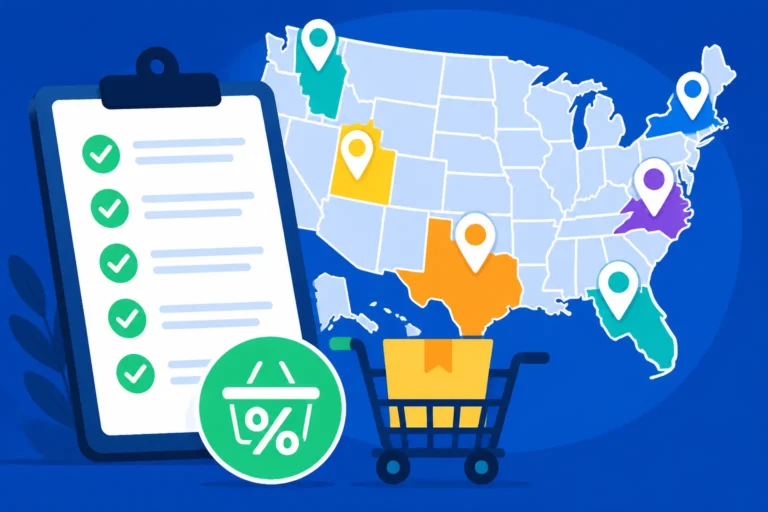
One of the most head-scratching questions for any business owner, especially those selling online or across state lines, is "Do I really need to charge sales tax to customers who aren't in my home state?" It’s a common source of anxiety, and for good reason—the rules are incredibly complex and vary dramatically from one state to another, making it feel like you need a law degree just to figure out a single transaction. This comprehensive guide is here to untangle that confusion, walking you through the critical concept of sales tax nexus and explaining exactly when, why, and how you might need to collect sales tax from your out-of-state customers.
Understanding Sales Tax Nexus: The Foundation
Before you can even think about charging sales tax to a customer, regardless of where they are, you need to establish if you have "nexus" in their state. Think of nexus as the legal connection or presence a business has in a state that obligates it to collect and remit sales tax. Without nexus, you generally don't collect sales tax from customers in that state. This is the cornerstone of sales tax compliance, and it's where most of the confusion, and unfortunately, potential pitfalls, lie.
The landscape of sales tax nexus shifted dramatically a few years ago, turning what used to be a relatively straightforward concept for many businesses into a labyrinth. What once primarily relied on physical presence now encompasses economic activity, thanks to a landmark Supreme Court decision. It's crucial for every business, from the smallest Etsy shop to the largest e-commerce platform, to understand these evolving rules.
Physical Nexus Triggers
Historically, physical nexus was the main game in town. If your business had a physical presence in a state, you had nexus there. It seems simple on the surface, but even "physical presence" can be broader than you might imagine.
For example, having a brick-and-mortar store in Phoenix, Arizona, clearly establishes physical nexus in Arizona. If you’re a small boutique selling unique handcrafted items and all your operations are within Arizona, you’d collect Arizona sales tax from all your Arizona customers. But what if you operate entirely online out of your home office in Florida and decide to attend a craft fair in Georgia for a weekend? That temporary presence, even for just a few days, could create physical nexus in Georgia. Suddenly, you might be required to collect Georgia sales tax from customers you sell to at that event and potentially even for a period afterward.
Beyond fixed locations or temporary events, physical nexus can also be triggered by employees working remotely in a state, independent contractors performing services on your behalf, or even storing inventory in a warehouse. Many online sellers, especially those using fulfillment services like Amazon FBA, often find themselves inadvertently establishing physical nexus in multiple states because Amazon stores their products in various warehouses across the country. If you have inventory in a warehouse in Texas, for instance, you have physical nexus in Texas, regardless of where your business is based. It’s a subtle but critical point that often catches businesses by surprise. To delve deeper into this, you might find our guide on Sales Tax Nexus Explained Physical vs Economic really helpful.
Economic Nexus Thresholds
The game-changer for sales tax collection was the 2018 Supreme Court ruling in South Dakota v. Wayfair, Inc. This decision opened the floodgates for states to implement "economic nexus" laws. What does that mean for you? It means that even if you don't have a single employee, office, or piece of inventory in a state, you can still be required to collect sales tax there if your sales activity into that state crosses a certain financial or transactional threshold.
Each state sets its own economic nexus thresholds, though most commonly, they involve either a specific dollar amount of sales (e.g., $100,000 or $500,000) or a number of separate transactions (e.g., 200 transactions), or sometimes both, within a calendar year. For instance, California's economic nexus threshold is $500,000 in gross sales into the state, while states like New York have a threshold of $500,000 in sales and 100 separate transactions. It's not always just about the big bucks; a high volume of small sales can also trigger nexus.
The complexities here are immense. Many states initially adopted both a dollar and a transaction threshold, but some, like Kentucky, have since dropped the 200-transaction threshold, simplifying (or, depending on your perspective, changing) the rules. This means you need to constantly monitor your sales into every state to see if you've crossed a threshold. It’s not a one-and-done check; your nexus status can change throughout the year. If you hit a threshold on, say, July 15th, you might need to start collecting sales tax from customers in that state immediately, or very soon thereafter. Keeping track of all these state-specific rules is a significant challenge for any growing business, and our in-depth guide to Economic Nexus by State 2026 Thresholds Guide can provide more specific details.
Determining Where and How Much to Charge
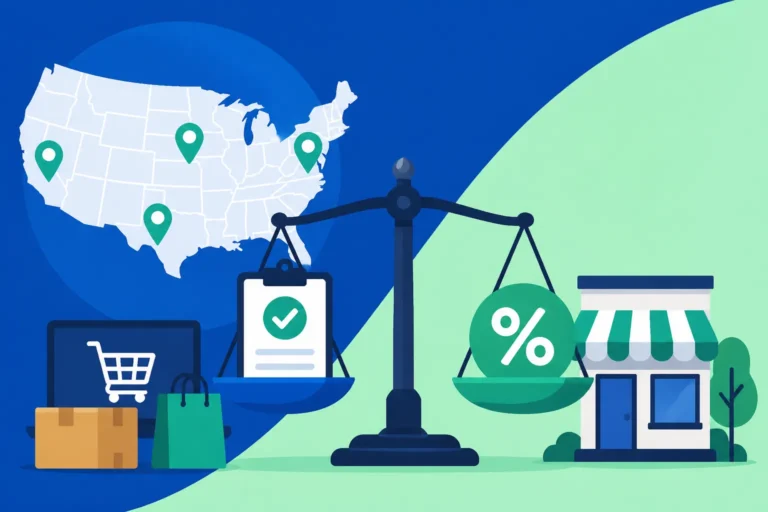
Once you've established that you have nexus in a particular state, the next hurdle is figuring out which sales tax rate to apply. This isn't as simple as just finding the state's base rate, because most states also have local sales taxes (county, city, district) that can add significantly to the overall rate. The question then becomes: do you apply the tax rate from your location, or from your customer's location? This is where sales tax "sourcing rules" come into play.
These sourcing rules dictate whether a sale is considered "origin-based" (taxed at the seller's location) or "destination-based" (taxed at the buyer's location). This distinction is critical because it directly impacts the sales tax rate you need to charge your out-of-state customers once nexus is established. Fail to understand these, and you could be collecting too much, too little, or the wrong kind of tax, leading to headaches down the line.
Origin-Based Sourcing States
In origin-based sales tax states, the sales tax rate you charge is determined by the seller's business location. This means if your business is physically located in an origin-based state, and you make a sale to a customer within that same state, you'd use the tax rate of your business location. If you make a sale to an out-of-state customer where you also have nexus (e.g., through economic nexus or an employee), the origin rules usually don't apply, and it defaults to the destination rules of the customer's state.
However, the primary impact of origin-based sourcing is often felt when a business is located in an origin state and makes sales within that state. For example, if your business is in Illinois, which is an origin-based state, and you sell to a customer in another city within Illinois, you generally charge the sales tax rate of your business's physical location. This simplifies things for in-state sales, as you don't need to worry about the buyer's specific city or county tax. For interstate sales where you have nexus in the customer's state, most origin states will require you to use the destination's rate. States like Illinois, Pennsylvania, and Utah are examples of origin-based states. Understanding Origin vs Destination Sales Tax Sourcing can help clarify this further.
Destination-Based Sourcing States
Most states, and certainly the majority of those you'll encounter when selling to out-of-state customers, operate under destination-based sales tax rules. In these states, the sales tax rate you charge is determined by the buyer's shipping address or the location where the customer receives the goods or services. This is where things get significantly more complicated, especially if you sell to a large number of customers across a wide geographic area within a state.
Consider a scenario where your online business is based in Oregon (a state with no sales tax), but you've established economic nexus in Texas because your sales into the Lone Star State crossed their $500,000 threshold. Texas is a destination-based state. This means for every sale you make to a Texas customer, you don't just apply the statewide 6.25% Texas sales tax rate. You also need to figure out the correct local sales tax rate for that customer's specific city, county, and any special district taxes. So, a customer in Houston might pay an 8.25% combined rate (6.25% state + 2% local), while a customer in a rural part of Texas might only pay the state rate. For businesses, this means needing robust tools to accurately calculate sales tax down to the precise street address, as ZIP codes alone are often not granular enough. You can learn more about this by reading our article on Sales Tax by ZIP Code and Why ZIP Isn't Enough.
Mixed Sourcing Rules and Exceptions
Just when you thought you had a handle on origin vs. destination, some states throw a curveball with mixed sourcing rules or specific exceptions. These states might use origin-based sourcing for in-state sales but then switch to destination-based sourcing for sales made by an out-of-state seller into their state. Other states might have different rules for tangible goods versus services or digital products.
For instance, California is a prime example of a state with complex sourcing rules, often considered a "modified origin" state. For retailers with a physical location in California, sales are generally taxed at the retailer's location rate for transactions within that district. However, for sales shipped to customers outside that district, the state portion of the tax remains the origin-based rate, but any applicable district taxes are based on the destination. This level of nuance makes it incredibly difficult for businesses to manually calculate sales tax, particularly for high volumes of transactions. Without dedicated sales tax software, ensuring you're collecting the correct rate for every single out-of-state customer can become a full-time job. It’s why companies like Avalara have built entire platforms around solving this very problem, using precise address-level calculations to ensure accuracy.
Practical Steps for Out-of-State Sales Tax Compliance
Okay, so you've figured out you have nexus in an out-of-state jurisdiction, and you have a basic understanding of sourcing. What now? This is where the rubber meets the road. Sales tax compliance isn't just about knowing the rules; it's about actively implementing them into your business operations. Neglecting these steps can lead to significant penalties, audits, and a whole lot of stress.
The goal is to move from theoretical understanding to practical application, ensuring you're collecting the right amount of tax, from the right customers, and remitting it correctly to the appropriate authorities. This requires a systematic approach and, for many businesses, leveraging technology to handle the heavy lifting.
Registering for Sales Tax Permits
This is non-negotiable. If you've determined you have sales tax nexus in a state, the very next step is to register for a sales tax permit (sometimes called a seller's permit, certificate of authority, or vendor's license) with that state's taxing authority. You absolutely cannot legally collect sales tax in a state without being registered first. Collecting sales tax without a permit is a big no-no and can lead to serious fines.
The registration process varies by state. Some states have relatively simple online applications that can be completed in minutes, while others require more detailed information about your business, its owners, and its sales activities. You’ll need your federal Employer Identification Number (EIN) and often details about your business structure (sole proprietorship, LLC, corporation, etc.). This is also when states typically assign you a filing frequency (e.g., monthly, quarterly, annually) based on your projected sales volume. Don't assume you only need one permit; if you have nexus in multiple states, you'll need a separate permit for each one. Our guide on How to Get a Sales Tax Permit by State offers a detailed breakdown for various jurisdictions, and if you find yourself with nexus in many places, our article on Registering for Sales Tax in Multiple States is a must-read.
Collecting and Remitting Sales Tax
Once you're registered, you can begin collecting sales tax from your out-of-state customers in that specific state. This means setting up your e-commerce platform, point-of-sale system, or invoicing software to correctly calculate and add sales tax to relevant transactions. As we discussed, for destination-based states, this often means needing real-time, address-level rate lookups to ensure accuracy.
For many small to medium-sized businesses, managing this manually becomes unsustainable very quickly. Imagine tracking individual county and city rates for every customer in every state where you have nexus! This is precisely where sales tax automation software comes into play. Solutions like Avalara or TaxJar integrate with your existing e-commerce platforms (Shopify, WooCommerce, Amazon, etc.) and accounting software (QuickBooks, Xero) to automatically calculate the correct sales tax at the point of sale. They use constantly updated databases of sales tax rates for thousands of jurisdictions across the U.S., ensuring you charge the precise amount needed. Then, when it's time to file, these systems can often prepare your returns, making the remittance process much smoother. You can explore options in our guide to the Best Sales Tax Compliance Software 2027. After collection, you'll need to periodically file sales tax returns and remit the collected funds to the state, as explained in articles like How to File a Sales Tax Return Step by Step.
Managing Exemptions and Resale Certificates
Not every sale you make to an out-of-state customer will be taxable, even if you have nexus in their state. Businesses often purchase items for resale, meaning they intend to sell those items to their own customers. In such cases, the purchasing business provides a "resale certificate" to the seller, exempting the transaction from sales tax. This prevents "double taxation" – taxing the item once when it's sold to the retailer, and again when the retailer sells it to the end consumer.
If you're selling wholesale to other businesses out-of-state, you'll need to collect and validate these resale certificates. Each state has its own specific requirements for what constitutes a valid resale certificate. Some states accept a uniform multi-state certificate, while others require their own specific form. It's critical to verify that the certificate is valid, current, and issued by the state where the sale is being made. Failing to collect a valid resale certificate can leave you on the hook for the uncollected sales tax during an audit. Additionally, certain organizations, like nonprofits or government entities, may also be exempt from sales tax and will provide their own exemption certificates. Proper management and storage of these certificates are vital for audit readiness. Our Resale Certificate by State Complete Guide provides state-specific details on how to handle these important documents.
Staying Compliant in a Dynamic Environment
The world of sales tax is not static. Rates change, new economic nexus laws are enacted, and states update their definitions of what's taxable (think digital products, SaaS, or even services). What might be compliant today could be outdated tomorrow. This dynamic environment requires vigilance and a proactive approach to sales tax management, especially when dealing with out-of-state customers across dozens of jurisdictions.
Consider how frequently tax rates can shift. Just like we highlighted in our article on 2026 Sales Tax Rate Changes by State, new local taxes are constantly being introduced or amended. A slight increase in a county's sales tax rate can throw off your calculations if your system isn't updated in real time. Keeping up with these changes manually is nearly impossible for most businesses.
Regularly reviewing your nexus footprint is also essential. As your business grows and expands, your sales volume into new states will increase. What starts as a small trickle into a new market might quickly hit an economic nexus threshold, triggering new collection obligations. Ignoring this can lead to accumulated past-due taxes, interest, and penalties that can be crippling for a business. Many businesses opt for sales tax software specifically because it automates the monitoring of these thresholds and rate changes, alerting them when they establish new nexus or need to adjust their collection practices. This proactive monitoring is key to sustainable growth without the looming threat of sales tax non-compliance.
| State Example | Economic Nexus Threshold (Sales) | Economic Nexus Threshold (Transactions) | Sourcing Rule for Interstate Sales |
|---|---|---|---|
| California | $500,000 | N/A (formerly 200, now dropped) | Destination-based (modified origin) |
| Texas | $500,000 | N/A (formerly 200, now dropped) | Destination-based |
| New York | $500,000 | 100 | Destination-based |
| Florida | $100,000 | N/A | Destination-based |
| Illinois | $100,000 | 200 | Destination-based (origin for in-state) |
Note: Thresholds and rules can change. This table is for illustrative purposes only. Always verify current state requirements.
Disclaimer
The information provided in this guide is for general informational purposes only and does not constitute professional tax or legal advice. Sales tax laws are complex and constantly evolving. You should consult with a qualified tax professional or legal advisor for advice tailored to your specific business situation.