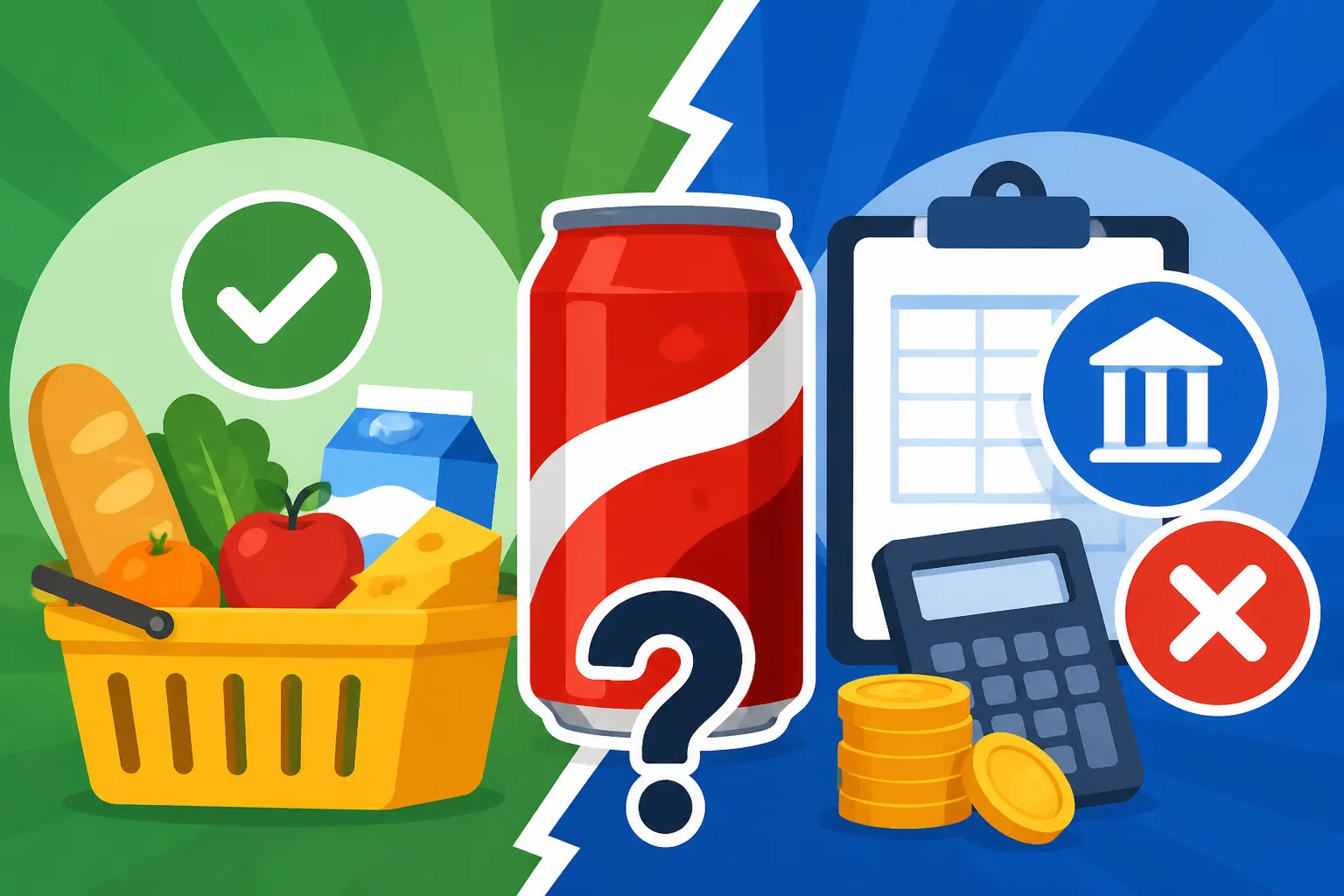
Is Soda Taxed as Food?
Navigating the labyrinth of sales tax, especially when it comes to everyday items like your favorite can of soda, can feel incredibly confusing. You might assume all food is treated equally, but state and local governments have some pretty specific — and often surprising — definitions. This guide is here to unravel the mystery of how soda is taxed across different states, helping you understand why that fizzy drink sometimes comes with an extra charge and sometimes doesn't.
The Complex World of Sales Tax on Food and Beverages
It seems straightforward, right? You buy something, you pay sales tax. But when it comes to groceries and beverages, things get incredibly intricate, incredibly fast. The core issue is that what constitutes "food" in the eyes of tax law isn't always what we consider food in our daily lives. This distinction has massive implications for how your soda gets taxed.
Why "Food" Isn't Always Just "Food" for Tax Purposes
Many states offer a general sales tax exemption for "food for home consumption." This usually covers your basic groceries – milk, bread, produce, uncooked meat, and so forth. The idea is to reduce the tax burden on essential living expenses. However, each state gets to define what "food for home consumption" truly means, and this is where beverages like soda often get caught in the crosshairs.
For instance, some states draw a sharp line between "prepared food" and "unprepared food." A sandwich from a deli is often taxed, while the ingredients to make that same sandwich at home are not. Soda can sometimes fall into this "prepared food" category, especially if purchased from a restaurant or a convenience store with a fountain drink machine, rather than a multi-pack from a grocery aisle. This distinction can be a major headache for businesses trying to correctly apply the right tax rate.
Think about the classic "candy flour test" many states use. If an item contains flour as a primary ingredient, it might be exempt as a food product (like a cookie). If it doesn't, it might be classified as candy and fully taxable. While soda doesn't contain flour, this illustrates how states create specific rules to classify seemingly similar items differently for tax purposes. These kinds of nuanced definitions are precisely why you need to dig into the specifics to understand Is Soda Taxable? Soft Drink Sales Tax.
The "Soda Tax" Phenomenon: Beyond Traditional Sales Tax
To make matters even more complicated, some jurisdictions have gone a step further than just regular sales tax, implementing specific "sugary drink taxes" or excise taxes on soda and other sweetened beverages. These taxes are often driven by public health initiatives, aiming to reduce consumption of sugary drinks and generate revenue for related programs.
A prime example is Philadelphia, Pennsylvania. While Pennsylvania generally doesn't have a state sales tax on most groceries, including many soft drinks, Philadelphia implemented its own sugary drink tax. This tax is levied on distributors and is often passed on to consumers, appearing as an additional charge on top of the product's price. Similarly, jurisdictions like Cook County, Illinois, have had their own versions of these taxes, although some have been repealed due to public pushback. These taxes are distinct from traditional sales tax and can significantly increase the final cost of a soda. They highlight a growing trend where states and local governments are looking for new revenue streams and ways to influence consumer behavior through taxation.
State-by-State Breakdown: Is Your Soda Taxed?
Given the complexities, there's no single, nationwide answer to whether soda is taxed as food. It truly depends on where you are. Some states treat soda just like any other taxable item, while others carve out specific exemptions or apply unique taxes.
States Where Soda is Generally Taxed Like Any Other Tangible Good
In a significant number of states, soda is typically subject to the standard sales tax rate, often because these states either tax groceries in general or don't consider soda to be "food for home consumption" worthy of exemption. For businesses, this simplifies things a bit, as soda is just another taxable good.
Consider states that tax groceries at either the full sales tax rate or a reduced rate. If groceries are taxed, then it's highly likely soda will be taxed too. For example, Alabama, Mississippi, South Dakota, Hawaii, and Idaho are among the states that generally apply sales tax to groceries. In these states, a can of Coke or a bottle of Pepsi from a grocery store shelf would typically incur sales tax, just like a new pair of shoes. The same goes for states like Kansas, Oklahoma, Tennessee, Utah, Virginia, Missouri, and Arkansas, where groceries are also subject to sales tax, albeit sometimes at a reduced rate or with credit programs.
For instance, in Alabama, the state sales tax is 4%, but many counties and cities add their own local taxes, pushing the combined rate significantly higher. If you pick up a six-pack of soda in Mobile, you'll be paying that combined state and local sales tax on it, much like any other taxable good. Businesses operating in these areas must ensure their point-of-sale systems are configured to apply the correct combined state and local sales tax rates, which can vary wildly even within the same state. Understanding How Combined Sales Tax Rates Work is crucial for compliance.
States Where Soda Faces Special Treatment or Exemptions
Then there's the other side of the coin: states that largely exempt groceries but make specific rules for soda. This is where the nuanced definitions really come into play, often excluding soft drinks from the "food for home consumption" category.
For example, California has a high base sales tax rate of 7.25%, with numerous district taxes pushing local rates even higher. While most groceries are exempt, soft drinks are generally subject to sales tax unless they contain milk or milk products, or are 100% juice with no added sweeteners. So, a regular soda is typically taxed, but a milkshake might not be. This distinction forces retailers to carefully classify beverages to ensure correct tax application.
Texas also generally exempts most grocery food items from sales tax. However, "soft drinks, sodas, sports drinks, and other sweetened beverages" are specifically called out as taxable, even if purchased from a grocery store. This means your six-pack of Dr. Pepper in Houston will have sales tax added to it, even though your bread and milk won't. Florida is another example where unprepared food sold for home consumption is exempt, but soft drinks are specifically listed as taxable.
New York's rules also demonstrate this special treatment. While most food products sold for off-premises consumption are exempt from state sales tax, carbonated beverages, and artificially sweetened beverages are specifically excluded from this exemption and are thus taxable. This means that a bottle of sparkling water might be exempt, but a regular soda typically won't be. These examples underscore the fact that simply knowing a state exempts "groceries" isn't enough; you must dive into the specific definitions and exclusions.
Here’s a quick overview of how some states approach sales tax on soda:
| State | General Grocery Tax? | Soda Tax Status (Typically) | Notes |
|---|---|---|---|
| Alabama | Yes | Taxed | Groceries taxed at state and local rates. |
| California | No | Taxed | Groceries exempt; most soft drinks specifically taxable. |
| Florida | No | Taxed | Groceries exempt; soft drinks specifically taxable. |
| New York | No | Taxed | Groceries exempt; carbonated/artificially sweetened drinks taxable. |
| Texas | No | Taxed | Groceries exempt; soft drinks specifically taxable. |
| Illinois | Yes (reduced rate) | Taxed | Groceries (including soda) taxed at a reduced rate (1%). |
| Pennsylvania | No | Exempt (State) | Groceries generally exempt, including soda. (Philadelphia has local sugary drink tax). |
| Tennessee | Yes | Taxed | Groceries taxed at reduced state rate (4%) plus local rates. |
| Louisiana | Yes | Taxed | Groceries taxed at state and local rates. High overall rates. |
Note: This table provides general guidance. Specific local taxes and definitions can always vary.
Understanding the Nuances and Practical Implications for Consumers and Businesses
The patchwork of sales tax rules for soda isn't just an academic exercise; it has real-world consequences for both the people buying the drinks and the businesses selling them.
The "Prepared Food" Distinction for Beverages
One of the biggest areas of confusion, especially for drinks, comes down to whether it's considered "prepared food" or a simple grocery item. Many states have different tax rates for these categories. For example, if you buy a can of soda from the cooler at a grocery store, it might be taxed differently than if you order a fountain soda with your meal at a fast-food restaurant. The fountain soda is almost universally considered "prepared food" and therefore taxable, even in states that exempt groceries.
In California, for instance, a soft drink sold in a sealed container from a grocery store is often taxable, but if that same soft drink is part of a "combination package" that includes a prepared meal and is sold for one price, the entire combination might be subject to the prepared food tax rules. This means the exact same beverage could have different tax implications based on how and where it's purchased. For a consumer, this can be frustrating when trying to understand why a drink costs one price at a drive-thru and another at the supermarket.
How Businesses Navigate Soda Sales Tax Complexity
For retailers, these granular distinctions are far from trivial. A convenience store, grocery store, or restaurant often sells a wide variety of beverages – from bottled water and 100% fruit juice (potentially exempt) to sugary sodas and fountain drinks (likely taxable). Each of these might fall under different tax rules depending on the state and local jurisdiction. Imagine a small business owner in Texas who sells groceries, prepared sandwiches, and a full range of beverages. They need to ensure that their point-of-sale system correctly applies the 6.25% state sales tax plus any local sales tax to the soda, while exempting the bread, and perhaps applying a different rate to a hot coffee if local rules dictate.
This is where specialized sales tax compliance software becomes invaluable. Instead of manually tracking every single product's taxability across potentially dozens of taxing jurisdictions, solutions like Avalara integrate with a business's POS or e-commerce platform. They can automatically determine if an item like soda is taxable in a specific ZIP code, apply the correct combined state and local rate, and help ensure accurate collection and remittance. Without such tools, businesses face a significant administrative burden and the risk of costly audits due to errors. Many businesses find that trying to manage these rules manually quickly becomes overwhelming, especially as they grow and expand into new markets. These platforms are designed to handle the thousands of sales tax rate changes and product taxability rules that occur throughout the year.
Key Considerations for Online Purchases and Future Trends
The complexity doesn't stop at brick-and-mortar stores. In our increasingly digital world, buying soda online introduces another layer of sales tax considerations. Moreover, the debate around sugary drinks continues to evolve, potentially leading to further tax changes.
Sales Tax on Online Soda Orders
If you're ordering a case of your favorite soda online, the sales tax rules depend heavily on where the seller has "nexus" and the destination of your shipment. Thanks to the landmark South Dakota v. Wayfair Supreme Court decision, online sellers are generally required to collect sales tax if they meet certain economic nexus thresholds in a state. This means if an online retailer sells enough products into California, for example, they would need to collect California sales tax on taxable items shipped to California addresses, including most sodas.
The crucial point here is that sales tax on online orders is almost always destination-based. The tax rate applied will be the rate at the buyer's shipping address, not the seller's location. So, if you live in a city with a high combined sales tax rate, and your state taxes soda, you'll pay that rate even if the online retailer is in a state with a lower rate or no sales tax on soda. The sheer number of potential rates and rules, varying by Sales Tax by ZIP Code (and Why ZIP Isn't Enough), makes sales tax for online sellers incredibly challenging. This is why many platforms leverage tools that can pinpoint the exact sales tax rate for every shipping address.
For more details on this, you might find our guide on Sales Tax for Online Sellers: Complete Guide particularly helpful, as it breaks down how nexus and online sales tax generally work across various product types. Also, understanding Is Shipping Taxable? Freight Sales Tax by State is another common complication for online orders that include physical goods like soda.
The Evolving Landscape of Sugary Drink Taxes
The conversation around taxing sugary beverages is far from over. Public health advocates continue to push for these taxes, citing concerns about rising rates of obesity, diabetes, and other health issues. Conversely, the beverage industry and some consumer groups often argue that these taxes disproportionately affect low-income individuals and don't effectively change long-term behavior.
This ongoing debate means that the sales tax landscape for soda is anything but static. States and local municipalities may introduce new sugary drink taxes, amend existing sales tax exemptions, or even repeal taxes based on economic or political pressures. For businesses, this means staying vigilant and adaptable. What's true today for soda sales tax in King County, Washington, or New Orleans, Louisiana, might change next year. This constant flux underscores the need for robust sales tax tracking and compliance mechanisms to avoid being caught off guard by 2026 Sales Tax Rate Changes by State or new legislative actions. Keeping up with these changes is a full-time job for many compliance professionals, which is another reason why automated solutions from providers like Avalara are so popular among businesses of all sizes. They help businesses not just calculate, but also monitor and adapt to the ever-shifting tax requirements.
Disclaimer
Please remember that sales tax laws are constantly changing and can be incredibly complex. This article provides general information and should not be considered legal or tax advice. Always consult with a qualified tax professional for advice specific to your business or situation.