Is SaaS Taxable in Arizona?
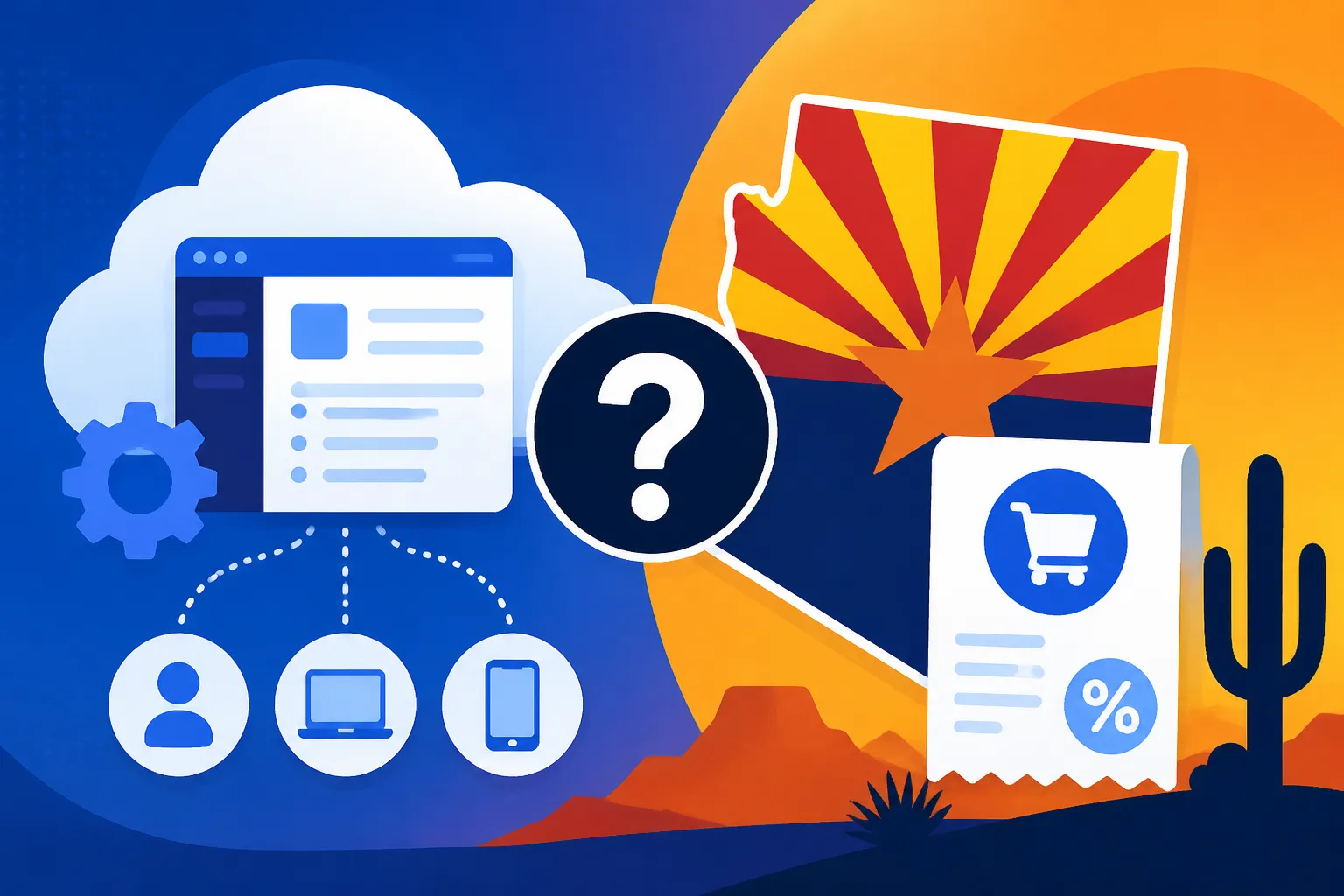
Navigating the ever-changing landscape of sales tax can feel like trying to hit a moving target, and when it comes to Software-as-a-Service (SaaS), things get even cloudier. Many online businesses and SaaS providers are left scratching their heads, wondering if their digital offerings are subject to sales tax in every state they operate in. This comprehensive guide will demystify whether SaaS is taxable in Arizona, helping you understand the nuances of the state's unique Transaction Privilege Tax (TPT) and what it means for your business.
The Complex World of SaaS Taxation
It’s no secret that sales tax is one of the most confusing aspects of running a business today, especially when you're selling digital goods or services across state lines. The traditional idea of sales tax was built around tangible products you could pick up off a shelf, but the digital economy has completely rewritten those rules. This shift has led to a patchwork of regulations where states each try to define what a "taxable sale" looks like in the 21st century.
Why SaaS Isn't Always Clear-Cut
One of the biggest frustrations for businesses selling SaaS is the lack of a universal definition or treatment for sales tax purposes. Is software you access over the internet a "tangible product"? Most people would say no. Is it a "service"? Sometimes. This ambiguity is precisely why states have developed such varied and often intricate rules. You're not selling a physical item, so it doesn't fit neatly into the old categories. Is it data processing? Is it a subscription to information? Is it merely hosting? Each state grappling with this question has come up with its own interpretation, and the answers can change on a dime, making compliance a real headache. Businesses might offer what they consider a pure service, only to find a state's tax department views it as the lease of software, thereby making it taxable. This divergence creates significant compliance challenges, particularly for small to medium-sized businesses trying to grow nationwide.
Arizona's Unique Approach to Transaction Privilege Tax TPT
Before we dive specifically into SaaS, it's crucial to understand that Arizona doesn't technically impose a "sales tax" in the way many other states do. Instead, Arizona has a Transaction Privilege Tax (TPT). While it might feel like sales tax to the end consumer because it's typically passed on, TPT is fundamentally different. It's a tax on the vendor for the privilege of doing business within the state. This means the legal burden of the tax falls on the business, not the purchaser, though businesses commonly itemize and collect it from the customer. This distinction might seem like semantics, but it influences how the state defines what's taxable and who is responsible for paying it. If you're accustomed to thinking in terms of traditional sales tax, you’ll need to adjust your mindset when dealing with Arizona’s TPT system. This unique structure requires a different lens when evaluating whether your specific SaaS offering triggers a taxable event.
Is SaaS Taxable in Arizona? Diving into the Details
Now that we've set the stage, let's get down to the brass tacks: is your SaaS product taxable in Arizona? The answer, like with many tax questions, is nuanced, but we can clarify the general landscape. Arizona's Department of Revenue has specific guidance that helps classify different types of software and digital products under their TPT framework.
Arizona's Classification of Software and Digital Products
Arizona categorizes software broadly, and the key often lies in whether it's considered "tangible personal property." Historically, if software was delivered on a physical medium like a CD or DVD, it was clearly seen as tangible and taxable. However, with the rise of downloads and cloud-based access, that line has blurred considerably.
For purposes of TPT, Arizona generally considers prewritten or "canned" computer software — that is, software not custom-designed for a specific user — to be tangible personal property. This applies even if it's delivered electronically or accessed remotely. Think of it like licensing a shrink-wrapped software package, but digitally. When you "lease" or "rent" access to this prewritten software, even if it's hosted by the vendor and accessed via a web browser (which is exactly what SaaS is), it typically falls under the "rental of tangible personal property" classification for TPT purposes. This contrasts with custom software, which is generally not taxable because it’s considered a service, not a product. So, if your SaaS platform provides access to a standardized, non-customized application, it's highly likely to be subject to Arizona TPT. Understanding this distinction is critical for online sellers; for a broader overview, you might find our guide on Is Software Taxable? (Canned vs Custom) helpful.
When SaaS Services Become Taxable Under TPT
As we touched upon, the critical factor for SaaS under Arizona TPT often boils down to whether your customers are essentially "renting" or "leasing" access to prewritten software. If your SaaS model involves providing customers the right to use, access, or operate standardized software hosted on your servers, that transaction is generally considered a taxable event under the "rental of tangible personal property" classification.
For instance, if your business offers a subscription to a cloud-based accounting system, a project management tool, or a customer relationship management (CRM) platform like Salesforce, where customers log in and use a standardized application, Arizona sees this as a taxable rental. The customer isn't buying the software outright, nor are they hiring you for a bespoke development service. They are, in essence, paying for the privilege to use your prewritten software over a period, and that triggers TPT. Even services that bundle data processing or storage with the software access can be taxable if the primary purpose is the use of the prewritten software. For example, if you offer a streaming service like Netflix or Hulu, where the primary value is access to digital content via your software platform, that too would typically be taxable. These types of digital products and services are increasingly under scrutiny, and you can learn more about general state approaches in our Digital Products Sales Tax by State article.
Exemptions and Non-Taxable Scenarios
While many SaaS offerings are taxable in Arizona, there are always nuances and potential exemptions. It's not a blanket tax on everything digital.
One common non-taxable scenario is for true "professional services" where the software component is incidental to the primary service being rendered. For example, if you're a consultant providing highly customized business advice and you happen to use your own proprietary software to deliver that advice, the service itself might be non-taxable, even if the software is involved. However, if the client is simply gaining access to the software to perform the analysis themselves, it would likely be taxable.
Another potential area for non-taxability could involve certain business-to-business (B2B) transactions, though these are rare for TPT on SaaS and would require very specific circumstances or statutory exemptions. Generally, if the end-user is a business accessing prewritten software, it's still taxable. It’s also important to remember that taxability can depend on the nature of the software. If your platform is primarily a marketplace facilitator, for example, collecting payments and connecting buyers and sellers, the income from facilitating might be treated differently than direct sales of software. For more on this, check out our guide on What Is a Marketplace Facilitator?.
Always scrutinize your specific offering and consult the latest Arizona Department of Revenue guidelines or a tax professional, as these rules can be intricate and subject to interpretation.
Practical Steps for SaaS Businesses Operating in Arizona
So, you've figured out that your SaaS might be taxable in Arizona. What's next? Don't panic! Taking a structured approach to compliance can help you navigate these waters effectively.
Determining Your TPT Obligations
The first critical step is to determine if your business has "nexus" in Arizona. Nexus is a legal term that means you have a significant enough presence in a state to be required to collect and remit sales tax (or TPT, in this case). For online and SaaS sellers, this often comes down to "economic nexus." Arizona's economic nexus threshold dictates that if your gross revenue from sales into the state exceeds $100,000 in the current or preceding calendar year, you have nexus. This means you must register and collect TPT. It's important to continuously monitor your sales into Arizona to ensure you don't inadvertently cross this threshold. Many businesses use automated sales tax solutions to keep tabs on their nexus across all states. You can find more comprehensive details on this in our Economic Nexus by State 2026: Thresholds Guide or specifically for Arizona in our Economic Nexus in Arizona: Threshold & Rules article.
Registration, Collection, and Remittance
Once you've established nexus, the next step is to register for an Arizona Transaction Privilege Tax (TPT) license. This isn't a "sales tax permit" in the traditional sense, but it serves the same function. The Arizona Department of Revenue (ADOR) handles the registration process, and you'll typically apply for what’s sometimes informally called an Arizona GET (Governmental Excise Tax) license, though the official term is TPT license. Our Arizona TPT License: How to Register guide provides step-by-step instructions for this process.
After registration, you'll need to accurately calculate and collect the correct TPT rate from your Arizona customers. The rate is a combination of the statewide rate and any applicable county, city, or special district rates. These can vary significantly depending on the customer's location, making rate lookup crucial. Once collected, you'll remit these funds to ADOR based on a filing frequency they assign to you (e.g., monthly, quarterly, annually). Many businesses leverage sales tax compliance software like Avalara to automate the rate lookup, collection, and filing process, ensuring accuracy and saving valuable time. This kind of automation is a lifesaver, especially when dealing with complex state-specific taxes like Arizona's TPT. For general guidance on getting started, refer to How to Get a Sales Tax Permit by State and Sales Tax for Online Sellers: Complete Guide.
Staying Compliant with Evolving Rules
The digital economy is constantly changing, and so are the tax laws trying to keep up with it. What's taxable today might be treated differently tomorrow, as states adapt their statutes and interpretations. This is particularly true for SaaS, which continues to evolve with new functionalities and delivery methods. For example, some states recently expanded their taxability to include specific digital services or even Louisiana began taxing SaaS in January 2025. It's not enough to set up your tax collection once and forget about it. Ongoing monitoring of Arizona's TPT statutes, ADOR rulings, and legislative changes is essential. Subscribing to tax alerts or working with a knowledgeable tax professional can help you stay informed. Implementing an automated sales tax solution, such as those offered by companies like Avalara, is one of the most effective ways to manage this dynamic environment. These platforms continuously update tax rates and rules, ensuring your business remains compliant without constant manual oversight. Choosing the Best Sales Tax Compliance Software 2027 can really make a difference. For a broader understanding of how often these changes occur, see our article on Sales Tax Filing Frequency Explained.
Here’s a quick overview of how Arizona generally treats various software types:
| Software/Service Type | Arizona TPT Treatment (General) | Notes |
|---|---|---|
| Canned/Prewritten Software (Physical Delivery) | Taxable | Considered tangible personal property. |
| Canned/Prewritten Software (Electronic Delivery) | Taxable | Considered rental of tangible personal property or electronic delivery of software. |
| Software-as-a-Service (SaaS) | Taxable | Generally considered a "rental" or "lease" of prewritten software. |
| Custom Software Development | Non-taxable | Considered a service, not a tangible product. |
| Data Processing Services (Standalone) | Non-taxable | Pure data processing without bundled software access. |
| IT Consulting/Professional Services | Non-taxable | If software use is incidental to the primary service. |
| Digital Products (e.g., Music, E-books, Streaming) | Taxable | Generally considered taxable as electronic data products or services. |
Disclaimer: This table provides general guidance and is not exhaustive. Specific scenarios may vary based on exact service descriptions and current ADOR rulings.
Final Thoughts for SaaS Businesses
Navigating sales tax for SaaS in Arizona might seem daunting, especially with the unique Transaction Privilege Tax system. But by understanding Arizona's definitions, determining your nexus, and implementing robust compliance strategies, you can confidently manage your tax obligations. Whether you're a small startup or a growing enterprise, staying informed and leveraging the right tools can save you from potential headaches down the road.
Disclaimer
The information provided in this guide is for general informational purposes only and does not constitute professional tax advice. Sales tax laws are complex and constantly evolving. It is essential to consult with a qualified tax professional or the Arizona Department of Revenue for advice tailored to your specific business situation. We are not liable for any actions taken or not taken based on the contents of this guide.