Is Clothing Taxable in Massachusetts?
It's incredibly frustrating when you're trying to budget for a shopping trip, especially for something as essential as clothing, only to find yourself scratching your head over sales tax rules. Every state seems to have its own twist, and Massachusetts is definitely no exception with its rather unique approach. This comprehensive guide will meticulously break down whether clothing is taxable in Massachusetts, focusing on the specific dollar amount exemption that often trips up shoppers and sellers alike, ensuring you know exactly what to expect at the register.
The Massachusetts Clothing Sales Tax Exemption: Understanding the $175 Rule
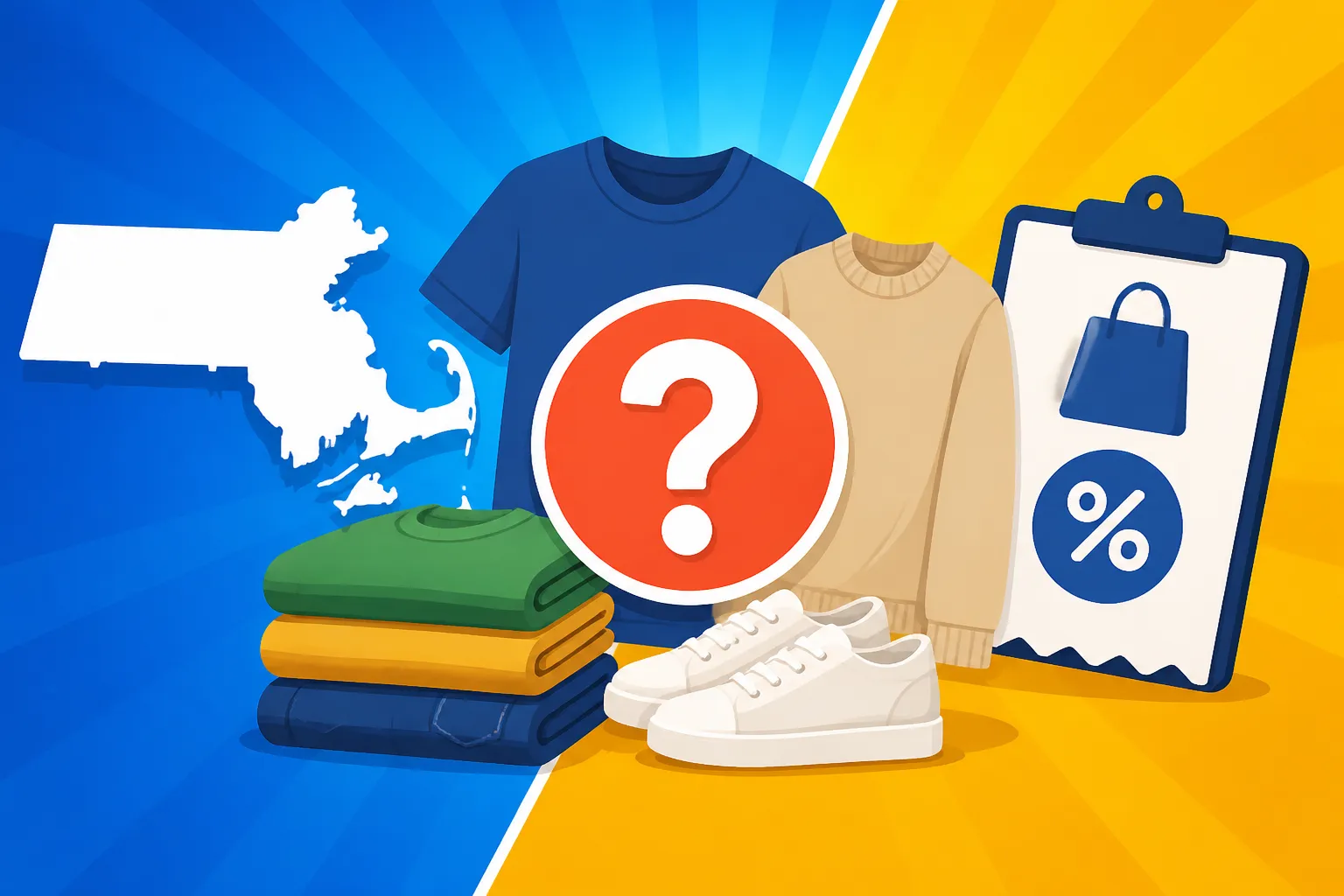
Let's get right to the heart of it: Massachusetts has a special sales tax exemption for clothing that many people find a bit confusing at first glance. Unlike some states that have broad exemptions for all clothing (looking at you, Pennsylvania!) or specific price thresholds that apply universally, Massachusetts carves out an exemption for individual items of clothing priced at $175 or less. This isn't a blanket exemption, and it's certainly not a sales tax holiday that comes and goes; it's a permanent feature of the state's tax code.
How the $175 Threshold Works
The key here is "per item." If you pick up a single t-shirt for $25, you won't pay any sales tax on it because it falls well below the $175 threshold. The same goes for a pair of jeans at $60 or a sweater at $100. These items are completely exempt from the state's 6.25% sales tax. This rule is designed to relieve the tax burden on everyday clothing purchases, acknowledging that most people aren't regularly buying single articles of clothing that exceed that price point. It’s a thoughtful exemption for the average shopper.
However, the moment an individual item of clothing crosses that $175 line, things change. Let's say you find a stunning winter coat for $250. You might think, "Oh, I'll just pay tax on the difference, right?" Nope, that's where the Massachusetts rule gets interesting and often catches people off guard. You don't just pay sales tax on the amount over $175; you pay sales tax on the entire $250 purchase price. This is a crucial distinction and one that can make a significant difference in your final bill. It means that while many everyday clothing items escape taxation entirely, a single splurge can suddenly become more expensive than anticipated. Understanding this specific application of the rule is vital whether you're shopping for yourself or managing sales tax for your business.
Why the Specific Dollar Amount?
The rationale behind the $175 threshold is rooted in balancing tax revenue with consumer relief. Massachusetts aims to exempt common, necessary clothing purchases from sales tax, thereby making everyday life a little more affordable for residents. Think about back-to-school shopping for kids, where dozens of individual items like socks, underwear, basic shirts, and pants easily fall under this limit. Without this exemption, families would face a considerably higher cost for these essentials.
However, by taxing the full value of items above $175, the state captures revenue from what they might consider more "luxury" or discretionary clothing purchases. It creates a clear line in the sand, distinguishing between basic needs and higher-end apparel. This approach contrasts sharply with states that have no sales tax on clothing at all, like New Jersey, or those with different thresholds, such as the New York clothing sales tax rule. This distinction means that retailers, especially those selling both budget-friendly and high-end items, must implement robust sales tax calculation systems to ensure compliance. Businesses frequently look for reliable platforms that can handle such nuanced rules across different states.
Navigating the Nuances: What Counts (and Doesn't Count) as Exempt Clothing
While the $175 rule seems straightforward, the definition of "clothing" for sales tax purposes in Massachusetts has its own set of particularities. Not everything you wear is considered exempt clothing, and certain accessories or protective gear often fall into the taxable category, regardless of price. This can be a real head-scratcher when you're at the checkout, wondering why one item in your basket is tax-free and another isn't.
Accessories and Apparel Not Covered by the Exemption
Here’s where it gets a bit tricky. The Massachusetts Department of Revenue (DOR) provides specific guidelines on what doesn't qualify as exempt clothing, even if it's priced under $175. For instance, most accessories are taxable. This includes items like jewelry, handbags, scarves, ties, belts, and umbrellas. So, while your $50 shirt might be tax-free, that $30 belt you bought to go with it will likely be taxed. This distinction can feel arbitrary to shoppers, but it's important for businesses to categorize inventory correctly.
Furthermore, certain items that might seem like clothing due to their wearability are also taxable. This often includes athletic equipment (like cleats, shin guards, or specialized cycling shorts), protective clothing (such as safety goggles, hard hats, or work gloves), and costumes. Even fancy dress-up clothes, often used for Halloween or theatrical performances, are typically taxable. The logic here is that these items serve a specific function beyond general "wearing apparel," which is what the exemption primarily targets. For merchants using platforms that automate sales tax, like those powered by Avalara, it's critical to ensure product categories are accurately mapped to the correct taxability rules in Massachusetts. This ensures that when a customer buys a pair of running shoes and a sports bra, the system correctly applies tax to the shoes but exempts the bra (assuming both are under $175 individually).
Special Occasion Clothing and Uniforms
Another area that causes confusion is clothing for special occasions or uniforms. Generally, ordinary ready-to-wear clothing that you might buy for a formal event, like a suit or a dress, can qualify for the exemption if the individual item is $175 or less. So, a $150 dress or a $120 suit jacket would be tax-exempt. However, if that dress or suit jacket costs $200, the entire $200 would be taxable. This is where comparing the Massachusetts rule to states like New Jersey, where most clothing is tax-exempt, highlights the complexity for multi-state retailers.
Uniforms, too, have a specific carve-out. If an employer or business requires employees to purchase specific uniforms, these are generally taxable, regardless of price. This is because they are considered specialized work apparel rather than general personal clothing. However, if an employer provides a clothing allowance and employees purchase regular clothing that could be worn outside of work, those items would still be subject to the $175 exemption rule. It's a fine line that requires clear understanding for both consumers and businesses. This level of detail underscores why businesses need a robust system for sales tax calculation, especially when trying to understand their obligations across multiple states as detailed in our guide on Sales Tax for Online Sellers Complete Guide.
Practical Applications: Online Shopping and Business Responsibilities
The world of retail has shifted dramatically, with online shopping becoming the norm for many. This raises an important question: does Massachusetts' $175 clothing exemption apply equally to purchases made online? The short answer is yes, but the practical implications for both shoppers and businesses can be significant.
Online Purchases and the Exemption
When you buy clothing from an online retailer that has sales tax nexus in Massachusetts, the same $175 per-item rule applies. If you're purchasing a single dress for $160 from an online boutique, it should show up as tax-exempt on your order summary. However, if that same dress is $180, the full amount will be subject to sales tax. This means that if you're shopping from a retailer like Nordstrom or Macy's online, and they have a physical presence or economic nexus in Massachusetts, their systems should be programmed to apply these rules correctly.
The challenge for consumers often lies in knowing whether the online seller has nexus in Massachusetts and is therefore obligated to collect sales tax. Thanks to the South Dakota v. Wayfair Supreme Court decision, most larger online retailers now collect sales tax in virtually every state that has a sales tax, including Massachusetts. This generally simplifies things for shoppers, as you're less likely to encounter a situation where you owe "use tax" on an online purchase. However, it places a significant burden on businesses to accurately apply the correct sales tax rates and exemptions based on the customer's location. For businesses trying to figure out if they have nexus, our guide on Economic Nexus by State 2026: Thresholds Guide can be incredibly helpful.
The Retailer's Perspective: Ensuring Compliance
For businesses selling clothing into Massachusetts, whether online or brick-and-mortar, adhering to this $175 per-item exemption is crucial for compliance. It's not just about applying the 6.25% state sales tax; it's about knowing exactly when to apply it and to what value. Miscalculating this can lead to under-collection (meaning the business owes the state money out of pocket) or over-collection (leading to customer dissatisfaction and potential refunds).
Imagine a scenario where a boutique sells a mix of high-end designer pieces and everyday basics. Their point-of-sale (POS) system or e-commerce platform needs to accurately identify each individual clothing item, check its price, and apply the exemption rules. This is where sophisticated sales tax software really shines. Solutions like Avalara are designed to handle complex, granular rules like Massachusetts's $175 clothing exemption across various states. They help businesses, from small online shops to large enterprises, ensure that every transaction is taxed correctly, reducing the risk of audits and penalties. For businesses, understanding How to Calculate Sales Tax Step by Step for each line item is critical, especially in states with unique exemptions.
Common Clothing Items and Their Tax Status in Massachusetts
To make things a bit clearer, let's look at some everyday examples of clothing and related items and how the Massachusetts sales tax rules generally apply. Remember, the $175 individual item threshold is the golden rule here for what's considered "clothing."
This table should give you a quick reference point for some common items. It illustrates just how many everyday clothing items easily fall into the tax-exempt category thanks to the Massachusetts rule.
| Item Type | Individual Price | Tax Status in Massachusetts | Notes |
|---|---|---|---|
| T-shirt | $25 | Exempt | Under $175 threshold |
| Jeans | $70 | Exempt | Under $175 threshold |
| Sweater | $150 | Exempt | Under $175 threshold |
| Winter Coat | $200 | Taxable | Over $175 threshold (entire amount taxed) |
| Pair of Socks (multi-pack) | $15 | Exempt | Under $175 threshold |
| Dress Shirt | $100 | Exempt | Under $175 threshold |
| Designer Scarf | $80 | Taxable | Considered an accessory, not clothing |
| Leather Belt | $50 | Taxable | Considered an accessory, not clothing |
| Running Shoes | $120 | Taxable | Considered footwear, not clothing |
| Work Uniform (specialized) | $90 | Taxable | Specialized work apparel |
| Backpack | $40 | Taxable | Luggage/bag, not clothing |
| Raincoat | $170 | Exempt | Under $175 threshold, considered outerwear |
| Formal Gown | $300 | Taxable | Over $175 threshold (entire amount taxed) |
| Swimsuit | $60 | Exempt | Under $175 threshold |
The Importance of Categorization for Retailers
For retailers, correctly categorizing every product is paramount. A simple oversight can lead to incorrect tax collection, which can be costly down the line. Is a specialized cycling jersey considered "clothing" or "athletic equipment"? In Massachusetts, it's generally athletic equipment, making it taxable regardless of price. What about a pair of high-fashion boots? Footwear is typically taxable in Massachusetts, regardless of price. These nuances mean that businesses can't just apply a blanket "clothing exemption" without careful review.
This is why tools that offer precise taxability matrices, like those offered by Avalara, are so valuable. They allow businesses to map their products to specific tax codes, ensuring that when an item is sold, the correct state and local sales tax rules are applied instantaneously. This becomes even more critical when managing sales in states with even higher local sales tax, such as Louisiana Sales Tax Rate (Highest Combined 10.11%), which adds another layer of complexity. Having an automated system takes the guesswork out of these intricate rules, freeing up businesses to focus on growth rather than constant tax research.
Comparing Massachusetts to Other States
It's interesting to compare Massachusetts's approach to its neighbors and other major states. As we mentioned, Is Clothing Taxable in Pennsylvania? (Exempt) where most clothing is entirely exempt from sales tax, offers a stark contrast. Similarly, Is Clothing Taxable in New Jersey? (Exempt) also provides a broad exemption. These states simplify things greatly for both shoppers and retailers by removing sales tax from clothing altogether.
Then there's New York, which has its own specific rule: Is Clothing Taxable in New York? ($110 Rule) It exempts individual items of clothing and footwear priced under $110 from state sales tax, though local taxes may still apply in some jurisdictions. Massachusetts's $175 threshold is more generous than New York's, but the underlying principle of a price-based exemption per item is similar. Understanding these subtle differences is key for any business operating across state lines or for savvy shoppers looking for tax advantages, perhaps even during a Tax-Free Weekend Back-to-School Guide 2026 in another state. Ultimately, the question "Is Sales Tax Based on Billing or Shipping Address?" further compounds these complexities, especially for online purchases where the physical location of the buyer determines the applicable tax rules.
The Broader Context of Sales Tax Exemptions
The Massachusetts clothing exemption is just one example of how states tailor their sales tax laws to meet specific economic and social goals. While it might seem like a small detail, it highlights the constant dance between revenue generation and consumer relief. Understanding these various exemptions, even beyond clothing, can save you money and keep your business compliant.
What Else Might Be Exempt?
Beyond clothing, many states offer a patchwork of other sales tax exemptions. For instance, most states exempt groceries, though the definition of "groceries" can vary wildly (leading to fun debates about whether a candy bar is food or candy!). You can explore more about this in our detailed guide on Sales Tax on Groceries & Food by State. Essential items like prescription drugs are almost universally exempt, and some states even offer exemptions for certain over-the-counter medications or dietary supplements.
Businesses also benefit from various exemptions, such as those for manufacturing equipment or agricultural supplies, designed to stimulate specific industries. Non-profit organizations and government entities typically also have broad sales tax exemptions, which significantly impact their purchasing power. Knowing which items are exempt from sales tax can influence both individual shopping habits and large-scale business operations, providing a slight reprieve from what can be a burdensome tax system.
The Role of Technology in Compliance
Given the intricate nature of sales tax laws across the country, trying to manually keep track of every exemption, threshold, and rate change (like the 2026 Sales Tax Rate Changes by State) is nearly impossible for most businesses. This is where modern sales tax compliance software becomes indispensable. These platforms don't just calculate basic sales tax; they factor in product taxability, jurisdiction-specific rules, nexus status, and, yes, even specific clothing exemptions like the one in Massachusetts.
For a business selling nationally, relying on a system that automatically updates these rules and applies them correctly can be the difference between smooth operations and compliance nightmares. It ensures accuracy, saves countless hours of administrative work, and provides peace of mind that you're meeting your tax obligations without overcharging or undercharging customers. So, while the Massachusetts clothing exemption might seem like a small detail, it's a perfect illustration of why businesses need robust tools to navigate the sprawling landscape of sales tax.
Disclaimer
The information provided in this guide is for general informational purposes only and does not constitute tax advice. Sales tax laws are complex and subject to change. Always consult with a qualified tax professional or the Massachusetts Department of Revenue for advice specific to your situation.