Is Bottled Water Taxable?
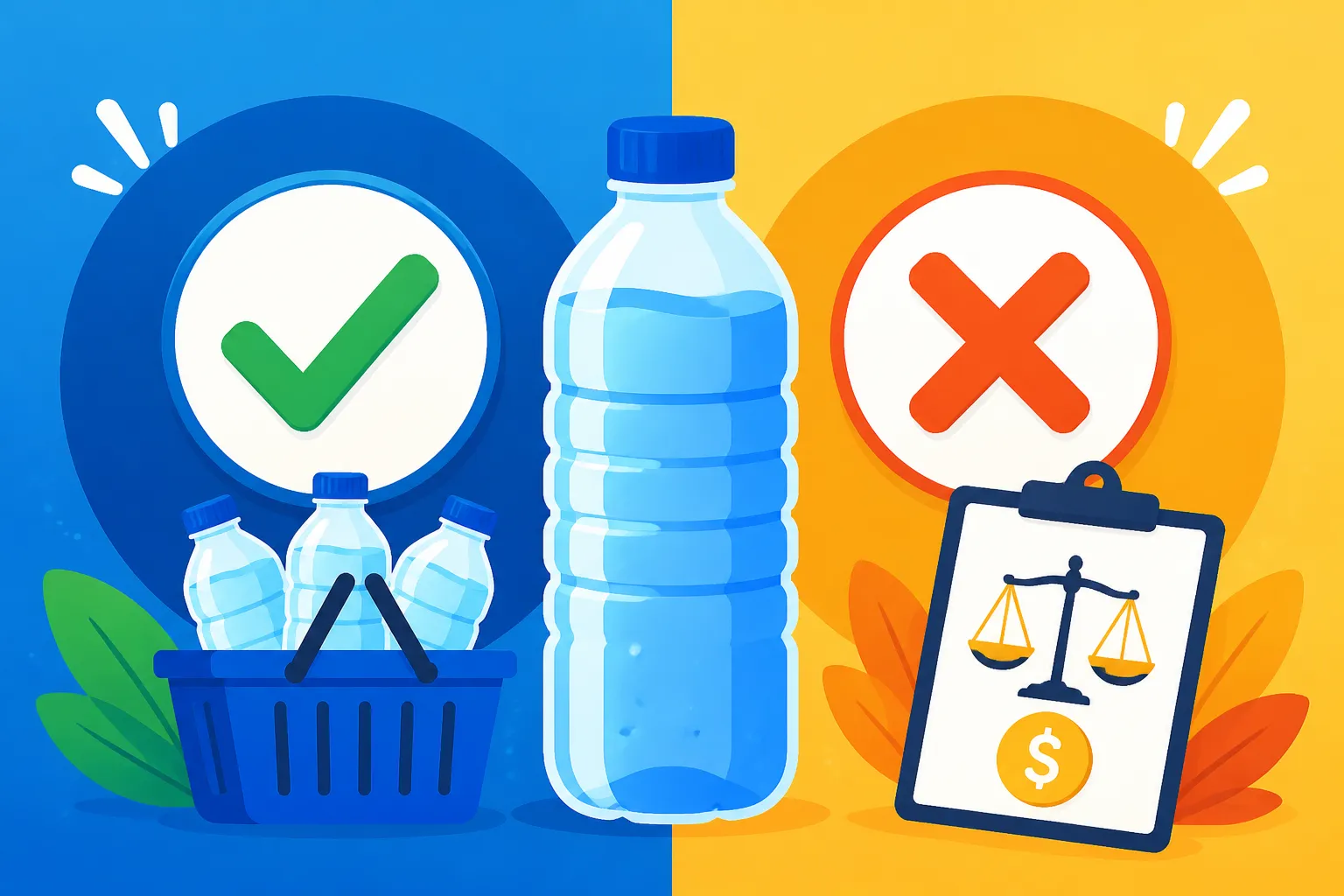
Navigating the labyrinth of sales tax can feel like trying to find your way through a funhouse mirror maze – everything looks a little distorted, and what you think is clear often isn't. One surprisingly tricky item that trips up many sellers, from corner store owners to online giants, is bottled water. It seems simple, right? It's just water. But depending on where you sell it and sometimes even the type of bottled water, its taxability can be a complete head-scratcher. This guide is here to shed some light on why bottled water isn't always tax-free and to help you understand the nuances state by state.
Why Bottled Water Taxability Is So Confusing
You'd think something as fundamental as bottled water would have a straightforward sales tax rule across the board, wouldn't you? Unfortunately, that's rarely the case in the world of sales tax. The core of the confusion often stems from how different states define "food for home consumption" and whether bottled water, especially flavored or sparkling varieties, falls into a separate category like "soft drinks" or "prepared food." This isn't just a minor detail; it can significantly impact how you price your products and manage your compliance.
The "Food for Home Consumption" Exemption
Many states offer a sales tax exemption for "food for home consumption" or "groceries." This is intended to relieve some of the tax burden on essential items that people need to live. However, the definition of what constitutes "food for home consumption" can vary wildly. Some states have a very broad interpretation, including most food items and non-alcoholic beverages. Others are much more granular, explicitly excluding certain types of beverages or food items sold in specific contexts.
For plain, unflavored bottled water, it often aligns with this grocery exemption in many states. Think about buying a six-pack of spring water at your local supermarket; it often rings up without sales tax if other groceries are also exempt. The problem arises when the water is not plain. Is sparkling water considered a "soft drink"? What about water with added fruit essence but no sugar? These are the questions that keep sellers up at night.
The "Soft Drink" Conundrum and Added Ingredients
This is where things get really murky. Many states specifically tax "soft drinks," which are usually defined as beverages containing natural or artificial sweeteners. But what about bottled water that has a natural fruit essence but no added sugar? Is it still "plain water," or does the flavoring push it into the "soft drink" category?
For instance, some states might use a "flour test" for candy, but for beverages, they look at ingredients like high-fructose corn syrup, cane sugar, or artificial sweeteners. If your bottled water has any of these, it's very likely to be considered a soft drink and therefore taxable, even if plain water is exempt. The exact thresholds and definitions of what constitutes a "soft drink" are incredibly state-specific, making compliance a moving target for businesses operating across state lines. Understanding these subtle distinctions is crucial, as miscategorizing a product can lead to audit issues down the road.
State-Specific Examples for Bottled Water Taxability
Because sales tax is administered at the state level, and often at local levels too, there's no single answer to whether bottled water is taxable. Let's look at a few examples to highlight the diversity of rules. It’s important to remember that these rules can change, so always double-check the latest regulations for your specific location.
California's Approach to Bottled Water
California's sales tax is generally imposed on the retail sale of all tangible personal property unless specifically exempted. When it comes to food products, California has a broad exemption for "food products for home consumption." This typically includes most bottled water, regardless of whether it's still, sparkling, or flavored, as long as it doesn't contain a significant amount of caloric sweetener and is not sold as a "prepared food" item.
So, if you're buying a case of Dasani or Fiji water at a grocery store in Los Angeles, you likely won't pay sales tax. However, if you grab a single bottle of sparkling water with some sugar added from a convenience store alongside a hot sandwich, the context of the sale could bring it under the "prepared food" umbrella, making it taxable. Furthermore, if the "bottled water" product is actually a juice drink, soda, or a beverage with more than 50% fruit juice that is sold in a fountain drink format, it would generally be taxable. This demonstrates how even in a state with a broad food exemption, specific conditions can change the taxability. For more on California's specific rates, you might want to look into the California Sales Tax Rate 2026.
Texas and the Beverage Distinction
Texas generally exempts food products and beverages sold for home consumption. This means that most plain bottled water, whether still or sparkling, is exempt from sales tax when purchased at a grocery store. However, Texas has very specific rules about what constitutes a "taxable beverage."
In Texas, soft drinks, candy, and certain prepared foods are taxable. A "soft drink" is generally defined as a nonalcoholic beverage containing natural or artificial sweeteners. This means that if your bottled water has any added sugar, honey, or artificial sweetener, it suddenly shifts from being an exempt grocery item to a taxable soft drink. This applies even if it's just a hint of flavoring that includes a sweetener. Imagine selling a case of flavored sparkling water that has 5 grams of sugar per serving versus one with natural flavors and zero sugar; in Texas, these could be treated entirely differently for sales tax purposes. You can learn more about general state rates by checking out the Texas Sales Tax Rate (6.25% + Local 8.25% Max) guide.
Florida's Rules on Bottled Water
Florida also provides a sales tax exemption for most food products and beverages sold for home consumption. Plain bottled water, whether still or sparkling, typically falls under this exemption when sold in a grocery store. However, like other states, Florida draws a line when it comes to sweetened beverages.
If bottled water contains any natural or artificial sweeteners, it is generally considered a "soft drink" and is therefore subject to Florida's sales tax. This means that a simple lemon-flavored water that includes sucralose would be taxable, while an unflavored sparkling water would not. This distinction is particularly important for vendors selling a wide array of beverage products, as they need to accurately classify each one based on its ingredients. The location of sale can also play a role; a bottle of water sold from a vending machine might be treated differently than one purchased in bulk from a grocery aisle. For more details on Florida's general sales tax rules, check out the Florida Sales Tax Rate (6% + County Surtax).
The Context of Sale: Where You Buy Matters
It's not just what you're selling, but where and how you're selling it that can impact sales tax on bottled water. The same bottle of water could be tax-exempt in one scenario and fully taxable in another.
Grocery Stores vs. Convenience Stores
Often, bottled water purchased in a grocery store is treated as "food for home consumption" and is thus exempt in many states that exempt groceries. This is because grocery stores are primarily focused on selling items for preparation and consumption elsewhere.
However, the moment that same bottle of water moves to a convenience store, a gas station, or a vending machine, its tax status can change. Many states have rules that distinguish between grocery-type sales and sales of "prepared food" or "food eaten on premises," even if it's just a grab-and-go item. A convenience store, by its nature, often implies immediate consumption. For instance, in some states, a single bottle of water from a cooler in a convenience store might be taxed if it's considered part of a "prepared food" sale, especially if bundled with other taxable items like a hot dog or a coffee. This is a common point of confusion for small business owners who might sell both exempt groceries and taxable prepared items.
Vending Machines and Restaurants
Sales tax rules for vending machine sales are often distinct. Some states have specific, often lower, sales tax rates for items sold through vending machines, or they might tax all items from vending machines regardless of their usual grocery status. The rationale is that these are almost always for immediate consumption. A bottle of water from a vending machine is generally assumed to be consumed right there or shortly after, much like a restaurant meal.
Speaking of restaurants, if bottled water is served with a meal at a restaurant, it nearly always becomes taxable. This is because it's part of a "prepared meal" or "restaurant food," which is typically subject to sales tax in all states. Even if plain bottled water is exempt at the grocery store, when it's sold by a restaurant, it's considered part of the service of providing a meal. This highlights how complex the situation can be, requiring businesses to understand not just the product but the entire transaction context.
Managing Sales Tax on Bottled Water for Your Business
Given the varied rules, managing sales tax for bottled water can be a real headache, especially for businesses that sell in multiple states or through different channels. You're not just dealing with state sales tax; you also have to factor in local sales tax, which can push rates even higher.
Classification is Key
The first and most critical step is accurate product classification. You need to know:
- Is it plain, unflavored water?
- Does it contain any natural or artificial sweeteners? Even a tiny amount can shift its tax status.
- What is the primary purpose of the product? Is it marketed as a "health drink" or clearly just water?
- How is it packaged and sold? Single bottles vs. multi-packs, chilled vs. ambient.
For businesses with a large inventory, manually tracking these distinctions across different states and constantly checking ingredient lists can be an overwhelming task. This is where robust sales tax solutions become indispensable.
The Role of Technology in Compliance
Trying to keep up with all the state and local sales tax rates, along with ever-changing product taxability rules for items like bottled water, can feel like a full-time job on its own. Imagine you're an online seller shipping bottled water across the country. You'd need to know if a particular state exempts it, if it's considered a soft drink there, and what the local district taxes are for every single customer's address. It's a logistical nightmare.
This is why many businesses turn to sales tax automation software. Platforms like Avalara specialize in keeping up-to-date with these complex regulations. They can automatically apply the correct sales tax rate at the point of sale, taking into account the product type, the buyer's location, and the seller's nexus status. This kind of automation removes much of the manual burden and significantly reduces the risk of errors, which can lead to costly audits and penalties. For businesses looking for the Best Sales Tax Compliance Software 2027, these tools are a game-changer.
Here's a simplified look at how some states might classify different types of bottled water:
| State (Example) | Plain Still Water (e.g., Spring Water) | Plain Sparkling Water | Flavored Water (No Sugar/Sweetener) | Flavored Water (With Sugar/Sweetener) |
|---|---|---|---|---|
| California | Exempt (for home consumption) | Exempt | Exempt | Taxable (if considered "soft drink") |
| Texas | Exempt (for home consumption) | Exempt | Exempt | Taxable (considered "soft drink") |
| Florida | Exempt (for home consumption) | Exempt | Exempt | Taxable (considered "soft drink") |
| New York | Exempt (for home consumption) | Exempt | Exempt | Taxable (considered "soft drink") |
| Louisiana | Exempt (for home consumption) | Exempt | Exempt | Taxable (considered "soft drink") |
| Colorado | Exempt (for home consumption) | Exempt | Exempt | Taxable (considered "soft drink") |
Note: This table provides general guidance. Specific exemptions, sales context, and local taxes can alter taxability. Always verify current state tax laws.
Maintaining Compliance and Staying Updated
The world of sales tax is anything but static. States frequently introduce new legislation, change definitions, or adjust rates. For instance, knowing How Often Do Sales Tax Rates Change? is crucial for any business. What was exempt last year might be taxable this year, or vice versa. This means that simply classifying your products once isn't enough; you need an ongoing strategy for staying compliant.
Regularly reviewing state tax bulletins, consulting with tax professionals, or utilizing sophisticated sales tax software like Avalara are all viable strategies. For online sellers, the complexities are amplified due to economic nexus laws. If you're wondering Do I Need to Collect Sales Tax for Online Sales?, understanding where you have economic nexus and the specific taxability rules for each of those states is paramount. Ignoring these details can lead to unexpected tax liabilities and legal headaches down the line. It’s an investment, but ensuring you collect the right amount of sales tax upfront saves immense stress and potential financial strain in the future.
Beyond the Bottle: Related Beverage Taxability Issues
The taxability of bottled water is just one piece of a larger puzzle when it comes to beverages. Many of the same principles and complexities apply to other drinks, and understanding these broader categories can help you better navigate specific products.
Soda, Juice, and Sports Drinks
The rules for soda, juice, and sports drinks are often more straightforward: they are almost universally taxable in states that impose sales tax, primarily because they contain sweeteners or are explicitly defined as "soft drinks" or "taxable beverages." However, even here, there can be nuances. For example, some states might exempt 100% fruit juice if it meets certain criteria, while juice drinks with added sugar are taxable.
The distinction between "food for home consumption" and "prepared food" also plays a role. A case of soda from a grocery store might have one tax treatment, while a single cold soda from a convenience store could have another, depending on state specifics. This intricate web of regulations shows that even seemingly simple items require careful consideration.
Coffee, Tea, and Dairy Products
When it comes to coffee, tea, and dairy products, the taxability can also depend heavily on whether they are prepared or unprepared. A bag of coffee beans or a box of tea bags sold in a grocery store is typically exempt if groceries are exempt in that state. But a prepared coffee from a cafe, or an iced tea sold alongside a sandwich, is almost always taxable as prepared food.
Milk and dairy products are generally considered essential food items and are often exempt for home consumption. However, flavored milk, milkshakes, or specialty dairy beverages might fall into the "soft drink" or "prepared food" categories depending on their ingredients and the point of sale. These classifications are crucial for businesses like cafes, delis, and even those running an Amazon FBA operation, as incorrect tax application can lead to compliance issues. To ensure you're on top of all these rules, having reliable tools to How Do I Find My Local Sales Tax Rate? for different product types is incredibly helpful.
The Bottom Line for Sellers
The taxability of bottled water is a prime example of the intricate and often counterintuitive nature of sales tax compliance in the United States. It's not a simple yes or no answer but a nuanced response shaped by state law, specific ingredients, and the context of the sale. From a plain bottle of spring water to a sugar-sweetened flavored sparkling water, each variation can trigger different tax obligations.
For businesses, especially those operating across state lines or with diverse product offerings, relying on assumptions is a dangerous game. Instead, proactive research, clear product classification, and leveraging robust sales tax solutions become essential strategies. Tools from companies like Avalara are designed to handle this complexity, ensuring that you apply the correct sales tax at every transaction, regardless of the product type or location. Staying informed and utilizing technology are your best allies in navigating the ever-changing landscape of sales tax.
Disclaimer
Please remember that this article is intended for informational purposes only and does not constitute professional tax advice. Sales tax laws are complex and constantly evolving. You should consult with a qualified tax professional or refer to your state's official tax regulations for advice specific to your business situation.