Economic Nexus Threshold in California
Navigating the labyrinth of sales tax rules can feel like trying to find your way through a dense fog, especially when you're selling across state lines. Many online business owners are constantly asking, "Do I really need to collect sales tax in California?" The truth is, the answer isn't always straightforward, and ignoring it can lead to some serious headaches down the road. This comprehensive guide will peel back the layers of California's economic nexus threshold, helping you understand when and why you need to register and collect sales tax in the Golden State, even if you don't have a physical presence there.
The Ever-Changing Landscape of Sales Tax Nexus
It wasn't that long ago that sales tax was relatively simple, at least in theory. If you had a physical presence – a store, an office, employees – in a state, you collected sales tax. If you didn't, you generally didn't. Oh, how times have changed!
A Quick Look Back: Physical Nexus and Wayfair
For decades, the concept of "physical nexus" was the bedrock of sales tax collection. This meant that a business only had to collect sales tax in states where it had a tangible connection, like a brick-and-mortar store, a warehouse, or even just an employee working from home. It was a relatively clear, albeit often cumbersome, rule that remote sellers could rely on. However, with the explosion of e-commerce, states saw billions in potential sales tax revenue slipping through their fingers.
Then came the landmark Supreme Court decision in 2018, South Dakota v. Wayfair. This ruling completely upended the traditional sales tax landscape, declaring that a physical presence was no longer the sole trigger for sales tax obligations. It essentially gave states the green light to require out-of-state businesses to collect sales tax based solely on their economic activity within that state, even if they had no physical footprint there. For many small and medium-sized online businesses, this was a massive shift, transforming a relatively simple compliance task into a complex, multi-state puzzle. It’s no wonder so many of us felt completely lost trying to figure out if we suddenly had new obligations in states we’d never even visited. If you're looking for a deeper dive into the foundational concepts, explore our guide on Sales Tax Nexus Explained Physical vs Economic.
What is Economic Nexus, Really?
So, if physical presence isn't the only game in town, what is? Enter economic nexus. In the simplest terms, economic nexus means that if your sales activity into a particular state crosses a certain financial threshold, that state can require you to collect and remit sales tax, regardless of whether you have a physical location or staff there. Think of it as hitting a certain sales volume or number of transactions that signals you're actively participating in that state's economy.
Each state sets its own unique economic nexus threshold, which can be a real pain point for businesses selling nationwide. Some states use a gross sales dollar amount, others use a number of separate transactions, and some even use a combination of both. The idea is to capture sales tax from businesses that are clearly benefiting from selling into their state but haven't traditionally been required to collect. It's a system designed to level the playing field between local businesses that have always collected sales tax and out-of-state online retailers. The challenge, of course, lies in tracking these varied thresholds across potentially dozens of states.
California's Economic Nexus Threshold: The Golden State's Rules
California, being one of the largest economies in the world, certainly has its own robust set of rules for economic nexus. It's a state that many businesses eventually hit a threshold in, making it crucial to understand exactly what triggers an obligation there.
The Specific Numbers: What Triggers Nexus in California
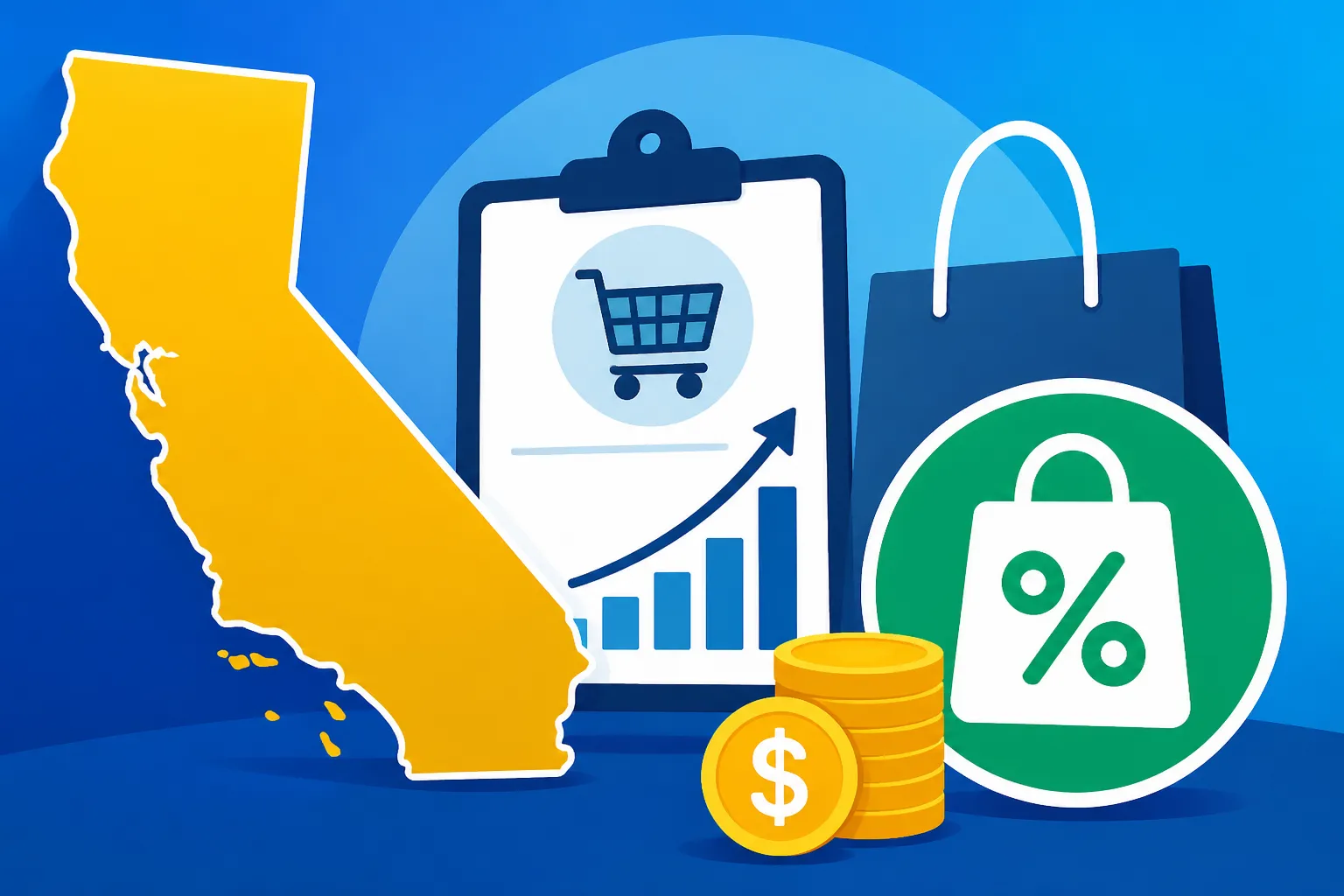
California's economic nexus threshold is pretty straightforward compared to some other states, which can be a small relief. For remote sellers, you establish economic nexus in California if, in the current or preceding calendar year, your total gross sales of tangible personal property delivered into California exceed $500,000. Yes, that's half a million dollars, which sounds like a lot, but for growing online businesses, it's a number that can be reached sooner than you think.
It's absolutely vital to understand what "gross sales" means here. It's not just your taxable sales; it includes all your sales of tangible personal property delivered into California, whether those sales ended up being taxable or exempt. For example, if you sell $600,000 worth of clothing into California, and $100,000 of that clothing was sold during a specific tax-exempt period or to a reseller with a valid certificate, the full $600,000 still counts towards that $500,000 threshold. The California Department of Tax and Fee Administration (CDTFA) looks at the total revenue generated from sales shipped into the state. You can read more about this specific threshold in our detailed post about the Economic Nexus Threshold in California ($500k).
To give you a clearer picture, let's say your business, "Coastal Crafts," sells handmade jewelry online. In 2024, you tracked your sales diligently. By October, your total sales of jewelry shipped to customers in California reached $450,000. Then, in November and December, you had a fantastic holiday season, pushing your California sales up to $550,000. As of December 31, 2024, Coastal Crafts has now exceeded the $500,000 threshold for the 2024 calendar year. This means that starting January 1, 2025, Coastal Crafts has an economic nexus obligation in California and must register for a seller's permit.
What "Tangible Personal Property" Means Here
The phrase "tangible personal property" is key to California's economic nexus rules. Generally, this refers to physical goods – items you can touch, see, and hold. Think clothing, electronics, books, furniture, toys, and so on. If you're selling these types of items and shipping them to customers in California, these sales count towards your $500,000 threshold.
What often gets confusing are services and digital products. In California, pure services are generally not subject to sales tax, and typically, sales of services do not count toward the economic nexus threshold for tangible personal property. So, if your business primarily offers consulting services or sells purely digital products like e-books or software downloads, these might not trigger economic nexus under the tangible personal property rule. However, it’s always important to verify, as some digital products can be considered tangible if delivered on a physical medium. For a broader understanding of how services are taxed, check out our article on Is Services Taxable Sales Tax on Services by State. It's crucial to distinguish between physical goods and intangible services or digital products, as their treatment under sales tax law can differ dramatically.
Important Nuances for Remote Sellers
One significant point of relief for remote sellers when it comes to California's economic nexus rules is that, unlike many other states, California does not currently have a transaction count threshold. This means you don't have to worry about how many individual sales you make into the state; only the aggregate dollar amount matters. Some states might trigger nexus if you make 200 separate transactions, even if the dollar value is low. Thankfully, California keeps it simpler by focusing solely on that $500,000 sales figure. This can be a huge simplification for businesses with many low-value transactions. If you're curious about which states do have a transaction count threshold, our article Which States Dropped the 200-Transaction Threshold? provides valuable insights.
This focus on a higher dollar threshold generally means that smaller businesses with limited sales into California may not be immediately impacted. However, for growing e-commerce businesses, especially those with successful marketing campaigns targeting California consumers, hitting that $500,000 mark can happen more quickly than anticipated. It underscores the importance of regularly monitoring your sales data by state, rather than waiting until year-end to discover you've passed the threshold.
Once Nexus is Established: Your Responsibilities
So, you've crunched the numbers, and your business has indeed crossed California's $500,000 economic nexus threshold. What now? This is where the real work begins, but don't fret – it's manageable with the right approach and tools.
Registering for a Seller's Permit in California
The very first step once you've established economic nexus is to register for a seller's permit with the California Department of Tax and Fee Administration (CDTFA). This isn't optional; it's a mandatory requirement to legally collect and remit sales tax in the state. Think of it like getting your driver's license before you hit the road – you wouldn't drive without one, and you shouldn't collect sales tax without a permit.
The process typically involves applying online through the CDTFA website. You'll need to provide some essential information about your business, such as your legal business name, mailing address, Federal Employer Identification Number (FEIN), business activity description, and details about your owners or partners. It's a pretty straightforward application, but having all your business information handy will make it much smoother. Once approved, the CDTFA will issue you a seller's permit number, which is your official authorization to collect sales tax. Our guide on How to Get a Seller's Permit in California can walk you through the specifics of this process. It's crucial to register promptly, as delays can lead to penalties, and you shouldn't collect tax from customers until you have your permit.
Collecting and Remitting California Sales Tax
This is often where the real complexity kicks in. California sales tax rates are notoriously intricate, primarily because they aren't just a single statewide rate. The statewide base sales tax rate is 7.25%, but nearly every city and county in California has additional local district taxes, which can push the combined rate much higher. For example, while the state rate is 7.25%, a sale in Los Angeles County could be subject to a combined rate of 9.5% or even higher, depending on the specific city. Meanwhile, a sale in another area, like a rural part of Fresno County, might stick closer to the base rate.
This means you can't just apply a flat rate to all your California sales. You need to calculate the sales tax based on the specific destination of the sale – usually the customer's shipping address. This is known as destination-based sourcing, and it requires precise address lookup to determine the correct local tax rates. Failing to collect the correct amount can result in you owing the difference out of your own pocket or overcharging customers, which can damage trust. We delve deeper into how these rates stack up in our article, California Sales Tax Rate 7.25% Base + Districts. Understanding these distinct rates is key, especially in densely populated areas; for instance, understanding the Los Angeles Sales Tax Rate Explained is vital if you have a significant customer base there. This is where sales tax automation software, like solutions offered by Avalara, becomes incredibly valuable, as it can automatically pinpoint the exact tax rate for each transaction based on the customer's address.
Ongoing Compliance and Potential Pitfalls
Once you're registered and collecting, your responsibilities don't end there. You'll also need to file sales tax returns regularly with the CDTFA and remit the collected taxes. The filing frequency – whether monthly, quarterly, or annually – will be assigned to you by the CDTFA based on your estimated or actual sales volume. Higher sales volumes typically mean more frequent filing requirements. For instance, a business with very high sales might be required to file monthly, while a smaller business might file quarterly. It's essential to keep track of your assigned filing frequency and the corresponding due dates to avoid late filing penalties. Missing a due date or filing an incorrect return can lead to fines, interest charges, and a lot of unnecessary stress.
Maintaining accurate records of all your sales, collected tax, and exemptions is also paramount. This documentation is crucial in case of an audit. Many businesses find that trying to manage these complex, variable rates and filing deadlines manually is a recipe for errors and wasted time. This is precisely why many turn to specialized sales tax compliance software, such as those offered by Avalara, to automate these tasks, from rate lookup to return filing. These platforms can integrate with your e-commerce store or accounting software, ensuring that the correct tax is collected at the point of sale and that your returns are prepared and filed accurately and on time. You can learn more about how frequently you might need to file in our post on Sales Tax Filing Frequency Explained, and if you're exploring options, consider our article on the Best Sales Tax Compliance Software 2027.
Navigating the Complexities: Tools and Best Practices
Dealing with sales tax, especially in a large and diverse state like California, can feel overwhelming. However, with the right strategies and resources, it doesn't have to be a constant source of anxiety.
Leveraging Technology for Accuracy
In today's e-commerce landscape, relying on manual calculations for sales tax is not only time-consuming but also highly prone to errors. This is particularly true in California, with its intricate network of district taxes layered on top of the state rate. That's where sales tax automation software truly shines. Solutions like Avalara are designed to handle the heavy lifting of sales tax compliance, providing real-time rate calculations at the point of sale, across thousands of taxing jurisdictions.
Imagine a customer in Berkeley, California, places an order on your website. Instead of manually looking up the state, county, and city district taxes for that specific address, an integrated sales tax solution automatically pulls the most current, accurate rate – which could be, for example, 10.25% in Berkeley – and applies it to the transaction. These systems don't just calculate; they also help manage exemption certificates, generate detailed reports, and even prepare and file your sales tax returns directly with the CDTFA. This automation frees up valuable time and resources that you can then reinvest into growing your business, rather than getting bogged down in tax minutiae. For many businesses, the question isn't if they need automation, but Sales Tax Automation Is It Worth It?. The answer, for those facing California's complexities, is often a resounding yes.
Staying Informed About Rate Changes
Sales tax rates are not static. While the statewide rate in California tends to be stable for longer periods, local district tax rates can change more frequently. New district taxes might be approved by voters, or existing ones might expire or be adjusted. These changes can happen on specific dates throughout the year, not just at the start of a new calendar year. Keeping up with these adjustments across all the cities and counties in California is a monumental task if you're trying to do it manually.
This constant flux underscores the importance of using up-to-date resources for sales tax rate lookup. Reliable sales tax software continually updates its rate databases to reflect the latest changes, ensuring that you're always collecting the correct amount. If you're managing this yourself, you'd need to regularly consult the CDTFA's website for updates or subscribe to tax news alerts. Ignoring these changes can lead to under-collection, leaving you liable for the difference, or over-collection, which can lead to customer frustration. Staying on top of these potential shifts is key to compliant operations. We have a helpful resource that tracks 2026 Sales Tax Rate Changes by State which can give you a broader perspective on rate fluctuations. For quick lookups, there are also various Sales Tax Rate Lookup Tools Compared that can help.
Proactive Compliance Strategies
The best defense against sales tax compliance woes is a good offense. Don't wait until you've clearly crossed the $500,000 threshold in California to start thinking about your obligations. Regularly review your sales data to monitor your trajectory towards that threshold. A monthly or quarterly check-in on your sales by state can give you an early warning if you're approaching economic nexus. This proactive monitoring allows you time to register for your seller's permit before you're legally required to collect, making the transition smoother.
Additionally, consider conducting a periodic nexus review, perhaps annually, to ensure you haven't inadvertently triggered nexus in California or any other state through other means (e.g., storing inventory in a new third-party warehouse). If you're ever in doubt, or if your business model is particularly complex, seeking advice from a qualified sales tax professional or a tax attorney can provide invaluable peace of mind. They can help interpret specific situations and ensure your business remains compliant as it grows.
California Economic Nexus Threshold Summary
To simplify, here's a quick look at California's economic nexus rules compared to a hypothetical state with different requirements.
| Feature | California's Economic Nexus | Hypothetical State (e.g., Texas) |
|---|---|---|
| Threshold Type | Sales volume only | Sales volume only |
| Dollar Threshold | $500,000 in gross sales | $500,000 in gross sales |
| Transaction Count | No transaction count threshold | No transaction count threshold (similar to CA) |
| Sales Counted | Tangible personal property delivered into the state | Tangible personal property delivered into the state |
| Measurement Period | Current or preceding calendar year | Preceding 12-month period |
| Filing Complexity | High (state + numerous local district taxes) | Moderate (state + optional local city/county taxes) |
| Governing Body | California Department of Tax and Fee Administration (CDTFA) | Texas Comptroller of Public Accounts |
This table provides a high-level comparison. While some states like Texas also have a $500,000 threshold without a transaction count, the nuances of what is taxable and how rates are structured can still vary significantly.
Disclaimer
The information provided in this guide is for general informational purposes only and does not constitute tax or legal advice. Sales tax laws are complex and constantly evolving. You should consult with a qualified tax professional or legal advisor for advice tailored to your specific business situation.