Marketplace Facilitator vs Seller Responsibility
For many online sellers, the world of sales tax can feel like a constantly shifting maze. Just when you think you've got a handle on your responsibilities, a new law or platform change throws everything into question. One of the biggest areas of confusion revolves around who is actually responsible for collecting and remitting sales tax: is it you, the seller, or the marketplace you're selling through? This comprehensive guide is here to untangle that knot, clarifying the vital distinction between marketplace facilitator and seller responsibilities.
Understanding the Shift: Before and After Marketplace Facilitator Laws
Before we dive into the present, it’s really helpful to understand the landscape from which these new rules emerged. For decades, sales tax compliance was a much simpler (though still often frustrating) beast. But the rise of e-commerce changed everything, leaving many states feeling like they were missing out on significant revenue.
The Traditional Burden on Sellers
In the good old days (or bad old days, depending on your perspective!), if you, as a seller, had "nexus" in a state, you were unequivocally responsible for collecting sales tax from customers in that state and remitting it to the state tax authority. Nexus, which essentially means a significant enough connection to a state, was primarily defined by physical presence – having an office, a warehouse, employees, or even just visiting a trade show. If you sold through your own website or a basic online directory, and you had nexus in, say, Texas, then every sale to a Texas resident meant you had to charge, track, and pay that sales tax.
This meant that even a small online boutique might need to register for a sales tax permit in several states if they had physical ties there. It was a lot to keep track of, especially for growing businesses expanding their reach. The complexity wasn't just in the collection; it was also in knowing if you even had nexus in the first place, and then dealing with the specific rules of each state.
The Game-Changer: South Dakota v. Wayfair
The traditional physical presence rule worked reasonably well for brick-and-mortar stores, but it utterly failed to capture the explosion of online sales. Online retailers, especially those without a physical footprint in many states, often didn't have to collect sales tax from out-of-state customers. This created an unfair advantage over local businesses and a massive revenue gap for states. Enter South Dakota v. Wayfair, Inc.
This landmark Supreme Court decision in 2018 completely redefined what constitutes sales tax nexus for remote sellers. The Court ruled that states could require businesses to collect sales tax even if they didn't have a physical presence, as long as they met certain "economic nexus" thresholds. Suddenly, a seller could have nexus in a state simply by having a certain volume of sales or number of transactions there. This decision truly changed the game, forcing states and sellers alike to grapple with a new, far more expansive definition of sales tax obligation. You can learn more about this pivotal case in our guide on South Dakota v. Wayfair: What It Means for Sellers.
Introducing Marketplace Facilitator Laws
While Wayfair made it clear that remote sellers could have sales tax obligations, it didn't solve the practical challenge for states of enforcing this on millions of individual online businesses. Imagine trying to audit every Etsy shop or individual Amazon seller to ensure compliance! This is where marketplace facilitator laws stepped in. Many states, looking for a more streamlined way to collect sales tax from the burgeoning e-commerce sector, decided to shift the collection and remittance burden to the large online platforms, or "marketplace facilitators," themselves.
These laws essentially designate major platforms like Amazon, eBay, and Etsy as responsible parties for collecting and remitting sales tax on behalf of their third-party sellers. This significantly simplifies compliance for many individual sellers, as the platform takes on much of the heavy lifting. However, it also means a new set of rules and considerations for sellers, and understanding when the platform is responsible versus when you are, is absolutely crucial for staying compliant.
What Exactly is a Marketplace Facilitator?
The term "marketplace facilitator" might sound a bit like legalese, but it's a critical concept for any online seller to grasp. It defines who holds the primary sales tax responsibility when you sell products through a third-party platform.
Defining the Role
At its core, a marketplace facilitator is any person or entity that owns, operates, or controls a marketplace and facilitates sales by third-party sellers on that marketplace. The key here is "facilitates." This usually means they:
- List or advertise products: They provide the platform for sellers to display their goods.
- Process payments: They handle the financial transaction between the buyer and the seller.
- Handle order fulfillment (sometimes): While not always the case, some facilitators also manage shipping or provide fulfillment services.
- Control key terms or conditions of sale: They set the rules for how transactions occur on their platform.
Crucially, under marketplace facilitator laws, these entities are treated as the "retailer" for sales tax purposes for transactions occurring on their platform. This means they are legally obligated to collect and remit sales tax on sales made by third-party sellers into states where these laws are in effect and where the facilitator has nexus. This greatly simplifies the sales tax journey for many small businesses, removing a significant chunk of the administrative burden.
Examples of Marketplace Facilitators
You're probably interacting with marketplace facilitators every single day, even if you don't call them that. The biggest and most obvious examples are:
- Amazon: If you sell through Fulfillment by Amazon (FBA) or even Seller Fulfilled Prime, Amazon acts as the marketplace facilitator for most states.
- eBay: A classic online auction and retail platform, eBay is a prime example of a facilitator.
- Etsy: For all those wonderful handmade and vintage goods, Etsy collects sales tax on behalf of its sellers in most states.
- Walmart Marketplace: As major retailers open up their platforms to third-party sellers, they also step into the facilitator role.
- Shopify (for its own integrated payment processing): While Shopify generally provides tools for sellers to manage their own stores, if you use Shopify Payments, they can act as a facilitator in some contexts, though it's often more about automating your collection and remittance rather than taking on the legal obligation directly in the same way as Amazon or eBay. It's always a good idea to check out the details of Shopify Sales Tax: Setup & Compliance.
It's important to remember that the specific list of platforms acting as facilitators, and the states where they do so, can evolve. Always check the specific platform's sales tax policies and state tax agency guidance.
The Legal Obligation to Collect & Remit
The legal weight behind marketplace facilitator laws is significant. Once a state implements such a law, and a marketplace meets the definition and has nexus (either physical or economic) in that state, the marketplace must collect sales tax on all sales made through its platform by third-party sellers to customers in that state. They are legally responsible for calculating the correct tax rate, adding it to the customer's purchase, and then remitting those funds to the state tax department.
For sellers, this is a huge relief. It means that for sales facilitated by these platforms in states with these laws, you generally don't have to worry about the actual collection and remittance yourself. The platform reports these sales, collects the tax, and pays it over. However, this doesn't mean your sales tax journey is completely over. As we'll discuss, you still have some very important responsibilities, especially regarding understanding your overall tax footprint and reporting. It's not a free pass on sales tax knowledge, but rather a shift in who handles certain parts of the process.
When Do Sellers Still Have Sales Tax Responsibilities?
"So, if marketplaces handle it, I don't have to worry about sales tax anymore, right?" Oh, if only it were that simple! While marketplace facilitator laws certainly lighten the load for many online sellers, they don't eliminate all your sales tax responsibilities. There are still critical scenarios where the burden falls squarely back on you.
Direct Sales Outside the Marketplace
This is perhaps the most significant area where sellers retain sales tax responsibility. If you sell products directly from your own website (e.g., a custom-built Shopify store not fully facilitated by Shopify, or a WordPress site with WooCommerce) or through any channel where a marketplace facilitator isn't involved in the transaction and payment processing, then you are the one responsible for sales tax.
Let's say you sell handmade jewelry on Etsy, but you also have your own website where you offer exclusive designs. For sales made on Etsy, the platform handles the sales tax for most states. But for a customer who buys that exclusive necklace directly from your website, you are responsible for determining if you have nexus in their state, collecting the appropriate sales tax, and remitting it. This applies to wholesale orders you fulfill directly, direct invoicing, or any other transaction where you are the sole party facilitating the sale from start to finish. This is why understanding Sales Tax for Online Sellers: Complete Guide is so crucial, even if you rely heavily on marketplaces.
Sales to States Without Marketplace Facilitator Laws (Rare, but Possible)
It's true that nearly every state with a statewide sales tax has adopted some form of marketplace facilitator law. However, there are nuances. Some states might have thresholds for the facilitators themselves, or slight variations in what transactions are covered. While very few states remain without these laws for all marketplaces, it's not impossible to encounter a situation where a specific state or a particular niche marketplace hasn't fallen under the umbrella.
Additionally, states like Missouri were among the last to implement economic nexus and marketplace facilitator laws, only doing so recently. Even for a state with a law, if a smaller, more niche platform doesn't meet the state's definition of a "marketplace facilitator" due to its size or scope, then the sellers on that platform might still be responsible. It's a less common scenario now, but it underscores the need to be diligent and not assume universal coverage. You can find detailed information on these laws in our article on Marketplace Facilitator Laws by State.
Understanding Your Own Nexus Obligations
Even with marketplace facilitators handling many transactions, your own business can still establish economic nexus in a state. Remember, the Wayfair decision didn't just create marketplace facilitator laws; it created economic nexus for all remote sellers. If your direct sales (i.e., sales not facilitated by a marketplace that collects tax on your behalf) exceed a state's economic nexus threshold, you will have your own sales tax collection obligation for those direct sales.
For example, if you sell $150,000 worth of goods directly from your website to customers in California in a year, you've likely established economic nexus there, even if your Amazon sales to California customers are handled by Amazon. This means you would need to get a California sales tax permit and collect sales tax on all subsequent direct sales to California customers. Many states set these thresholds at $100,000 in sales or 200 separate transactions, though the 200-transaction threshold is becoming less common. Staying informed about Economic Nexus by State 2026: Thresholds Guide is vital for understanding your personal nexus footprint.
Understanding your individual nexus is crucial because even if Amazon is collecting sales tax for most of your sales in Florida, if your direct sales to Florida residents hit Florida's economic nexus threshold, you'd then need to register for a sales tax permit in Florida and collect tax on your own direct website sales to Florida customers. It's a layer of complexity that often trips up even seasoned sellers.
The Nitty-Gritty: How Marketplace Facilitator Laws Work in Practice
So, the theory is great, but how does this all play out in the real world? For sellers, understanding the practical implications of marketplace facilitator laws can make a huge difference in managing compliance and avoiding headaches.
Collection and Remittance by the Facilitator
When a marketplace facilitator law is active in a state, and a sale occurs on a covered platform (like Amazon or eBay) to a customer in that state, the facilitator takes over the sales tax process. They will automatically:
- Determine the correct sales tax rate: This can be incredibly complex, considering the hundreds of thousands of local sales tax jurisdictions across the U.S. A good facilitator uses sophisticated tax calculation engines (much like what solutions from companies like Avalara provide) to pinpoint the exact rate based on the buyer's shipping address.
- Add sales tax to the buyer's total: The customer sees the sales tax as part of their purchase, collected by the marketplace.
- Collect the sales tax: The funds are held by the marketplace.
- Remit the sales tax to the state: Periodically, the marketplace files returns and sends the collected tax to the relevant state and local tax authorities.
For you, the third-party seller, this usually means that the sales tax portion of the transaction never even touches your bank account. It's collected by the marketplace, and they handle the remittance. This can be a huge relief, saving you immense administrative time and effort. Many sellers found themselves asking, "Do I still need a permit if Amazon collects?" and for sales processed through Amazon, the answer is often no, for those specific sales. However, as always, nuances exist!
Reporting Requirements for Sellers
Even though marketplace facilitators handle the collection and remittance, you, the seller, still have reporting requirements. Most state tax agencies want to know about all your sales, including those facilitated by marketplaces. Why? Because they still need an accurate picture of economic activity, and they also need to distinguish between sales where the tax was collected by a facilitator and sales where it was your responsibility (like those direct website sales we discussed).
When you file your sales tax returns (if you have nexus and direct sales in a state), you'll typically report your total sales, and then you'll usually have a line item or section to deduct "marketplace facilitated sales." This allows the state to see your full sales volume but acknowledge that the tax for a portion of those sales has already been handled by the marketplace. If you don't have any direct sales in a state but have nexus due to physical presence (say, a small office), you might still need to file a "zero return" to acknowledge your presence even if all your sales are marketplace facilitated. This process can be made much simpler by using sales tax automation software, which can often generate these reports for you, clearly segregating your sales data.
What About Economic Nexus for the Seller?
This is where things can get a little tricky and often confuse sellers. Even if Amazon, eBay, or Etsy are collecting sales tax for all your sales to, say, Georgia, you can still establish economic nexus in Georgia based on your total sales into that state – including both marketplace-facilitated sales and any direct sales.
Here's why this matters:
- Registration Requirement: If your total sales (including marketplace facilitated) exceed Georgia's economic nexus threshold, the state might expect you to register for a sales tax permit. Why? So you can properly report those marketplace sales (even if no tax is due from you) and collect tax on any direct sales you make into Georgia.
- Compliance for Direct Sales: Once you've established your own economic nexus, you are definitely on the hook for collecting and remitting sales tax for any sales made directly through your own website or other non-marketplace channels into that state.
- "Hybrid" Nexus: Many businesses find themselves in a hybrid situation: marketplace facilitators handle some sales, while they manage others directly. In this scenario, understanding your full sales volume per state is essential for accurately tracking your own economic nexus triggers. Our guide on Sales Tax Nexus Explained Physical vs Economic delves deeper into this.
Consider a scenario where a small business has $50,000 in direct sales and $150,000 in Amazon-facilitated sales into New York. Even though Amazon collects tax on the $150,000, the seller's total sales into New York ($200,000) exceed New York's economic nexus threshold (which is $500,000 in sales and 100 transactions, but for illustrative purposes, let's assume they met a lower threshold for this example). This means the seller still has economic nexus in New York and is responsible for collecting tax on their $50,000 in direct sales. They also need to report all sales, deducting the marketplace-facilitated portion. It’s a classic example of why ignoring your own nexus potential is a dangerous game.
Navigating the Complexities: Common Seller Questions
Even with a better understanding of marketplace facilitator laws, sellers often have lingering questions. These aren't just theoretical; they come from real-world situations and highlight the constant need for clarity in sales tax compliance.
Do I Still Need a Sales Tax Permit?
This is perhaps the most common question. The answer, unfortunately, is "it depends."
- If you only sell through marketplace facilitators (like Amazon FBA or Etsy) and have no direct sales, and you have no physical presence (like a warehouse, office, or employees) in any state other than your home state, then you might not need a sales tax permit in many states. The marketplace facilitator handles it all. In your home state, you almost certainly need one for your direct sales to local customers, even if those sales are minimal.
- If you have any direct sales to customers in a state where you've established nexus (either physical or economic, based on your own sales), then yes, you absolutely need a sales tax permit in that state. Even if the majority of your sales in that state are handled by a marketplace, you need the permit to collect and remit tax on your direct sales and to properly report your total sales, including those handled by the marketplace. You can find detailed guides like How to Get a Sales Tax Permit by State to help with this process.
It’s about understanding your entire sales footprint. Many sellers mistakenly believe that if Amazon collects, they're off the hook entirely. But if you have your own website, or even make one-off direct sales, that assumption can get you into trouble. States want you to register if you have nexus, regardless of whether a significant portion of your sales is handled by a marketplace facilitator.
What if a State Has No Marketplace Facilitator Law?
As we briefly touched upon, this scenario is becoming increasingly rare. As of 2024, virtually every state that imposes a statewide sales tax has enacted some form of marketplace facilitator law. However, if you were to encounter such a situation (perhaps in a future state or for a very niche online platform), the responsibility would revert entirely to you, the seller.
In this unlikely event, you would be responsible for:
- Determining your nexus: Does your business meet the physical or economic nexus thresholds in that state?
- Registering for a sales tax permit: If you have nexus.
- Calculating, collecting, and remitting sales tax: For all sales into that state.
- Filing sales tax returns: According to the state's assigned Sales Tax Filing Frequency Explained.
It's a lot of work, which is precisely why marketplace facilitator laws were adopted – to simplify compliance for both states and sellers. The key takeaway here is to always verify the current laws in any state where you sell, especially if you're exploring new platforms or expanding your reach.
How to Track Sales Handled by Facilitators vs. Direct Sales?
This is a practical challenge that many online businesses face. Your accounting system and inventory management need to clearly differentiate between these two types of sales. Here’s why and how:
- Accurate Reporting: As mentioned, when you file your own sales tax returns, you'll often need to report total gross sales and then deduct marketplace-facilitated sales. If you don't segment your data, this becomes a nightmare.
- Nexus Tracking: To know if you have established economic nexus in a state, you need to know your total sales volume into that state. This means combining your direct sales data with the sales data provided by your marketplace facilitators.
- Audit Readiness: Should a state ever audit your sales tax compliance, having clear, segregated records for marketplace-facilitated sales versus your direct sales is absolutely critical.
Most marketplace facilitators provide detailed reports that clearly show sales made through their platform, often indicating the sales tax collected by them. You'll need to download these reports regularly and integrate them with your own accounting software (like QuickBooks Online or Xero) or spreadsheets. This might involve creating separate sales accounts or using specific tags in your bookkeeping system. Solutions like Avalara offer robust tools that can help consolidate this data, providing a unified view of your sales across all channels and helping you manage your filing obligations.
Tools and Strategies for Compliance
The landscape of sales tax is undoubtedly complex, but modern tools and smart strategies can significantly ease the burden. No matter the size of your business, staying on top of your responsibilities, both as a seller and in relation to marketplace facilitators, is paramount.
Leveraging Sales Tax Automation Software
This is perhaps the biggest game-changer for online sellers dealing with the intricacies of nexus and varying sales tax rates. Sales tax automation software, like Avalara or TaxJar, connects to your e-commerce platforms (Shopify, WooCommerce, etc.) and even to marketplaces through integrations. These tools can:
- Calculate rates accurately: They use vast databases of sales tax rates, updating them in real-time, right down to the specific street address if needed. This is critical for getting the Combined State + Local Sales Tax Rates Explained correct.
- Track nexus: They can monitor your sales volume and transaction count into each state, alerting you when you approach or cross economic nexus thresholds.
- Automate filings: Once you've collected sales tax on your direct sales, these platforms can often prepare and even file your sales tax returns automatically with the relevant state tax agencies, ensuring you meet Sales Tax Due Dates by State 2026.
- Generate reports: They can compile comprehensive reports that distinguish between your direct sales and marketplace-facilitated sales, making your personal filing and nexus tracking much clearer.
For businesses with significant direct sales or those operating across many states, investing in a robust sales tax automation platform is often less about luxury and more about necessity. It frees up countless hours, reduces the risk of errors, and provides peace of mind that you're staying compliant. Our guide to the Best Sales Tax Compliance Software 2027 offers a great comparison of available options.
Keeping Meticulous Records
Even with automation, your role in maintaining accurate records is non-negotiable. This includes:
- Sales Data: Keep detailed records of all your sales, distinguishing between those made on marketplace facilitator platforms and your direct sales. This means downloading reports from Amazon, eBay, Etsy, and any other platform you use, alongside your own website sales data.
- Nexus Determinations: Document when and how you established nexus in each state (e.g., reached $100,000 in sales, hired an employee in a new state, or started storing inventory in a new state via FBA).
- Permit Registrations: Keep copies of all your sales tax permits or certificates of authority for every state where you're registered. Our guide on Registering for Sales Tax in Multiple States can walk you through that process.
- Filed Returns: Save copies of all sales tax returns you file, even if they are zero returns or returns where you've deducted marketplace sales.
Meticulous record-keeping is your best friend if you ever face an audit. The tax authorities want to see that you've made a good-faith effort to understand and comply with the rules, and comprehensive records are the strongest evidence of that effort.
Staying Up-to-Date with Law Changes
Sales tax laws are not static. States frequently adjust their economic nexus thresholds, update marketplace facilitator definitions, change tax rates, or introduce new taxable services and products. This constant flux is one of the most frustrating aspects of sales tax compliance.
Here are ways to stay informed:
- Subscribe to State Tax Bulletins: Many state departments of revenue offer newsletters or updates specifically for businesses.
- Follow Industry News: Sales tax blogs (like this one!), accounting firms specializing in e-commerce, and business publications often report on significant changes.
- Utilize Compliance Software: Good sales tax software will typically keep their databases updated with the latest rates and rule changes, which is a huge benefit of using them. For example, a company like Avalara is constantly tracking these legislative changes.
- Consult a Professional: When in doubt, consulting with a sales tax expert or tax attorney can save you from costly mistakes.
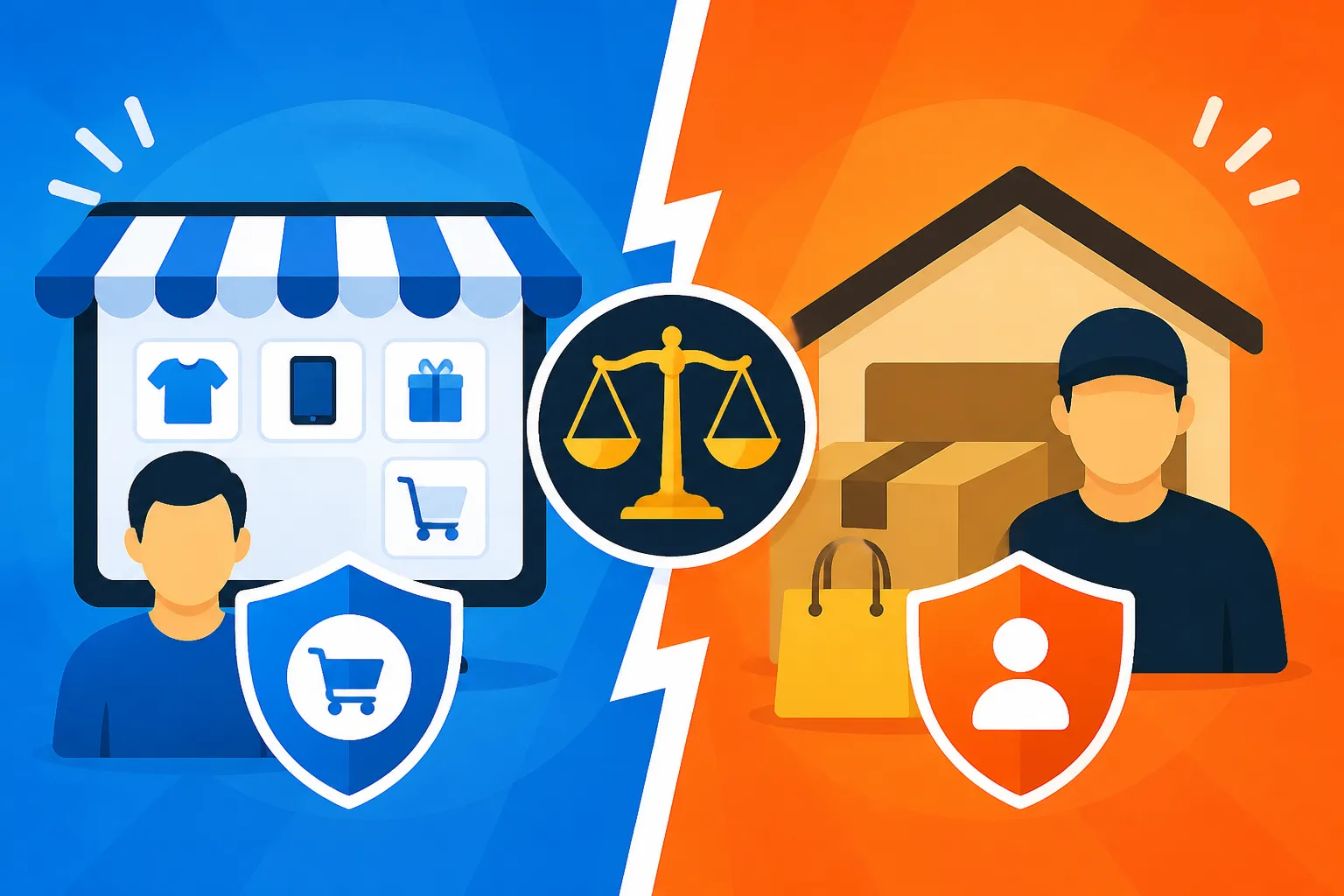
The table below summarizes the key differences in responsibilities for typical online sellers:
| Aspect | Before Marketplace Facilitator Laws (Seller's Own Direct Sales) | After Marketplace Facilitator Laws (via Platform like Amazon) |
|---|---|---|
| Nexus Determination | Seller's responsibility | Seller's responsibility (for their own nexus) & Facilitator's responsibility (for their nexus) |
| Sales Tax Permit | Required by seller if nexus established | Seller may still need one for direct sales or to report, even if facilitator collects on platform sales |
| Rate Calculation | Seller's responsibility | Marketplace Facilitator's responsibility |
| Collection from Buyer | Seller's responsibility | Marketplace Facilitator's responsibility |
| Remittance to State | Seller's responsibility | Marketplace Facilitator's responsibility |
| Reporting Sales to State | Seller's responsibility | Seller reports all sales (direct + facilitated), deducting facilitated sales; Facilitator reports their collected sales |
| Audit Liability (for collected tax) | Seller (for tax they collected) | Primarily Marketplace Facilitator (for tax they collected); Seller for uncollected direct sales |
Navigating the sales tax world as an online seller is certainly a journey. But by understanding the roles of marketplace facilitators, recognizing your own remaining responsibilities, and leveraging the right tools and strategies, you can minimize stress and stay compliant.
Disclaimer
The information provided in this guide is for informational purposes only and does not constitute tax, legal, or accounting advice. Sales tax laws are complex and constantly changing. Always consult with a qualified tax professional or state tax authority for advice tailored to your specific situation.