Do I Need to Collect Sales Tax in California?
It can feel like navigating a dense fog when trying to figure out if your business needs to collect sales tax in California. With its massive economy and intricate local tax jurisdictions, many business owners, especially those selling online, find themselves constantly asking: "Do I actually need to collect sales tax in California?" The good news is, you're not alone in that confusion, and this guide is here to clear the air, breaking down the exact triggers that create a sales tax obligation in the Golden State, from physical footprints to economic thresholds.
The Foundation: Understanding Sales Tax Nexus in California
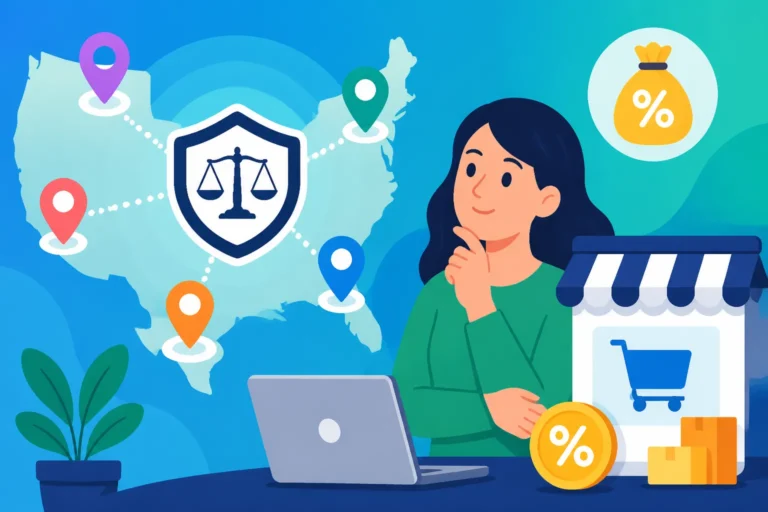
Before you even think about calculating rates or filing returns, the absolute first step is to determine if your business has "nexus" in California. Nexus is just a fancy legal term that means your business has a significant enough presence or connection to a state to be required to collect and remit sales tax. Without nexus, you generally aren't obligated to collect sales tax from your customers in that state. With California being such a large and economically influential state, understanding its specific nexus rules is crucial.
What Exactly is Sales Tax Nexus?
At its core, sales tax nexus is the link between your business and a state that obligates you to collect sales tax from buyers within that state. Think of it as the state drawing a line in the sand and saying, "If your business crosses this line, you're part of our tax system." Historically, this line was drawn almost exclusively by a physical presence. If you had a brick-and-mortar store, an office, employees, or even inventory in a state, you had physical nexus.
However, the world of commerce has changed dramatically, largely thanks to the internet. The Supreme Court's 2018 ruling in South Dakota v. Wayfair revolutionized sales tax, introducing the concept of "economic nexus." This means that even if you don't have a single physical toe in California, you could still be required to collect sales tax if your sales into the state meet certain revenue or transaction thresholds. It’s a game-changer, especially for online sellers who might be based in, say, Oregon, but sell extensively to Californians. For a broader understanding, dive into our guide on Sales Tax Nexus Explained Physical vs Economic.
Why California's Nexus Rules are Particularly Important
California isn't just any state; it's the fifth-largest economy in the world. Its sheer size means a huge customer base and a significant amount of commerce. As such, the state's tax agencies, primarily the California Department of Tax and Fee Administration (CDTFA), are quite proactive in enforcing sales tax laws. Many businesses often grapple with the question, "Do I need to collect sales tax in California?" not just because of the state's size, but because of its detailed district taxes and strict compliance expectations. Ignoring these obligations can lead to significant penalties, interest, and audits down the line, making proactive compliance absolutely essential for anyone selling to customers in the Golden State.
Decoding California's Economic Nexus Threshold
For many online and out-of-state businesses, economic nexus is the most common and often most confusing trigger for sales tax obligations in California. It's not about having a physical storefront; it's about how much business you do in the state.
The $500,000 Sales Threshold Explained
California's economic nexus threshold is one of the highest in the nation. As of January 1, 2019, an out-of-state seller establishes economic nexus in California if their total sales of tangible personal property delivered into California exceed $500,000 in the preceding or current calendar year. It's important to stress that this isn't just about taxable sales; it's about gross sales of tangible personal property delivered into the state. This means even if you sell items that are ultimately exempt from sales tax, those sales still count towards the $500,000 threshold.
Let's break that down with an example. Imagine you sell handmade jewelry online. You're based in Arizona and have no physical presence in California. In 2024, your total sales of jewelry shipped to California customers amounted to $400,000. While this is a substantial sum, it's below California's $500,000 threshold. In this scenario, you wouldn't have economic nexus based on 2024 sales. However, if your sales suddenly surged in early 2025 and hit $550,000 by June, you would then establish economic nexus for the current calendar year (2025) as of that point. The "preceding or current calendar year" rule is vital to remember because it means you need to continuously monitor your sales figures. Our article Economic Nexus Threshold in California ($500k) provides even more detail on this specific threshold.
When Economic Nexus Doesn't Apply: The Marketplace Facilitator Effect
Here's where things get a little less complicated for many small online sellers. California, like most states, has robust marketplace facilitator laws. What does this mean for you? If you sell exclusively through a marketplace facilitator like Amazon, Etsy, eBay, or Walmart, and they are collecting and remitting sales tax on your behalf, then those sales do not count towards your $500,000 economic nexus threshold. The marketplace facilitator is the one responsible for collecting and remitting the sales tax for those transactions.
This is a huge relief for many small businesses. For example, if you sell $700,000 worth of goods to California customers, but $600,000 of those sales are through Amazon FBA and $100,000 are through your own website, you would not have economic nexus. Why? Because the $600,000 handled by Amazon doesn't count towards your individual threshold. However, if you started selling more on your own Shopify store and those direct sales to California customers hit $500,000, then you'd be on the hook. It's crucial to understand this distinction. If you want to know more about how these platforms handle sales tax, check out our guide on Marketplace Facilitator Laws by State. Tools like Avalara can integrate with various marketplaces and direct sales channels to help businesses track these thresholds accurately and ensure compliance.
Physical Nexus: More Than Just a Storefront
While economic nexus gets a lot of attention in the digital age, physical nexus is still a very real and common trigger for sales tax obligations in California. It's often more straightforward but can also be triggered by activities you might not immediately consider.
Obvious Physical Presences
Some physical presences are no-brainers. If your business has any of the following in California, you almost certainly have physical nexus:
- A brick-and-mortar store: This is the classic example. If you have a retail shop in Los Angeles or San Francisco, you have nexus.
- An office or other place of business: Even if it's just a small administrative office, a sales office, or a co-working space where you conduct business regularly, it can establish nexus.
- Employees or agents: If you have employees, salespeople, or independent contractors working for your business within California, performing tasks on your behalf, this generally creates nexus. This includes full-time staff, part-time workers, or even a single sales representative.
- A warehouse or inventory: Storing your goods in a warehouse, whether it's one you own or a third-party logistics (3PL) facility, creates nexus. This is particularly important for businesses using services like Amazon FBA, as storing inventory in Amazon's California fulfillment centers creates physical nexus for your business, regardless of your sales volume. This is a common "hidden trap" that many sellers overlook. Our article on Amazon FBA Sales Tax Nexus Explained delves into this in more detail.
Consider a hypothetical. Sarah runs an online vintage clothing store from her home in Arizona. All her sales were direct through her website. When her business started booming, she decided to store some of her popular items in an Amazon fulfillment center in Fontana, California, to speed up shipping to her West Coast customers. The moment her inventory touched down in that California warehouse, she established physical nexus in California, even if her total sales to the state were well below the $500,000 economic nexus threshold.
Less Obvious Physical Presences
Sometimes, the triggers for physical nexus are less apparent but equally valid:
- Temporary activities: Attending a trade show, craft fair, or festival in California where you sell products, even for just a few days, can establish nexus. Many states have specific rules for "transient sellers" or those engaging in temporary business activities. California is no exception. If you set up a booth at the Rose Bowl Flea Market or a festival in Golden Gate Park to sell your wares, you're likely creating nexus for the duration of that event and potentially longer.
- Affiliate nexus: While less common now due to economic nexus rules, some states used to have "click-through" or "affiliate" nexus laws. California's affiliate nexus rule was repealed, but it's a good reminder that if you have in-state representatives or affiliates who refer sales to you in exchange for commissions, this could create nexus in other states. Always be aware of all the different ways you might establish nexus.
- Delivery and installation: If your business regularly sends its own employees or agents into California to deliver, install, assemble, or repair products, those activities can create physical nexus. It's not just about selling; it's about your presence and activity within the state.
Understanding these physical triggers is just as important as monitoring your sales thresholds. It often helps to perform a regular "nexus check" to see if your business operations have expanded into California in any of these ways. For guidance on how to assess your specific situation, you might find our article How to Know If You Have Sales Tax Nexus incredibly useful.
Registering for a California Seller's Permit
So, you've figured out you have nexus in California, whether through economic activity or a physical presence. The next, absolutely crucial step is to register with the state and obtain a seller's permit. You cannot legally collect sales tax in California without one.
The Process of Obtaining Your Seller's Permit
Getting a California seller's permit (often called a Certificate of Registration) is a straightforward process, though it requires attention to detail. You'll register with the California Department of Tax and Fee Administration (CDTFA). This can typically be done online through the CDTFA's website.
Here's a general idea of what you'll need:
- Your business information: This includes your federal Employer Identification Number (EIN) or your Social Security Number (SSN) if you're a sole proprietor without employees.
- Business legal name and "doing business as" (DBA) name, if applicable.
- Business address and mailing address.
- Contact information: Phone number and email.
- Business activity description: What kind of products or services do you sell?
- Start date of sales in California: This is important for determining your past obligations if you're registering retroactively.
- Estimated monthly taxable sales. This helps the CDTFA determine your filing frequency.
Once you submit your application, the CDTFA will review it and issue your seller's permit. There's typically no fee to obtain a seller's permit in California, but you may be asked to post a security deposit if you're a new business or have a history of non-compliance. You'll then receive a physical permit that you should display prominently if you have a physical location. For a step-by-step walkthrough, our resource on How to Get a Seller's Permit in California can guide you through the application process.
Collecting the Right Sales Tax Rate
Once you have your seller's permit, your obligation shifts to collecting sales tax from your California customers. This is where California's sales tax system can get particularly tricky. The statewide base sales tax rate is 7.25%, but almost every city and county in California levies additional "district taxes," which means the actual combined sales tax rate can vary significantly depending on the customer's location. For example, a customer in Los Angeles might pay a higher rate than someone in a less densely populated county.
California is generally a "destination-based" sales tax state for intrastate sales. This means that if you're based in California and sell to a customer also in California, you collect sales tax based on the customer's shipping address. For interstate sales (you're an out-of-state seller with nexus selling to a California customer), it's also destination-based. This requires precise rate lookup capabilities, often down to the exact street address, because even within a single ZIP code, district taxes can change. Knowing your Sales Tax by ZIP Code and Why ZIP Isn't Enough is vital here.
Take the example of a clothing retailer based in San Diego with nexus in California. If they sell a jacket to a customer in Sacramento, they would need to charge the combined sales tax rate for Sacramento, which includes the statewide rate plus any applicable district taxes in Sacramento. The complexities of California District Taxes Explained mean that manually looking up rates for every single transaction is nearly impossible for most businesses. This is where sales tax software becomes invaluable, as it can automatically calculate the precise tax rate based on the customer's address at the point of sale. Many businesses use solutions like Avalara to ensure they are collecting the correct, ever-changing rates across California's numerous jurisdictions.
Navigating California's Sales Tax Filing and Remittance
Once you've collected sales tax, you have a fiduciary duty to remit it to the state. This isn't your money; it belongs to the state of California.
Understanding Your Filing Frequency
When you register for your seller's permit, the CDTFA will assign you a filing frequency—typically annually, quarterly, or monthly. This frequency is usually determined by your estimated sales tax liability. Businesses with higher sales tax collections will generally be required to file more frequently. For example, if you're a high-volume seller with significant sales tax collections each month, you'll likely be assigned a monthly filing frequency. If your sales tax liability is lower, you might be able to file quarterly or even annually. It’s crucial to adhere to these assigned frequencies to avoid penalties. Our article on Sales Tax Filing Frequency Explained offers a general overview of how this works.
How to File Your California Sales Tax Returns
California encourages electronic filing, and it's the most common method. You can file your sales tax returns directly through the CDTFA's online services portal. On your return, you'll report your total sales, your taxable sales, and the sales tax you collected for the filing period. You'll also account for any deductions or exemptions. If you collected sales tax in multiple districts, the return will usually require you to break down your sales by those district jurisdictions.
For many businesses, especially those with sales across multiple California districts or even multiple states, managing this manually can be a full-time job. This is why many opt for automated sales tax solutions. Platforms like Avalara can integrate with your e-commerce platform or accounting software, automatically tracking sales, calculating tax, and even preparing and filing your returns for you. This significantly reduces the risk of errors and ensures you meet all your filing deadlines. For a broader look at tax solutions, our comparison of Avalara vs TaxJar: Which Sales Tax Software? might be helpful.
Key Takeaways for California Sales Tax Compliance
California's sales tax landscape can seem daunting, but breaking it down into manageable pieces makes it much clearer. The fundamental principles remain consistent: establish nexus, get permitted, collect correctly, and file on time.
- Nexus is paramount: Whether through physical presence (like a store, office, or even inventory in an Amazon FBA warehouse) or economic activity (exceeding $500,000 in gross sales to California residents), determining your nexus status is the first critical step.
- Marketplace facilitators can simplify things: If you sell only through platforms like Amazon or Etsy, they typically handle the sales tax, but be mindful of your direct sales on your own website.
- Rates are complex: California's base rate combined with numerous district taxes means accurate rate lookup based on the destination address is essential.
- Registration is mandatory: You must obtain a California Seller's Permit from the CDTFA before you start collecting sales tax. You can find detailed instructions in our Sales Tax Registration Guide for California.
- Automation helps: Given the complexities, especially with destination-based sourcing and district taxes, sales tax automation software can be a lifesaver for ensuring compliance and preventing costly errors.
Staying on top of your sales tax obligations in California isn't just about avoiding penalties; it's about running a legitimate, successful business. By understanding these rules, you can operate with confidence and ensure you're contributing correctly to the Golden State's economy.
Disclaimer
The information provided in this guide is for informational purposes only and does not constitute professional tax or legal advice. Sales tax laws are complex and subject to change. Always consult with a qualified tax professional or the California Department of Tax and Fee Administration (CDTFA) for advice tailored to your specific business situation.