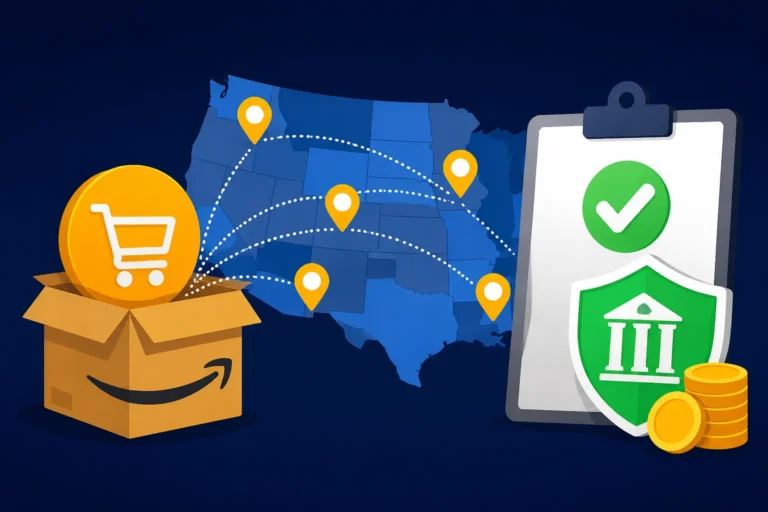
SaaS & Digital Nexus for Sellers
It can feel incredibly daunting trying to figure out your sales tax obligations, especially when you're selling digital products or Software-as-a-Service (SaaS). It's not like selling a physical widget where the rules feel a little more straightforward; the intangible nature of digital goods and services adds layers of complexity that leave many online sellers scratching their heads. This guide is designed to cut through that confusion, helping you understand the concept of nexus as it applies specifically to SaaS and digital products, and what you need to do to stay compliant.
Understanding Sales Tax Nexus in the Digital Age
The world of sales tax has changed dramatically, particularly for businesses operating entirely online with digital offerings. What used to be a relatively simple concept tied to a physical storefront or warehouse has morphed into a multifaceted challenge, especially for those in the SaaS and digital product space.
The Traditional Physical Nexus vs. New Realities
For decades, the standard rule for sales tax was rooted in "physical nexus." This meant if your business had a physical presence in a state – think a brick-and-mortar store, an office, a warehouse, or even employees working from home – then you had a responsibility to collect sales tax from customers in that state. It was a tangible concept, easy to grasp. However, the rise of e-commerce and the digital economy threw a massive wrench into this system. Suddenly, businesses could sell to customers all over the country without ever setting foot in those states. This created a loophole where online sellers weren't collecting sales tax, putting local businesses at a disadvantage and depriving states of revenue.
This inequity led to the landmark 2018 Supreme Court decision in South Dakota v. Wayfair. This ruling completely reshaped the sales tax landscape by introducing the concept of economic nexus. No longer did you need a physical presence; simply conducting enough business in a state could create a sales tax obligation. For digital product sellers, this was a game-changer, as it meant their entirely online operations could now create nexus in states where they had no physical ties whatsoever. Understanding how this decision impacts your specific business is crucial for anyone involved in digital commerce, and you can dive deeper into its implications by reading about South Dakota v. Wayfair: What It Means for Sellers.
What is Economic Nexus for Digital Sellers?
Economic nexus, in simple terms, means that if your sales into a particular state reach a certain monetary threshold or transaction count within a specific period (usually the current or previous calendar year), you're considered to have a significant enough economic presence to require collecting and remitting sales tax in that state. The exact thresholds vary wildly from state to state, which is where much of the headache begins for digital sellers.
Most states have adopted an economic nexus threshold of $100,000 in gross sales or 200 separate transactions, or sometimes both. For instance, a state might say you have economic nexus if you make $100,000 in sales or have 200 transactions, even if your total sales are less than $100,000. Other states might require both thresholds to be met. The challenge for digital sellers is that high-volume, low-value sales (like a $5 e-book) can quickly rack up transaction counts, while higher-value SaaS subscriptions can rapidly hit monetary thresholds. This means a seller might easily cross a threshold in dozens of states without even realizing it until they do a deep dive into their sales data. Tracking these ever-changing thresholds across all 45+ states that have a statewide sales tax, plus numerous local jurisdictions, is a monumental task that often requires specialized software or significant manual effort. You can learn more about these requirements in our guide on Economic Nexus by State 2026: Thresholds Guide.
The Specifics of SaaS Sales Tax Nexus
Selling Software-as-a-Service presents unique challenges because states often struggle with how to classify it for tax purposes. Is it a product? A service? A hybrid? The answer dictates your sales tax obligations.
Is SaaS a Service or a Product? Why It Matters
The classification of SaaS for sales tax purposes is perhaps one of the biggest sticking points for digital businesses. Traditionally, sales tax applied to tangible personal property – items you can touch and feel. Services were often exempt unless specifically listed as taxable by a state. SaaS, being delivered remotely over the internet, doesn't fit neatly into either box, leading to a patchwork of state laws.
Many states use a "true object" or "essential purpose" test to determine if SaaS is taxable. If the customer's primary objective is to gain access to software functionality without acquiring a copy of the software itself, it might be deemed a service. However, some states view the use of software, even if not owned, as a taxable transaction. For example, Texas considers data processing services, which can include many SaaS offerings, as taxable if more than 20% of the charge is for information services. New York generally taxes SaaS as a prewritten computer software service, while California often treats it as a non-taxable service unless it involves the transfer of tangible personal property. This means that a SaaS provider could have nexus in New York and Texas, collecting sales tax from customers in those states, but not in California, despite having a similar sales volume in all three. This deep dive into Is SaaS Taxable? Software-as-a-Service by State will help clarify the nuances across jurisdictions.
Common Triggers for SaaS Nexus
Beyond the economic nexus thresholds we've already discussed, several other factors can trigger a sales tax nexus for SaaS providers. These generally fall under the umbrella of physical nexus, even if they're not obvious.
One significant trigger is having physical infrastructure within a state, even if it's not a traditional office. If your company owns or leases servers or data centers located in a particular state, that can establish physical nexus. While many SaaS providers rely on cloud services like Amazon Web Services (AWS) or Microsoft Azure, it's important to understand the terms of those services and whether their infrastructure could inadvertently create nexus for your business in a particular state. Another common trigger is having employees or third-party contractors working remotely within a state. Even if your headquarters are in Delaware (a state with no sales tax), if you have a software developer or a sales representative working from their home office in Florida, that can be considered a physical presence, establishing nexus in Florida. Additionally, engaging in affiliate marketing programs, where individuals or other businesses in a state refer customers to your SaaS product in exchange for a commission, can sometimes create "click-through nexus" in certain states. These varied triggers mean that even a fully remote SaaS company needs to be vigilant about its footprint across the country.
Digital Products and Sales Tax Nexus
Digital products, like e-books or downloadable software, share many of the same nexus complexities as SaaS, but with their own distinct characteristics. Their intangible nature means states have had to develop new rules to determine if and how to tax them.
Defining Digital Products for Sales Tax Purposes
Digital products encompass a wide array of offerings that are delivered electronically without a physical medium. This includes items like downloadable software (not SaaS, but a one-time download), e-books, online music, streaming content subscriptions (think Netflix or Spotify), digital magazines, online courses, website templates, and even digital art or photography. The key characteristic is that they are received by the customer via electronic means, like a download or streaming access.
The challenge, once again, is state-by-state variation. Some states treat digital products as "tangible personal property," even though they're intangible, because they function similarly to physical goods (e.g., you "own" an e-book). Other states classify them as "services" or create entirely new categories for "digital goods." The location for sales tax purposes is almost always the customer's location, making it critical for sellers to accurately identify where their buyers reside. For example, a customer in Georgia buying a downloadable e-book would be subject to Georgia sales tax, while a customer in California would typically not pay sales tax on the same e-book, as California generally exempts pure digital goods. It’s a labyrinth, and our guide on Digital Products Sales Tax by State delves into these specific classifications.
How Digital Sales Establish Nexus
For most sellers of digital products, economic nexus is the primary way they establish a sales tax obligation in a state. As mentioned earlier, hitting a state's sales volume ($100,000) or transaction count (200 transactions) threshold typically triggers this. If you're selling low-cost digital items like stock photos or small software utilities, those transaction counts can accumulate incredibly fast, leading to nexus in numerous states before your revenue even feels substantial.
Beyond direct sales, sellers of digital products also need to consider marketplace facilitator laws. If you're selling your e-books on a platform like Amazon Kindle Direct Publishing or your software on the Apple App Store, these platforms often act as "marketplace facilitators." This means they are responsible for calculating, collecting, and remitting sales tax on your behalf in many states. This significantly simplifies compliance for sellers using these platforms. However, if you also sell the exact same digital product directly from your own website, you remain responsible for collecting sales tax on those direct sales in any state where you have nexus. It’s vital to understand Marketplace Facilitator Laws by State and how they apply to your specific selling channels. Determining the correct sales tax rate for digital products also adds a layer of complexity; unlike physical goods where the shipping address is often clear, digital products require careful consideration of the customer's billing address, IP address, or other data points to determine the correct jurisdiction.
Navigating the Complexities of Multi-State Nexus
Once you've established nexus in multiple states, the real fun begins: managing compliance across all of them. This isn't just about collecting tax; it's about registration, filing, and staying on top of ever-changing rules.
Tracking Economic Nexus Across All 45+ States
The core challenge for any online seller, especially those dealing with SaaS and digital products, is the sheer variety of economic nexus laws. Each of the 45 states (plus D.C.) that have a statewide sales tax has its own unique set of rules. While many states align with the $100,000 in sales or 200 transactions standard, there are crucial differences. Some states only look at gross sales, meaning all sales before deductions, while others look at taxable sales. Some have higher thresholds, like California's $500,000 threshold, while others still include the 200-transaction count that some states have since dropped.
This means a digital seller must continually monitor their sales data against the specific thresholds for every state they sell into. This isn't a "set it and forget it" task; states frequently update their laws, and what triggers nexus today might change next year. Imagine tracking individual transactions and revenue streams for hundreds or thousands of customers across all these states, calculating what counts towards each state's specific threshold, and doing this accurately every month or quarter. It’s a task that quickly becomes impossible to manage manually for any growing business. This is why understanding your total sales picture and tracking it accurately is paramount, as detailed in our comprehensive Sales Tax for Online Sellers: Complete Guide.
Registration and Compliance Once Nexus is Established
When you hit an economic nexus threshold in a state, your first step is to register for a sales tax permit (sometimes called a seller's permit, certificate of authority, or vendor's license). This isn't optional; it's a legal requirement before you can begin collecting tax. Each state has its own registration process, which can vary from a simple online application to more involved paperwork requiring your business's legal entity information, federal EIN, and projected sales. Our guide on How to Get a Sales Tax Permit by State offers state-specific instructions.
Once registered, you'll be assigned a filing frequency (e.g., monthly, quarterly, annually) based on your projected or actual sales volume in that state. You'll then need to collect the appropriate sales tax from your customers, file returns, and remit the collected tax to the state by the specified due dates. Even if you make no sales in a state during a filing period, you often still need to file a "zero return" to remain compliant. For businesses with nexus in many states, this means managing dozens of permits, understanding different local tax rates (like district taxes in California or parish taxes in Louisiana, which can apply to digital goods if the state taxes them), and submitting numerous filings each year. It’s a lot to juggle, to say the least. Fortunately, for some states, programs like the Streamlined Sales Tax (SST) Governing Board aim to simplify this process for businesses, allowing for a single registration and filing process for multiple member states, though not all states are members.
The Role of Technology in Digital Sales Tax Compliance
Given the overwhelming complexity of multi-state sales tax for SaaS and digital products, relying on manual processes is a recipe for errors, missed deadlines, and potential penalties. This is where technology becomes not just helpful, but absolutely essential.
Automation for Nexus Tracking and Rate Determination
Imagine trying to keep track of every single sale, where the customer is located, and how that sale contributes to the economic nexus threshold in potentially all 45+ sales tax states. For many digital sellers, this means thousands of transactions per month. Sales tax automation software is designed to handle this burden. These tools connect to your e-commerce platform or billing system (like Stripe or PayPal) and automatically monitor your sales volume and transaction count for each state. When you approach or cross an economic nexus threshold, the software can alert you, indicating it's time to register.
Beyond nexus tracking, perhaps the most critical function for digital product and SaaS sellers is accurate sales tax rate determination. For physical goods, you might think a ZIP code is enough, but as our article on Sales Tax by ZIP Code (and Why ZIP Isn't Enough) explains, it's far more granular. For digital goods, you need sophisticated software that can pinpoint the exact jurisdiction (state, county, city, and any special district taxes) based on the customer's address. Tools like Avalara, a leading provider in sales tax automation, can calculate these rates in real-time at the point of sale, ensuring you collect the correct amount from customers, whether they're buying an e-book in Seattle, Washington, or subscribing to your SaaS in Houston, Texas. This granular accuracy is vital for compliance and avoiding under- or over-collection.
Collection, Remittance, and Reporting for Digital Sales
Once you know where you have nexus and what rates to charge, the next step is actually collecting, remitting, and reporting that sales tax. Sales tax automation software streamlines this entire process.
First, these solutions integrate with your checkout process, automatically applying the correct sales tax to each transaction based on the customer's location and the taxability rules for your specific digital product or SaaS in that state. This removes the guesswork from the customer's end and ensures you're collecting what you're legally required to. Second, at the end of each filing period, the software can generate accurate, audit-ready reports, breaking down collected taxes by state, county, and city. This eliminates the need for manual calculations and reduces the risk of errors when preparing your returns. Finally, many advanced sales tax platforms, including solutions offered by companies like Avalara, can even automate the filing and remittance process, directly submitting your sales tax returns and payments to the various state departments of revenue. This complete automation is invaluable, especially for companies with a broad customer base, ensuring that every penny collected is accounted for and paid on time, avoiding costly penalties. If you're looking for an automated solution, you might find our guide on Best Sales Tax Compliance Software 2027 helpful.
Best Practices for SaaS and Digital Product Sellers
Navigating sales tax can feel like a full-time job in itself, but with the right strategies and a proactive approach, you can manage your obligations effectively and minimize risk.
Proactive Nexus Assessment and Review
Don't wait for an audit notice to discover you have nexus in a new state. Proactively assessing your nexus footprint is a critical best practice for any digital seller. This means regularly reviewing your sales data, ideally monthly or quarterly, to see if your sales volume or transaction counts are approaching or exceeding the economic nexus thresholds in new states. Keep a close eye on your revenue and transaction counts by state. If you suddenly see a surge in customers from a state you previously ignored, that's a red flag to investigate its nexus laws.
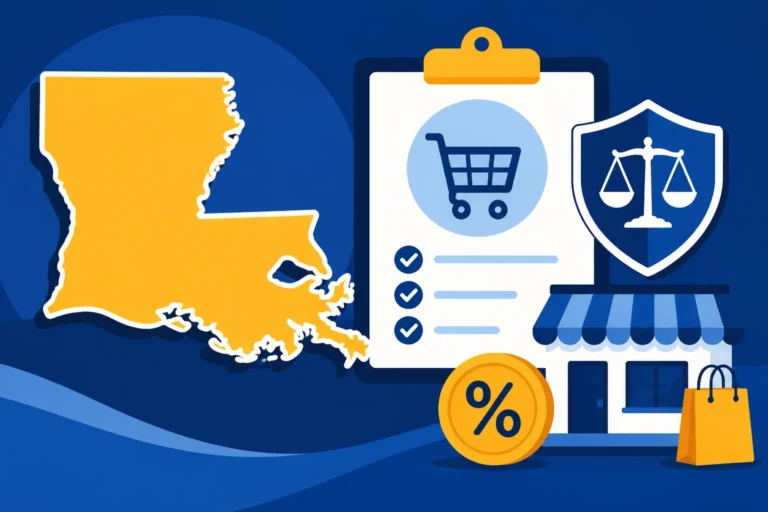
It's also crucial to stay informed about changes in state sales tax laws. States frequently update their taxability rules for SaaS and digital products, change their economic nexus thresholds, or introduce new local taxes. What was non-taxable yesterday might be taxable tomorrow. For example, Louisiana recently started taxing SaaS, a significant change for providers selling into that state. Regularly consulting resources that track these updates, such as our posts on 2026 Sales Tax Rate Changes by State, can help you stay ahead of the curve. Consider setting calendar reminders to review your sales against thresholds at regular intervals. For complex situations or when you're unsure, consulting with a sales tax professional who specializes in digital goods can provide invaluable guidance.
Utilizing Exemption Certificates for B2B Sales
While many of your sales to end-users (B2C) will be taxable if you have nexus, sales to other businesses (B2B) for resale or integration into their own products or services can often be exempt. This is where resale certificates come into play.
If you sell SaaS or digital products to another business that intends to resell your product, or incorporate it into a new product that they then sell to their own customers, their purchase from you might be exempt from sales tax. To qualify for this exemption, the buying business typically needs to provide you with a valid resale certificate. This certificate acts as proof that they are registered to collect sales tax themselves and will be responsible for taxing the end consumer. For a SaaS provider, for instance, if you sell an API (Application Programming Interface) service to another software company that then uses your API as a component of their own taxable software application, their purchase might be exempt. It's your responsibility to collect and properly store these certificates. Failing to do so can leave you liable for the uncollected sales tax during an audit. Ensuring you have a robust system for collecting, validating, and retaining these certificates is just as important as collecting the tax itself.
Sales Taxability for SaaS and Digital Products by State (Examples)
Here's a snapshot of how a few states approach sales tax on SaaS and digital products, illustrating the diversity you'll encounter:
| State | SaaS Taxability (General Rule) | Digital Products (General Rule) | Economic Nexus Threshold (Sales/Transactions) |
|---|---|---|---|
| California | Generally Non-Taxable (service) | Generally Non-Taxable (intangible) | $500,000 (sales) |
| New York | Taxable (prewritten software service) | Taxable (prewritten software, e-books, streaming) | $500,000 (sales) OR 100 (transactions) |
| Texas | Taxable (data processing service, if 20%+ for info service) | Taxable (e-books, music, software downloads) | $500,000 (sales) |
| Illinois | Generally Non-Taxable (service) | Taxable (certain streaming, downloads, if property) | $100,000 (sales) AND 200 (transactions) |
| Washington | Taxable (digital automated services) | Taxable (digital goods, streaming) | $100,000 (sales) OR 200 (transactions) |
Disclaimer: This table provides general rules and should not be considered legal or tax advice. Specific situations may vary, and state laws are subject to change. Always consult a tax professional for advice tailored to your business.
Disclaimer
The information provided in this article is for general informational purposes only and does not constitute tax, legal, or accounting advice. Sales tax laws are complex and constantly evolving, varying significantly by state and local jurisdiction. You should consult with a qualified tax professional to discuss your specific situation and ensure compliance with all applicable tax laws.