Ohio Sales Tax Holiday 2026 Guide
Navigating the labyrinth of sales tax can feel like a full-time job, especially when you're trying to figure out if you can catch a break on those back-to-school essentials. It's frustrating to constantly wonder if that big purchase will suddenly have an extra chunk added to its price tag. This comprehensive guide is here to clear up all the confusion surrounding the Ohio Sales Tax Holiday for 2026, helping both shoppers and businesses understand what's included, what's not, and how to make the most of this tax-saving opportunity.
Understanding Ohio's Sales Tax Holiday
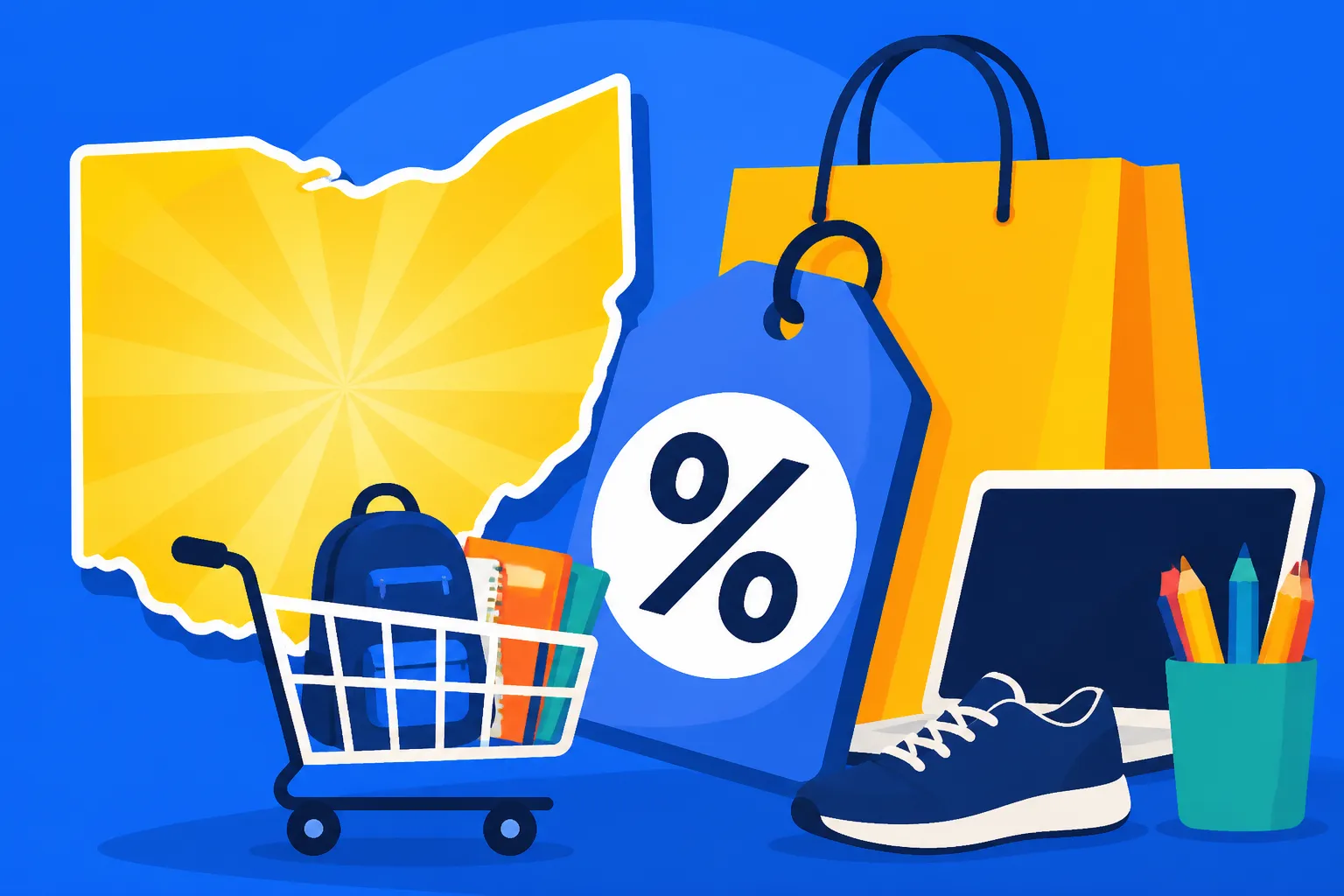
Ohio's annual sales tax holiday is a much-anticipated event for families and budget-conscious shoppers across the state. It offers a temporary reprieve from paying state and local sales taxes on specific items, primarily focusing on back-to-school necessities like clothing and school supplies. The idea behind these holidays, which many states implement, is to give consumers a bit of a financial break and stimulate retail activity during a traditionally busy shopping period. For many parents, it’s not just about saving a few dollars; it’s about making sure their kids are fully equipped for the academic year without breaking the bank after a long summer.
The Purpose Behind Sales Tax Holidays
At its core, the Ohio Sales Tax Holiday is designed to alleviate some of the financial burden on families gearing up for a new school year. Think about it: sending even one child back to school can involve a hefty shopping list, from new outfits that fit, to binders, pens, and scientific calculators. When you multiply that by multiple children or factor in the rising cost of goods, every little bit helps. The state understands this, and by temporarily suspending sales tax on certain items, it hopes to put more money back into the pockets of its citizens, encouraging them to spend locally.
Moreover, these holidays can also provide a boost to local businesses. When shoppers know they can save on sales tax, they're more likely to head to brick-and-mortar stores or local online retailers within Ohio, rather than crossing state lines or waiting for major sales events. This influx of consumer spending can be a real shot in the arm for small businesses during a crucial time of year. It's a win-win, really: shoppers save, and businesses see increased traffic. You can learn more about specific Sales Tax Rates by State 2026: All 50 States to understand how Ohio's base rate compares to its neighbors.
General Rules for the Ohio Sales Tax Holiday
While the specific dates and item limitations might shift slightly from year to year, the general framework of Ohio's sales tax holiday remains consistent. During the designated period, eligible purchases are exempt from Ohio's 5.75% statewide sales tax, as well as any applicable local sales taxes. This means the savings can be even more substantial in areas with higher local rates, such as those found in larger cities. The key is that items must meet specific criteria, typically relating to their type (e.g., clothing, school supplies) and their price cap. This isn't a free-for-all on all purchases, so understanding the limits is crucial to truly benefit.
It’s important to note that the exemption applies at the point of sale. You don't pay the tax and then apply for a refund later. The retailer simply doesn't charge you sales tax on the qualifying items during the holiday period. This makes it straightforward for shoppers, but it does mean businesses need to be prepared to properly configure their point-of-sale systems, especially if they use sales tax compliance software like Avalara to ensure accurate calculations during these special periods. The goal is to make the shopping experience as smooth as possible for everyone involved.
Key Dates and Eligibility for Ohio's 2026 Sales Tax Holiday
For 2026, the Ohio Sales Tax Holiday is expected to follow its traditional schedule, typically kicking off in early August, just as school preparations hit their peak. Based on past patterns, shoppers can anticipate the tax holiday to run for a full weekend, giving ample time to snatch up those necessities. Staying on top of these dates is paramount if you want to take full advantage of the savings, because once the clock strikes midnight on the last day, sales tax will apply again.
Anticipated Dates for 2026
While official dates are typically confirmed closer to the event by the Ohio Department of Taxation, based on historical precedent, we can expect the 2026 Ohio Sales Tax Holiday to run during the first full weekend of August. This would mean it likely starts on a Friday and concludes on the following Sunday evening. For example, if August 1st, 2026, falls on a Friday, then the holiday could potentially be August 1st-3rd, 2026. However, it's always best to double-check the official announcements from the state as the year progresses. Mark your calendars, but remain flexible until the final word comes down!
This timing is strategic, aligning perfectly with the last push for back-to-school shopping. Parents are usually trying to get everything sorted before classes resume, and retailers are stocking up on inventory. Knowing these dates helps everyone plan their shopping trips, whether it’s a quick run to a department store or a more leisurely browse through different shops. Businesses, too, use these dates to schedule staff, stock shelves, and make sure their systems are ready to handle the increased demand and the special tax exemptions.
Eligible Items and Price Limitations
This is where many people get tripped up. The Ohio Sales Tax Holiday isn't a blanket exemption for everything in the store. It's very specific, focusing on "back-to-school" type items. Generally, the categories include:
- Clothing: Most articles of clothing up to a certain price per item. This usually includes shirts, pants, dresses, coats, underwear, and shoes. The common limit is $75 per item.
- School Supplies: Items commonly used by students in a course of study, up to a certain price per item. This covers things like pencils, pens, erasers, notebooks, paper, binders, crayons, glue, rulers, and scissors. The usual limit is $20 per item.
- School Instructional Materials: This can include things like textbooks, workbooks, or other printed materials designed for classroom use. These also typically have a $20 per item limit.
It's crucial to pay close attention to the per item limit. If you buy a pair of jeans for $70, it's tax-free. If you buy a winter coat for $100, only the first $75 might be tax-free, or the entire item might be taxable if it exceeds the limit, depending on how the rule is interpreted (most states make the entire item taxable if it goes over). Always assume the more conservative interpretation or check the official guidance. For school supplies, if you're buying a $25 backpack, it might be taxable, whereas a $15 notebook would be exempt.
Here’s a quick table to help visualize typical eligibility:
| Category | Description | Typical Price Limit (per item) |
|---|---|---|
| Clothing | Shirts, pants, dresses, coats, shoes, underwear, socks, etc. | $75 |
| School Supplies | Pencils, pens, notebooks, paper, binders, crayons, glue, rulers, calculators, etc. | $20 |
| School Instructional Materials | Textbooks, workbooks, maps, globes | $20 |
Keep in mind that accessories like jewelry, watches, handbags, briefcases, or sporting equipment are generally not included. Similarly, items like protective masks (unless explicitly for a school sport), cosmetics, or cleaning supplies don't usually make the cut, even if a student might use them. Knowing what is taxable and what isn't can be complex, and tools like those offered by Avalara can assist businesses in classifying items correctly.
Items That Are Typically Excluded
Beyond the specific price caps, there are several categories of items that generally do not qualify for the sales tax exemption, even if you might think a student could use them. This is often a source of confusion for shoppers, and it’s important to clarify to avoid disappointment at the checkout.
For instance, sporting goods are usually a no-go. That new basketball for gym class or soccer cleats for the school team will likely still be subject to sales tax. Recreational equipment, like bicycles or video games, are definitely out. Books that are not specifically designated as "school instructional materials" – think leisure reading or novels – are also typically excluded, as the holiday focuses on academic necessities, not general entertainment or enrichment.
Furniture, even if it's for a student's desk, does not qualify. Neither do electronics like laptops, tablets, or smartphones, despite their undeniable importance in modern education. These items usually carry higher price tags and are considered outside the scope of the targeted "back-to-school" essentials that the sales tax holiday aims to cover. Understanding these exclusions can help you plan your budget more effectively and prevent any surprises when you're at the register.
How to Maximize Your Savings During the Holiday
Making the most of the Ohio Sales Tax Holiday requires a bit of planning, whether you’re a shopper looking for deals or a business aiming to provide a smooth experience. It's not just about showing up; it's about strategizing your purchases to get the biggest bang for your buck.
Tips for Shoppers
For families, the sales tax holiday is a prime opportunity to stock up. Here are some pointers to help you save:
- Make a Detailed List: Before the holiday begins, sit down with your children and create a comprehensive list of all school supplies and clothing they'll need. Check current inventory at home to avoid buying duplicates. Having a list helps you stick to necessities and avoid impulse purchases on non-eligible items.
- Check Price Limits Carefully: Double-check the exact price limits for clothing and school supplies for the 2026 holiday once they are officially announced. If an item is just over the limit, consider if there's a comparable, slightly cheaper option that would qualify for the exemption. Sometimes, splitting larger purchases or looking for bundles might also help.
- Combine with Sales and Coupons: The tax holiday is an additional saving, not exclusive. Many retailers run special promotions, sales, and offer coupons during this peak shopping season. Stack these discounts on top of the sales tax exemption for even greater savings. Imagine getting 20% off an already tax-exempt shirt!
- Shop Early (or Strategically): Stores can get incredibly busy during the sales tax holiday weekend. If you prefer to avoid crowds, try to shop early on Friday, or during off-peak hours on Saturday or Sunday. Many retailers also extend the tax-free savings to online purchases for delivery within Ohio, so you might be able to shop from the comfort of your home. Always confirm if online purchases are included and if they are sourced correctly – you can learn more about Origin vs Destination Sales Tax Sourcing to understand how that works.
- Don't Forget the Basics: It’s easy to focus on clothes, but things like socks, underwear, and basic T-shirts can add up. These often fall well within the price limits and are items kids constantly need. Stocking up on these during the holiday can make a noticeable difference in your overall spending.
Advice for Businesses
Retailers in Ohio have a unique opportunity during the sales tax holiday, but it also comes with responsibilities. Being prepared ensures a smooth experience for both your customers and your operations.
- Communicate Clearly: Make sure your customers know about the sales tax holiday! Use signage, social media, email newsletters, and website banners to highlight the dates and eligible items. Clear communication reduces confusion at the register.
- Train Your Staff: Your cashiers are on the front lines. They need to be thoroughly trained on what items are eligible, what the price limits are, and how to process the transactions correctly. A well-informed staff makes the checkout process efficient and positive.
- Update POS Systems: Ensure your point-of-sale (POS) systems are properly configured to automatically apply the sales tax exemption to qualifying items within the specified dates. Manual overrides can lead to errors and slow down lines. Sales tax software providers, such as Avalara, specialize in helping businesses manage these kinds of temporary tax rule changes seamlessly, ensuring compliance without headaches.
- Manage Inventory: Anticipate increased demand for eligible items and stock your shelves accordingly. Running out of popular school supplies or common clothing sizes can lead to frustrated customers who might take their business elsewhere.
- Review Return Policies: Consider how returns of tax-exempt items will be handled after the holiday. If a customer returns an item that was purchased tax-free during the holiday, the refund should reflect the original tax-exempt price. If they try to return it after the holiday and swap it for a different item, ensure your system correctly applies tax to the new item if it's no longer eligible. Understanding How Do Sales Tax Rate Changes Take Effect? can give you insight into the complexities retailers face.
Common Questions and Misconceptions
Despite the regularity of sales tax holidays, there are always questions and misunderstandings that pop up. Let's tackle some of the most common ones specific to Ohio.
What if an item costs more than the limit?
This is a frequent point of confusion. In Ohio, if an item exceeds the designated price limit (e.g., a pair of shoes costs $80, but the limit for clothing is $75), the entire purchase price of that single item is generally subject to sales tax, not just the amount over the limit. So, if you buy that $80 pair of shoes, you'll likely pay sales tax on the full $80. It's not like a coupon where only a portion is reduced. This is a crucial distinction and often catches shoppers off guard. Always assume the most conservative interpretation unless the Ohio Department of Taxation explicitly states otherwise. This is why careful planning and adherence to the price caps are so important.
For businesses, this means your POS system must be capable of recognizing when an item's price crosses the threshold and applying the full sales tax appropriately. Relying on robust sales tax compliance tools can automate this complex rule, preventing errors that could lead to audits or customer dissatisfaction.
Does the holiday apply to online purchases?
Yes, typically the Ohio Sales Tax Holiday does apply to online purchases, as long as the items are eligible and shipped to an address within Ohio during the holiday period. However, there are a couple of important nuances:
- Shipping & Handling: While the item itself might be tax-exempt, shipping and handling charges can sometimes be taxable, depending on Ohio's specific rules for these fees. In many states, if the item being shipped is tax-exempt, the shipping associated with it also becomes exempt. However, it's not a universal rule, so always check the specific guidance from the Ohio Department of Taxation for 2026. This detail can significantly impact the total cost, especially for larger online orders.
- Order Fulfillment Date: The key is when the sale occurs, not necessarily when the item is delivered. If you place an order online during the tax holiday, but it ships after the holiday, it should still be tax-exempt if the transaction was completed during the eligible window. However, if you place the order before the holiday but it ships during, it might not qualify. The best practice is to complete your online purchases within the actual holiday timeframe.
- Marketplace Facilitators: If you're buying from a marketplace like Amazon or Etsy, they are usually responsible for collecting and remitting sales tax in Ohio due to marketplace facilitator laws. During the sales tax holiday, their systems should automatically adjust for eligible items. This means you generally don't have to do anything extra, but it's always good to verify your cart total before checking out. For more on this, you might find our guide on Marketplace Facilitator Laws by State helpful.
What about "buy one get one free" or bundled items?
These scenarios can be a bit tricky. Here's a general approach:
- "Buy One Get One Free" (BOGO): If you buy one eligible item at full price and get another eligible item free, the "free" item's value is often factored into the total to determine if the first item still falls under the price limit. However, usually, the item for which you pay money is the one being evaluated against the price threshold. If you buy a $60 shirt and get a $60 shirt free, you only paid for one $60 shirt, which is below the $75 limit. So, the transaction would typically be tax-exempt.
- Bundled Items: If a retailer bundles several eligible items together (e.g., a "school supply kit" with notebooks, pens, and folders), the total price of the bundle is usually what's evaluated against the price limits for each individual item within the bundle. So, if a bundled kit costs $30, but it contains items that individually would be under the $20 limit for school supplies, and the aggregate price for the 'supply' component is under $20 (or whatever the rule for bundles is), it might still be tax-exempt. However, if the bundle includes a $60 item alongside other school supplies and the total goes over the individual item limit, it could become taxable. Retailers need to ensure their systems correctly interpret these bundles.
The most important thing for both consumers and businesses is to refer to the specific guidance issued by the Ohio Department of Taxation for the 2026 Sales Tax Holiday, as slight interpretations or additions to the rules can occur year to year. When in doubt, it's always better to ask the retailer or consult the official state resources. Keeping up-to-date with tax obligations, especially during special events, is something sales tax software like Avalara is designed to handle, reducing the compliance burden for businesses.
How the Sales Tax Holiday Compares to Other States
Ohio isn't unique in offering a sales tax holiday, but the specifics can vary significantly from one state to another. This patchwork of rules can be incredibly confusing for businesses that operate in multiple states or for consumers who might live near state lines. Understanding these differences can highlight why precise local knowledge is so crucial.
Different Approaches to Sales Tax Holidays
While many states have sales tax holidays, they don't all follow the same script. Some states, like Florida, have multiple tax holidays throughout the year, often including distinct events for disaster preparedness items or energy-efficient appliances, in addition to their back-to-school offerings. Others, like New York or Massachusetts, have specific rules for clothing where only items below a certain threshold are exempt year-round, or they only hold holidays sporadically. You might find it interesting to compare this to the Texas Tax-Free Weekend 2026 (Aug 7-9) or the Florida Back-to-School Tax Holiday (All August) where the rules and timing might be slightly different.
The types of eligible items also differ. While clothing and school supplies are common, some states might include computers or other electronics, often with much higher price caps. For example, some states might allow laptops up to $1,000 to be tax-free, while Ohio explicitly excludes them. These variations mean that a shopping strategy that works perfectly in Ohio might not yield the same savings in a neighboring state like Pennsylvania, which famously has a year-round clothing exemption. This complexity is one of the reasons why businesses benefit from integrated sales tax solutions to ensure they’re always charging the correct rate, regardless of the state or the specific holiday.
Why Knowing Your State's Rules is Critical
For businesses, failing to correctly apply sales tax during a holiday can lead to significant issues. If you accidentally charge sales tax on an exempt item, you inconvenience the customer and might have to issue a refund. More seriously, if you don't charge tax on a taxable item, you're on the hook for that uncollected tax to the state. This can be a costly mistake, especially for online sellers with economic nexus in many states, needing to understand each state's unique rules, as discussed in Economic Nexus by State 2026: Thresholds Guide.
For consumers, knowing your state's rules means maximizing your savings. There's no point planning a big electronics purchase during Ohio's holiday if those items aren't included. Conversely, if you know a particular item like a new backpack for school is exempt up to a certain dollar amount, you can plan to buy it during the holiday to save a few dollars. These small savings add up, especially for families with multiple children preparing for the school year. Being informed is truly the best way to leverage these temporary tax breaks.
Final Thoughts on the Ohio Sales Tax Holiday
The Ohio Sales Tax Holiday is a fantastic opportunity for residents to save money on essential back-to-school items and a chance for local businesses to see increased foot traffic and sales. While it might seem straightforward on the surface, the devil is often in the details, particularly concerning eligible items, price limits, and specific scenarios like online purchases or bundled goods. By staying informed, planning ahead, and understanding the nuances, both shoppers and retailers can make the most of this annual event. Remember to always consult the official guidance from the Ohio Department of Taxation as the 2026 dates approach to ensure you have the most accurate and up-to-date information.
Disclaimer
Please note that the information provided in this guide is for general informational purposes only and does not constitute tax advice. Sales tax laws are subject to change and can be complex. Always consult with a qualified tax professional or refer to the official resources provided by the Ohio Department of Taxation for the most current and accurate information regarding the Ohio Sales Tax Holiday and your specific tax obligations.