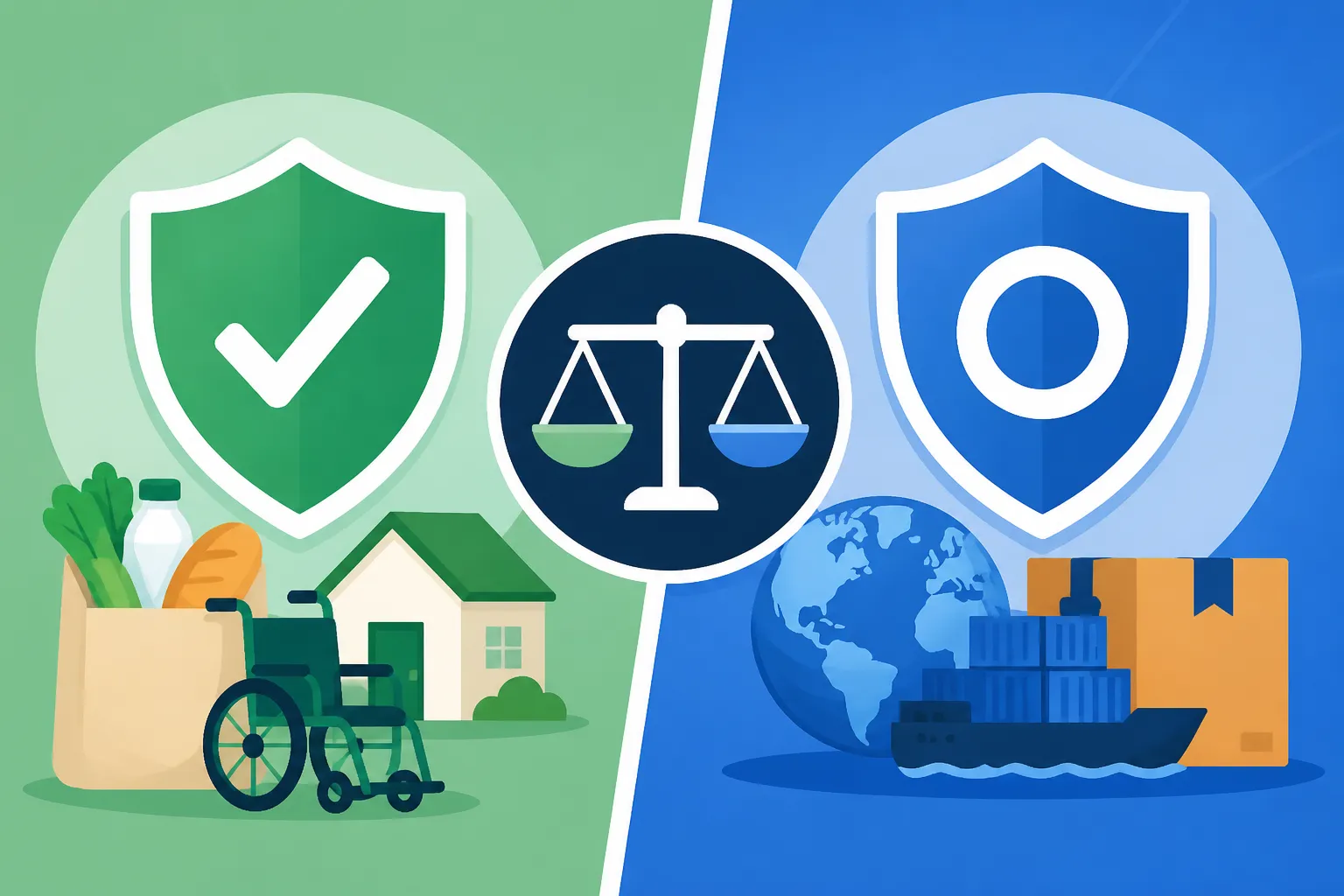
What Is the Difference Between Exempt and Zero-Rated?
Navigating the labyrinthine world of sales tax can often feel like learning a whole new language, especially when you encounter terms like "exempt" and "zero-rated." For many business owners, particularly those just starting out or expanding into new states, these distinctions can be incredibly confusing, leading to accidental miscalculations or even compliance issues. This guide is here to demystify these terms, breaking down what they mean, how they differ, and why understanding them is crucial for your business.
Understanding the Foundation of Sales Tax
Before we dive into the nuances of "exempt" and "zero-rated," let's quickly touch on what sales tax is at its core, and why it's such a tricky beast to tame across the United States.
The Core Idea of Sales Tax
At its most basic level, sales tax is a consumption tax levied by state and local governments on the sale of goods and services. When you buy a tangible item at your local store, that little extra charge you see on your receipt? That's sales tax. The seller collects it from you, the consumer, and then remits it to the appropriate tax authorities. It's a significant source of revenue for states, funding everything from roads to schools.
However, it's rarely as simple as a single, uniform rate. Many people are surprised to learn that while all states with a sales tax have a base rate, cities, counties, and special taxing districts can (and often do) add their own local sales tax on top of that. This is why checking the local rates is so important when figuring out your obligations. You can explore how these rates vary dramatically by checking out a resource like Sales Tax Rates by State 2026: All 50 States.
Why Sales Tax Gets Complicated
The complexity of sales tax in the U.S. doesn't just stop at varying rates. Each state, and sometimes even local jurisdictions, has its own unique set of rules about what is taxable. Is clothing always taxable? What about services? Or digital products? The answers often depend on where you're selling and what specific item or service you're offering. This patchwork of regulations can make it incredibly frustrating for businesses trying to ensure they're charging the correct amount and staying compliant. This is where the concepts of "exempt" and "zero-rated" come into play, adding another layer to the intricate sales tax puzzle.
What Does "Exempt" Really Mean?
When something is "exempt" from sales tax, it means that by law, it is not subject to the tax. It's truly outside the scope of what the sales tax is meant to cover in that particular jurisdiction.
The Concept of Sales Tax Exemptions
Think of an exemption as a legislative carve-out. The state has decided, for various reasons (often economic or social policy), that certain transactions or items simply won't be taxed. When an item is exempt, the seller does not collect sales tax from the buyer. Period. There's no tax applied, and there's usually no underlying tax rate, even a 0% one, being considered. It's just not part of the sales tax calculation process for that specific type of sale or buyer.
For example, many states offer specific Nonprofit & Government Sales Tax Exemptions allowing these organizations to purchase goods and services without incurring sales tax, provided they present a valid exemption certificate. This isn't about the item being inherently untaxable, but about the buyer's status.
Common Examples of Exempt Goods and Services
Exemptions are incredibly common and vary wildly from state to state. Here are some of the most frequent types you'll encounter:
- Groceries: This is perhaps one of the most widely recognized exemptions. To help lower the burden on consumers, especially those with lower incomes, most states either completely exempt "unprepared food" (groceries) or tax it at a reduced rate. However, defining "groceries" can be surprisingly tricky; a candy bar might be taxed while a loaf of bread isn't. To understand the specifics for your state, you might want to read more on Is Groceries Taxable? Sales Tax on Groceries by State.
- Services: In many states, pure services (like a haircut, legal advice, or consulting) are often exempt from sales tax. This is a significant difference from tangible goods. However, this isn't universal, and some states have started taxing specific services or services that result in a tangible product. If you offer services, it's critical to know Sales Tax on Services: What's Taxable by State.
- Prescription Drugs and Certain Medical Devices: Health-related items are often exempt to ensure accessibility and affordability for residents.
- Resales: If a business buys an item with the intention of reselling it, that initial purchase is typically exempt from sales tax. The tax is only collected when the item is sold to the final consumer. This is facilitated by a Resale Exemption Explained or a resale certificate.
- Specific Organizations/Buyers: As mentioned, government entities, schools, and qualified non-profit organizations are frequently exempt from paying sales tax on their purchases when they provide proper documentation.
Impact on the Seller and Buyer
When a transaction is exempt, it means the seller doesn't charge or collect sales tax. For the buyer, they simply pay the advertised price without any additional sales tax. From the seller's perspective, this means they don't have to report or remit sales tax for that specific transaction. Crucially, because no sales tax was collected, the seller typically doesn't have "input tax" (tax paid on purchases for their business) that they can claim back, because the original transaction was never subject to sales tax in the first place.
What Does "Zero-Rated" Mean?
The term "zero-rated" is often confused with "exempt," but there's a fundamental difference, especially when you consider its implications in a broader tax context (like Value Added Tax, or VAT, systems). While "zero-rated" isn't a common term in U.S. sales tax terminology, understanding its underlying principle is incredibly important for proper sales tax classification.
The Concept of Zero-Rated Goods and Services
Imagine an item that is subject to sales tax, but the rate of that tax happens to be 0%. That's the core idea of "zero-rated." Unlike an exempt item, which is completely outside the tax system, a zero-rated item is within the tax system, but at the lowest possible rate. It's taxable, but the tax due is zero.
This distinction might seem like splitting hairs – after all, in both cases, the customer pays no sales tax. However, the difference becomes significant when we talk about "input tax credits" or "input VAT" in other countries. In a VAT system, businesses collect VAT on their sales (output VAT) and pay VAT on their purchases (input VAT). If a good or service is zero-rated, the business still gets to reclaim any input VAT paid on purchases related to that zero-rated sale. If an item is exempt, they cannot.
In the U.S. sales tax system, which is generally a single-stage tax levied on the final consumer, the concept of "input tax credits" for sales tax isn't really a thing in the same way it is with VAT. However, the spirit of "zero-rated" can be seen in how some states treat certain sales. For instance, in California, food purchased with food stamps is essentially "zero-rated" – it's a taxable item, but the state has set a 0% rate for these specific transactions. The underlying mechanism is still considering it a taxable item, just at a specific rate.
Common Examples of Zero-Rated Items (Globally and in US Context)
While a common term in countries with a VAT system (like Canada or European nations, where basic groceries, exports, and some medical supplies are often zero-rated), the direct application of "zero-rated" to U.S. sales tax is rare in name. However, the effect of a zero rate might be seen in:
- Prescription Medicine: While often classified as exempt in many states, if a state considered prescription medicine a taxable item but set the rate at 0%, that would functionally be zero-rated.
- Exports: Sales where the goods are shipped directly by the seller to a location outside the taxing jurisdiction (often outside the U.S.) are generally not subject to sales tax. This could be seen as a form of zero-rating, as these transactions could theoretically be taxed if they remained within the jurisdiction, but they are effectively taxed at 0% due to their destination.
- Specific Programs: As mentioned with California and food stamps, certain state programs might designate a 0% sales tax rate for purchases made under particular conditions.
The key takeaway is that even if not explicitly called "zero-rated" in U.S. sales tax law, the treatment can be similar to how that term is understood in other tax systems.
Why the Distinction Matters for Businesses
For U.S. businesses, the distinction between truly "exempt" and "zero-rated" (or functionally zero-rated) can still matter for internal accounting and compliance systems. If an item is truly exempt, your tax software simply ignores it for sales tax purposes. If it's technically taxable but at 0%, your system might still need to classify it as a taxable sale, but apply a 0% rate.
In a global context, if your business ever deals with international sales or operates in countries with VAT, understanding this difference is critical for recovering input tax. Businesses selling zero-rated goods can reclaim input VAT, which can significantly improve cash flow. Businesses selling exempt goods usually cannot, leading to higher effective costs.
Key Differences: Exempt vs. Zero-Rated
Let's distill the core differences between these two concepts into a clear, digestible comparison.
Taxable Status and Input Tax Credits
This is where the rubber meets the road. The fundamental difference lies in whether the item or service is technically within the scope of taxation.
- Exempt: The item is not subject to tax at all. It's excluded from the sales tax base. No tax is collected, and for businesses in a sales tax system, there are typically no input tax credits to worry about (as there was no tax to pay in the first place related to this sale).
- Zero-Rated: The item is subject to tax, but the tax rate applied is 0%. In VAT systems, this means businesses can still reclaim any input VAT paid on purchases related to those zero-rated sales. This distinction is less pronounced in the U.S. sales tax model but still speaks to the underlying classification.
Here's a quick table to summarize:
| Feature | Exempt | Zero-Rated |
|---|---|---|
| Taxable Status | Not subject to sales tax; outside its scope | Subject to sales tax, but at a 0% rate |
| Tax Collected from Buyer | None | None (due to 0% rate) |
| Input Tax Credits (VAT) | Cannot typically be reclaimed (in VAT systems) | Can be reclaimed (in VAT systems) |
| Sales Tax Return Reporting | Often reported separately or not at all (depending on state) | Often reported as a taxable sale with 0% tax |
| Underlying Intention | To remove specific items/transactions from taxation entirely | To relieve the final consumer of tax while allowing businesses to reclaim tax on related purchases (in VAT) |
Administrative Burdens and Compliance
While both scenarios result in the customer paying no sales tax, the administrative burden on businesses can differ.
- Exempt Sales: For exempt sales, businesses need to correctly identify which items or transactions qualify for exemption based on state and local laws. This often means classifying products correctly in their inventory systems (e.g., distinguishing between taxable candy and exempt groceries). For buyer-based exemptions (like sales to non-profits), the business must also collect and retain valid exemption certificates from the buyers. Failure to do so could result in the business being liable for uncollected tax if audited.
- Zero-Rated Sales: In a U.S. sales tax context, functionally zero-rated sales often require similar product classification. For example, if a state has a 0% rate for certain types of clothing below a certain price point, the business needs to accurately track those sales. If a zero-rated concept were more widespread, the administrative difference for U.S. sales tax might be minimal compared to exempt sales, primarily focusing on correctly applying the 0% rate rather than simply omitting the tax.
Both classifications demand meticulous record-keeping and a thorough understanding of state-specific tax laws to maintain compliance. Many businesses find that manually managing these rules becomes overwhelming, especially as they grow and have nexus in multiple states.
Real-World Implications for Consumers and Businesses
For consumers, the practical outcome is the same: they pay no sales tax. However, for businesses, the implications can be quite different in terms of compliance, reporting, and potential audits.
- Compliance Risk: Misclassifying an item as exempt when it should have been taxed (even at 0%) or vice-versa can lead to penalties during an audit. States have strict rules about what is What Items Are Exempt From Sales Tax?.
- Reporting: On your sales tax return, you often have to report your total gross sales, then subtract your exempt sales, and sometimes separately list sales where no tax was collected for other reasons (which could encompass functionally "zero-rated" sales). Understanding the distinction ensures you fill out your returns accurately. Knowing How to File a Sales Tax Return: Step by Step correctly depends heavily on these classifications.
- Pricing Strategy: For businesses, particularly those operating internationally, understanding the reclaimable input tax under a zero-rated system (compared to non-reclaimable tax under an exempt system) can affect pricing and profitability.
Why This Distinction Matters for US Businesses
Even though "zero-rated" isn't a ubiquitous term in U.S. sales tax, the conceptual difference between something being truly outside the tax system (exempt) and something being in the system but taxed at 0% carries significant weight for compliance and accurate financial reporting.
Navigating State-Specific Rules
The United States is a patchwork of sales tax laws. What's exempt in California might be fully taxable in Texas. This variability means that relying on general assumptions can be costly. For instance, in New York, most clothing and footwear under $110 per item are exempt from state sales tax, but some local jurisdictions might still apply their own tax. This isn't a 0% state rate on an otherwise taxable item; it's an explicit exemption.
Understanding whether a state has chosen to completely exempt an item versus setting a 0% rate (however rare that explicit language might be) can be crucial for how you set up your internal sales tax calculations. It influences how you categorize sales data for reporting purposes, particularly when reconciling your books and preparing your sales tax returns. For businesses with complex operations, sometimes needing to file in every state they have Economic Nexus by State 2026: Thresholds Guide, these granular details are paramount.
The Role of Sales Tax Automation
Given the immense complexity of sales tax — with varying rates, a multitude of taxable and exempt items, and different rules for every jurisdiction — many businesses turn to sales tax automation software. Solutions from companies like Avalara are designed to handle these intricacies. These platforms can automatically determine if a sale is taxable, exempt, or falls under a specific condition (like certain food purchases or sales to specific entities), applying the correct rate or exemption status at the point of sale.
By integrating with your e-commerce platform or accounting system, these tools can:
- Accurately Classify Products: Helping you define whether an item is considered a "grocery" (often exempt) versus a "prepared food" (often taxable).
- Manage Exemption Certificates: Storing and validating resale certificates or other exemption documents.
- Apply Correct Rates: Ensuring the right combined state and local rate is applied, or correctly identifying a 0% taxable rate versus a full exemption.
Ultimately, while the term "zero-rated" may not be used in U.S. sales tax law with the same frequency or exact meaning as it is in VAT systems, the core principle of an item being subject to tax but at a zero rate is an important conceptual tool. Coupled with a deep understanding of exemptions, it empowers businesses to navigate the choppy waters of sales tax compliance more effectively, minimizing risk and ensuring accurate collection and remittance. To streamline this process and ensure you're always on top of these complex rules, exploring the Best Sales Tax Compliance Software 2027 can be a game-changer for businesses of all sizes.
Disclaimer
The information provided in this guide is for general informational purposes only and does not constitute professional tax advice. Sales tax laws are complex and constantly changing. Always consult with a qualified tax professional or the appropriate state tax authority for advice tailored to your specific situation.