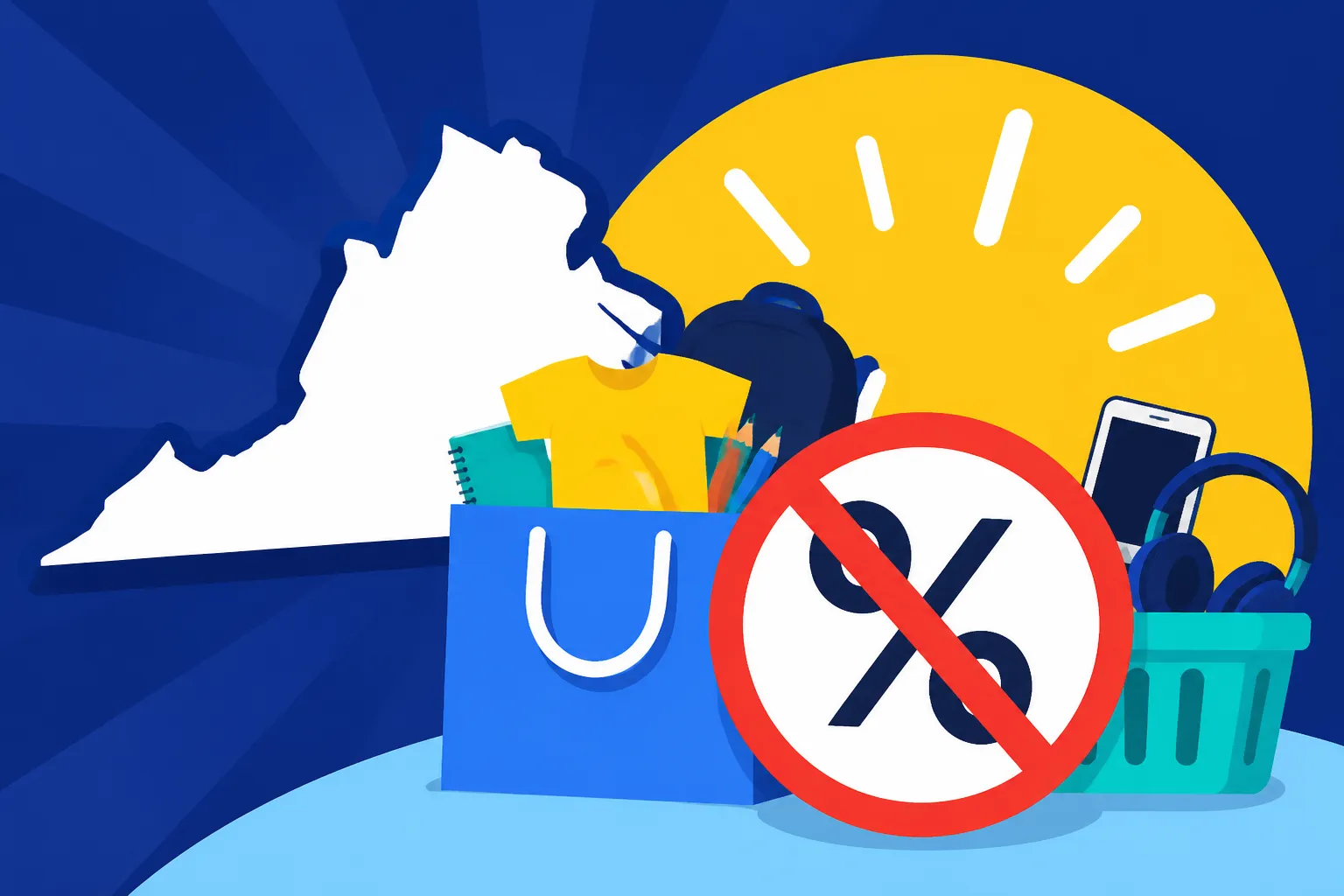
Virginia Tax-Free Weekend (Expiring July 2026)
For years, the Virginia Sales Tax Holiday has been a welcome relief for families and shoppers, a chance to grab school supplies, clothing, and even major appliances without the added burden of sales tax. But as we look to the future, it's bittersweet news: this beloved annual event is scheduled to expire in July 2026, meaning the opportunities to save are rapidly dwindling. This guide will walk you through what the Virginia Tax-Free Weekend has historically offered, how to maximize your savings during its final occurrences, and what its expiration means for you, both as a consumer and a business owner.
A Fond Farewell to Virginia's Sales Tax Holiday
It’s hard to believe, but the clock is truly ticking on the Virginia Sales Tax Holiday. What started as a popular initiative to help residents save on essential purchases is slated to become a thing of the past. For many, it's been an annual tradition, a mark on the calendar to get ready for school or stock up on emergency supplies. The thought of it disappearing definitely leaves a void for budget-conscious families and savvy shoppers across the Commonwealth.
Understanding the Historical Context of Virginia's Tax-Free Weekends
The Virginia Sales Tax Holiday wasn't just a random event; it was a deliberate legislative effort to provide financial relief to residents. Instituted years ago, these holidays typically combined several exemption periods into one convenient weekend, usually in early August. The idea was simple: by temporarily suspending sales tax on specific categories of goods, the state aimed to stimulate local economies, help families prepare for the new school year, and encourage preparedness for severe weather events. It offered a tangible benefit, even if it was just a few dollars here and there, which really added up for larger purchases or multiple children. These periods of exemption were widely advertised and became an anticipated part of the summer shopping season, creating a buzz that boosted retail activity when many needed it most.
The Sunset Clause: Why July 2026 Marks the End
So, why is this helpful program coming to an end? The Virginia Tax-Free Weekend operates under what's known as a "sunset clause" in its legislation. This means that when the law was initially passed or subsequently renewed, a specific expiration date was written into the text. For Virginia's sales tax holiday, that date is July 1, 2026. Unless the General Assembly takes action to extend, amend, or reinstate it before that date, the exemption period will simply cease to exist. This isn't due to any sudden poor performance or controversy, but rather a pre-determined end point that allows legislators to re-evaluate the program's effectiveness and fiscal impact over time. Unfortunately, without a new legislative push, residents will experience their last combined sales tax holiday in August 2025, making the upcoming events particularly significant for those hoping to take advantage one last time.
What the Virginia Tax-Free Weekend Meant for Shoppers
For years, the Virginia Tax-Free Weekend was a beacon for savings, making back-to-school shopping less painful and encouraging households to be better prepared for emergencies. It wasn't just about the state's 4.3% sales tax; it included local taxes too, meaning the full combined rate, which can vary across localities, was waived. Knowing what qualified and what didn't was key to maximizing those savings.
School Supplies and Clothing: The Classic Savings
This was arguably the most popular component of the tax holiday. As summer dwindled, parents flocked to stores to stock up on everything from pencils and notebooks to new outfits for their growing kids. The rules were pretty straightforward, but crucial to remember:
- School Supplies: Individual school supply items had to be priced at $20 or less. This meant you could buy a cart full of $5 notebooks and $10 calculators, but a single item over $20 (like a fancy art kit or an expensive scientific calculator) would still be taxed. It encouraged buying multiple smaller essentials rather than one big-ticket item.
- Clothing and Footwear: These items were exempt if their selling price was $100 or less per item. This was a huge win for families needing to buy new jeans, shirts, shoes, and even socks. Imagine fitting out several children for the academic year, or refreshing your own wardrobe, and seeing those sales tax lines disappear from your receipt. If a dress cost $99, it was tax-free. If it was $101, the entire item would be taxed. This clear cut-off meant shoppers had to be mindful of individual item prices, not just their total basket. This also applied to many types of athletic wear and everyday garments.
For more information on clothing taxability in general, you might find our guide on Is Clothing Taxable? Sales Tax on Apparel by State helpful.
Hurricane Preparedness Items: Essential Exemptions
Living in a state susceptible to various weather events, Virginia wisely included an exemption for hurricane and emergency preparedness items. This was a smart move to encourage residents to stock up on essentials before a storm hit, rather than scrambling last minute. These items were typically exempt if priced at $60 or less per item. This category covered a wide range of goods:
- Batteries: AA, C, D, 6-volt, 9-volt (excluding automobile and boat batteries)
- Flashlights and Lanterns: Crucial for power outages.
- Radios: Battery-powered, NOAA weather radios, or hand-crank radios.
- First Aid Kits: Essential for any emergency.
- Non-electric can openers: Because you never know when you'll need one.
- Plastic Sheeting or Tarpaulins: For covering broken windows or leaky roofs.
- Ground Anchor Systems or Tie-Down Kits: To secure outdoor property.
- Bungee Cords and Rope: Versatile tools for securing items.
- Duct Tape: The ultimate fix-all!
It’s worth noting that some more robust items like portable generators were also exempt, but typically had a much higher price cap, often around $1,000. This encouraged more significant investments in home safety. Understanding these nuances was critical for making sure you didn’t accidentally pay tax on something that should have been exempt.
Energy Star and WaterSense Products: Eco-Friendly Savings
Beyond immediate needs, the Virginia Sales Tax Holiday also had an eye on sustainability and long-term savings for consumers. This segment focused on energy-efficient and water-saving appliances:
- Energy Star Products: Certain large appliances bearing the Energy Star label were eligible for exemption, provided they were purchased for noncommercial home or personal use and priced at $2,500 or less per item. This included things like refrigerators, washing machines, dishwashers, water heaters, air conditioners, and even programmable thermostats. The idea was to incentivize consumers to choose more efficient models, which not only reduced their utility bills but also lessened the overall energy demand.
- WaterSense Products: Similarly, certain WaterSense labeled products like toilets, showerheads, and faucets, again for noncommercial use, were also part of the exemption. While typically lower in price than major appliances, these items still contributed to water conservation efforts and offered small but appreciated savings on renovation projects or essential replacements.
These categories broadened the appeal of the tax holiday beyond just back-to-school, offering substantial savings on investments that would benefit homeowners for years to come.
Navigating the Last Hurrah: Tips for the Final Tax Holiday
With the Virginia Tax-Free Weekend set to expire in July 2026, the tax holiday in August 2025 will be the last chance for shoppers to take advantage of these statewide savings. It’s important to treat it as such and plan accordingly to maximize your benefits. Don't let this final opportunity slip away!
Planning Ahead: Making the Most of the Remaining Opportunity
For many, the annual tax holiday was a convenient way to knock out some shopping, but now, with its impending end, a more strategic approach is warranted. Think of it as your final major savings event for these specific categories.
- Make a Comprehensive List: Don't just wing it. Sit down and make detailed lists for all eligible categories: school supplies for every child, clothing needs for the whole family, and any hurricane preparedness items you might be low on. Check your inventory for batteries, flashlights, and first aid supplies. This is also the time to consider if you need to upgrade an old refrigerator or replace a leaky toilet with a WaterSense model. Remember the specific price limits for each category—$20 for most school supplies, $100 for clothing, $60 for emergency items, and up to $2,500 for qualifying Energy Star and WaterSense products.
- Compare Prices Beforehand: Just because something is tax-free doesn't mean it's the absolute best deal. Retailers often run their own sales during the tax-free weekend, but it’s wise to compare prices at different stores in the weeks leading up to the event. Use apps or online tools to track prices and ensure you're getting a true bargain, not just avoiding tax on an inflated price.
- Shop Early: The last tax holiday will likely draw larger crowds, both in-store and online. If you're planning to shop in person, go early on Friday or Saturday to beat the rush and ensure stock availability. For online purchases, place your orders promptly to ensure they are processed and shipped within the tax-free window.
Online Shopping and Layaway Rules: What You Need to Know
The beauty of modern tax holidays is that they often extend beyond brick-and-mortar stores, and Virginia's was no exception. However, there were specific rules for online purchases and layaway plans that shoppers needed to be aware of to ensure they still qualified for the exemption.
- Online Sales: For online purchases to be tax-exempt during the holiday, the order must be placed and paid for during the designated tax-free period. This means you can't place an order on Thursday and expect it to be tax-free just because it ships on Friday. The transaction date is key. Shipping and handling charges can sometimes complicate things. In Virginia, if shipping and handling were separately stated, they would generally be taxable, even on an otherwise exempt item. However, if the vendor's policy was to include shipping in the price, it might be exempt. It's a tricky area, so it’s always best to confirm with the specific retailer or check out our guide on Does Online Shopping Have Sales Tax? for more general insights.
- Layaway Plans: If you put an eligible item on layaway during the tax-free weekend, it would qualify for the exemption, even if you paid for it and picked it up later. However, if you initiated a layaway plan before the tax holiday and made the final payment during the tax-free weekend, the item would generally not be exempt. The key was when the initial layaway contract was created. Always clarify with the store's customer service if you're uncertain about layaway rules for the tax holiday.
Here’s a quick overview of some of the categories and their limits for the final Virginia Sales Tax Holiday (August 2025):
| Category | Price Limit Per Item | Typical Examples |
|---|---|---|
| School Supplies | $20 or less | Pens, pencils, notebooks, binders, crayons, glue, rulers, erasers, school bags (backpacks), calculators, art supplies. |
| Clothing & Footwear | $100 or less | Shirts, pants, dresses, skirts, socks, underwear, shoes, boots, jackets, coats, hats, pajamas, athletic uniforms (excluding protective sports equipment). |
| Hurricane Preparedness | $60 or less | Batteries (AA, C, D, 6V, 9V), flashlights, lanterns, radios (battery-powered, NOAA weather, hand-crank), first-aid kits, non-electric can openers, plastic sheeting, tarpaulins, bungee cords, rope, ground anchor systems. (Portable generators up to $1,000 were also included.) |
| Energy Star Appliances | $2,500 or less | Refrigerators, washing machines, dishwashers, water heaters, air conditioners, programmable thermostats, furnaces, boilers, heat pumps. (Must be Energy Star certified). |
| WaterSense Products | $2,500 or less | Toilets, showerheads, faucets, bathroom sink faucets, sprinkler controllers. (Must be WaterSense certified). |
The Broader Impact: What Happens After July 2026?
The expiration of the Virginia Sales Tax Holiday in July 2026 will undoubtedly mark a shift, not just for consumers who enjoyed the savings, but for businesses that adapted to its unique requirements. It's a reminder that sales tax landscapes are always changing, and staying agile is key. The 2026 Sales Tax Rate Changes by State guide can offer a broader perspective on how dynamic these regulations can be.
For Consumers: Adjusting to the New Normal
Once the tax holiday officially sunsets, consumers in Virginia will face a different shopping reality. Every purchase of formerly exempt items will once again include the standard state and local sales tax rates, which can range from 5.3% to 7% or more depending on your exact location in the Commonwealth. For many, this will mean:
- Increased Budgeting Challenges: Families who relied on the tax-free weekend for back-to-school savings will need to factor in the additional sales tax cost for clothing and school supplies. While it might seem small on individual items, it adds up quickly when buying for multiple children or making larger purchases like a new wardrobe. This could necessitate adjusting back-to-school budgets or spreading out purchases over a longer period to mitigate the impact.
- No More Specific Incentives: The push to buy energy-efficient appliances or stock up on emergency supplies will no longer have the sales tax incentive attached. While the long-term savings of an Energy Star appliance are still compelling, that immediate discount from the tax holiday will be gone, potentially reducing the urgency for some consumers to upgrade.
- The Search for Alternative Savings: Consumers will likely shift their focus to other forms of discounts, such as store-specific sales, coupons, and loyalty programs, to offset the re-introduced sales tax. It might also lead to a renewed interest in states with lower overall sales tax rates for specific large purchases, though this often comes with its own set of complexities like use tax. For more general understanding, our article on Sales Tax Rates by State 2026: All 50 States discusses different state approaches to sales tax.
For Businesses: Ensuring Seamless Sales Tax Compliance
Businesses operating in Virginia, especially those in retail, have had to configure their point-of-sale (POS) systems and accounting processes to correctly apply the exemptions during the tax holiday. With its expiration, they'll need to make adjustments, and sales tax compliance will once again be a constant, unvarying requirement for these goods.
- System Updates: Retailers will need to ensure their POS systems are updated to remove the tax holiday exemptions for the affected categories. This might sound simple, but for businesses with complex inventory systems or multiple sales channels (in-store, online, mobile), it requires careful planning and testing to avoid errors. An incorrect sales tax collection can lead to audits, penalties, and customer dissatisfaction.
- Employee Training: Sales associates will need to be re-trained on the new tax rules, ensuring they understand that all previously exempt items will now be subject to sales tax. Clear communication with staff is essential to prevent confusion and provide accurate information to customers.
- Ongoing Compliance Vigilance: The sunset of the tax holiday highlights the ever-changing nature of sales tax regulations. Businesses, particularly those operating across state lines or online, already grapple with complex issues like economic nexus and varying taxability rules for different products. Tools and services from companies like Avalara can be incredibly helpful in automating sales tax calculations, collections, and remittances, especially as states continue to modify their tax laws. These platforms help businesses maintain accuracy and navigate the intricate web of state and local tax jurisdictions. Without a tax holiday to simplify things, having robust solutions in place for accurate sales tax management becomes even more critical. You can learn more about finding the right tools in our guide on the Best Sales Tax Compliance Software 2027.
- Marketplace Facilitator Impact: While the tax holiday itself is ending, businesses selling through platforms like Amazon or Etsy still need to be aware of their sales tax obligations, as marketplace facilitator laws mean these platforms generally handle sales tax collection and remittance. However, for sales made directly through a business's own website, the full responsibility shifts back to the seller, and they must ensure they are collecting the correct Virginia sales tax on all taxable items.
Looking Ahead: The Future of Sales Tax Exemptions in Virginia
While the direct sales tax holiday is ending, this doesn't necessarily mean the door is closed forever on all forms of consumer tax relief in Virginia. Legislative bodies are constantly evaluating fiscal policies and public needs. Businesses, in particular, should consider integrated solutions from providers like Avalara to easily adapt to any future changes, ensuring they remain compliant without manual heavy lifting.
Potential New Initiatives or Targeted Exemptions
The expiration of the broader sales tax holiday could pave the way for more targeted tax exemptions or new legislative initiatives down the line. It's not uncommon for states to replace expiring programs with more focused ones that address specific needs or economic goals.
- Specific Product Exemptions: Instead of a weekend-long holiday, Virginia might consider making certain essential items permanently tax-exempt, or introduce smaller, more niche tax holidays. For example, some states have considered permanently exempting items like diapers, feminine hygiene products, or even certain accessibility equipment.
- Income-Based Relief: Another avenue could be to shift from sales tax exemptions to income-based tax credits or rebates for low-income families, which could achieve similar goals of supporting back-to-school or essential purchases without altering the sales tax structure for all consumers.
- Industry-Specific Incentives: There might also be a push for exemptions that support specific industries, like manufacturing, or further incentives for green initiatives through different mechanisms. Keeping an eye on proposed legislation from the Virginia General Assembly will be crucial for both consumers and businesses.
The Importance of Staying Informed on Sales Tax Legislation
The lesson from the Virginia Tax-Free Weekend's expiration is clear: sales tax laws are dynamic and can change. For businesses, especially those with economic nexus in Virginia, staying abreast of these changes is not optional; it’s a fundamental part of compliance.
- Regular Monitoring: Businesses should regularly monitor updates from the Virginia Department of Taxation and subscribe to official state newsletters. Industry publications and sales tax compliance software providers like Avalara also offer valuable insights and alerts on legislative changes. Understanding how Sales Tax Rate Changes Take Effect is crucial for timely adjustments.
- Leveraging Technology: Manually tracking legislative changes across multiple states, understanding their effective dates, and updating tax calculation systems can be a full-time job. This is where modern sales tax software truly shines. These platforms are designed to automatically update tax rates and rules, ensuring businesses are always collecting and remitting the correct amounts, even when laws like the Virginia Tax-Free Weekend sunset. This proactive approach saves time, reduces error, and helps avoid potential penalties.
- Consulting Experts: For complex situations, particularly for businesses that operate nationally, consulting with a sales tax expert or tax attorney can provide peace of mind and ensure full compliance. This proactive step can prevent costly mistakes and help businesses navigate the ever-evolving landscape of sales tax.
Disclaimer
The information provided in this guide is for general informational purposes only and does not constitute professional tax or legal advice. Sales tax laws are complex and subject to change. Always consult with a qualified tax professional or the appropriate state tax authority for advice specific to your situation.