Consumer Use Tax: Do I Owe It?
You've just snagged an incredible deal online, or maybe brought back a unique souvenir from a cross-border trip, feeling like a savvy shopper. But then a little voice creeps in, wondering, "Did I just avoid sales tax, or did I actually incur a use tax obligation?" It's a question that plagues many consumers, and it often feels like navigating a secret handshake club you were never invited to. This comprehensive guide is here to demystify consumer use tax, helping you understand when and why you might owe it, and how to stay on the right side of the taxman without undue stress.
Understanding the Elusive Consumer Use Tax
Let's be real, the term "use tax" sounds a bit vague, almost like a catch-all for something you probably don't want to pay. But it's a very real and important component of state tax systems, designed to ensure fairness and prevent tax evasion. Think of it as the silent partner to sales tax, stepping in when sales tax isn't collected at the point of purchase.
What Exactly Is Consumer Use Tax?
At its core, consumer use tax is a tax on the storage, use, or consumption of taxable goods or services in your state when sales tax wasn't paid at the time of purchase. Most states with a sales tax also have a corresponding use tax. It's essentially a self-assessed sales tax. For instance, if you live in California and buy a new gadget from an online retailer who doesn't collect California sales tax (perhaps they don't have economic nexus there), you, as the consumer, are technically responsible for remitting that sales tax directly to California as use tax. This can feel like a burden, especially when you're just trying to enjoy your new item.
The tricky part is that many consumers simply aren't aware of this obligation. It's not like the cashier reminds you, "Hey, don't forget your use tax!" when you buy something out-of-state. But ignorance, unfortunately, is rarely a defense when it comes to tax laws. The underlying principle is to ensure that all taxable purchases made by residents of a state, regardless of where they were purchased, are subject to the same tax rate. This prevents a situation where consumers could consistently avoid sales tax by simply purchasing from out-of-state vendors.
Why States Have It: Leveling the Playing Field
States implement use tax primarily for two crucial reasons: revenue generation and fair competition. From a revenue perspective, it ensures that states don't miss out on tax dollars when transactions occur outside their direct taxing authority, such as with remote sellers or out-of-state purchases. Without use tax, states would see a significant decline in their tax base, impacting public services and infrastructure.
More importantly, use tax creates a level playing field for local businesses. Imagine a brick-and-mortar store in Phoenix, Arizona, that has to collect the local sales tax rate on every sale. If a customer could simply drive across the border or order online from a seller who doesn't collect tax and pay less, it would put local businesses at a severe disadvantage. Use tax aims to neutralize this disparity, making sure that whether you buy from a local shop or a remote one, the overall tax burden is the same. This protects local economies and encourages consumers to support businesses within their own communities. Understanding Use Tax Explained: What It Is & When You Owe It can offer even more clarity on this often-misunderstood tax.
The Common Scenarios Where You Might Owe Use Tax
It's easy to assume use tax is a rare occurrence, something only big businesses need to worry about. But the reality is, many everyday consumer actions can trigger a use tax obligation without you even realizing it. The world of online shopping and cross-border travel makes these scenarios increasingly common.
Online Purchases from Out-of-State Sellers
This is, by far, the most frequent way individuals incur a consumer use tax obligation today. Before the landmark South Dakota v. Wayfair Supreme Court decision in 2018, many online retailers without a physical presence (nexus) in a buyer's state weren't required to collect sales tax. This meant countless online transactions went untaxed at the point of sale. While Wayfair expanded states' ability to require sales tax collection from remote sellers based on "economic nexus" (sales volume or transaction count), not every single online retailer necessarily meets these thresholds in every state. Plus, some smaller sellers might simply not be compliant, or you might be purchasing from an international vendor whose rules differ.
Let's say you're a resident of Texas and you bought a unique handmade piece of furniture from an artisan in Oregon through an independent website. Oregon doesn't have a state sales tax, but Texas does. If that artisan's sales to Texas customers didn't meet the state's economic nexus threshold (currently $500,000 in gross revenue), they wouldn't have collected Texas sales tax from you. In this specific instance, you would then owe Texas use tax on that furniture purchase. Similarly, if you purchased something from a smaller platform or direct from a website that hasn't configured its sales tax collection properly for your state, you might find yourself owing use tax. Many states, including Texas, have a Economic Nexus Threshold in Texas ($500k) that determines when remote sellers must collect sales tax. If a seller is below that, you might owe.
Items Bought Without Sales Tax for Personal Use
Another common scenario involves items that were originally purchased for resale or with an exemption, but then get diverted to personal use. This happens more often than you'd think, especially for small business owners or individuals with a side hustle. Imagine you run a small online store selling unique art prints. You purchase a new, high-quality printer, intending to use it primarily for your business to create inventory. You might have used a resale certificate or another exemption to avoid paying sales tax on that printer, as it was considered a business input.
However, if a few months later, you decide to use that printer mainly for personal projects – printing family photos, making invitations for a party, or even just for your kids' school assignments – its primary use has shifted. At that point, the printer is no longer primarily for resale or an exempt business use. Therefore, you would owe use tax on the original purchase price of the printer in your state. This is why it's so important for small business owners to keep clear records and understand the intent behind their purchases, especially if they are using any kind of sales tax exemption.
Cross-Border Shopping Trips
For those living near state borders, a weekend shopping trip across state lines is a common occurrence. It's often seen as a way to find different stores, better deals, or even avoid sales tax if the neighboring state has a lower rate or exempts certain items. For example, if you live in New York and drive to New Jersey to buy a new wardrobe because New Jersey exempts most clothing from sales tax (up to a certain price point, though not all), you might think you've saved a bundle.
However, if you bring those items back to New York for use or consumption, New York law dictates that you actually owe New York use tax on those purchases. This applies to tangible personal property that you purchase out-of-state and then bring into your home state. The intent isn't to discourage cross-border commerce, but to ensure tax fairness. Your state's use tax rate will generally be the same as its sales tax rate, so while you might have paid less at the register in New Jersey, you're still expected to pay the difference (or the full New York sales tax if New Jersey collected nothing) when you bring those items home. This scenario highlights why understanding Use Tax vs Sales Tax: What's the Difference? is so critical.
Use Tax vs. Sales Tax: Unpacking the Differences
While sales tax and use tax often go hand-in-hand and share the same rates, they are fundamentally distinct in their application and who is responsible for collecting/remitting them. Confusing the two can lead to misunderstandings about your obligations.
The Fundamental Distinction
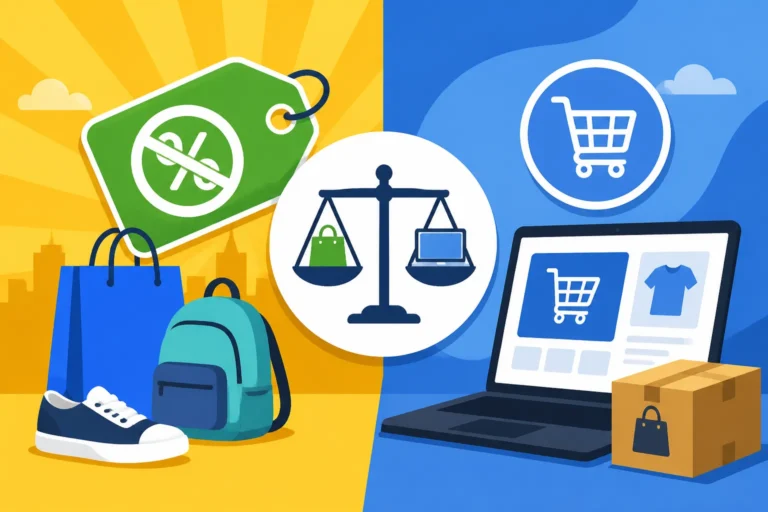
The simplest way to think about the difference is this: sales tax is typically collected by the seller at the point of sale, while use tax is self-assessed and paid by the buyer when sales tax wasn't collected by the seller.
When you walk into a store in your hometown and buy a new pair of shoes, the store owner (the seller) collects sales tax from you. They then remit that money to the state on your behalf. This is a sales tax transaction, and the burden of collection and remittance falls on the business. But what if you ordered those same shoes from an online retailer who doesn't have a physical or economic presence in your state and therefore doesn't collect sales tax from you? In that case, the state wants its tax revenue, and that responsibility shifts to you, the consumer, to report and pay the use tax. The Sales Tax Calculator: How to Calculate Sales Tax can be a helpful tool in figuring out these amounts, whether it's for sales tax or self-assessing use tax.
It's not about double-taxing you; it's about ensuring a tax is paid. If sales tax was correctly collected, you never owe use tax on that item. The use tax is only triggered when a sales tax liability exists but hasn't been satisfied. The aim is to create tax parity between purchases made in-state and those made out-of-state where the seller wasn't required to collect.
Why Both Exist
The existence of both sales tax and use tax is rooted in constitutional limits and practical enforceability. States generally only have the authority to impose sales tax on transactions that occur within their borders, or where the seller has a sufficient "nexus" (connection) to that state. Before the internet age, this was pretty straightforward: if a store was physically there, they collected tax. If they weren't, they didn't.
However, as commerce evolved, particularly with mail-order catalogs and then e-commerce, states realized a massive loophole was developing. Consumers could easily buy from out-of-state vendors and avoid sales tax, leading to lost revenue and an unfair competitive advantage for remote sellers. To close this loophole, states enacted use tax laws. It’s their way of asserting their right to tax the consumption of goods within their borders, regardless of where the purchase transaction itself took place. Think of use tax as the state saying, "We can't force an out-of-state seller to collect our sales tax if they don't have nexus, but we can require our residents to pay a tax on goods they use here that weren't taxed elsewhere." This dual system, therefore, is a pragmatic solution to a complex legal and economic challenge.
Identifying Your Use Tax Obligation: Nexus and Beyond
Determining if you owe consumer use tax can feel like detective work. It involves understanding your state's rules, the seller's obligations, and even the price of your purchase. It's not always straightforward, but with a bit of knowledge, you can navigate it.
Your State's Specific Rules
Every state has its own nuances when it comes to sales and use tax, even if the general principles are similar. While most states with a sales tax also have a use tax, the specific thresholds for reporting and collection can vary. For example, some states might have specific exemptions for certain items that apply to both sales and use tax. Others might have different rules for tangible goods versus services or digital products. For instance, Is SaaS Taxable? Software-as-a-Service by State details how even non-physical products can be subject to tax.
It's crucial to understand the Sales Tax Rates by State 2026: All 50 States that apply to your location, as your use tax rate will generally mirror your state's sales tax rate, including any local add-ons. You might also need to consider if your state has any special reporting requirements for larger purchases. For instance, some states might require specific forms or declarations for vehicles purchased out-of-state. A good starting point is always your state's department of revenue website. These sites typically have sections dedicated to consumer use tax, often with FAQs or specific guides for residents. Don't be afraid to look them up – they're there to help (even if it doesn't always feel like it!).
The Purchase Price Threshold for Reporting
One common question is whether there's a minimum purchase amount that triggers a use tax obligation. The simple, albeit often frustrating, answer is: generally, no. In most states, the use tax applies to any taxable purchase where sales tax wasn't collected, regardless of how small the amount. That $5 book you bought online, the $10 gadget, or the $25 souvenir from another state – technically, you owe use tax on all of them if the seller didn't collect sales tax.
However, states recognize the impracticality of tracking and reporting every single small purchase. That's why many states include a line item on their annual income tax returns for individuals to report and pay consumer use tax. Often, this line item will include a de minimis amount, a small dollar figure that the state estimates you might owe based on average online purchases. For example, your state's tax form might say, "Enter use tax owed. If unknown, you may use the safe harbor amount of $XX." This isn't a threshold that exempts small purchases; it's a simplification for reporting negligible amounts. For larger, more significant purchases, you are expected to calculate and report the exact amount. This is where tools that help you How to Calculate Sales Tax (Step by Step) can really come in handy, allowing you to accurately determine what you owe on those pricier items.
To illustrate, consider Sarah, who lives in Florida. She buys a $20 book from an independent online seller in Montana who doesn't collect Florida sales tax. She also splurges on a $500 piece of art from an out-of-state gallery, also not collecting Florida sales tax. While the $20 book contributes to her overall use tax liability, the state primarily expects her to calculate and report the use tax on the $500 art piece, as it's a more significant amount. The small book might be covered by a simplified estimate on her income tax form, but the art piece would require specific calculation. Florida's sales tax rate is 6% statewide, plus any applicable county surtax. So, for the art piece, she'd owe at least $30 in use tax, potentially more with a county surtax.
How to Report and Pay Consumer Use Tax
Okay, so you've identified that you might owe use tax. The next step, naturally, is figuring out how to actually pay it. Don't panic – it's often more straightforward than it sounds, even if it feels like another layer of complexity on top of your regular taxes.
Reporting on Your Income Tax Return
For individual consumers, the most common way to report and pay consumer use tax is directly on your annual state income tax return. Many states that levy a sales tax will have a dedicated line or section on their personal income tax forms specifically for reporting use tax. This is typically where you'd list the total purchase price of taxable goods and services on which sales tax was not collected, and then calculate the corresponding use tax amount.
Let's imagine you live in California and made several online purchases throughout the year from out-of-state vendors who didn't collect California sales tax. You bought a camera for $800, a new jacket for $150, and some specialty craft supplies for $50. The current statewide base sales tax rate in California is 7.25%, but you also need to factor in district taxes. Let's say your combined rate is 9.25%. You would total these purchases ($800 + $150 + $50 = $1,000) and multiply by your local combined sales tax rate (e.g., $1,000 * 0.0925 = $92.50). This $92.50 would then be reported on your California income tax return as use tax. For a detailed walkthrough, checking out How to Report Use Tax on Your Tax Return can provide state-specific instructions. Some states even provide an estimated use tax amount if you don't know the exact figure, to simplify things for small amounts.
Direct Payments to the State Tax Agency
While reporting on your income tax return is common for individuals, sometimes you might need to make a direct payment to your state's tax agency. This is often the case for very large, specific purchases, or if your state doesn't have an individual income tax (like Florida, Texas, or Washington). In these states, or for certain high-value items, the state might require a separate use tax form or registration.
For instance, if you purchase a vehicle or a boat from out-of-state and bring it into your home state, you almost certainly will have to pay use tax directly to the Department of Motor Vehicles (DMV) or a similar agency when you register the item. They typically won't allow you to register it without proof that sales tax (or use tax) has been paid. Another scenario might be if you realize you owe a significant amount of use tax for a prior year and your income tax return has already been filed. In such cases, you might need to amend your return or contact the state tax agency to arrange a direct payment. Many states, like Louisiana with its notoriously complex Louisiana Parish Sales Tax Complexity, might have specific forms and procedures for direct use tax payments on certain items, so it's always best to check their official guidance for large purchases.
The Consequences of Ignoring Consumer Use Tax
It's tempting to think that use tax is rarely enforced for individual consumers. After all, how would the state know about that online purchase from a small vendor? While it's true that enforcement for small, isolated purchases might be limited, ignoring a legitimate use tax obligation, especially for larger items or recurring scenarios, can lead to some unpleasant consequences.
Penalties and Interest
Just like with any other tax liability, if you owe consumer use tax and don't pay it, states can impose penalties and interest. The penalties vary by state but are usually a percentage of the unpaid tax, and interest will accrue from the original due date of the tax. This means that even if you eventually pay what you owe, you might end up paying significantly more than the original tax amount.
Consider a scenario where you purchase a luxury item, like a high-end bicycle for $5,000, from an out-of-state seller who doesn't collect sales tax. Let's say your state has a combined sales tax rate of 8%. Your use tax obligation is $400. If you don't report this on your income tax return and are later audited or discovered, the state might tack on a 10% penalty for underpayment, plus daily interest. That $400 bill could easily swell to $450 or more, just for delaying payment. For businesses, the penalties can be even more severe. While this article focuses on consumers, the principles are similar for businesses. You can learn more about general consequences in What Happens If You Don't Collect Sales Tax?.
Audits and Enforcement
While individual consumer use tax audits are less common than business audits, they do happen. States are becoming increasingly sophisticated in identifying undeclared use tax liabilities. They can obtain data from various sources, including customs declarations (for international purchases), property records (for vehicles, boats, and aircraft purchased out-of-state), and even through vendor records during a business audit.
For example, if you purchase a new RV out-of-state for $100,000 and try to register it in your home state without paying the required use tax, the DMV will almost certainly flag it. Similarly, if your state's tax department audits a specific out-of-state online vendor, they might uncover a list of customers in your state who made untaxed purchases, potentially leading to individual assessments. While it might seem unlikely for a $50 purchase, for significant investments, the risk of enforcement increases substantially. It's truly better to proactively address your use tax obligations than to face the stress and financial burden of an audit down the line.
Strategies for Staying Compliant and Avoiding Headaches
Feeling overwhelmed by the thought of tracking every single online purchase? You're not alone. The good news is there are practical strategies you can employ to make staying compliant with consumer use tax much less daunting.
Keeping Meticulous Records
The first and most important step is to keep good records. This might sound obvious, but it's easy to forget about those smaller online purchases. Create a system, even a simple one, to track purchases where sales tax wasn't collected.
You could maintain a spreadsheet throughout the year, listing:
- Date of purchase: When did you buy it?
- Item description: What was it?
- Seller: Who did you buy it from?
- Purchase price: How much did it cost?
- State sales tax rate (your state): What would the tax have been?
- Calculated use tax: The actual amount you owe.
Alternatively, you could create a dedicated email folder for receipts from untaxed online purchases. At the end of the year, you can easily review this folder, total up the amounts, and calculate your use tax liability for your income tax return. This proactive approach eliminates the scramble at tax time and ensures you don't miss anything significant. Imagine you're doing some home renovation projects and buying specialty tools online. Keeping a running tally of these purchases where sales tax wasn't charged will be invaluable when tax season rolls around.
Utilizing Sales Tax Software and Lookup Tools
While sophisticated sales tax software like Avalara is typically geared towards businesses managing complex multi-state nexus and filing requirements, the principles of accurate tax calculation apply to consumers too. For individuals, you might not need a full-blown compliance system, but knowing how to use online sales tax lookup tools can be incredibly helpful.
Many states offer online tools where you can input an address or ZIP code to find the exact combined state and local sales tax rate for that location. This is crucial for accurately calculating your use tax, especially since local rates can vary widely, as detailed in articles like Sales Tax by ZIP Code (and Why ZIP Isn't Enough). When you purchase an item from an out-of-state seller, you'll need to know the sales tax rate for your specific address to calculate the correct use tax. Websites of state revenue departments usually provide these rate lookup features. Using these tools gives you confidence that your self-assessed use tax is correct, rather than relying on guesswork. For those larger purchases, having a precise calculation can save you from potential headaches down the line.
Common Myths and Misconceptions About Consumer Use Tax
When it comes to taxes, myths and misunderstandings abound, and consumer use tax is no exception. Clearing up these common misconceptions can alleviate a lot of unnecessary anxiety and help you approach your tax obligations with clarity.
"It's Too Small to Matter"
This is perhaps the most prevalent myth regarding consumer use tax. The idea that individual purchases are too small for the state to ever notice or care about can lead people to ignore their obligations entirely. While it's true that states aren't likely to launch a full-scale audit over a $15 book, the cumulative effect of many small untaxed purchases can add up.
Moreover, the "too small to matter" attitude overlooks the principle of use tax. The obligation exists regardless of the dollar amount. Many states include a line on their personal income tax returns specifically for reporting use tax, often with an option for an estimated amount if you haven't meticulously tracked everything. This shows that states do expect you to account for it, even if they offer simplified reporting for convenience. For larger, single-item purchases (e.g., furniture, electronics, jewelry), the "too small to matter" argument holds even less water, as these are easier for states to track through various data points. Thinking that small amounts are irrelevant is a risky game that could lead to unexpected bills if your purchases are ever scrutinized. You might not need to worry about the use tax on a $5 coffee mug, but repeated, slightly larger online purchases can certainly become notable over a year.
"Only Businesses Pay Use Tax"
Another widespread misconception is that use tax is solely a business concern. People often hear about businesses needing to track use tax for inventory, equipment, or supplies purchased without sales tax and assume it doesn't apply to them as individuals. However, as we've explored, consumer use tax is a specific category designed for personal consumption.
Businesses do indeed have significant use tax obligations, often dealing with complex issues like Manufacturing Sales Tax Exemption by State or Agricultural Sales Tax Exemption by State when purchasing machinery or supplies without sales tax. They need robust systems, potentially utilizing solutions from companies like Avalara, to manage these complexities. But this doesn't absolve the individual consumer. If you, as a private citizen, purchase a taxable item for your personal use and sales tax wasn't collected by the seller, then you, not a business, owe the consumer use tax. Whether you're buying a new gadget, a piece of clothing, or even a digital download, if it's for your personal use and untaxed, the use tax obligation falls squarely on your shoulders. It's important for everyone to understand that consumer use tax is very real for individuals and not just a business-to-business tax issue.
Disclaimer
Please note that this guide provides general information about consumer use tax and is not intended as legal or tax advice. Sales tax laws, including use tax regulations, vary significantly by state and are subject to change. For specific advice regarding your individual or business tax situation, it is always recommended to consult with a qualified tax professional or refer to your state's official tax authority website.