What Documents Do I Need for a Sales Tax Permit?
Trying to figure out what paperwork you need just to get started with collecting sales tax can feel like an overwhelming, confusing mess, like trying to solve a puzzle with half the pieces missing. Every state seems to have its own unique requirements, and if you're a small business owner, the last thing you need is more administrative headaches. This guide is here to cut through the confusion, clearly laying out the essential documents and information you'll need to secure your sales tax permit, no matter where your business operates.
Why Getting a Sales Tax Permit Feels Like a Scavenger Hunt
It's a common frustration, isn't it? You've got a great product or service, you're making sales, and then suddenly you realize you have to deal with sales tax. The thought of applying for a sales tax permit (often called a seller's permit or a certificate of authority, depending on the state) can bring on a cold sweat. It's not just about filling out a form; it's about knowing which form, what information to provide, and where to send it. Many business owners have stories of getting halfway through an application only to realize they're missing a crucial detail, forcing them to stop, find the information, and start over. It's a time sink that no one enjoys.
The reason it feels like a scavenger hunt is because states want to ensure that any business collecting tax on their behalf is legitimate and can be held accountable. They need to verify who you are, what kind of business you're running, and how you plan to handle the collected funds. This isn't just about revenue; it's about consumer protection and maintaining a fair marketplace. Without proper identification, it would be far too easy for unscrupulous actors to collect sales tax and never remit it to the state. This is why the process, while sometimes tedious, is a necessary hurdle for all legitimate businesses. Understanding this underlying purpose can sometimes make the process feel a little less arbitrary, even when you're digging through old files for a forgotten document.
The Core Information Every Business Needs for a Sales Tax Permit
While the specific forms and terminology might vary from state to state, there’s a universal set of core information that almost every state tax authority will ask for when you apply for a sales tax permit. Think of these as your foundational documents – the absolute non-negotiables. Getting these organized before you even start the application will save you a ton of grief and help you get your permit much faster.
Personal Identification Details
Even if you operate as a corporation, states want to know who the people behind the business are. For sole proprietors, this is paramount. For larger entities, they'll usually ask for information about the principal officers or responsible parties.
For example, when applying for a Seller's Permit Explained: What It Is & How to Get One in California, a sole proprietor would need their Social Security Number (SSN). If you're running an LLC or corporation, the state will likely ask for the SSN of the primary owner or a responsible officer. This is a critical piece of information because it ties a real person to the business's tax obligations. It ensures that there’s someone accountable in the eyes of the state should any issues arise with sales tax collection or remittance. Many business owners, especially those new to sales tax, sometimes overlook providing their personal details, assuming the business EIN is enough, but states generally want both.
Beyond your SSN, you'll also need your full legal name, current residential address, and contact information (phone number, email address). This might seem obvious, but double-checking that these match what's on file with other government agencies (like the IRS or your driver's license) can prevent unnecessary delays. Inconsistent information can trigger red flags and slow down the approval process considerably, sometimes requiring manual review or additional verification steps. So, before you hit "submit" on that application, take a moment to ensure every field aligns perfectly with your official records.
Business Identification Details
This is where you tell the state who your business is, officially. This information allows the state to uniquely identify your business for tax purposes and connect it to your legal structure.
Every business, regardless of size, will need its legal business name. This should be the name under which your business is officially registered with the state (e.g., your LLC name, Inc. name, or your personal name if you're a sole proprietor). Don't confuse this with your "doing business as" (DBA) name, though some applications might ask for both. You'll also need your Federal Employer Identification Number (EIN), which is essentially your business's Social Security Number. If you're a sole proprietor without employees, you might still use your SSN for federal tax purposes, but most states prefer an EIN for sales tax permits even for single-owner LLCs. Getting an EIN is a quick, free process through the IRS website and is generally a good idea for any serious business.
The physical address of your business is also essential. This might be your home address if you work remotely, or a commercial storefront. Remember, sales tax is highly localized, so the state needs to know where your business is physically located to apply the correct tax rules and potentially establish sales tax nexus. Some states, like Colorado, have complex sales tax rules, especially for "home-rule" cities, where knowing your exact physical address is crucial. You'll also need your business's mailing address if it's different from the physical location, along with your business phone number and email. For businesses operating online, even if you don't have a physical storefront, your registered business address is still a core requirement.
Business Activity and Product Information
States aren't just curious about who you are; they also want to understand what you're selling and how you're selling it. This information helps them determine if your business activities are indeed subject to sales tax and at what rates.
You'll typically need to provide a description of the type of products or services you plan to sell. For instance, are you selling tangible personal property like clothing or electronics? Or are you providing services, which may or may not be taxable depending on the state? For example, Is Clothing Taxable? Sales Tax on Apparel by State varies widely, and some states have specific rules for digital products or software. Be as specific as possible here. Instead of just saying "retail," you might specify "online retail of handmade jewelry" or "brick-and-mortar clothing boutique." This helps the state classify your business correctly and apply the appropriate tax regulations.
Furthermore, you'll need to indicate your expected sales volume and the start date of your business activities. The anticipated sales figures are particularly important because they often determine your sales tax filing frequency – whether you'll file monthly, quarterly, or annually. A business with high projected sales in a state like Texas might be assigned a monthly filing schedule, while a smaller operation in the same state could be quarterly. This is also relevant for Economic Nexus by State 2026: Thresholds Guide, as exceeding certain sales thresholds (e.g., $100,000 in sales or 200 transactions) can trigger nexus in other states, requiring you to get permits there as well.
You might also be asked about your business structure (sole proprietor, partnership, LLC, S-Corp, C-Corp) and the legal registration date. This helps the state verify your entity's legal standing and ensures you're applying under the correct business type.
Beyond the Basics: State-Specific Nuances and Additional Requests
While the core information listed above is almost universally required, many states have unique nuances or might ask for additional documents depending on your business type or specific circumstances. Ignoring these state-specific requirements is a common pitfall that can lead to significant delays.
State Business Registration
Before you can even apply for a sales tax permit, most states require your business to be officially registered with their Secretary of State or a similar agency. This is especially true for corporations and LLCs, but even sole proprietors or partnerships might need some form of general business license or registration, depending on local ordinances. For instance, in New York, you might need a Certificate of Authority from the Department of State before you can even think about getting your sales tax Certificate of Authority from the Department of Taxation and Finance.
This initial business registration often involves filing articles of incorporation or organization and designating a registered agent. The state tax authority will cross-reference your sales tax permit application with these existing records to ensure consistency. If your business isn't properly registered at the state level first, your sales tax permit application will almost certainly be rejected or put on hold. It’s a foundational step that many new business owners, especially those selling online from a home office, sometimes forget, assuming federal registration or their local business license is enough.
Licenses, Permits, and Industry-Specific Information
Depending on what you sell and where you operate, you might need specific professional licenses or local permits that the state tax authority will want to see. For example, if you're selling alcohol or tobacco, you'll undoubtedly need special licenses for those products, and the sales tax application might ask for those license numbers. Similarly, certain service industries, like construction or cosmetology, might have specific licensing requirements that need to be in place.
Some states also want to know if you're a home-based business, if you operate out of multiple locations, or if you plan to sell at temporary events like craft fairs or pop-up shops. This information can influence not only the type of permit you receive but also how your sales tax obligations are structured, especially concerning local taxes. For example, an artist selling at various weekend markets in Louisiana might have different reporting requirements than a fixed retail store due to the Louisiana Parish Sales Tax Complexity. This is where understanding the specific regulations of each jurisdiction becomes crucial.
Here's a quick look at common information requirements:
| Category | Common Information/Documents Required |
|---|---|
| Personal Identification | – Full Legal Name (of owner/officer) – Social Security Number (SSN) – Residential Address – Date of Birth – Contact Phone Number & Email |
| Business Identification | – Legal Business Name (as registered with state) – Federal Employer Identification Number (EIN) – Physical Business Address – Mailing Address (if different) – Business Phone Number & Email – Business Type (Sole Proprietor, LLC, Corp, Partnership) – Date of Business Establishment – Business Purpose/Activity Code (NAICS/SIC) |
| Operational Details | – Description of Goods/Services Sold – Estimated Monthly/Annual Sales Volume – Primary Sales Channel (Online, Retail, Wholesale) – Anticipated Start Date of Sales – Bank Account Information (for direct debit of tax, sometimes) – Registered Agent Information (for LLCs/Corps) – Existing State Business Registration Number (e.g., from Secretary of State) – Any other specific licenses/permits (e.g., alcohol) |
| Resale/Exemption Specifics | – If purchasing items for resale, intent to use a Resale Certificate by State: Complete Guide to avoid paying tax to suppliers. |
Documentation for Multi-State Nexus
If your business has established Sales Tax Nexus Explained (Physical vs Economic) in multiple states, either through physical presence or economic nexus, the process of registering for sales tax can become significantly more complex. You won't just need to provide your basic business documents to one state; you'll need to provide them to every state where you've met the threshold for collecting sales tax. This means keeping all your primary business identification and personal details meticulously organized, as you'll be submitting them repeatedly.
Some states might ask for proof of your economic nexus, such as sales reports demonstrating that you've exceeded their specific sales or transaction thresholds (e.g., $100,000 in gross sales in California). This is where robust record-keeping is absolutely essential. Imagine trying to gather sales data from previous years across all your platforms for a dozen states! It's why many growing online sellers turn to compliance solutions. For businesses looking to register in multiple states, understanding each state's individual requirements and having all the necessary documentation readily available is key to a smooth registration process.
Making the Application Process Smoother
Navigating sales tax permit applications doesn't have to be an anxiety-inducing ordeal. There are definitely ways to streamline the process and reduce the chances of delays. A little preparation goes a long way here.
Organize Your Information Ahead of Time
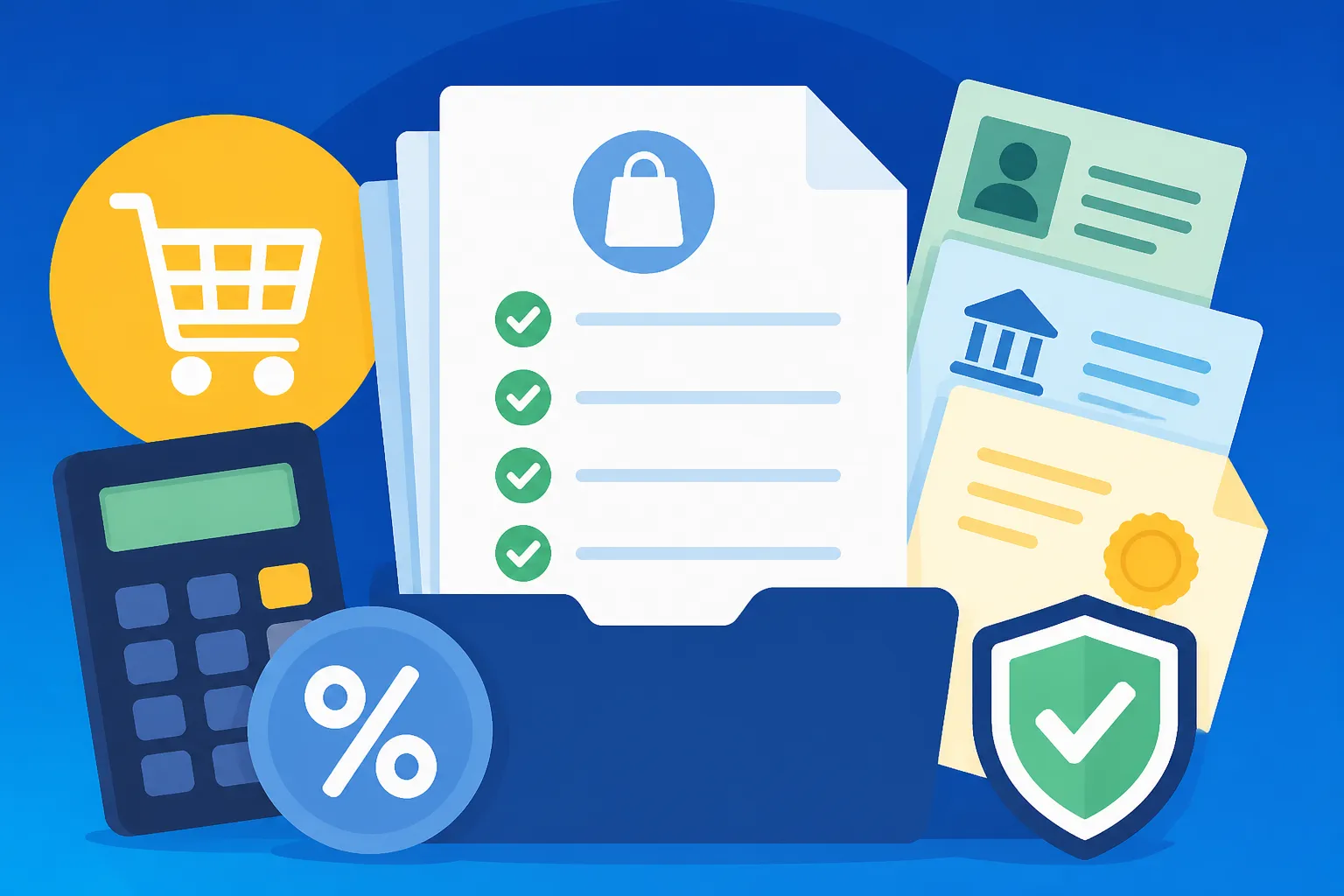
The single best piece of advice is to create a dedicated folder, either physical or digital, where you keep all your essential business documents and information. Before you even open a state's sales tax permit application portal, gather everything on the checklist above: your EIN letter, your SSN, your legal business name, physical and mailing addresses, business start date, and a clear description of your products.
Having a concise summary of your business activities, including projected sales, also helps. Many applications will ask for your North American Industry Classification System (NAICS) code or Standard Industrial Classification (SIC) code, which categorizes your business type. Knowing this in advance, or being ready to look it up, saves time. Think of it like packing for a trip: you make a list, check it twice, and ensure everything is in its designated spot so you're not scrambling at the last minute. This proactive approach not only speeds up the application but also ensures accuracy, reducing the likelihood of errors that could lead to processing delays.
Utilize State Resources and Online Tools
Every state tax authority has an online portal dedicated to business registration and sales tax permits. These portals often provide specific guides, FAQs, and even live chat support. Don't be afraid to use them! If you're unsure about a particular question on the application, it's always better to seek clarification directly from the source rather than making an assumption. For example, if you're unsure about What Is a District Tax in California? and how it applies to your specific location, the California Department of Tax and Fee Administration (CDTFA) website is your go-to resource.
Additionally, for businesses operating across multiple states or those experiencing rapid growth, sales tax compliance software can be an absolute game-changer. Solutions like Avalara can automate many aspects of sales tax management, from determining where you have nexus to calculating the correct rates and even filing your returns. While this kind of software won't fill out your initial permit application for you (that still requires your input), it can vastly simplify the ongoing compliance once you have your permits. It also helps in tracking your sales across states, which is critical for understanding when you might trigger Economic Nexus Threshold in California or other states, signaling that it's time to apply for a new permit there.
Double-Check Everything Before Submitting
It sounds simple, but it's often overlooked in the rush to get the application done. Before you click that final "submit" button, review every single field. Check for typos, incorrect numbers, or mismatched addresses. An error as small as a transposed digit in your EIN or SSN can cause your application to be flagged, leading to significant delays while the state attempts to verify the correct information.
Remember, the goal is a swift and smooth approval process. By taking the time to gather all the necessary documents, understand the common requirements, and meticulously review your application, you can significantly reduce the stress and administrative burden associated with obtaining your sales tax permit. It's a foundational step for any business, and getting it right from the start sets you up for smoother sales tax compliance down the road. Once you have your permit, you'll be ready to tackle the next steps, like understanding How to File a Sales Tax Return: Step by Step and meeting your filing deadlines.
Disclaimer
As a friendly lifestyle blogger, I'm here to offer helpful advice and insights into the often-confusing world of sales tax. However, please remember that I am not a tax professional, attorney, or financial advisor. The information provided in this article is for general informational purposes only and should not be considered tax or legal advice. Sales tax laws are complex, constantly changing, and vary significantly by state and local jurisdiction. Always consult with a qualified tax professional or legal expert to get advice tailored to your specific business situation.