How to Get a Reseller Permit in Washington
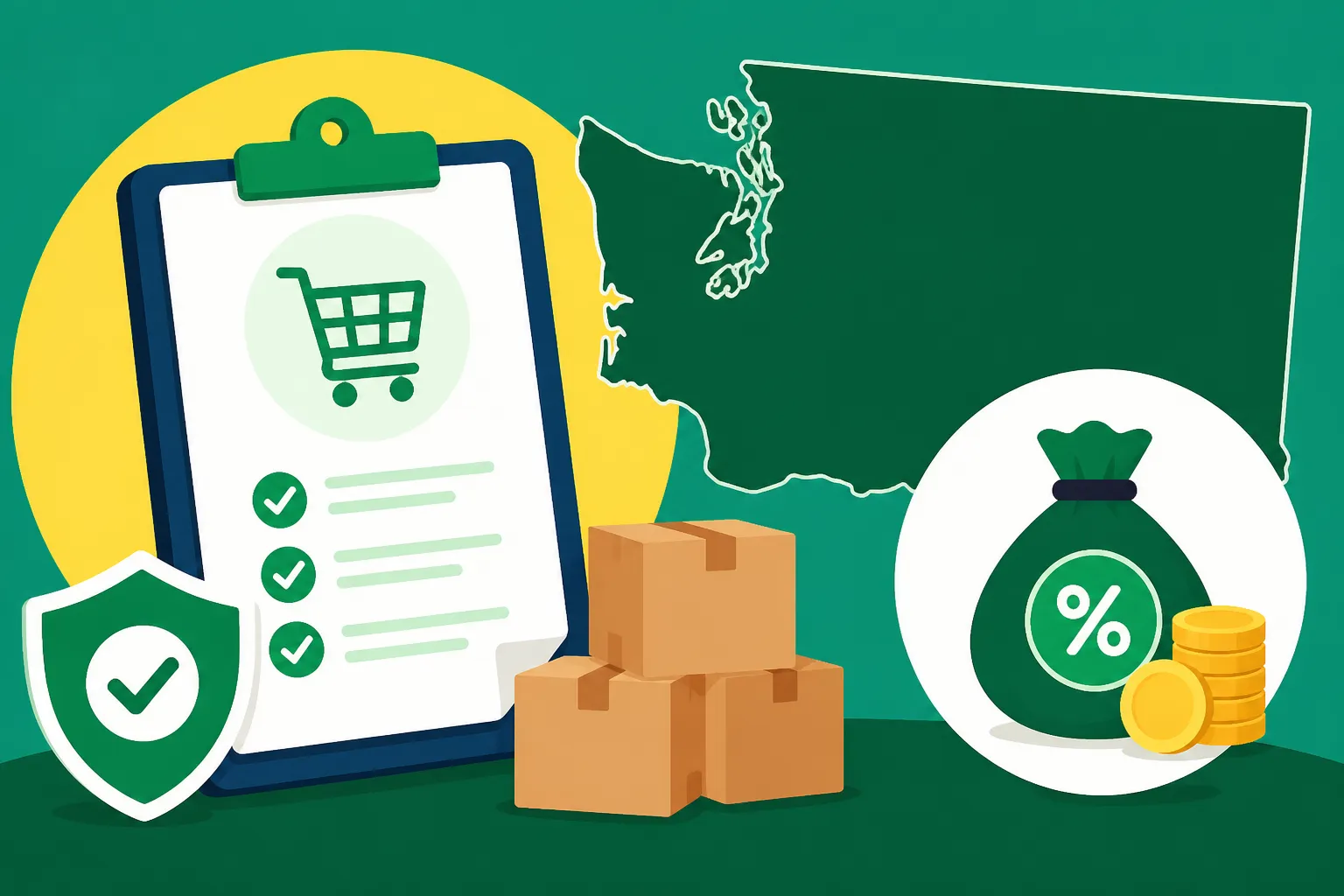
Feeling overwhelmed by all the different sales tax jargon, permits, and requirements? You're not alone. Many business owners, especially those new to the game or expanding into Washington State, find themselves scratching their heads when it comes to reseller permits. It’s a crucial piece of the sales tax puzzle that can save you a ton of money and keep you compliant, but figuring out how to get one and use it correctly can feel like navigating a maze. This guide is here to demystify the process, walking you through everything you need to know about obtaining and effectively using a reseller permit in Washington.
Understanding Washington's Reseller Permit Landscape
Before we dive into the nitty-gritty of the application process, let’s clear up what a reseller permit in Washington truly is and why it's so important for your business. It's not just another piece of paper; it’s a fundamental tool that impacts how you manage your inventory costs and ensure you're not paying sales tax twice.
What Exactly is a Reseller Permit in Washington?
In Washington State, a reseller permit isn't quite the same as a general "sales tax permit" you might hear about in other states, which primarily grants you the authority to collect sales tax. Instead, a Washington reseller permit acts as an exemption certificate. When you purchase goods that you intend to resell in the ordinary course of your business, this permit allows you to buy those items from your suppliers without paying sales tax at the time of purchase. Think of it as a special pass that tells your vendor, "Hey, I'm buying this to sell it to someone else, so the sales tax will be collected when I make the final sale to my customer." This mechanism is designed to prevent "double taxation," where sales tax would be applied both when you buy the product and again when your customer buys it from you. It’s a common system across the country, though the specific names and forms vary, such as a Resale Certificate by State: Complete Guide in a broader context.
For example, imagine you own a small boutique in Seattle that sells unique artisanal jewelry. When you purchase raw materials like silver wire, beads, and clasps from a wholesaler, you're not the end-user. You're transforming those materials into finished pieces and then selling them to your customers. Without a reseller permit, your wholesaler would charge you sales tax on the silver wire. Then, when you sell the finished necklace, you'd collect sales tax from your customer on the entire sale, effectively taxing the silver wire twice. The reseller permit eliminates that first layer of tax, making your cost of goods truly tax-exempt at the point of acquisition for resale.
Who Needs a Washington Reseller Permit?
Simply put, if you’re a business buying tangible personal property or certain services with the intent to resell them to your customers, you likely need a Washington reseller permit. This isn't just for traditional retailers with a storefront in Spokane or Tacoma; it applies to a wide array of business models, including:
- Retailers: Whether you have a brick-and-mortar shop, an online store, or a pop-up boutique, if you buy products to sell them, you need this permit. This is true for everything from clothing stores to electronics shops.
- Wholesalers: If you buy products from manufacturers or distributors and then sell them in bulk to other businesses for their resale, you'll need a permit to purchase your inventory tax-free.
- Manufacturers: Businesses that purchase raw materials or components to create a new product that they will then sell are also candidates. The raw materials become part of the final product, which is then resold.
- Contractors: While it gets a bit nuanced for contractors, if you purchase materials that become a physical part of the real property you're improving (and you charge sales tax on your services or the materials are consumed by your customer), a reseller permit might be applicable for those specific material purchases. However, contractors often have different rules, so it's always good to consult the Department of Revenue directly for complex scenarios.
- Online Sellers: Even if your primary presence is online, if you're making sales into Washington and meet the Economic Nexus by State 2026: Thresholds Guide, you'll need to collect and remit sales tax. To purchase your inventory without paying sales tax to your suppliers, you'll absolutely need a reseller permit.
It’s crucial to understand that the item must be purchased for resale in its original form or as an ingredient or component part of a new item being produced for sale. You cannot use a reseller permit to purchase items for your own business's consumption, such as office supplies, cleaning products, or equipment you use internally. That would be a misuse of the permit and could lead to penalties. If you're wondering if your specific business structure or sales volume triggers tax obligations, you might find more general guidance in articles like Do I Need to Collect Sales Tax for Online Sales? or Sales Tax Nexus Explained (Physical vs Economic).
Key Benefits of Holding a Reseller Permit
Having a valid Washington reseller permit offers several significant advantages for businesses:
- Avoid Double Taxation: This is the primary and most important benefit. It ensures that sales tax is only collected once, at the final retail sale to the consumer. For example, if you're a florist in Olympia buying flowers from a wholesaler, you don't pay sales tax on the flowers. When you arrange them into a beautiful bouquet and sell it to a customer, that's when sales tax is collected on the entire retail price. This keeps your operating costs down and prevents you from having to tie up capital in sales tax that you'll eventually collect and remit anyway.
- Improved Cash Flow: By not paying sales tax on your inventory purchases, you retain more working capital within your business. This can be particularly vital for small businesses or startups that need every penny for growth, marketing, or unexpected expenses. Imagine the difference it makes on large inventory orders – that extra 6-10% (depending on the local rate) can add up quickly!
- Legal Compliance: Operating without a reseller permit when you should have one means you’re incorrectly paying sales tax to your suppliers, and then potentially collecting it again from customers. While this might seem harmless (you're "overpaying" tax initially), it complicates your accounting and can raise red flags during an audit. The Washington Department of Revenue wants businesses to follow the correct protocols, and using a reseller permit for legitimate resale purchases is part of that. It solidifies your position as a legitimate reseller in the state.
- Streamlined Purchasing: Once you have your permit, purchasing from wholesalers and manufacturers becomes much simpler. You just provide your permit number, and they can process your order without adding sales tax. Many suppliers even require a valid reseller permit on file before they'll process wholesale orders. For businesses looking to expand or manage tax across multiple states, understanding How to Register for Sales Tax (Multi-State) becomes even more critical.
Step-by-Step Guide to Applying for a Washington Reseller Permit
Alright, let's get down to the brass tacks: how do you actually get one of these elusive permits? The process in Washington State is fairly straightforward, primarily handled through the Department of Revenue's online portal.
Before You Apply: Prerequisites and Information Needed
Before you even think about clicking "apply," there are a few foundational steps and pieces of information you’ll need to have at your fingertips. Gathering these beforehand will make the application process much smoother and faster.
- Obtain a Unified Business Identifier (UBI) Number: This is absolutely step one for doing business in Washington. A UBI number is a nine-digit number that registers your business with various state agencies. You can get one when you register your business with the Washington State Department of Revenue (DOR) or the Secretary of State's office. If you're just starting, you'll go through the Business Licensing Service (BLS) to register your business and get your UBI. This is effectively your Seller's Permit Explained: What It Is & How to Get One for Washington. If you already have a business registered, you likely already have a UBI.
- Gather Business Information: You'll need standard details about your business, including:
- Legal Business Name: As registered with the state.
- Trade Name (DBA): If you operate under a different name.
- Business Address and Mailing Address: Physical location and where you receive mail.
- Business Phone Number and Email Address: How the DOR can contact you.
- Start Date of Business: When you began (or will begin) operations in Washington.
- Primary Business Activity: A description of what you do.
- North American Industry Classification System (NAICS) Code: This categorizes your business. You can usually find this with a quick online search based on your business activity.
- Federal Employer Identification Number (FEIN): If you have employees or are structured as a corporation or partnership. Sole proprietors can often use their Social Security Number (SSN), but many choose to get an FEIN for business purposes.
- Owner/Officer Information: Names, addresses, and Social Security Numbers (or FEINs) of the business owners, partners, or corporate officers.
The Online Application Process with the Washington Department of Revenue
The most common and efficient way to apply for a Washington reseller permit is online through the Department of Revenue's My DOR portal.
- Access the My DOR Portal: Head to the official Washington State Department of Revenue website. Look for a link or section related to "My DOR" or "Business Licensing."
- Log In or Create an Account: If you already have a My DOR account (which you likely would if you've registered your business in Washington), log in. If not, you'll need to create one. This usually involves associating your UBI number with your online account.
- Navigate to the Business Licensing Service: Within My DOR, you'll typically find a section for the Business Licensing Service. This is where you manage various business registrations and permits.
- Initiate a New Application: Look for an option to "Apply for a Business License" or "Add a Business License." Even though it's called a "reseller permit," it's often handled through the general business licensing application because it's tied to your overall business registration.
- Complete the Application Form: You'll be guided through a series of questions. This is where all that information you gathered in the "Before You Apply" section comes in handy. You'll enter your UBI, business details, ownership information, and specifics about your business activities. Crucially, you'll indicate that you are applying for a reseller permit and specify the types of goods you intend to purchase for resale. The system is designed to walk you through step-by-step, prompting you for each piece of necessary data.
- Review and Submit: Before final submission, carefully review all the information you've entered. Mistakes can delay the process. Once you're confident everything is accurate, submit your application.
- Payment (if applicable): While there is generally no fee specifically for the reseller permit itself, there might be fees associated with your initial business license application or renewals, depending on your business type and other licenses you require.
What Happens After You Apply?
Once your application is submitted, it's a waiting game, but usually not a long one for Washington.
- Processing Time: The Washington Department of Revenue is generally efficient. If your application is complete and accurate, you can often receive your reseller permit details fairly quickly, sometimes within a few days or even instantly for established businesses just adding the permit. For new business registrations, it might take a bit longer as they process your entire business license.
- Receiving Your Permit: The permit isn't always a physical document like a certificate you frame. More often, it’s an authorization linked to your UBI number that allows you to use your UBI as your reseller permit number. You can usually print proof of your reseller permit directly from your My DOR account. This document will typically state that you are authorized to make purchases for resale without paying sales tax. It's a good practice to keep a copy of this authorization readily accessible, both digitally and physically, especially when dealing with new suppliers.
- Vendor Verification: Your suppliers will typically verify the validity of your reseller permit (your UBI number) through the Department of Revenue's online tool before accepting it. This protects them from liability if they exempt a sale that shouldn't have been.
Using and Maintaining Your Washington Reseller Permit
Getting the permit is one thing; using it correctly and keeping it current is another. Misusing your reseller permit can lead to audits, back taxes, and penalties, which nobody wants!
Proper Use of Your Reseller Permit
Knowing when and how to present your reseller permit is vital to staying compliant and avoiding issues.
- When to Present It: You should present your reseller permit to your suppliers at the time of purchase whenever you are buying goods or services that you intend to resell. This could be when you're setting up a new account with a wholesaler, placing an order online, or even making a purchase at a local supply store.
- How to Present It:
- Provide Your UBI Number: In Washington, your UBI number essentially is your reseller permit number. Most vendors will ask for this.
- Complete Exemption Certificates: Some larger vendors, or those operating across multiple states, might require you to fill out their specific exemption certificate form. This form typically asks for your business name, UBI number, and a statement confirming the purchase is for resale. Even if you're buying from an out-of-state vendor, if they have nexus in Washington and you're buying for resale here, they will honor your Washington permit.
- Keep Records: Always keep thorough records of every purchase where you've used your reseller permit. This includes invoices, purchase orders, and the exemption certificates you've provided or received. In case of an audit, these records are your proof that you correctly applied the exemption. This ties into overall good record-keeping practices that services like Avalara can help you manage digitally.
- Specific Purchase Types: Remember, the permit is for items you resell. If you're buying office furniture for your boutique, new software for your accounting system, or coffee for your break room, those are for your business's consumption, not for resale, and thus sales tax should be paid. It can be tempting to try to save a few bucks, but incorrectly using your permit for personal or business-use items is a serious no-no.
Common Pitfalls to Avoid
Even with the best intentions, it's easy to stumble into common mistakes if you're not careful.
- Misusing the Permit for Personal or Business Use: As mentioned, this is the biggest pitfall. Using your reseller permit to buy a new laptop for your office or cleaning supplies for your store is a direct misuse. If discovered by the DOR, you will owe the uncollected sales tax, plus potential penalties and interest.
- Expired or Invalid Permits: While Washington reseller permits are generally ongoing as long as your business license is active, it’s always good practice to ensure all your business registrations are current. If your overall business license lapses, your reseller permit might also become invalid. Always double-check and keep your My DOR account information up to date.
- Failure to Collect Sales Tax on Your Own Sales: Having a reseller permit means you don't pay sales tax on items you buy for resale. It does not mean you are exempt from collecting sales tax from your customers when you make a taxable sale. You are still responsible for collecting and remitting sales tax on all taxable sales you make in Washington. This is a critical distinction, and misunderstanding it can lead to significant issues. The only exception is if your customer provides you with a valid reseller permit because they, too, are buying for resale.
- Inadequate Record Keeping: Failing to keep proper documentation of all sales tax exempt purchases can be a nightmare during an audit. The burden of proof is on you to show that each exempt purchase was indeed for resale.
- Ignoring Changes in Taxability: Sales tax laws can change. What's exempt today might be taxable tomorrow, or vice-versa. For instance, sometimes certain Is Clothing Taxable? Sales Tax on Apparel by State items have thresholds, or Is SaaS Taxable? Software-as-a-Service by State rules evolve. Staying informed about 2026 Sales Tax Rate Changes by State or changes to taxable goods or services is crucial, especially for businesses with diverse product offerings.
Keeping Your Permit Current and Compliant
Staying on top of your sales tax obligations, including your reseller permit, doesn't have to be a monumental task.
- Regularly Review Your My DOR Account: Make it a habit to log into your My DOR account periodically. This is where you'll find updates, renewal notices (if applicable), and ensure all your business information is correct.
- Understand Renewal Requirements: While Washington's reseller permit is generally tied to your active business license, be aware of any specific renewal cycles or requirements the Department of Revenue might have for your overall business registration.
- Educate Your Staff: If you have employees who handle purchasing, make sure they understand the proper use of the reseller permit. Training them on what is and isn't eligible for tax-exempt purchase can prevent costly mistakes.
- Utilize Compliance Tools: For businesses that handle a high volume of transactions or operate in multiple states, investing in sales tax compliance software can be a game-changer. Solutions like Avalara can help automate sales tax calculations, manage exemption certificates, and even assist with filing returns. These tools can track when and where you need to use your permits, reducing the manual burden and minimizing errors. For smaller operations, simply having a clear internal policy and diligent record-keeping can suffice, but larger businesses often find automation invaluable.
- Stay Informed: The Washington Department of Revenue's website is an excellent resource for staying updated on sales tax laws and regulations. You can also sign up for their newsletters or consult with a tax professional if you have complex questions.
Getting a reseller permit in Washington State is a relatively straightforward process once you know the steps and understand its purpose. It's an essential tool for any business buying goods for resale, allowing you to manage your costs effectively and maintain compliance with state tax laws. By following these guidelines, you can ensure your business operates smoothly, efficiently, and legally in the Evergreen State.
Disclaimer
Please remember that this guide provides general information and is not intended as legal or tax advice. Sales tax laws are complex and can change frequently. Always consult with a qualified tax professional or refer directly to the Washington State Department of Revenue for advice specific to your business situation.