What Information Do I Need to Register for Sales Tax?
When you're first diving into the world of sales tax, the idea of "registering" can feel like a daunting plunge into a bureaucratic abyss. You stare at those state department of revenue websites, forms flashing before your eyes, and all you can think is: "What on earth do they even need from me?" It's a completely valid frustration, and you're not alone. This guide is here to strip away the mystery and walk you through the essential information you'll need to gather before you embark on the journey of sales tax registration, helping you feel prepared and confident.
The Initial Overwhelm: Why Sales Tax Registration Feels Like a Mountain
It's completely normal to feel a knot in your stomach when you start thinking about sales tax registration. For many small business owners and even seasoned entrepreneurs, it brings up images of complex legal jargon, endless forms, and the fear of making a costly mistake. This isn't just "adulting" – it's navigating a system designed with a level of complexity that can make even simple tasks feel monumental. You're trying to run your business, manage inventory, serve customers, and now you have to become a sales tax expert overnight. It's a lot.
The Anxiety of "What Am I Missing?"
One of the biggest sources of stress is the unknown. You start filling out a form, and suddenly you hit a field like "North American Industry Classification System (NAICS) code" or "Secretary of State Entity ID," and your mind races. Do I have that? Where do I find it? What if I put the wrong thing? This anxiety stems from the legitimate concern that providing incomplete or incorrect information could lead to delays, rejection of your application, or even future penalties. You want to do it right the first time, but the path to "right" isn't always clearly marked. It's like being asked to pack for a trip to an unknown destination – you're desperate for a checklist, but every state seems to have its own unique packing list.
Dispelling the Myth of a Single Application
Another common misconception that fuels the overwhelm is the belief that there's one universal application for sales tax. Oh, if only! The reality is that sales tax is governed at the state level, and within many states, at the local (county, city, district) level too. This means that if you have sales tax nexus in multiple states – which many online sellers do thanks to the Wayfair decision and economic nexus rules – you'll need to register with each individual state's taxing authority. Each state has its own forms, its own unique set of questions, and its own online portal. There's no single "Apply for Sales Tax Everywhere" button, which can make the process feel incredibly fragmented and repetitive, especially for businesses with a wider reach.
The Absolute Essentials: Core Business Information You'll Need
Let's cut through the noise and get to the core. Every single state sales tax registration will ask for basic information about your business. Think of this as your business's identity card. Having this information readily available before you start will save you a ton of time and reduce those frustrating moments of scrambling for details.
Your Business Identity: Legal Name and Structure
First and foremost, you'll need to provide the full, legal name of your business exactly as it's registered with your state's Secretary of State or equivalent agency. If you're a sole proprietor operating under your own name, that's what you'll use. If you have a "doing business as" (DBA) name, you might be asked for that too, but the legal entity name is paramount.
You'll also need to specify your business structure. Are you a sole proprietorship, a partnership, a limited liability company (LLC), or a corporation? This is important because it dictates how your business is legally recognized and how certain tax liabilities are handled. For example, registering as a sole proprietorship might mean your Social Security Number (SSN) is used as your primary tax ID, whereas an LLC or corporation will almost always require an Employer Identification Number (EIN). Make sure the structure you report to the state's tax department matches what you've registered elsewhere. Consistency here is key to avoiding unnecessary headaches down the line.
Identification Numbers: EIN and SSN
These are your business's tax fingerprints. For most businesses, especially those with employees or those structured as LLCs, partnerships, or corporations, an Employer Identification Number (EIN) issued by the IRS is standard. Think of it as your business's Social Security Number. If you're a sole proprietor and don't have an EIN, many states will allow you to use your Social Security Number (SSN) for sales tax purposes. However, it's often recommended to obtain an EIN even as a sole proprietor to separate your business finances and identity, especially as you grow.
You'll also likely be asked for your driver's license number and date of birth as the responsible party or owner. This helps the state verify your identity and link you to the business for accountability purposes. This isn't just about sales tax; it's about the state understanding who is ultimately responsible for the business's compliance.
Physical Presence and Contact Details
Even if you're an online seller, every business needs a physical address. This is typically your primary business location or, for home-based businesses, your home address. States need to know where to send official correspondence, audit notices, and other important documents. This isn't just a mailing address; it's about establishing a physical point of contact.
Beyond the physical address, expect to provide:
- Mailing Address: This might be different from your physical address if you use a P.O. Box or a virtual office service for mail.
- Business Phone Number: A direct line where the state can reach you or your authorized representative.
- Email Address: Increasingly, states use email for notifications, updates, and even electronic filing reminders.
- Website URL (if applicable): Especially for online sellers, this helps the state understand your business model and product offerings.
Providing clear and accurate contact information ensures you receive critical updates and don't miss important deadlines or communications from the state tax authorities.
Unpacking the "What You Sell": Goods, Services, and Exemption Details
States aren't just interested in who you are, but what you're doing. The nature of your business and the items you sell directly impact how sales tax applies. This is where understanding the taxability of your specific products or services becomes crucial.
Describing Your Product or Service Line
You'll be asked to categorize your business and describe the types of goods or services you sell. This often involves selecting from a list of industry codes (like those NAICS codes we mentioned earlier) or providing a narrative description. For instance, if you sell handmade jewelry, you'd specify "retail sale of tangible personal property" and likely select a relevant retail trade code. If you offer web design services, you'd indicate "services," and the state's laws on taxing services would come into play.
Be as detailed and accurate as possible. This information helps the state determine if your business activities fall under sales tax regulations, which tax rates apply (some states have different rates for certain goods, like food or clothing above a certain price), and if you might qualify for any specific exemptions. For example, a business selling only groceries might have different filing requirements or exemptions than one selling electronics.
Understanding Exempt Sales and Resale Certificates
Sales tax isn't always charged on every transaction. If you're selling goods to another business that intends to resell them, that sale is typically exempt from sales tax. To facilitate this, you'll need to accept a resale certificate from your buyer. When registering, some states will ask if you plan to make exempt sales, such as sales for resale or to tax-exempt organizations (like nonprofits or government entities).
You may also be asked if you purchase goods for resale. If so, you'll want to have your own sales tax permit number (which you get through this registration process) to provide to your suppliers, allowing you to buy inventory without paying sales tax on it upfront. This distinction is vital for accurate sales tax collection and remittance, ensuring tax is only collected once at the final consumer sale.
Understanding Your Reach: Where Do You Even Need to Register? (Nexus)
This is arguably the most complex part for many businesses, especially those selling online. "Nexus" is the legal term for a connection between your business and a state that obligates you to collect and remit sales tax there. Knowing where you have nexus is the first step in determining which states you even need to register with. You can't just register everywhere; you only register where you've established nexus.
Physical Nexus Triggers
Historically, sales tax nexus was primarily based on physical presence. This includes having:
- A physical office or storefront: Even a small rented space in a coworking building counts.
- Employees working in the state: Full-time, part-time, or even remote employees can create nexus.
- Inventory stored in a warehouse: This is a huge one for Amazon FBA sellers, as storing products in a third-party fulfillment center like those run by Amazon creates nexus where that inventory is located.
- Sales agents or representatives: Anyone soliciting sales on your behalf within a state.
- Delivery vehicles: Regularly delivering goods in your own vehicles within a state.
If you have any of these physical connections, that state has a right to demand you collect their sales tax. This is often the easier type of nexus to identify because it's tangible.
Economic Nexus Thresholds and Transaction Counts
Since the 2018 Supreme Court South Dakota v. Wayfair decision, states can also impose sales tax obligations based purely on a business's economic activity within their borders, even without a physical presence. This is known as economic nexus. Almost every state that charges sales tax now has an economic nexus threshold, typically $100,000 in gross sales or 200 separate transactions into the state in the current or previous calendar year.
Many states, like New York, still retain both thresholds (e.g., $500,000 in sales and 100 transactions), while others have dropped the transaction count, focusing solely on the sales dollar amount. You need to know the specific thresholds for each state where you sell and constantly monitor your sales to determine if and when you cross these thresholds. Once you cross a threshold, you've established nexus and typically have a grace period (e.g., the rest of that year and the next) to begin collecting sales tax after registering. This is often where sales tax compliance software, like Avalara, truly shines, as it can track these thresholds for you across all states.
The Marketplace Facilitator Impact
For many online sellers, especially those on platforms like Amazon, Etsy, eBay, or Walmart, the concept of a marketplace facilitator is a game-changer. Most states now have laws that require these platforms to collect and remit sales tax on behalf of their third-party sellers. This means if 100% of your sales are through a marketplace facilitator in states where those laws are active, the marketplace is responsible for collecting and paying the sales tax.
However, this doesn't always eliminate your registration requirement. Some states still require marketplace sellers to register and file "zero returns" to report their marketplace sales, even if they don't owe tax directly. And if you also sell on your own website (e.g., Shopify store) in addition to marketplaces, you are responsible for collecting and remitting tax on your own website sales in any state where you have nexus. It’s critical to understand these nuances.
Getting Down to Brass Tacks: Financial & Bank Details
The state isn't just gathering information; they're ultimately preparing to receive tax payments from you. Therefore, you'll need to provide some financial details that enable this process.
Estimated Sales Volume and Filing Frequency
When you register, states will often ask for an estimate of your anticipated taxable sales volume (monthly or quarterly). This isn't just a curiosity; it helps them determine your initial sales tax filing frequency. Businesses with higher sales volumes are typically required to file more frequently (e.g., monthly), while smaller businesses might file quarterly or even annually.
For example, if you project $50,000 in monthly taxable sales in Texas, they might assign you a monthly filing frequency. If you only anticipate $500 a quarter, you might get a quarterly assignment. This is an initial estimate, and your filing frequency can change over time if your sales volume significantly increases or decreases. Keep in mind that adhering to your assigned filing schedule is crucial to avoiding late penalties.
Bank Account Information for Payments and Refunds
In today's digital age, most states prefer, or even require, electronic payment of sales tax. To facilitate this, you'll often be asked for your business bank account details – specifically, your bank name, account number, and routing number. This allows the state to process Automated Clearing House (ACH) debits for your sales tax payments.
This information is also important for receiving any potential refunds or credits your business might be entitled to in the future. States want to make the process as seamless as possible for both collection and distribution, and electronic transfers are the standard. Always ensure you're providing information for your business bank account, not a personal one, to maintain clear separation of finances.
The Nitty-Gritty: Specific State-Level Requirements and Nuances
While the core information we've discussed is universally needed, nearly every state throws in a few curveballs. These unique requirements are where the "lifestyle blogger" part of me truly feels your pain, because it's never a one-size-fits-all situation.
Unique State Questions
Different states have different priorities and tax structures, which leads to unique questions on their registration forms. For example:
- Louisiana Parish Details: Louisiana has incredibly complex local sales tax administration, with each parish often having its own tax rates and collection processes. When registering in Louisiana, you might need to specify the specific parishes where you have physical presence or substantial sales, and you'll interact with the Louisiana Department of Revenue as well as individual parish tax collectors. This multi-layered approach makes the Louisiana sales tax system notoriously challenging.
- California District Taxes: California has a statewide base rate, but then numerous district taxes are layered on top, often tied to specific cities or counties. Their registration might ask you about your primary selling locations or delivery points to help them correctly assign district tax responsibilities. Understanding district taxes in California is crucial for accurate collection.
- Seller's Permit vs. Certificate of Authority: While often used interchangeably, different states use different terminology. In California, it's a "seller's permit." In New York, it's a "Certificate of Authority." Don't let the varying names confuse you; they all serve the same purpose: granting you the legal right to collect sales tax. When you're looking for how to get a permit in a specific state, like "California," remember these terms.
These state-specific nuances are why it's so important to review each state's registration requirements carefully and why generic advice can sometimes fall short.
The Role of Sales Tax Software in Streamlining Data Collection
Given the complexity, many businesses, especially those with nexus in multiple states, turn to sales tax compliance software. Tools like Avalara and TaxJar are designed to simplify this process dramatically. While they can't fill out the initial registration forms for you (that's still a manual process), they can provide immense support:
- Nexus Tracking: These platforms can monitor your sales data and alert you when you're approaching or have crossed an economic nexus threshold in a new state.
- Rate Calculation: Once registered, they automatically calculate the correct sales tax rate (state, county, city, district) for each transaction based on the customer's location.
- Filing Reminders: They keep track of all your sales tax due dates and filing frequencies for every state where you're registered.
- Data Aggregation: They pull together all the necessary sales data into reports that are ready for filing, which significantly reduces the time and potential for error when preparing your returns.
Using such software means you spend less time worrying about the minutiae of sales tax and more time focusing on what you do best: running your business. It transforms the overwhelming task of multi-state compliance into a manageable, automated process, a true lifesaver for businesses expanding their reach online. For those looking to dive deeper, exploring sales tax compliance software options can be incredibly helpful.
Preparing Your Sales Tax Registration Checklist
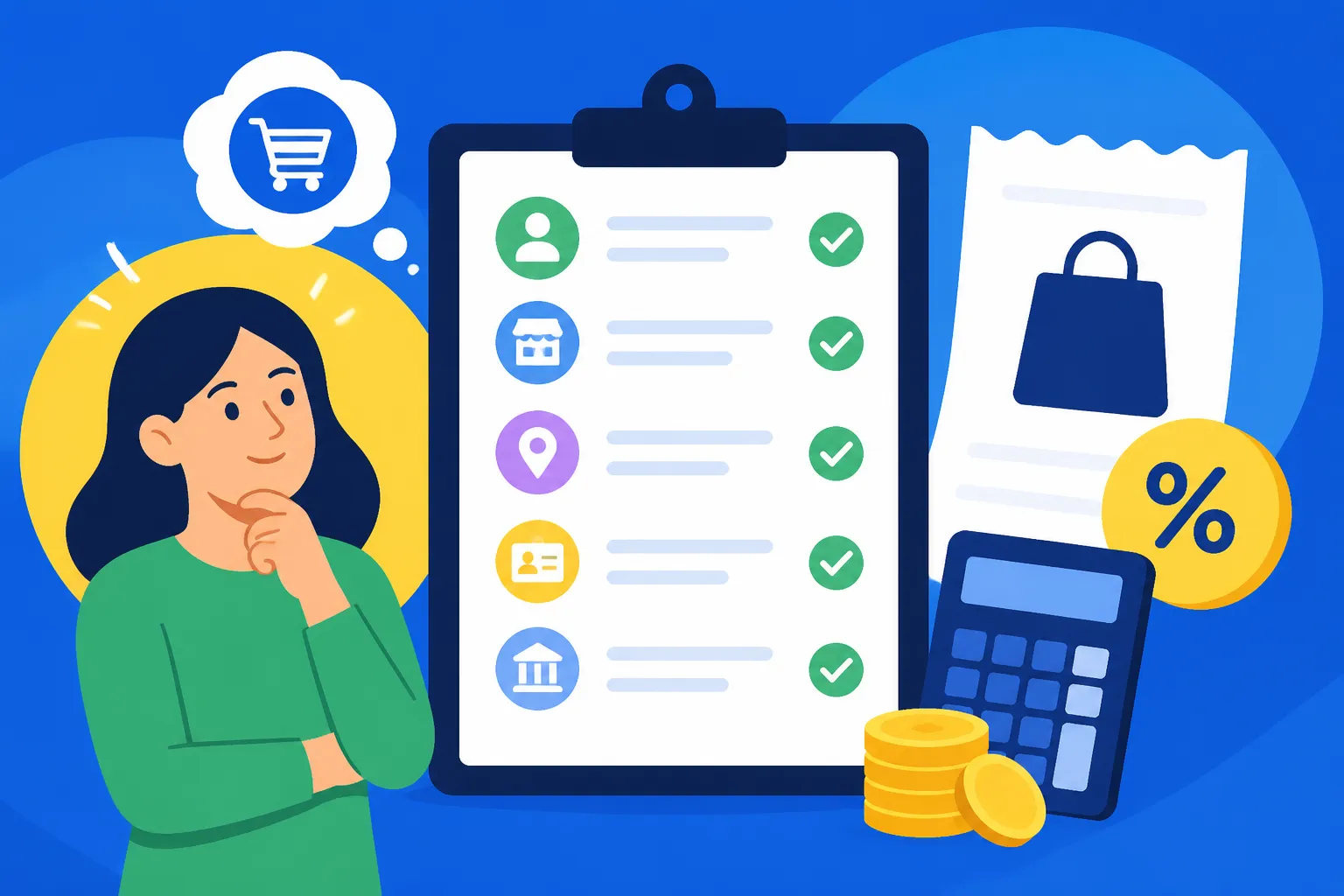
To make your life easier, here’s a comprehensive checklist of the information you’ll likely need to register for sales tax in most states. Print this out, grab a cup of coffee, and gather these details before you even open that first state website.
| Category | Required Information | Notes |
|---|---|---|
| Business Identity | Legal Business Name | Exactly as registered with your Secretary of State |
| Doing Business As (DBA) Name (if applicable) | Any trade names your business operates under | |
| Business Structure (Sole Prop, LLC, Corp, etc.) | Matches your federal and state registrations | |
| Identification | Federal Employer Identification Number (EIN) | Required for most entities; sole proprietors may use SSN |
| Social Security Number (SSN) of Owner/Responsible Party | For identity verification, especially if using SSN as primary tax ID | |
| Driver's License Number of Owner/Responsible Party | For identity verification | |
| Contact Information | Physical Business Address | Where your primary business operations occur |
| Mailing Address (if different) | Where you receive official mail | |
| Business Phone Number | Direct contact number | |
| Business Email Address | For electronic communications and notifications | |
| Website URL (if applicable) | For online businesses, helps states understand your operations | |
| Business Activity | Description of Goods/Services Sold | Be specific about what you sell (e.g., "retail clothing," "SaaS subscriptions") |
| Primary Business Activity / NAICS Code | Industry classification code (can find online if unsure) | |
| Date Business Started / Date First Sale Made | Or anticipated date for new businesses | |
| Do you make sales for resale? | Important for understanding your tax obligations and eligibility for resale certificates | |
| Financial Details | Estimated Monthly/Quarterly Taxable Sales | Helps the state assign your initial filing frequency |
| Bank Name | For electronic payment setup | |
| Bank Account Number | For electronic payment setup | |
| Bank Routing Number | For electronic payment setup | |
| Previous History | Any prior sales tax registration in this state? | If you had a permit previously or are reactivating |
| Any tax liens or judgments against the business? | Some states ask this during the application process |
Gathering this information beforehand is like having a well-stocked pantry before you start cooking – it makes the whole process smoother and far less stressful. The more prepared you are, the quicker you can navigate the state portals and get your sales tax permits in hand. Remember, this isn't just a one-and-done; sales tax compliance is an ongoing journey, but getting the registration right is the critical first step.
Disclaimer
The information provided in this article is for general informational purposes only and does not constitute professional tax or legal advice. Sales tax laws are complex and constantly changing. Always consult with a qualified tax professional or legal advisor for advice tailored to your specific business situation.