Resale Certificate vs Sales Tax Permit
It’s a tale as old as time for small business owners and even seasoned entrepreneurs: you hear terms like "sales tax permit" and "resale certificate" tossed around, and honestly, they can sound like two sides of the same confusing coin. You know they're important for staying on the right side of sales tax compliance, but figuring out which one you need, when you need it, and what it actually does can feel like deciphering an ancient language. This guide is here to untangle that knot, breaking down the core differences and purposes of these two crucial sales tax documents, so you can move forward with confidence.
The Core Confusion: Why Do These Sound So Similar?
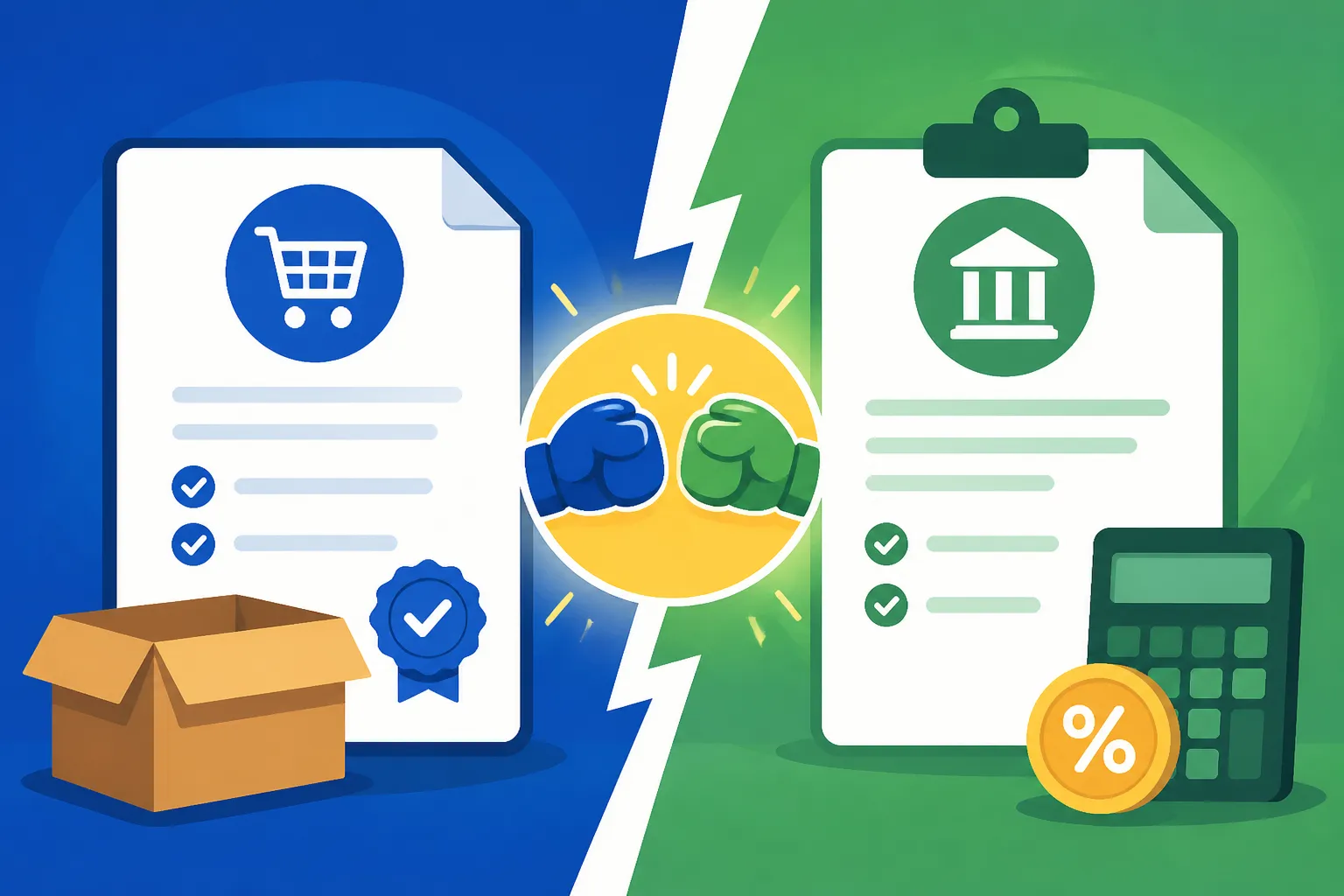
Let's be real, the terminology around sales tax can be incredibly murky, and it’s no wonder people get these two mixed up. Both a sales tax permit and a resale certificate involve sales tax, and both are documents issued by state tax authorities or used in transactions. But that's pretty much where the similarities end. The fundamental difference lies in their purpose: one gives you permission to collect tax, and the other gives you permission not to pay tax on certain purchases. Without understanding this distinction, you might accidentally register for something you don't need or, worse, miss collecting or remitting taxes you do owe.
Understanding the Purpose of Each Document
Think of it this way: a sales tax permit is like your official license to operate as a sales tax collector for the state. If you're selling goods or certain taxable services directly to consumers, the state requires you to register with them so you can collect sales tax on their behalf and then remit it back to the state. It's about empowering you to be a tax agent. On the flip side, a resale certificate is a way for businesses to buy items without paying sales tax at the time of purchase, specifically when those items are going to be resold to an end customer. The idea is to avoid "tax on tax," ensuring that sales tax is only applied once, at the final consumer transaction. It’s an exemption, not a collection mandate.
These distinct purposes mean that the requirements for obtaining and using each document are entirely different, as are the responsibilities that come with them. Trying to use a resale certificate when you need a sales tax permit, or vice-versa, can lead to serious headaches, including penalties and back taxes. It's a common pitfall that many new businesses stumble into, and understanding the core function of each is the first step toward building a solid compliance foundation.
Who Needs What? Distinguishing Your Role
The question of "who needs what" boils down to your business activities. If you are a retailer, whether you sell physical products from a storefront, through an e-commerce website, or even via drop shipping, and your sales are to the final end-user in a state where you have sales tax nexus, you almost certainly need a sales tax permit. This permit authorizes you to add sales tax to the customer's bill. Without it, you're illegally collecting tax or, even worse, failing to collect tax that you're legally obligated to. For many small businesses trying to navigate their state obligations, a key first step is often to understand how to get a sales tax permit by state.
Conversely, if you're a business that buys goods with the intent to resell them, either in their original form or as a component of another product, then you'll need a resale certificate. This certificate is presented to your suppliers, allowing you to purchase inventory or raw materials tax-free. For example, if you own a boutique and buy inventory wholesale to sell to your customers, you’d use a resale certificate to avoid paying sales tax on your wholesale purchases. The tax will be collected when you sell those items to your customers. It's critical to note that you typically cannot use a resale certificate to buy items for your business's internal use, like office supplies or equipment; those are generally taxable purchases.
Diving Deep into the Sales Tax Permit (Seller's Permit, Certificate of Authority)
Alright, let's zoom in on the sales tax permit. This is the big one for most retailers. It’s known by various names across different states – sometimes a "seller's permit" in California, a "certificate of authority" in New York, a "vendor's license" in Ohio, or even a "TPT license" in Arizona. Despite the different titles, they all serve the same fundamental purpose: granting you the legal right to collect sales tax from your customers. This isn't a suggestion; it's usually a non-negotiable requirement once you establish sales tax nexus in a state.
What Exactly Is a Sales Tax Permit?
At its heart, a sales tax permit is an official document issued by a state's tax authority (like a Department of Revenue or Franchise Tax Board) that authorizes your business to collect sales tax. Think of it as your official ID card for the state's sales tax system. When you obtain this permit, you're effectively entering into an agreement with the state: you'll diligently collect sales tax from your customers on all taxable sales, hold that money in trust, and then remit it to the state according to a set schedule. It’s a trust relationship, and the state takes it very seriously.
This permit isn't just a piece of paper; it comes with responsibilities. It typically has a unique identification number that you'll use when filing your sales tax returns. It also dictates your filing frequency (e.g., monthly, quarterly, annually), which is usually determined by your expected sales volume. For online sellers, the question often arises, "Do I need a sales tax permit to sell online?" The answer is a resounding yes, if you have nexus in that state and are making taxable sales directly to consumers. It's the first tangible step toward becoming a compliant business in the eyes of the state.
The Application Process: Getting Your Permit
Getting a sales tax permit isn't usually a quick, one-and-done type of task. The application process varies by state, but generally involves providing detailed information about your business. You'll need your Federal Employer Identification Number (EIN) or Social Security Number (if you're a sole proprietor), your business name and address, contact information, and often a description of the type of goods or services you'll be selling. Some states, like California with its Seller's Permit, might ask for an estimate of your monthly taxable sales to help determine your initial filing frequency.
The good news is that most states have streamlined their application processes, allowing you to apply online through their Department of Revenue website. While the process is typically free, some states may charge a small registration fee. After submitting your application, there's usually a waiting period while the state processes it. This can range from a few days to several weeks, depending on the state and current workload. Once approved, you'll receive your sales tax permit or certificate, often with instructions on how to file your first return. It's important to remember that you should not begin collecting sales tax until you have this permit in hand.
Your Ongoing Responsibilities with a Sales Tax Permit
Obtaining a sales tax permit is just the beginning of your compliance journey. The permit comes with ongoing responsibilities that you must adhere to. First and foremost, you are responsible for accurately calculating and collecting sales tax on all taxable sales you make within that state. This means understanding the specific sales tax rates, which can vary not just by state but also by city, county, and special districts. For example, knowing the base California Sales Tax Rate and understanding how district taxes affect it is crucial for businesses operating there.
Beyond collection, you are obligated to file regular sales tax returns, even if you had no sales during a particular period (these are often called "zero returns"). Your filing frequency (monthly, quarterly, or annually) will be assigned by the state based on your sales volume, and missing deadlines can result in penalties and interest. Finally, you must remit the collected sales tax to the state. This collected tax isn't your money; it's held in trust for the state, so it’s crucial to keep it separate and never view it as business revenue. Effective sales tax compliance software, like Avalara, can become an invaluable tool here, helping automate these calculations, track nexus, and manage filing obligations.
Unpacking the Resale Certificate (Reseller Permit, Exemption Certificate)
Now, let's shift gears to the resale certificate. This document serves a completely different, yet equally vital, purpose in the sales tax ecosystem. While a sales tax permit is about collecting tax from your customers, a resale certificate is about not paying tax to your suppliers on certain purchases. It acts as an exemption, proving to a vendor that the items you are buying from them are intended for resale, and therefore, should not be subject to sales tax at that stage of the transaction.
What Exactly Is a Resale Certificate For?
The primary purpose of a resale certificate is to prevent "double taxation." Imagine you're a wholesaler buying 100 widgets from a manufacturer. If you paid sales tax on those widgets, and then your customers paid sales tax again when you sold them, the end consumer would effectively be taxed twice on the same product. This is where the resale certificate steps in. By providing a valid resale certificate to your supplier, you certify that the items you're purchasing will be resold. This allows your supplier to sell the goods to you tax-exempt. The sales tax collection is deferred until the final sale to the end consumer.
It's important to understand that a resale certificate isn't a free pass to buy anything tax-free. It applies specifically to items that you intend to resell. This could be raw materials that will be incorporated into a new product, or finished goods that you'll sell directly to customers. For example, a bakery might use a resale certificate to buy flour, sugar, and other ingredients, as these will be components of the cakes they sell. However, they wouldn't use it to buy a new oven, as that's equipment for their own use, not for resale. Mastering the proper use of this document is covered comprehensively in guides such as "How to Use a Resale Certificate (Form CDTFA-230)".
How to Obtain and Properly Use a Resale Certificate
In many states, your sales tax permit (or seller's permit, certificate of authority, etc.) number is your resale certificate number. You simply fill out a state-specific resale certificate form, enter your sales tax permit number, and provide it to your vendors. Some states, however, issue a separate document explicitly called a "resale certificate" or "reseller permit." For instance, Washington state issues a specific reseller permit. Generally, to qualify for a resale certificate, you must already be registered to collect sales tax in that state or prove you're engaged in the business of selling tangible personal property.
When you purchase goods for resale, you'll present this certificate to your supplier. It's their documentation to justify not charging you sales tax. If you fail to provide a valid certificate, they are generally required to charge you sales tax. Businesses often ask if a Resale Certificate vs Sales Tax Permit can be used interchangeably; the answer is a firm no. One is for collecting, the other is for exempting your purchases from tax, based on your intent to resell. Maintaining accurate records of all resale certificates you issue and receive is crucial for audits.
The Importance of Valid Resale Certificates
The validity of resale certificates cannot be overstated. Both you, as the buyer, and your supplier, as the seller, have responsibilities regarding these documents. As a buyer, you certify that the items are indeed for resale. Misusing a resale certificate (e.g., buying personal items tax-free) can lead to severe penalties, including back taxes, interest, and fines, as it constitutes tax evasion. It's essentially lying to the state about the true nature of your purchase.
As a seller who accepts a resale certificate, you need to ensure it's properly filled out and valid. Most states require you to keep these certificates on file to prove why you didn't collect sales tax from a particular customer. If you're audited and can't produce a valid resale certificate for a tax-exempt sale, you could be held liable for the uncollected sales tax, plus penalties and interest. This is why many businesses use third-party tools, like those offered by Avalara, to manage and validate resale certificates, reducing their audit risk significantly. Ensuring compliance here is just as important as knowing your Sales Tax Rates by State 2026: All 50 States.
Key Differences That Can Make or Break Your Compliance
Understanding the distinct roles of a sales tax permit and a resale certificate is absolutely fundamental for any business engaging in commerce. Getting them confused or misusing one could lead to audit nightmares, financial penalties, and a whole lot of stress. It's not just about what they are, but about how they function in the sales tax cycle.
Issuer and Recipient: Who Gives, Who Gets?
Let's break down the flow. A sales tax permit is issued by the state to your business. You, as the business owner, are the recipient of this permit, and it grants you the authority to act as an agent for the state in collecting sales tax from your customers. You apply for it, and the state issues it to you. It's your permission slip from the government. If you're wondering, "How to Get a Seller's Permit in California" or elsewhere, you're directly interacting with the state tax authority.
A resale certificate, on the other hand, is generally issued by your business (the buyer) to your supplier (the seller). You fill out the form, certifying that the goods you're purchasing are for resale, and hand it to your vendor. Your vendor then keeps this certificate on file as proof that they were justified in not charging you sales tax. So, with a sales tax permit, the state is giving you something; with a resale certificate, you are giving something to another business. This fundamental difference in direction and purpose is crucial.
The Financial Impact: Tax Collection vs. Tax Exemption
The financial implications of each document are also diametrically opposed. When you have a sales tax permit, you are legally required to add sales tax to the price of taxable goods or services you sell to your end customers. This means your customer pays more, and you are then responsible for holding and remitting that collected tax to the state. It represents an increase in the transaction cost for the end consumer and a liability for your business until it's paid to the state.
A resale certificate, conversely, allows you, the purchasing business, to avoid paying sales tax on eligible purchases from your suppliers. This results in a reduction in your immediate purchase cost for inventory. It's an exemption from tax at the wholesale or intermediary stage. Without a valid resale certificate, your supplier would be obligated to charge you sales tax, increasing your upfront costs and tying up capital that would otherwise be used for other business expenses. This distinction highlights why businesses often want to understand Sales Tax by ZIP Code (and Why ZIP Isn't Enough) when they are making sales, but for purchases with a resale certificate, the tax calculation is avoided entirely.
Consequences of Misuse or Non-Compliance
The stakes are high for both documents. Failing to obtain a sales tax permit when required, or collecting sales tax without one, can lead to severe penalties. States can impose fines for operating without a license, and you could be held personally liable for any uncollected taxes. Furthermore, if you do collect sales tax without a permit, those funds are still owed to the state, and you’ll have a hard time explaining your actions during an audit. This situation can severely damage your business's reputation and financial health. Regular filing, as outlined in "How to File a Sales Tax Return: Step by Step", is a key compliance activity after obtaining your permit.
Misusing a resale certificate is equally risky. If you use a resale certificate to purchase items for personal use or for business use (not for resale), you are essentially committing tax fraud. This can lead to assessments for the uncollected sales tax, substantial interest charges, and hefty penalties. Additionally, your supplier could face penalties for failing to collect tax if they accepted an invalid certificate from you. States regularly audit businesses, and discrepancies in sales tax collection or exemption practices are often red flags. It’s crucial to treat both documents with the utmost respect and adhere strictly to their intended uses.
| Feature | Sales Tax Permit | Resale Certificate |
|---|---|---|
| Primary Purpose | Authorizes collection of sales tax from customers | Exempts purchases from sales tax when items are for resale |
| Issued By | State Tax Authority | Buyer (to their supplier) |
| Recipient | Your Business | Your Supplier |
| What it Does | Allows you to add sales tax to customer invoices | Allows you to buy inventory tax-free |
| Effect on Price | Increases price for end customer | Reduces purchase cost for your business |
| Usage | Required for taxable sales to end consumers | Used for B2B purchases of goods intended for resale |
| Other Names | Seller's Permit, Certificate of Authority, Vendor's License | Reseller Permit, Exemption Certificate |
Real-World Scenarios: When Do You Use Which?
Let's ground this in some practical examples, because the theory is one thing, but applying it to your actual business can sometimes feel like a puzzle. These scenarios should help clarify when each document comes into play, especially for businesses with varied operations.
The Online Retailer's Dilemma
Imagine Sarah, who runs an online boutique selling custom-designed t-shirts. She sources blank t-shirts from a wholesale supplier, prints her designs, and then sells the finished shirts through her Shopify store to customers across the country. In this scenario, Sarah has a dual role. First, when she buys the blank t-shirts from her wholesaler, she's purchasing inventory for resale. To avoid paying sales tax on these purchases, she would provide her wholesaler with a resale certificate. This ensures she only pays for the cost of the shirts, not an additional sales tax that would later be collected from her customers.
Second, when Sarah sells her finished t-shirts to customers, she needs to determine if she has sales tax nexus in the customer's state. If she has Economic Nexus by State 2026: Thresholds Guide in a particular state (meaning she meets that state's sales or transaction thresholds), she must have a sales tax permit for that state. With the permit, she will collect the appropriate sales tax from her customers on each sale and then remit it to the state. Her challenge is managing permits and collection across multiple states where her online sales create nexus, a task often simplified by integrated tax solutions.
The Wholesaler's Perspective
Consider Mark, who operates a wholesale distribution business for electronic components. He buys large quantities of resistors, capacitors, and microchips directly from manufacturers and then sells them to other businesses that use these components to build their own finished electronic products. Mark rarely sells directly to an end consumer. For Mark's business, the primary document he receives is the resale certificate.
When a business customer places an order with Mark for components, Mark will request a valid resale certificate from them. If the customer provides one, Mark does not charge sales tax on that transaction, knowing that his customer will either incorporate the components into another product to be sold (at which point sales tax will be collected on the final product) or they will resell the components themselves. Mark still needs his own sales tax permit in any state where he has nexus, because he could potentially make a direct, taxable sale to an end consumer (even if rare), and he must be authorized to collect tax if that happens. He also needs it to prove to his suppliers that he, too, is buying for resale. His core focus, however, is on correctly accepting and validating the resale certificates from his business customers.
The Service Provider Who Sells Goods
Let’s look at a slightly more nuanced case: Maria, a graphic designer who primarily offers creative services. Sometimes, as part of a client project, she designs custom brochures or business cards and has them printed for her clients. She marks up the printing cost and charges her client for the finished physical goods, plus her design fee. Her design service itself might not be taxable in her state, but the physical brochures she sells to her client often are.
When Maria orders the brochures from her commercial printer, she is buying a product that she intends to resell to her client. Therefore, she should provide her printer with a resale certificate to purchase the brochures tax-free. Then, when she bills her client for the brochures, she must have a sales tax permit for her state to collect sales tax on the marked-up price of those brochures. This dual role illustrates why understanding both documents is so crucial. If she mistakenly paid sales tax to the printer, she'd likely be out that money unless her state allows her to apply for a refund, which is often a lengthy process. This kind of complexity often pushes businesses to explore solutions like Avalara to ensure they’re compliant on both the purchasing and selling sides.
Streamlining Your Sales Tax Management
Managing sales tax, whether it's obtaining permits, issuing resale certificates, or tracking nexus across multiple states, can become incredibly complex and time-consuming as your business grows. The compliance landscape is constantly shifting, with new rules and rate changes happening all the time. This is where strategic planning and the right tools can make a world of difference.
Manual Tracking vs. Automation Solutions
Initially, a small business might try to manage all sales tax obligations manually. This involves visiting each state's Department of Revenue website to apply for a sales tax permit, keeping physical or digital copies of all resale certificates exchanged, and manually calculating sales tax rates for every transaction. You also have to keep up with 2026 Sales Tax Rate Changes by State, which can change frequently. While feasible for a very local business with few transactions, this quickly becomes unsustainable for online sellers or businesses expanding into multiple states. The risk of error is high, and the time spent on administrative tasks distracts from core business activities.
Automation solutions, like those offered by companies such as Avalara, are designed specifically to tackle this complexity. They can help you identify where you have sales tax nexus, automatically apply the correct sales tax rates (down to the street address level, not just ZIP codes), manage your permits, and even handle the filing and remittance of your sales tax returns. For businesses that are dealing with sales tax across multiple states or managing a high volume of transactions, investing in such a system can be a game-changer, significantly reducing compliance risk and freeing up valuable resources.
Best Practices for Keeping Records
Regardless of whether you choose to go manual or leverage automation, maintaining meticulous records is a non-negotiable best practice for sales tax compliance. For sales tax permits, keep a copy of every permit you've obtained, clearly noting the state, permit number, and issuance date. This is crucial documentation for any audit. You should also maintain records of all your sales tax filings and payment confirmations.
For resale certificates, the best practice is to collect a valid, properly filled-out certificate from every customer who claims a sales tax exemption for resale. Ensure it's signed, dated, and includes their sales tax permit number (if required by that state). As a seller, you must keep these certificates on file, usually for a period of several years (check your state's specific record-keeping requirements), to justify why you didn't collect sales tax on those transactions. As a buyer, keep copies of the resale certificates you've issued to your suppliers. Proper record-keeping is your first line of defense in the event of an audit and a cornerstone of sound sales tax management. It’s a core component of overall sales tax compliance for online sellers.
Disclaimer
This article is for general informational purposes only and does not constitute professional advice. Laws and regulations vary by location and change over time. Consult a qualified professional for guidance on your specific situation.