Are Shoes Taxable in California?
It can be incredibly frustrating when you're trying to figure out the sales tax on everyday items, especially something as common as shoes, and the rules seem to change depending on where you look or even what state you're in. This guide aims to cut through that confusion and give you a crystal-clear understanding of whether shoes are taxable in California, how those taxes are applied, and why it can feel so complicated.
Understanding California's Approach to Sales Tax on Apparel
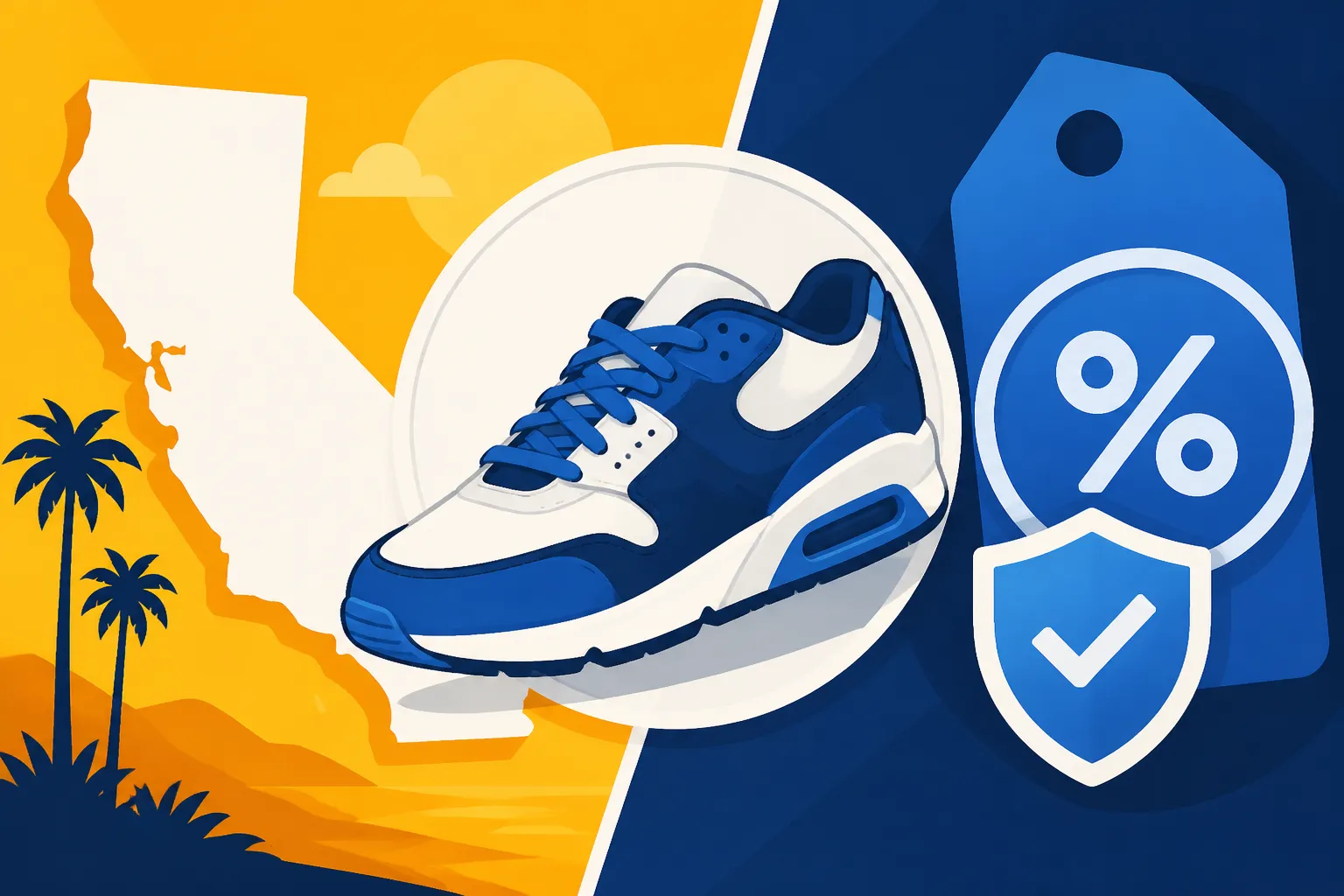
Let's get straight to the point: when you buy shoes in California, you're going to pay sales tax on them. There's often a lot of confusion, especially because other states handle clothing and footwear sales tax differently, but California keeps it pretty simple for most apparel.
The Golden Rule: Tangible Personal Property
In California, the general rule is that sales tax applies to the retail sale of most tangible personal property. What does "tangible personal property" mean? Essentially, it's anything you can see, weigh, measure, feel, or touch, and that can be moved. Shoes fit squarely into this category. Whether you're buying a pair of sneakers, fancy heels, sturdy work boots, or tiny baby booties, they are considered tangible personal property and are therefore subject to sales tax.
This might seem obvious to some, but it's a foundational principle that helps clarify why items like digital downloads or certain services aren't always taxed in the same way. For physical goods, especially something as common and universally understood as a pair of shoes, California’s tax code generally says, "Yes, that's taxable."
Dispelling Common Misconceptions
Many people mistakenly believe that clothing, or at least certain types of clothing or footwear, are exempt from sales tax in California. This isn't an uncommon thought process, and it usually stems from encountering different rules in other states or during specific "tax-free weekends" elsewhere. For example, states like Pennsylvania and Minnesota have broad exemptions for most clothing, while New York exempts individual clothing items priced under a certain amount. Even Massachusetts exempts single items of clothing under a specific dollar threshold. It's completely understandable why a shopper moving to California or even just traveling there might assume a similar rule applies.
However, California does not have a general sales tax exemption for clothing or shoes, regardless of price. There are no statewide sales tax holidays that include clothing or shoes either, which means that whether you're buying an inexpensive pair of sandals or high-end designer footwear, the applicable sales tax rate will be added to your purchase. This consistent approach, while perhaps less generous than other states, does offer a certain predictability once you understand it.
The Nitty-Gritty: How California Sales Tax Rates Apply to Your Shoe Purchases
Understanding that shoes are taxable is the first step, but then comes the question of how much tax you'll actually pay. This is where California's sales tax system can get a little complex due to its combination of statewide and local district taxes.
Statewide Rate vs. Local District Taxes
California has a base statewide sales tax rate. However, nearly every city and county in California also levies its own local sales taxes, often called district taxes. These district taxes are added on top of the statewide rate, meaning the actual sales tax you pay can vary significantly depending on the specific city or even neighborhood where you make your purchase. It's not uncommon for these combined rates to push the total sales tax well above the base state percentage. For instance, while the base statewide rate for California Sales Tax Rate is 7.25%, many areas see rates climb much higher. In fact, major metropolitan areas like Los Angeles have significantly higher rates once all district taxes are factored in, which can be explored further in guides like the one on the Los Angeles Sales Tax Rate Explained.
This creates a dynamic where two people could buy the exact same pair of shoes for the same price in California, but pay different amounts of sales tax if they purchased them in different cities or counties. Businesses, therefore, have to be incredibly precise in determining the correct rate based on the buyer's location. This is where tools from companies like Avalara become invaluable, helping businesses accurately calculate and apply the correct local rates, preventing under- or over-collection errors. If you're running a business and need to ensure you're getting this right, exploring different Sales Tax Rate Lookup Tools Compared can be a lifesaver.
Here's a simplified look at how combined rates work in a few California locations for a $100 pair of shoes (excluding any potential city-specific surtaxes that could further increase the rate):
| Location (Example) | State Sales Tax Rate | Typical District Tax Rate (Example) | Combined Sales Tax Rate | Sales Tax on $100 Shoes | Total Cost for $100 Shoes |
|---|---|---|---|---|---|
| State Base (Hypothetical) | 7.25% | 0.00% | 7.25% | $7.25 | $107.25 |
| Sacramento, CA | 7.25% | 0.75% | 8.00% | $8.00 | $108.00 |
| San Francisco, CA | 7.25% | 1.50% | 8.75% | $8.75 | $108.75 |
| Los Angeles (City), CA | 7.25% | 2.50% | 9.75% | $9.75 | $109.75 |
Note: These district tax rates are examples and can change. Always verify current rates for specific addresses.
As you can see, even a $100 purchase can have a noticeable difference in final price based purely on the location of sale. Understanding these local nuances, sometimes referred to as California District Taxes Explained, is crucial for both consumers and businesses.
Real-World Examples of Shoe Purchases
Let's walk through a couple of common scenarios to illustrate how this plays out.
Scenario 1: Buying New Running Shoes at a Local Store
Imagine you're in San Diego, California, and you've found the perfect pair of running shoes for $150 at your local Foot Locker. San Diego County has its own district taxes. The current combined sales tax rate in most areas of San Diego is around 7.75%. When you get to the register, the sales associate will add 7.75% to your $150 purchase. That's an additional $11.63 in sales tax, bringing your total to $161.63. This is a straightforward application of the combined rate to the tangible item.
Scenario 2: Ordering Dress Shoes Online
Now, let's say you're looking for a specific pair of dress shoes and find them for $200 on an online retailer's website. If you live in Oakland, California, the sales tax rate for your delivery address will be applied. For Oakland, the combined sales tax rate is typically 9.25%. So, on your $200 shoes, you'll be charged $18.50 in sales tax, making your total $218.50. This highlights how online purchases are also subject to California sales tax based on the destination of the sale, which is usually the shipping address. The complexities of sales tax for online sellers are often supported by compliance solutions like Avalara to ensure accurate collection, especially when dealing with varying rates across different ZIP codes.
Remember, whether you're shopping in a brick-and-mortar store or clicking "add to cart" online, the sales tax on shoes in California is almost always going to be part of your final cost. It's not based on billing or shipping address specifically for nexus, but rather the destination of the goods. For businesses, knowing Is Sales Tax Based on Billing or Shipping Address? is a critical aspect of compliance.
Why Other States are Different (and Why California Isn't)
The varied landscape of sales tax on apparel across the U.S. can certainly make things confusing, prompting many to ask, "Is Clothing Taxable?"
A Glimpse at Apparel Exemptions Elsewhere
It's true that several states offer sales tax exemptions on clothing and shoes, often with specific conditions. For example:
- Pennsylvania and Minnesota: These states generally exempt most clothing and footwear from sales tax, with very few exceptions. You could buy a whole new wardrobe there and not pay a dime in sales tax on the apparel itself.
- New York: In New York, individual items of clothing and footwear sold for less than $110 are exempt from state sales tax. However, local sales taxes may still apply. So, if you buy a $109 pair of sneakers in New York City, you won't pay the state's 4% sales tax, but you'll still pay the combined local sales tax.
- Massachusetts: Similar to New York, Massachusetts exempts individual articles of clothing costing $175 or less. If an item is over that threshold, the entire price is subject to sales tax.
- New Jersey: Most clothing and footwear are exempt from sales tax in New Jersey.
- Other States with Sales Tax Holidays: Many states offer annual sales tax holidays, often for back-to-school season, where certain clothing and footwear items (usually under a price cap) become temporarily tax-free. For a comprehensive look at these events, check out the Sales Tax Holidays by State 2026: Full Calendar.
These examples clearly illustrate why someone might carry the expectation of a sales tax exemption on shoes over to California. It's a patchwork quilt of rules out there!
California's Clear Stance
California, however, has opted for a much simpler, though perhaps less consumer-friendly from a tax perspective, approach. There are no general exemptions for clothing or footwear, no price thresholds, and no statewide sales tax holidays that make apparel tax-free. If it's a pair of shoes you can wear, it's taxable.
This means that while shoppers in states like New Jersey can enjoy tax-free shoe purchases year-round, and those in Texas can take advantage of an annual back-to-school Sales Tax Holiday for clothing and footwear under a certain price, California residents and visitors will consistently pay sales tax on their shoe purchases. This straightforward rule, while sometimes disappointing for shoppers, makes compliance somewhat simpler for retailers operating exclusively within California, as they don't have to track specific apparel exemptions or holiday dates. However, for multi-state sellers, keeping track of California's consistent taxability versus other states' nuanced rules is a significant challenge, often requiring sophisticated sales tax compliance solutions.
Navigating Sales Tax for Businesses Selling Shoes
If you're a business owner selling shoes in California, understanding these rules isn't just about paying tax; it's about correctly collecting and remitting it. This can be a huge headache, especially with the varied local rates.
Collecting and Remitting Accurately
As a seller, you have a legal obligation to collect the correct sales tax from your customers and remit it to the California Department of Tax and Fee Administration (CDTFA). This means staying on top of the base state rate and all the district taxes that apply to your specific sales locations. For an in-store retailer, this might mean simply programming your POS system to reflect the combined rate for your address. But for online sellers, it's far more complex. You need to calculate the sales tax rate for the customer's shipping address for every single order. This is why many businesses turn to automated sales tax solutions to ensure accuracy. Services like Avalara are specifically designed to handle this complexity, integrating with e-commerce platforms to automatically determine and apply the correct sales tax rate down to the street address level. This precision helps businesses avoid costly audits and penalties.
Accurate collection is just one piece of the puzzle. You also need to file your sales tax returns regularly and remit the collected funds. The filing frequency (monthly, quarterly, or annually) depends on your sales volume. Knowing How to File a Sales Tax Return: Step by Step is crucial, and understanding your Sales Tax Due Dates by State 2026 can prevent late penalties.
Resale Certificates for Inventory
Now, here's a crucial point for businesses: if you're buying shoes wholesale with the intent to resell them, you generally do not pay sales tax on that initial purchase. This is where a Resale Certificate by State: Complete Guide comes in. As a retailer, you would provide your supplier with a valid California resale certificate (Form CDTFA-230, Resale Certificate) at the time of purchase. This certifies that you're buying the goods for resale and shifts the sales tax collection responsibility to you when you eventually sell the shoes to the end consumer.
Using a resale certificate correctly is vital for avoiding unnecessary costs for your business. It prevents "tax on tax" situations where sales tax is charged multiple times along the supply chain. However, you must only use a resale certificate for items you genuinely intend to resell. If you buy shoes using a resale certificate and then decide to keep them for personal use, you would typically owe "use tax" on that item, which is essentially sales tax on purchases where sales tax wasn't collected at the time of sale. Businesses often use solutions from providers like Avalara to manage the collection and validation of resale certificates, streamlining what can be a very paperwork-heavy process and ensuring compliance for both buyers and sellers.
Understanding these distinctions is paramount for any business operating in California's retail landscape, ensuring that operations run smoothly and compliance is maintained without a hitch.
Disclaimer
Please remember, this information is for educational purposes only and should not be considered tax advice. Sales tax laws are complex and can change. Always consult with a qualified tax professional or the California Department of Tax and Fee Administration (CDTFA) for advice specific to your situation.