Is SaaS Taxable in Ohio?
Navigating the world of sales tax can feel like trying to solve a Rubik's Cube blindfolded, especially when you're dealing with something as seemingly intangible as software as a service (SaaS). Many businesses, both those selling SaaS and those purchasing it, often wonder: "Is SaaS taxable in Ohio?" This isn't just a casual question; getting it wrong can lead to costly audits, penalties, and a whole lot of stress down the line. This comprehensive guide is here to untangle Ohio's specific rules, help you understand what's taxable, and provide a roadmap for staying compliant.
Understanding Ohio's Sales Tax on SaaS: The ADP Service Angle
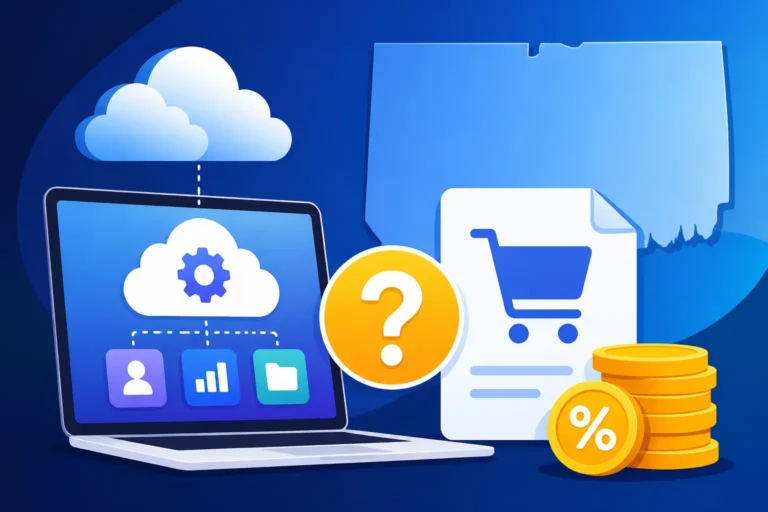
Ohio's approach to taxing SaaS isn't quite like some other states that might simply define "digital products" or "cloud computing." Instead, the Buckeye State largely categorizes SaaS under its definition of "automatic data processing" (ADP) services. This distinction is absolutely crucial because it means that if your SaaS product or the SaaS you're using fits this description, it's subject to Ohio sales tax. It’s a concept that has evolved with technology, making it challenging for businesses to keep up.
The "Automatic Data Processing" Definition in Ohio Law
So, what exactly is automatic data processing in the eyes of Ohio tax law? According to Ohio Revised Code (ORC) 5739.01(B)(3)(a), automatic data processing and computer services generally refer to "the processing of others' data, the providing of access to computer equipment by remote or direct access, the providing of computer equipment by remote or direct access to, and the providing of computer services, which includes the electronic manipulation of information." While that sounds like a mouthful, the key phrase here is "electronic manipulation of information." It's about taking data, doing something with it electronically, and then giving it back or presenting it to the user.
Think of it this way: traditional software installed on your computer is a tangible personal property (or sometimes a license to use tangible personal property) that performs tasks. SaaS, however, is a service where you're essentially paying someone else to run and maintain that software on their servers, providing you access to its capabilities and the manipulation of your data through their infrastructure. It’s this "service" aspect that Ohio targets with its ADP definition.
Why SaaS Falls Under ADP
SaaS applications inherently involve the "electronic manipulation of information" or "providing access to computer equipment." When you use a cloud-based CRM, for instance, you're inputting customer data, and the software is storing, organizing, and processing that data to give you insights, manage leads, and automate tasks. You're accessing these services remotely, without owning or directly controlling the underlying hardware or software itself.
This distinguishes it from buying a physical CD-ROM of software back in the day, or even a perpetual license for software installed on your own servers. With SaaS, the vendor is providing the service of data processing and access. This interpretation has been solidified through various tax rulings and informal guidance from the Ohio Department of Taxation, making it a well-established principle for businesses operating in or selling into Ohio.
What Exactly Qualifies as ADP? Unpacking the Definition
The broad definition of ADP can still leave room for ambiguity, especially when some services blend software with human elements or specific data storage functions. It’s not always a clear-cut case, which is why digging into the characteristics is so important. Businesses often find themselves scratching their heads, wondering if their specific offering truly fits the mold.
Key Characteristics of Taxable ADP Services
Generally, taxable ADP services in Ohio involve several key characteristics. First, there's an interactive element, where the user engages with the software to input, retrieve, or manipulate data. This isn't just a static webpage; it's a dynamic application. Second, the service must primarily involve data manipulation or processing. This could be crunching numbers, organizing records, running algorithms, or generating reports based on user-provided data. For example, a subscription to a project management tool like Asana or Monday.com, where you input tasks, deadlines, and team members, and the software processes this to create timelines and track progress, would typically fall into this category.
It's also important to note that merely providing access to computer equipment or a database, without significant data manipulation by the service provider on behalf of the customer, might be viewed differently. However, most modern SaaS platforms do much more than just store data; they actively process it. Think about a cloud storage service like Google Drive or Dropbox. If you're simply uploading and storing files, that might lean more towards storage. But if the service also offers integrated tools for editing, collaborating, or searching within those documents in a sophisticated way, it quickly veers into "electronic manipulation of information."
Distinguishing ADP from Non-Taxable Services
This is where it gets a bit trickier. Not all services involving computers are taxable as ADP in Ohio. For instance, custom software development might be considered a non-taxable professional service if the developer is creating a unique program specifically for one client and the client retains significant control over the development process, rather than simply subscribing to a pre-existing platform. Similarly, consulting services that happen to use software as a tool for delivering advice are usually not taxable, even if that advice involves analyzing data processed by software. The "true object" of the transaction is key here. If the customer is primarily buying the expertise, knowledge, or custom creation, and the software is incidental, it might not be taxable.
Consider a scenario where a marketing agency uses an email marketing SaaS platform like Mailchimp or Constant Contact to send out campaigns for a client. The agency pays for the SaaS (and would pay Ohio sales tax on that), but the service they provide to their client (developing campaign strategies, writing content, managing lists) is a professional service, generally not subject to sales tax. The distinction lies in whether the customer is buying access to the software's data processing capabilities directly, or if they are buying a human-delivered service where software is just one of many tools used by the provider.
Common SaaS Scenarios and Their Tax Implications in Ohio
Given the nuances, it's helpful to look at specific types of SaaS products and how they typically fare under Ohio's sales tax rules. Understanding these common scenarios can help you determine if your product, or a product you use, is taxable.
Examples of Taxable SaaS
Most mainstream SaaS applications that businesses rely on daily are considered taxable ADP services in Ohio. Here’s a quick rundown of examples:
- Customer Relationship Management (CRM) Software: Platforms like Salesforce or HubSpot, where businesses manage customer interactions, sales pipelines, and marketing efforts, involve extensive data input, storage, and manipulation. These are classic examples of taxable SaaS.
- Accounting and Financial Software: Cloud-based accounting solutions such as QuickBooks Online or Xero process financial transactions, generate reports, and manage payroll. They perform significant data manipulation and are typically taxable.
- Project Management Tools: As mentioned, tools like Asana, Trello, or Jira help teams organize tasks, track progress, and collaborate. They process project data and provide access to features that manipulate this information.
- Email Marketing Platforms: Services that allow you to manage email lists, design campaigns, send emails, and track performance (like Mailchimp, Constant Contact) involve manipulating customer data and sending communications electronically.
- Cloud Storage and Document Management (with processing features): While simple storage might be debatable, most modern cloud storage solutions offer collaborative editing, version control, and powerful search functionalities that go beyond mere storage and delve into data processing.
- HR and Payroll Software: SaaS platforms for managing employee data, benefits, and payroll calculation also fall squarely under ADP services, as they manipulate sensitive employee and financial information.
In essence, if you're subscribing to a service that allows you or your employees to interact with software hosted by a third party, and that software is doing something with data (collecting, storing, analyzing, displaying), chances are it's taxable in Ohio. Businesses selling these types of services need to understand their Economic Nexus in Ohio: Threshold & Rules to determine if they are required to collect tax.
Nuances for Hybrid Offerings
Sometimes, a service isn't purely SaaS. What about offerings that combine software access with a significant human service component or substantial customization? This is where the "true object" test really comes into play. If the primary purpose of the transaction, the "true object" the customer desires, is the human-delivered professional service, then the entire transaction might be exempt, even if software is used.
For instance, if a company hires a consultant for a comprehensive data analysis project, and the consultant uses their own specialized SaaS tools to perform the analysis and deliver a custom report, the customer is primarily paying for the consultant's expertise and the custom report. The use of the SaaS tool is incidental to the professional service. In such a case, the consultant's fee to the client would likely not be subject to sales tax, though the consultant themselves would pay sales tax on their subscription to the SaaS tool if they have nexus in Ohio.
However, if the "hybrid" offering is essentially a subscription to a SaaS platform with optional, add-on "premium support" or "basic onboarding assistance," the primary object is still access to the software. The additional human services, if minor or incidental to the software's function, might not make the entire offering exempt. It's crucial for businesses to carefully evaluate the predominant nature of their service offerings. For complex cases, seeking advice from a tax professional or using sophisticated sales tax software like Avalara can make a world of difference in correctly classifying your sales.
Navigating Exemptions and Compliance for SaaS in Ohio
Once you've determined that your SaaS offering is taxable in Ohio, the next step is to understand if any exemptions apply and, critically, how to remain compliant with the state's tax laws. This isn't just about collecting tax; it's about doing it correctly and consistently.
Potential Exemptions for SaaS Purchases
While most SaaS is taxable as ADP, there are a few potential exemptions that could apply, though they are often quite specific and limited:
- Resale Exemption: This is a big one for businesses that are themselves selling services that incorporate or resell the SaaS. If you purchase a SaaS product with the intent of directly reselling it to your own customers, or if the SaaS becomes an integral component or ingredient of a separate service you provide, you might be able to purchase it tax-free using a Resale Certificate by State: Complete Guide. For example, a web hosting company that purchases cloud infrastructure (which could be considered a form of ADP) and then resells access to that infrastructure as part of its own hosting packages could potentially claim a resale exemption. However, if the SaaS is used internally to run your business operations (e.g., your accounting software), you cannot claim this exemption.
- Manufacturing Exemption: Ohio offers sales tax exemptions for certain machinery, equipment, and services used directly in the production of tangible personal property for sale. While a SaaS product might not immediately seem to fit, if it's directly and exclusively used in the actual manufacturing process to create a tangible good (e.g., industrial design software that controls a CNC machine), it might qualify. This is a very narrow exemption and typically doesn't apply to general business software.
- Government and Nonprofit Exemptions: Purchases made by certain government entities or qualifying nonprofit organizations are often exempt from sales tax. If your SaaS client is one of these entities, they would typically provide you with an exemption certificate.
It's vital for sellers to obtain a valid exemption certificate from the buyer for any exempt sale and keep it on file. Without it, you could be held liable for the uncollected tax if audited. Understanding the nuances of these exemptions can save both you and your customers money.
Steps for Ohio SaaS Sellers to Ensure Compliance
For any business selling SaaS into Ohio, compliance involves several critical steps, similar to selling any other taxable good or service. This is where the rubber meets the road, and errors can quickly compound.
-
Determine Nexus: First and foremost, you need to establish if you have a sales tax nexus in Ohio. This means you have a significant enough presence in the state to be required to collect sales tax. Nexus can be physical (e.g., an office, employees, inventory in a warehouse) or economic. Ohio's economic nexus threshold is currently $100,000 in gross receipts from sales into the state or 200 separate transactions in the current or preceding calendar year. If you meet either of these, you likely have economic nexus. You can learn more about this in our guide on Economic Nexus by State 2026: Thresholds Guide.
-
Register for a Sales Tax Permit: If you have nexus, your next step is to register with the Ohio Department of Taxation to obtain a vendor's license. You cannot legally collect sales tax in Ohio without this permit. Our article on Sales Tax Registration Guide for Ohio provides a detailed walkthrough of this process.
-
Calculate the Correct Sales Tax Rate: Ohio has a statewide sales tax rate, but also allows local jurisdictions (counties) to impose additional rates. The combined rate can vary significantly across the state. For SaaS, the sales tax rate is generally based on the location where the customer receives or primarily uses the service. Many businesses find tools like a Sales Tax Calculator: How to Calculate Sales Tax incredibly helpful for this. You'll need to know the correct combined state and local rate for each transaction. This can be complex, and using a service that automatically handles sales tax calculations, like Avalara, can significantly simplify this task, ensuring you apply the correct Ohio Sales Tax Rate 2026 for every customer.
-
Collect and Remit Sales Tax: Once registered, you must collect sales tax from your Ohio customers at the point of sale. Then, periodically (monthly, quarterly, or annually, depending on your assigned filing frequency), you will need to remit these collected taxes to the Ohio Department of Taxation. Filing can often be done online, and understanding How to File Sales Tax Online by State is crucial.
-
Maintain Accurate Records: Keep detailed records of all sales, collected taxes, and any exemption certificates. This is vital for audits and ensuring you can reconcile your filings. Good record-keeping is your best defense if the state ever comes knocking.
Remaining compliant with sales tax laws, especially for evolving services like SaaS, is an ongoing process. Laws can change, thresholds can shift, and new interpretations can emerge. Proactive management and potentially leveraging Best Sales Tax Compliance Software 2027 are key to minimizing risk and focusing on growing your business.
Disclaimer
The information provided in this article is for general informational purposes only and does not constitute professional tax advice. Sales tax laws are complex and subject to change. Always consult with a qualified tax professional or the Ohio Department of Taxation for advice specific to your business situation.