Do I Need a Sales Tax Permit to Sell on Amazon?
Selling on Amazon is a fantastic way to reach a huge audience, but let's be honest, the sales tax rules can feel like trying to navigate a maze blindfolded. Many sellers assume that because Amazon handles so much, they're completely off the hook for sales tax. The reality is, even with Amazon collecting and remitting sales tax in most states, you might still need to get a sales tax permit. This guide is here to untangle that confusion, explaining exactly when and why you might need a permit, even as an Amazon seller.
Understanding Sales Tax Nexus for Amazon Sellers
The first hurdle in understanding your sales tax obligations is figuring out where you actually have a "nexus." In the world of sales tax, "nexus" basically means you have a significant enough presence in a state that you're required to collect and remit sales tax there. For Amazon sellers, especially those using Fulfillment by Amazon (FBA), this concept can get really tricky, really fast.
What is Sales Tax Nexus?
At its core, sales tax nexus is a connection. Historically, this connection was all about physical presence. Think brick-and-mortar stores, warehouses, employees, or even just transient sales reps making calls. If you had any of these in a state, boom, you had physical nexus and an obligation to collect sales tax from customers in that state. This made sense in a pre-internet world where businesses were largely localized.
Then came the internet, and everything changed. The landmark 2018 Supreme Court case, South Dakota v. Wayfair, Inc., introduced a new type of nexus: economic nexus. This means that even if you don't have a physical footprint in a state, if your sales (or sometimes transactions) into that state exceed a certain dollar amount or number, you've established economic nexus. Every state now has its own specific thresholds, which are usually around $100,000 in gross sales or 200 separate transactions annually, though some states have since dropped the transaction count. It’s a complex landscape, and understanding the nuances of these connections is the first step in knowing if you need a sales tax permit. To dive deeper into the basics, you might find our guide on Sales Tax Nexus Explained (Physical vs Economic) really helpful.
How Amazon FBA Creates Physical Nexus
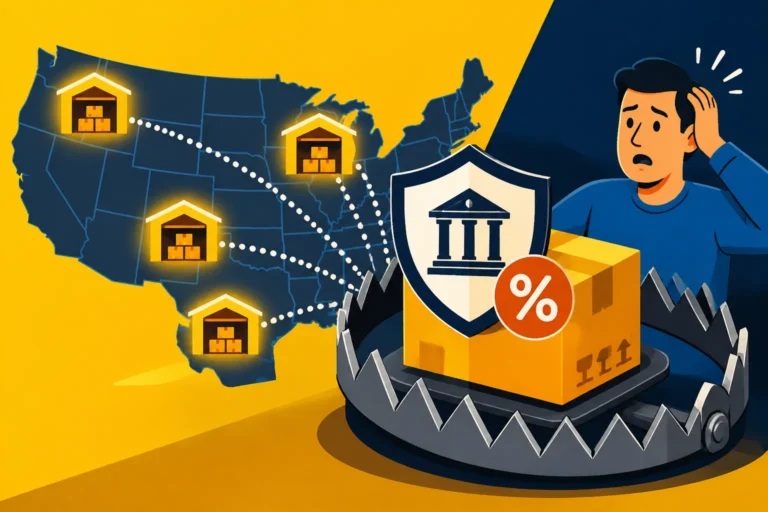
This is where many Amazon FBA sellers get caught off guard. You might be running your business from your home office in California, but because you use FBA, Amazon stores your inventory in their fulfillment centers across the country. Guess what? Those fulfillment centers in states like Texas, Florida, or Ohio? Each one of them can establish a physical nexus for your business in that state. That's right, your inventory sitting in an Amazon warehouse creates a physical presence for you, the seller, in that state.
Imagine this scenario: you're selling handmade jewelry on Amazon. You live in Oregon (a state with no sales tax, by the way!), but Amazon decides to store some of your best-selling items in a fulfillment center in Pennsylvania and another in Arizona. Suddenly, you have a physical nexus in both Pennsylvania and Arizona, even though you’ve never set foot in either state for business purposes. This means that, traditionally, you would be obligated to register for a sales tax permit and collect sales tax from customers in both of those states. This is a crucial point that often surprises sellers and is covered in more detail in our article about Amazon FBA Sales Tax Nexus Explained. While marketplace facilitator laws have somewhat changed the collection burden, the underlying nexus still exists.
Economic Nexus Thresholds and Amazon Sales
Beyond the physical presence created by FBA inventory, you also need to consider economic nexus. As mentioned, this is triggered when your sales into a state cross a certain financial or transactional threshold. For example, if your total sales into Illinois, from all channels combined (your Amazon sales, your own website, Etsy, etc.), exceed $100,000 in a calendar year, you would establish economic nexus in Illinois.
Now, here's the tricky part for Amazon sellers: most states consider the sales made through Amazon when determining if you've hit their economic nexus thresholds. However, if Amazon is collecting and remitting sales tax for those marketplace sales (which they usually are due to marketplace facilitator laws), those sales generally don't require you to collect and remit again. But if you also sell on your own website, or through other channels, those non-Amazon sales absolutely count towards your economic nexus thresholds. If your sales on your independent website hit, say, the Economic Nexus Threshold in Texas ($500k), you'd need a permit and would be responsible for collecting and remitting sales tax on those direct sales. Keeping a close eye on your total sales volume by state, from all sources, is crucial. Our Economic Nexus by State 2026: Thresholds Guide provides an excellent resource for checking these specific numbers.
The Role of Marketplace Facilitator Laws
The sales tax landscape for online sellers, especially those using platforms like Amazon, was significantly streamlined with the introduction of marketplace facilitator laws. These laws aim to simplify things, but they don't always eliminate your responsibilities entirely.
How Marketplace Facilitators Simplify Sales Tax for Sellers
Marketplace facilitator laws are a game-changer. Passed in nearly all sales tax states, these laws essentially shift the burden of collecting and remitting sales tax from individual third-party sellers (like you) to the marketplace platform itself (like Amazon). This means that for sales made through Amazon, Amazon is typically responsible for calculating, collecting, and remitting the correct sales tax to the appropriate state and local tax authorities.
For many small businesses, this was a huge relief! Suddenly, you didn't have to worry about tracking sales tax rates in hundreds of jurisdictions, registering for permits in every state where you had FBA inventory, or filing dozens of sales tax returns. Amazon handles a massive chunk of that compliance headache for you. This significantly simplifies operations, especially for sellers whose primary or only sales channel is Amazon. Our comprehensive overview on Marketplace Facilitator Laws by State explains how this works across different states and can offer a lot more clarity. It's a fantastic development that has certainly eased the compliance burden for countless online entrepreneurs.
Why You Still Need a Sales Tax Permit Even with Amazon Collecting
Here's the critical nuance that often trips up Amazon sellers: just because Amazon collects and remits sales tax for your marketplace sales doesn't automatically mean you never need your own sales tax permit. There are several key scenarios where you absolutely still need one:
First, if you have any sales outside of Amazon. Maybe you also sell products on your own e-commerce website, through a different marketplace like Etsy (though Etsy also has marketplace facilitator duties), at local craft fairs, or through wholesale channels. If these direct sales establish nexus (either physical or economic) in a state, you are responsible for collecting and remitting sales tax on those sales. Your Amazon sales are handled, but your non-Amazon sales are entirely your responsibility.
Second, some states, even with marketplace facilitator laws in place, still require sellers who have nexus to register for a sales tax permit. Why? Often, it's for informational purposes. They want to know you exist as a business with sales tax obligations in their state. You might register, file returns, and simply report your gross sales (including those made through Amazon) but then deduct the marketplace-facilitated sales, resulting in a "zero" amount owed by you. It might seem redundant, but neglecting this can lead to issues down the road. States want everyone on their books.
Third, if you purchase inventory or supplies for your Amazon business for resale and want to use a resale certificate to buy them tax-free, you'll need a sales tax permit from the state where you are registered. Most states require you to hold a valid sales tax permit (sometimes called a seller's permit or vendor's license) to be able to issue a resale certificate to your suppliers. Without one, you'd be paying sales tax on your inventory, which eats into your profit margins and is generally unnecessary if you're reselling those items. This is a common requirement and something many sellers overlook. You can learn more about how this works in our guide on Do I Still Need a Permit If Amazon Collects?.
Finally, if you happen to have a physical presence in a state outside of Amazon's FBA warehouses (e.g., your home office is in that state, you have employees there, or even attend trade shows), you definitely need to register for a permit in that state. Amazon's collection doesn't negate your own direct physical nexus.
Steps to Determine Your Sales Tax Permit Needs
Navigating sales tax as an Amazon seller doesn't have to be overwhelming, but it does require a structured approach. Let's break down the practical steps you can take to determine your permit needs and stay compliant.
Assessing Your Nexus Footprint
Before you even think about permits, you need a crystal clear picture of where you have nexus. This is often the trickiest part for Amazon sellers, but it’s absolutely foundational. Start by reviewing your business operations for any traditional physical nexus. Do you have an office, a warehouse (that isn't Amazon FBA), employees, or even a storage unit in any state? These are clear indicators of physical nexus.
Next, for FBA sellers, it's time to dig into your Amazon reports. Look for your inventory placement. While Amazon doesn't always make it easy to see all the specific fulfillment centers your inventory has passed through, you can often find reports that show where your inventory is currently stored. This will give you a good idea of the states where you've established a physical presence through FBA. Remember, even if Amazon handles the tax collection, the nexus is still attributed to your business. This aspect is crucial for understanding your full obligations, which you can further explore in How to Know If You Have Sales Tax Nexus.
Finally, aggregate your total sales into each state from all your sales channels – not just Amazon. This includes sales from your own website, Shopify, Etsy, craft fairs, wholesale, etc. Compare these totals against each state's economic nexus thresholds. If your non-Amazon sales hit a threshold in a state, you have economic nexus there and a clear obligation to register and collect sales tax on those direct sales. Tools like Avalara can integrate with your various sales platforms to help you track these sales and identify potential nexus triggers automatically, saving you countless hours of manual data crunching.
Registering for a Sales Tax Permit
Once you've identified the states where you have nexus and a permit obligation, the next step is to actually get those permits. This process typically involves applying directly with the state's Department of Revenue, Department of Taxation, or a similar agency. Each state has its own application process, but generally, you'll need information about your business, such as your legal name, federal Employer Identification Number (EIN), business structure, and contact details.
While most states don't charge a fee for a sales tax permit (it's essentially a license to collect tax on their behalf), the application can be quite detailed and time-consuming, especially if you need to register in multiple states. It's critical to register before you make sales that create a collection obligation. Collecting sales tax without a permit can lead to penalties, and conversely, failing to collect when you should have can leave you liable for the uncollected tax out of your own pocket. For a state-by-state breakdown, check out our guide on How to Get a Sales Tax Permit by State. If you find yourself needing to register in many locations, a service like Avalara can often streamline the multi-state registration process, ensuring you don't miss any crucial steps.
Ongoing Compliance: Filing and Remitting
Getting the permit is just the beginning; ongoing compliance is where the real work lies. Even if Amazon is collecting sales tax on your marketplace sales, you might still need to file returns in states where you have nexus. As discussed, some states require you to file "zero returns" or report your gross sales and then take a deduction for the marketplace-facilitated sales, even if you owe nothing yourself. This ensures the state has a record of your business activities.
Your filing frequency (monthly, quarterly, or annually) will be assigned by each state's tax agency, usually based on your projected or actual sales volume. High-volume sellers often have monthly filing requirements, while smaller businesses might file quarterly or annually. Missing due dates or failing to file can result in penalties, even if you owe no tax. Accurate record-keeping is paramount here. You need to keep track of all your sales, both marketplace and direct, and be prepared to report them correctly. Our article on How to File a Sales Tax Return: Step by Step provides a detailed walkthrough of the filing process.
For businesses with nexus in several states, managing these varying filing frequencies and reporting requirements can quickly become a full-time job. This is where sales tax automation software becomes incredibly valuable. Platforms like Avalara can automate the entire process, from calculating the correct sales tax at the point of sale (for your direct sales) to preparing and filing your returns in all the states where you're registered. This not only saves time but also significantly reduces the risk of errors and missed deadlines, allowing you to focus on growing your Amazon business without the constant worry of sales tax compliance. You might also find our guide on Sales Tax for Online Sellers: Complete Guide helpful for a broader perspective on compliance strategies.
Sales Tax Permit Scenarios for Amazon Sellers
Let's summarize some common situations for Amazon sellers and whether a sales tax permit is typically required. This table should help clarify when you absolutely need one versus when it's still a good idea.
| Scenario | Do You Need a Sales Tax Permit? | Why or Why Not? |
|---|---|---|
| Selling solely on Amazon FBA, only marketplace sales, no direct sales, no physical presence outside of FBA, under economic nexus thresholds (if direct sales applied). | Possibly, depending on state law. While Amazon collects and remits, some states still require registration and informational filing from all nexus-having sellers to track sales activity, even if you report zero taxable sales. | |
| Selling on Amazon FBA and your own website, exceeding economic nexus thresholds with your direct sales (e.g., $100,000 in sales via your website into a state). | Yes. Your direct sales create economic nexus if they exceed state thresholds. You are responsible for collecting and remitting tax on these sales. | |
| Selling only on your own website, exceeding economic nexus thresholds. | Yes. You are the sole retailer, responsible for all collection and remittance in nexus states. | |
| Selling on Amazon FBA, no direct sales, but you have a physical presence (e.g., home office, employee, non-Amazon warehouse) in a specific state. | Yes. Physical presence always creates nexus, regardless of sales channel. You'll need to report your Amazon sales and remit for any direct sales you might make. | |
| Purchasing goods for resale (e.g., from wholesalers) and need to provide a resale certificate to buy them tax-free. | Yes. To legally purchase items tax-exempt for resale, you typically need a valid sales tax permit (or reseller certificate) from the state where you have nexus. This ensures you're a legitimate reseller. You can learn more with our Resale Certificate by State: Complete Guide. | |
| Selling digital products or services (that are taxable in certain states) via Amazon and/or your own platform. | Yes, if those products/services are taxable. Even if Amazon collects for physical goods, digital goods and services often have separate rules, and you might need a permit if you're selling them directly. |
It's clear there's a good chance you'll need one. Many sellers operating across states will find themselves needing to navigate Registering for Sales Tax in Multiple States. For guidance on choosing the right tools, our article on the Best Sales Tax Compliance Software 2027 can be a great starting point to help manage these complexities.
Disclaimer
The information provided in this guide is for general informational purposes only and does not constitute professional tax advice. Sales tax laws are complex and constantly changing. You should consult with a qualified tax professional or legal advisor for advice tailored to your specific business situation.