What Happens If I Don’t Pay Use Tax?
It's easy to get tangled up in the world of sales tax, but use tax? That's often a hidden layer of complexity that can sneak up on individuals and businesses alike. If you've ever bought something online or out-of-state without being charged sales tax and then wondered if you still owe something, you're hitting on a common frustration. This guide is here to shed light on what exactly use tax is and, more importantly, to walk you through the very real consequences of not paying it.
Understanding the Elusive Use Tax and Why It Matters
Let's be honest, "use tax" sounds a bit obscure, doesn't it? It's not something you typically see itemized on a receipt, and many people only stumble upon it when facing an audit or doing deep research. But understanding it is crucial because it's a legitimate tax obligation in most states, designed to level the playing field for local businesses and ensure states collect revenue on goods consumed within their borders.
What Exactly is Use Tax?
Think of use tax as the sister tax to sales tax. While sales tax is collected by a seller at the point of sale, use tax is typically self-assessed and paid by the buyer when sales tax wasn't collected. This usually happens in a few scenarios:
- Out-of-State Purchases: You buy an item online from a retailer that doesn't have a physical presence (or "nexus") in your state, and therefore doesn't charge you local sales tax. For example, if you live in California and buy a fancy new gadget from a small online shop in Oregon (which has no state sales tax), and that shop doesn't have nexus in California, you wouldn't be charged California sales tax. In this case, California expects you to pay the use tax.
- Catalog or Phone Orders: Similar to online purchases, if you order something through a catalog or over the phone from a seller who isn't required to collect sales tax in your state, you're on the hook for the use tax.
- Items Brought into the State: You travel to a state with lower or no sales tax, purchase an item (like a car or a boat), and then bring it back to your home state for use. Your home state might expect you to pay use tax on that item, especially for high-value purchases.
- Taxable Goods Used by a Business: A business buys office supplies or equipment for its own use, and the seller, for whatever reason, didn't collect sales tax. The business then owes use tax on those items.
It's fundamentally about making sure that whether you buy something locally or from afar, the state still gets its due. You can learn more about Use Tax Explained: What It Is & When You Owe It. The question "Do I owe use tax on Amazon/online purchases?" used to be a big one, but with the Wayfair decision and subsequent marketplace facilitator laws, most major online retailers now collect sales tax, significantly reducing the consumer's personal use tax burden. However, it still applies to smaller sellers or specific situations.
Why States Are Serious About Use Tax
For a long time, consumer use tax was largely ignored by individuals, and states had difficulty enforcing it. However, with the explosion of e-commerce, the revenue lost to uncollected sales and use tax became too significant to overlook. States started taking it much more seriously, not just for businesses, but also for individual consumers. They see it as a matter of fairness to local businesses who do collect sales tax, and as a vital revenue stream for public services. The difference between Use Tax vs Sales Tax: What's the Difference? really boils down to who collects and remits it, but the underlying tax burden is often the same.
The Unpleasant Truth: Penalties and Interest for Unpaid Use Tax
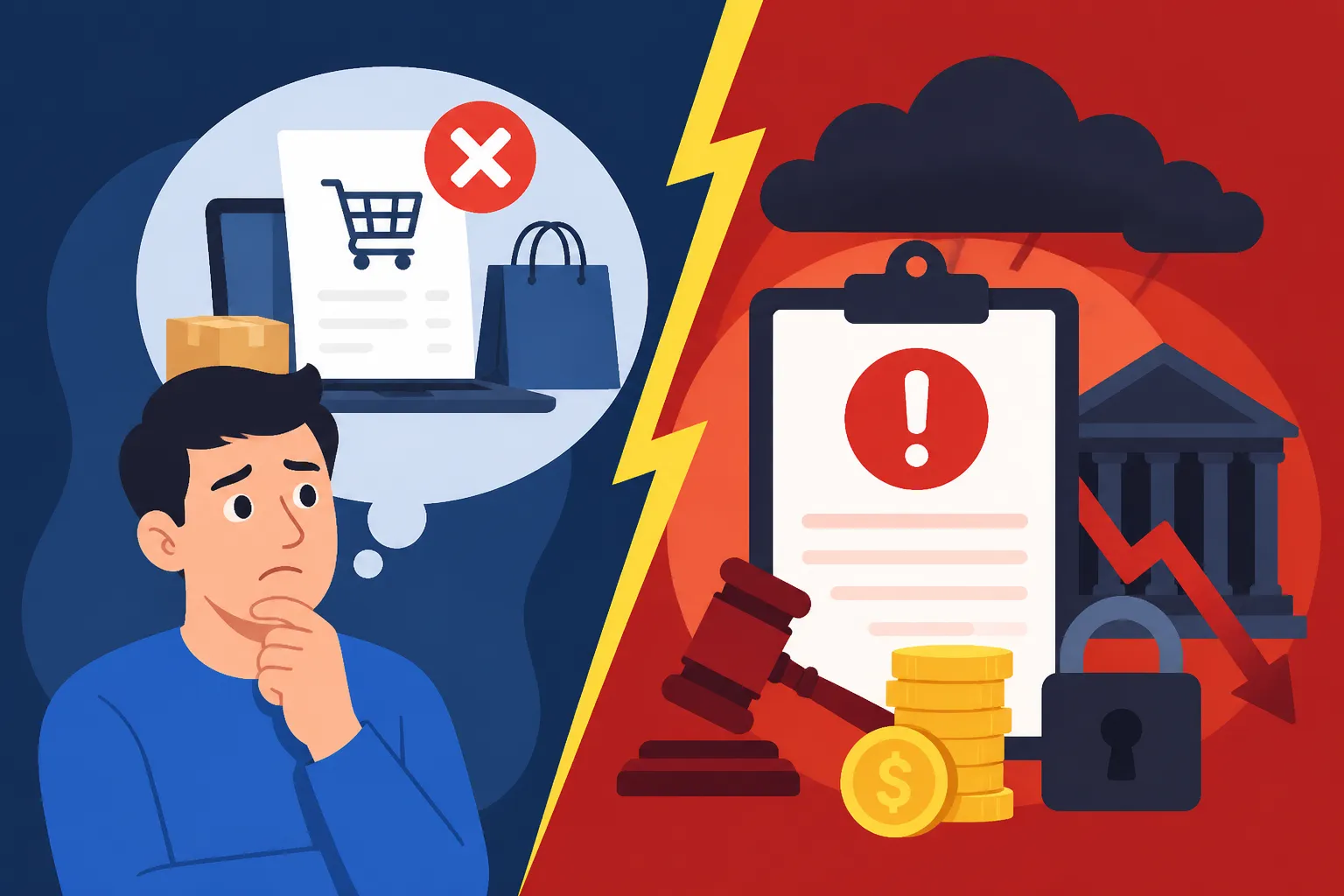
Ignoring use tax isn't just a minor oversight; it can lead to tangible financial repercussions. States are increasingly sophisticated in how they identify non-compliance, and the penalties can stack up quickly. It's not usually a "one and done" fine; it often involves the original tax owed, plus interest, plus penalties.
Financial Penalties and Interest Accumulation
When a state discovers unpaid use tax, they don't just ask you to pay the original amount. They'll typically assess interest from the original due date of the tax. This interest can accrue daily or monthly, and it's usually tied to a statutory rate, which can be surprisingly high.
On top of interest, there are penalties. These can vary significantly by state but often fall into categories like:
- Failure to Pay Penalty: This is a percentage of the unpaid tax, often ranging from 5% to 25%, depending on how long the tax has been outstanding. Some states might have a tiered system, increasing the penalty for longer periods of non-compliance.
- Negligence Penalty: If the state deems that you negligently disregarded tax laws, they might add an additional penalty, sometimes 10% to 20% of the underpayment.
- Fraud Penalty: In severe cases where there's intent to evade tax, penalties can be as high as 50% to 75% of the underpayment, or even more. This is rare for individual consumer use tax but possible for businesses deliberately misrepresenting their liabilities.
Let's imagine you're a small business owner in Texas, and you purchased $20,000 worth of specialized software from an out-of-state vendor who didn't charge you the 6.25% state sales tax (and applicable local taxes, let's assume an average of 8.25% combined for simplicity, making the tax owed $1,650). If you fail to report and pay that use tax, and the state later discovers it during an audit, you're looking at:
- Original Tax: $1,650
- Interest: Let's say it's been two years, and the annual interest rate is 12%. That's roughly $1,650 * (1.12)^2 – $1,650 = $418.56 (compounding can make this even higher).
- Failure to Pay Penalty: If Texas imposes a 5% penalty for the first 30 days, plus 5% for each additional month up to a maximum of 25%, and it's been 2 years, you could easily hit the maximum 25%. So, $1,650 * 0.25 = $412.50.
Suddenly, your $1,650 oversight could cost you over $2,481.06, and that's just a hypothetical example. The exact figures depend on the state's specific penalty and interest laws. You can find more details in our guide on Sales Tax Penalties & Late Filing by State.
Audits and Increased Scrutiny
Unpaid use tax, especially for businesses, can trigger an audit. State tax agencies often conduct audits to ensure compliance across various tax types, and if they find discrepancies in sales tax collection or use tax payments, it opens a bigger can of worms. During an audit, the state tax auditor will meticulously review your purchase records, looking for items bought without sales tax being charged, and then assess use tax on those items. This isn't just a simple review; it's a time-consuming, stressful process that can divert significant resources from your business operations.
For individuals, while full-blown audits are less common for just use tax, states can still send notices requesting payment if they have reason to believe you owe. For instance, if you registered a new, high-value vehicle that you bought out-of-state and didn't pay sales tax at the time of purchase in your home state, the Department of Motor Vehicles might flag it, leading to a direct demand for use tax payment.
How States Track Unpaid Use Tax
You might wonder how states even know you haven't paid use tax, especially for smaller purchases. It's a valid question, and the answer is that their tracking methods are becoming increasingly sophisticated. It's less about directly monitoring your individual Amazon purchases and more about leveraging data, cross-referencing, and intelligent auditing strategies.
Data Matching and Cross-Referencing
State tax agencies don't operate in a vacuum. They share information. Here's how they might track potential use tax liabilities:
- Vendor Information: Many states require out-of-state vendors (even those not technically required to collect sales tax in the buyer's state) to report sales made into their state. This data can then be cross-referenced with use tax payments.
- DMV Records: As mentioned, when you register a vehicle, boat, or even an aircraft, purchased out-of-state, the Department of Motor Vehicles typically flags it if sales tax wasn't collected. This is a common trigger for use tax assessment.
- Customs Data: For purchases made internationally and imported, customs declarations can sometimes provide states with information on items entering their jurisdiction.
- Third-Party Information Reporting: Some states have agreements where third-party payment processors or shipping companies might share aggregate data that indicates significant purchases by residents from out-of-state vendors.
- Audits of Sellers: If a seller is audited, and they have records of sales to customers in a particular state where they didn't collect sales tax, that information can then be passed on to the buyer's state, leading to a use tax assessment for the buyer.
Public Awareness and Reporting Mechanisms
While less formal, some states actively encourage voluntary compliance by making it easier to report and pay use tax. Many state income tax forms now include a line where individuals can report and pay use tax on their out-of-state purchases. For example, if you live in California, you'll find a line on your Form 540 income tax return to declare and pay use tax on purchases where sales tax wasn't collected. Ignoring this line on your annual return means potentially certifying an incorrect tax liability, which can have its own set of consequences down the line.
For businesses, the scrutiny is even higher. Regular financial audits, tax return reviews, and industry-specific compliance checks mean that unpaid business use tax is much more likely to be uncovered. Many businesses find that sales tax automation solutions, like those offered by Avalara, are crucial for tracking and correctly remitting both sales and use tax, ensuring they don't fall afoul of these complex regulations. These tools help manage the intricate rules of Origin vs Destination Sales Tax Sourcing and keep tabs on taxable purchases for internal use.
Proactive Steps to Address Unpaid Use Tax
The good news is that if you realize you owe use tax, it's almost always better to address it proactively rather than waiting for the state to come knocking. States appreciate voluntary compliance, and often, the penalties are less severe or can even be waived if you come forward first.
Calculating and Reporting Your Use Tax
The first step is to accurately calculate what you owe. This involves reviewing your purchase history, identifying items where sales tax was not collected but should have been, and then applying the correct sales tax rate for your jurisdiction. Remember, this includes your state, county, and local city sales tax rates – sometimes even special district taxes, especially in states like California, where understanding California District Taxes Explained can be vital.
- For individuals: Check your state's income tax form for a dedicated line to report use tax. Most states that levy a sales tax also have a corresponding use tax, and many provide a simplified calculation (e.g., an estimate based on income) or require you to track specific purchases. If you've made significant purchases, it's best to use the actual rates.
- For businesses: This process is more involved. You'll need to review purchase invoices, expense reports, and asset ledgers. Any purchases made for business use where sales tax wasn't charged, and the item is considered taxable in your state, need to be accounted for. Tools like Avalara or other Best Sales Tax Compliance Software 2027 can integrate with your accounting systems to identify these transactions and help calculate the correct use tax, reducing manual errors. Businesses will usually report use tax on their regular sales tax returns.
Voluntary Disclosure Agreements (VDAs)
If you're a business that has accumulated a significant, undeclared use tax liability over several years, a Voluntary Disclosure Agreement (VDA) might be your best path forward. A VDA is a formal program offered by many states that allows taxpayers to come forward anonymously (through a representative, usually a tax professional) and pay back taxes, often with reduced penalties and a limited look-back period (meaning the state agrees not to audit you for periods beyond a certain number of years, typically three to five). This can be an incredibly valuable way to get compliant without facing the full brunt of penalties and a comprehensive audit. Our article on Voluntary Disclosure Agreements (VDA) Explained goes into much greater detail about this process.
Getting Professional Help
Sales and use tax, even for seemingly simple situations, can be incredibly complex. From understanding Economic Nexus by State 2026: Thresholds Guide for businesses to figuring out the taxable status of specific goods (like "Is SaaS Taxable?" or "Are Dietary Supplements & OTC Drugs Taxable?"), there's a lot to navigate. If you're unsure about your obligations, especially if you have a business with multi-state operations, consulting with a qualified tax professional is always a wise investment. They can help you:
- Determine if you have use tax liability.
- Calculate the correct amount owed.
- Navigate the process of reporting and payment.
- Assess whether a VDA is appropriate for your situation.
- Implement systems, potentially leveraging software like Avalara, to ensure future compliance.
By taking proactive steps, you can avoid the stress, financial penalties, and potential legal entanglements that come with neglecting your use tax obligations. Ultimately, understanding and complying with use tax is just another facet of good financial citizenship, whether you're managing household budgets or running a booming e-commerce venture.
Sales Tax Compliance Software Comparison
To help illustrate the differences and benefits of sales tax compliance software, here's a quick comparison of some popular options, focusing on features relevant to sales and use tax:
| Feature/Software | Manual Tracking/Spreadsheets | Mid-Range Software (e.g., TaxJar, TaxCloud) | Enterprise Software (e.g., Avalara, Sovos) |
|---|---|---|---|
| Complexity Handled | Basic, low volume, single state | Moderate, growing businesses, multi-state, e-commerce | High, large enterprises, complex product categories, global operations |
| Use Tax Tracking | Manual review of invoices, error-prone | Automated identification of purchases without sales tax, self-assessment support | Robust use tax engine, comprehensive taxability rules, audit trail |
| Rate Accuracy | Manual lookups, prone to human error, hard to keep current | Real-time rate lookups, automatic updates for 2026 Sales Tax Rate Changes by State | Superior rate accuracy, rooftop-level precision for complex local jurisdictions |
| Nexus Monitoring | Requires manual tracking of sales volume/transactions by state | Basic economic nexus tracking, alerts for approaching thresholds | Advanced nexus monitoring across all types (physical, economic, click-through) |
| Return Filing | Manual data entry into state portals, time-consuming | Automated filing services for sales tax returns | Fully automated filing, compliance calendar, payment management |
| Audit Support | Manual record keeping, difficult to defend | Organized data, some reporting to help with audits | Comprehensive reporting, detailed audit trails, expert support for inquiries |
| Cost | Low (time cost is high) | Moderate monthly/annual fees | Higher annual subscription, tailored pricing |
| Integration | None | Integrates with popular e-commerce platforms (Shopify, Amazon, Etsy) | Integrates with ERPs (SAP, Oracle), POS, e-commerce, CRM, custom APIs |
This table provides a snapshot, but it clearly shows why businesses, especially those growing or operating across multiple states, quickly outgrow manual methods and turn to solutions for robust compliance.
Disclaimer
The information provided in this guide is for general informational purposes only and does not constitute professional tax or legal advice. Sales and use tax laws are complex, constantly evolving, and vary significantly by jurisdiction. You should consult with a qualified tax professional or legal expert for advice tailored to your specific situation.