What’s Included in Connecticut Tax-Free Weekend?
It's incredibly frustrating when you're trying to budget, only to find that sales tax adds an unexpected chunk to your purchases, especially for everyday necessities like clothes and school supplies. Understanding exactly what items are exempt during a sales tax holiday can feel like cracking a secret code. This guide is here to demystify Connecticut's annual Tax-Free Week, helping you navigate the rules and save money on eligible items without any nasty surprises.
Understanding Connecticut's Tax-Free Week Basics
The idea behind a tax-free week is wonderful: a chance to snag some savings on essential items that often eat into our household budgets. Connecticut is one of several states that offers such a holiday, providing a much-needed break from the usual sales tax burden. But like all things tax-related, there are always specific rules and parameters you need to understand to truly benefit. It's not just a free-for-all on everything in the store, and knowing the specifics is key to maximizing your savings.
When Does Connecticut's Tax-Free Week Happen?
Connecticut's annual Sales Tax-Free Week is a tradition designed to give shoppers a break, particularly as families prepare for the upcoming school year. Historically, this event kicks off in the third week of August and runs for seven consecutive days, including a weekend. For example, if we look at a pattern, for 2026, it would likely fall around August 16th through August 22nd. While the exact dates are set by the state legislature, the mid-to-late August timeframe is very consistent, aligning perfectly with that frantic back-to-school shopping rush. You can always confirm the precise schedule each year by checking the Connecticut Department of Revenue Services (DRS) website closer to the date, which is always a good practice. Knowing when these periods occur is the first step in strategic shopping and helps you plan your larger purchases accordingly.
Who Benefits from the Tax Holiday?
The short answer is: just about everyone! While it’s often associated with back-to-school, the Connecticut Tax-Free Week isn't exclusively for students or families. Any consumer purchasing eligible items from a participating retailer during the specified week can enjoy the sales tax exemption. This means whether you're a parent buying new uniforms, a professional refreshing your wardrobe, or simply someone needing new socks, you can take advantage. Retailers across the state are mandated to participate, so you don't have to hunt for special "tax-free" stores. It’s a broad benefit for individuals, though businesses generally do not qualify for sales tax exemptions on purchases they make for their own operations, unless they are buying items for resale with a proper Resale Exemption Explained certificate.
Navigating Eligible Items: Apparel and Footwear
This is where the rubber meets the road, or rather, where your wallet meets the cash register. The Connecticut Tax-Free Week has a very specific focus: clothing and footwear. This isn't a broad "everything is tax-free" event, so it's vital to understand what categories of items are included and, more importantly, what the limitations are within those categories. Missing these details can lead to unexpected charges and spoil the savings you were anticipating.
The All-Important Price Cap for Clothing and Shoes
The absolute most critical detail to remember about Connecticut's Tax-Free Week is the price cap. For an item of clothing or footwear to be eligible for the exemption, its sales price must be less than $100. This isn't $100 per transaction or per cart, but $100 per item. So, if you buy a pair of jeans for $95, they're tax-free. If you buy a winter coat for $120, that coat will be subject to the standard Connecticut sales tax rate of 6.35%.
What about buying multiple items? Let's say you pick up two shirts, each priced at $45. Both are individually under $100, so both would be tax-free, even if their combined total is $90. However, if you bought a dress for $105 and a pair of shoes for $80, only the shoes would be exempt; the dress would be taxed. It’s a subtle but significant distinction that many shoppers miss, leading to confusion at checkout. This rule applies uniformly across all retailers, whether you’re shopping at a major department store or a small local boutique. Understanding this cap is crucial for strategizing your purchases during this period. For those looking to understand the broader landscape of sales tax rates, our guide on Sales Tax Rates by State 2026: All 50 States provides a comprehensive overview.
What Doesn't Qualify Under the Apparel Exemption?
While "clothing and footwear" sounds broad, the Connecticut Tax-Free Week typically has several exclusions, even within these categories. Generally, certain accessories and specialized gear do not qualify, regardless of their price. For instance, jewelry, watches, handbags, wallets, umbrellas, and similar accessories are usually not exempt. Similarly, sports equipment like baseball mitts, ski boots, ice skates, and bicycle helmets are generally not considered standard "clothing and footwear" for this holiday.
Also, don't assume that all items sold in a clothing store will be tax-free. Things like fabric, sewing supplies, and materials purchased to make clothing are typically still taxable. The intent is to provide relief on ready-to-wear items, not the components. The Connecticut Department of Revenue Services publishes a detailed list each year, and it’s always wise to consult it if you have specific questions about unusual items. This is also a good time to remember that while the state's base sales tax is 6.35%, local jurisdictions in other states can sometimes add their own rates, leading to Combined State + Local Sales Tax Rates Explained, but Connecticut generally has a statewide uniform rate for sales tax.
Beyond Clothes: Are School Supplies and Other Items Tax-Free?
This is another area where a lot of confusion crops up. Many people assume that if there’s a "back-to-school" sales tax holiday, it must include all things back-to-school, like notebooks, pens, and even electronics. However, this isn't always the case, and it's essential to check the specific legislation for each state's holiday.
Clarifying School Supplies and Other Potential Exemptions
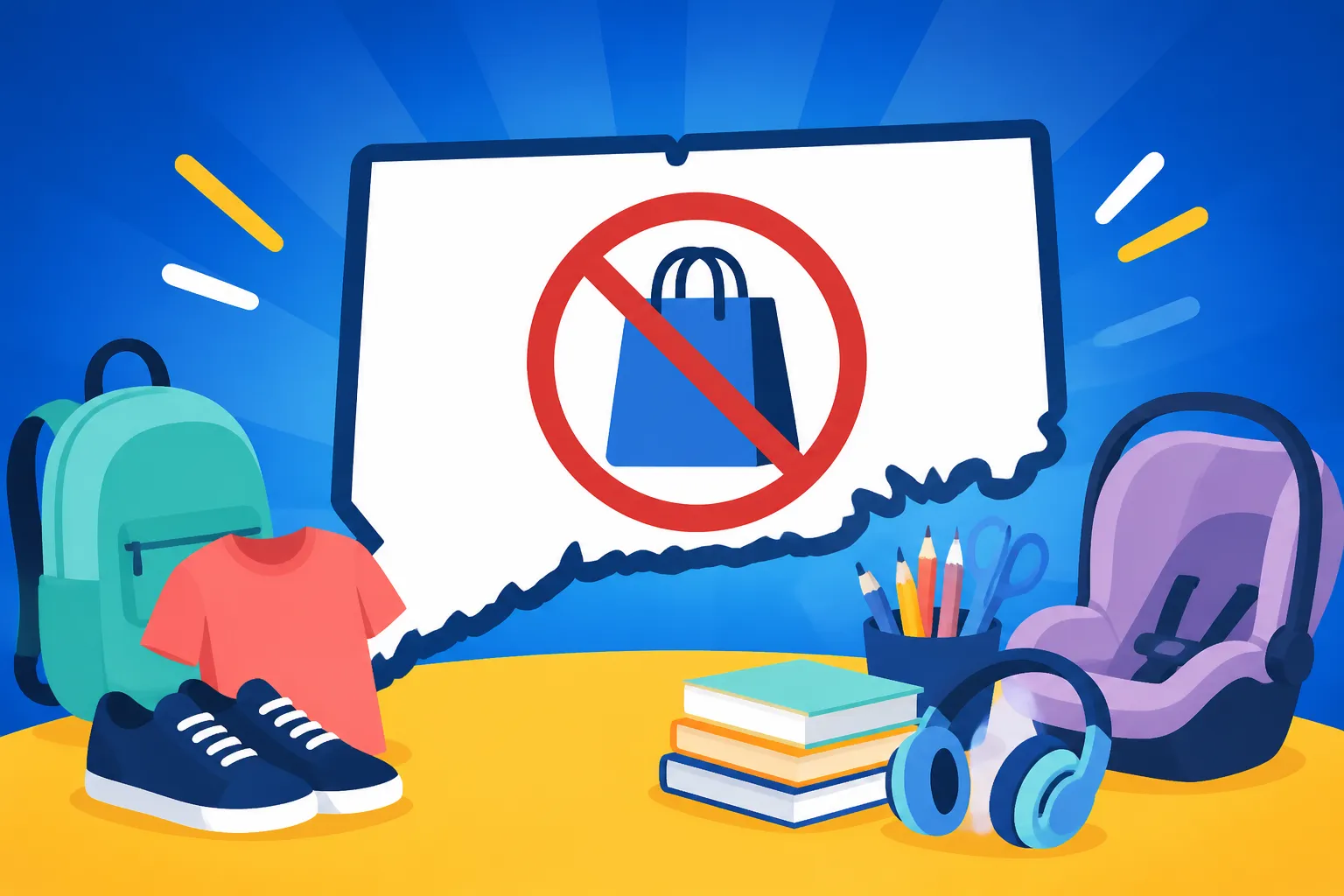
Here's the critical distinction for Connecticut: The state's primary Sales Tax-Free Week focuses almost exclusively on clothing and footwear under $100 per item. It generally does not extend to school supplies, textbooks, art supplies, or electronics like laptops and calculators. This is a common point of misunderstanding because other states, like Massachusetts or Florida, do often include school supplies or even computers in their tax holidays.
So, while you might be saving on that new pair of sneakers for gym class, you'll still pay the regular sales tax on the pens, paper, and backpack needed for the classroom. Always be sure to look up the exact rules for the current year. If you're a retailer trying to keep track of these varied rules across states, robust sales tax compliance software like Avalara can be a real lifesaver, ensuring you apply the correct exemptions. Keeping track of Sales Tax Rate Changes by State 2026 is a full-time job, so knowing the specific inclusions and exclusions for these holidays is paramount.
Special Considerations for Businesses and Online Purchases
The Connecticut Tax-Free Week benefits consumers primarily. Businesses purchasing items for their own use, even if they are clothing items for employees (like uniforms), would generally still be subject to sales tax, unless they qualify for another specific business exemption. The intent of this holiday is not to provide a tax break for general business expenses.
When it comes to online purchases, the rules for the Sales Tax-Free Week typically apply just as they would to in-store purchases. If you buy eligible clothing or footwear from an online retailer that ships to a Connecticut address, and the item's price is less than $100, it should be exempt from sales tax. However, shipping and handling charges are often a separate consideration. In Connecticut, shipping and delivery charges are generally taxable if they are part of the sale of taxable tangible personal property. So, even if the item itself is tax-free, you might still pay sales tax on the shipping fee. This is a nuanced area, and our article on Is Shipping Taxable? Freight Sales Tax by State delves deeper into these complexities. Make sure to check the retailer's policy and your order summary carefully.
Making the Most of Connecticut's Tax-Free Week
With a clear understanding of the rules, you can approach Connecticut's Tax-Free Week with confidence and truly maximize your savings. A little planning goes a long way in navigating these special shopping periods. You don't want to get to the checkout only to realize an item you thought was tax-free actually isn't!
Tips for Smart Shopping
- Plan Ahead: Don't wait until the last minute. Make a list of all the clothing and footwear items your family needs for the upcoming season or school year. Categorize them and note their approximate prices. This helps you stay focused and ensures you prioritize items under the $100 cap.
- Verify the Dates: Double-check the exact dates for the current year's Tax-Free Week on the Connecticut Department of Revenue Services (DRS) website. While the timeframe is usually consistent, confirming it avoids any disappointment.
- Read the Fine Print: If you're unsure about a specific item, consult the official guidelines from the DRS. They often provide examples of what is and isn't included.
- Compare Prices: A tax exemption is great, but it doesn't always guarantee the best deal. Compare prices from different retailers beforehand. Sometimes, a sale price at one store, even with sales tax, might be lower than a non-sale price at another store during the tax holiday.
- Understand Returns and Exchanges: If you return an item purchased during the tax holiday, and then exchange it for a taxable item outside of the tax-free period, you might then owe sales tax on the new item. Be mindful of this for any post-holiday adjustments.
Common Pitfalls to Avoid
Navigating sales tax holidays can be tricky, and there are a few common mistakes shoppers often make. Being aware of these can save you headaches and ensure you actually get the savings you expect. This is why tools that automate sales tax calculations, even during holidays, are so valuable for businesses.
- Assuming All Back-to-School Items are Exempt: As we discussed, Connecticut's holiday is primarily for clothing and footwear. Don't expect to buy tax-free notebooks, pencils, or electronics. Always verify the specific categories covered for Sales Tax Holidays by State 2026: Full Calendar.
- Misunderstanding the Price Cap: The $100 limit is per item, not per transaction. Buying a $150 jacket and an $80 pair of pants will result in sales tax on the jacket, even though the pants are exempt. If you're a business, ensuring your point-of-sale system accurately applies these rules is critical. This is where a solution like Avalara can step in to handle complex rules, even for special events like these, to ensure compliance.
- Forgetting About Shipping Costs: While the item itself might be tax-exempt, shipping charges in Connecticut are typically taxable if the item being shipped is taxable. If the item is tax-exempt, sometimes the shipping is also exempt, but this is not always universally true for all states or items. Always double-check the retailer's policy.
- Ignoring Other Sales: Sometimes, a deep discount offered by a retailer outside the tax-free week might save you more money than the sales tax exemption alone. Do the math! A 20% off coupon on a $120 item, even with tax, might be better than paying full price tax-free.
Here's a quick summary table for clarity:
| Item Category | Eligible for CT Tax-Free Week? | Key Condition / Notes |
|---|---|---|
| Clothing (e.g., shirts, pants, dresses) | YES | Must be priced under $100 per item |
| Footwear (e.g., shoes, boots, sneakers) | YES | Must be priced under $100 per item |
| Accessories (e.g., jewelry, handbags, wallets) | NO | Generally excluded |
| Sports Equipment (e.g., helmets, pads, specialized shoes) | NO | Generally excluded |
| School Supplies (e.g., notebooks, pens, crayons) | NO | Generally excluded from this CT holiday |
| Computers & Electronics | NO | Generally excluded from this CT holiday |
| Materials to Make Clothing (e.g., fabric, thread) | NO | Taxable, unless part of a different exemption |
| Shipping & Handling Charges | Potentially YES/NO | Taxability depends on the item being shipped, often taxable |
Understanding these distinctions can truly make a difference in your back-to-school or wardrobe refresh budgeting. For businesses, keeping up with these granular rules across multiple states can be overwhelming. This is why platforms like Avalara are so helpful; they simplify sales tax calculations, making sure you apply the correct exemptions during special periods like Connecticut's Tax-Free Week. To truly grasp the local complexities, you might want to read our article on Why Is Sales Tax Different in Every City?. Or if you’re concerned about how much tax you'd pay on a standard purchase, check out Sales Tax on a $100 Purchase by State.
Disclaimer
Please remember that sales tax laws and regulations are constantly changing. The information provided in this guide is for general informational purposes only and should not be considered professional tax advice. Always consult with a qualified tax professional or refer to the official resources from the Connecticut Department of Revenue Services (DRS) for the most accurate and up-to-date information regarding sales tax holidays and exemptions.