What’s Included in Oklahoma Tax-Free Weekend?
Oh, the infamous tax-free weekend! It rolls around every year, and it always feels like a mad dash to figure out what actually qualifies for that sweet, sweet sales tax exemption. You’re trying to stock up on essentials for the kids, maybe grab a few things for yourself, but the rules can feel like a labyrinth, especially with specific limits and exclusions. This guide is here to untangle all that confusion and give you a clear roadmap to what's truly included in Oklahoma’s Sales Tax Holiday, helping you make the most of those precious tax-free days.
Understanding Oklahoma's Sales Tax Holiday
Every year, like clockwork, Oklahoma offers a brief reprieve from sales tax on certain purchases, primarily aimed at easing the financial burden on families preparing for the upcoming school year. It’s a moment designed to give your wallet a bit of a break, but knowing the nuances is key to actually saving money.
What the Holiday Is and When It Happens
Oklahoma's annual Sales Tax Holiday is a specific period where the state's 4.5% sales tax is waived on eligible purchases. Typically, this highly anticipated event takes place on the first Friday in August and runs through the following Sunday. For 2026, mark your calendars for Friday, August 7th, through Sunday, August 9th. This short window gives shoppers a chance to buy specific items without paying state sales tax, which can add up, especially when you're buying for an entire family. It's truly a welcome opportunity for parents and students alike to snag those necessary items before the school bells start ringing. You can also check out our comprehensive guide on Sales Tax Holidays by State 2026: Full Calendar to see how Oklahoma's holiday fits into the national picture.
State vs. Local Tax Exemption: A Critical Distinction
Here’s where a lot of people get tripped up, and it's a frustration I hear all the time: "I thought it was tax-free, but I still paid some tax!" That's because, in Oklahoma, the sales tax holiday only exempts the state's 4.5% sales tax. Any local sales taxes – that’s city and county taxes – are still applied unless your specific local jurisdiction decides to opt-in and waive their portion as well. This is a crucial detail!
Imagine you're shopping in Oklahoma City. While the state sales tax is off the table, Oklahoma City has its own local sales tax of 4.125%. So, your total sales tax burden would only drop from 8.625% to 4.125% during the holiday. It’s still a savings, no doubt, but it’s not completely tax-free as some shoppers might assume. Always double-check with your specific city or county's treasury department or a local retailer if you're unsure about the total sales tax rate you'll be paying. This situation highlights why understanding Why Is Sales Tax Different in Every City? is so important for savvy shoppers. Businesses, particularly those using advanced tax compliance solutions like Avalara, often have these local distinctions baked into their point-of-sale systems, ensuring accurate calculations even during holidays.
Delving into Eligible Items: What You Can Buy Tax-Free
The core of any sales tax holiday lies in understanding what you can actually purchase without sales tax. Oklahoma's holiday is primarily focused on back-to-school essentials, but even within those categories, there are specific definitions and price limits that you need to be aware of.
Clothing and Footwear: Navigating the $100 Limit
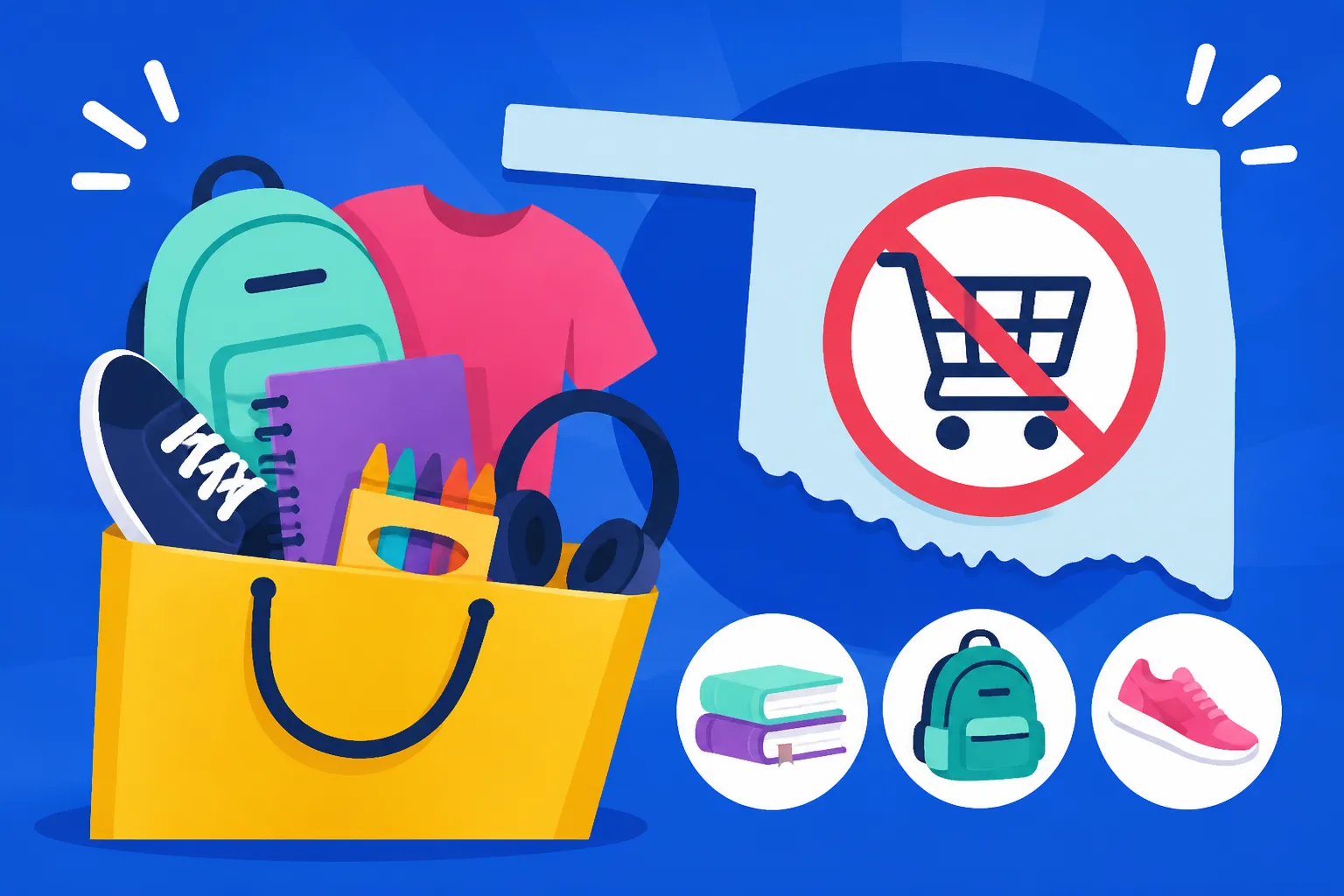
For many families, this is the big one. The Oklahoma Sales Tax Holiday exempts most articles of clothing and footwear, but with a significant catch: the exemption only applies to items priced at less than $100 per article. This "per article" rule is incredibly important.
Let’s break it down:
- Included: This means a pair of jeans for $45, a shirt for $20, a new pair of sneakers for $90, or even a fancy dress for $99.99 would all be sales tax-exempt. These are the everyday items you'd normally buy for school or general wear. Think t-shirts, shorts, dresses, pants, socks, underwear, coats, jackets, and most types of shoes.
- Excluded (due to price): If that pair of designer jeans costs $105, or those high-end basketball shoes are $120, they will not qualify for the exemption. The entire cost of the item becomes taxable, not just the amount over $100. It's an all-or-nothing rule once you hit that threshold.
- Excluded (due to type): There are also some items, regardless of price, that are generally not considered "clothing" for this exemption. These often include accessories like jewelry, watches, handbags, briefcases, luggage, umbrellas, wallets, and even athletic apparel or protective equipment not typically worn as street clothes (think football pads, shin guards, ballet shoes, or specialized cycling gear).
It’s about making sensible, everyday purchases for the school year. If you're looking for information on specific items, our guide on Sales Tax on Clothing by State can offer further insights into how different states classify apparel.
School Supplies: Definitions and Price Caps
Beyond clothing, school supplies are the other major category for the Oklahoma Sales Tax Holiday. The intent here is to help parents get all those notebooks, pens, and crayons without the added tax.
The exemption applies to school supplies, school art supplies, and school instructional materials priced at less than $100 per item. While the $100 limit is generous for most individual school supplies, it's the definition of "school supplies" that can sometimes be tricky.
- Commonly Included Items: You can generally expect to buy things like binders, crayons, glue, pens, pencils, rulers, calculators, composition books, notebooks, paper, scissors, art supplies like watercolors and paintbrushes, and even textbooks and workbooks, all without state sales tax, as long as each item is under the $100 limit. This covers the vast majority of your typical back-to-school list.
- What Might Surprise You as Excluded: Items that are typically for home or office use, even if a student might use them, are often not included. This can mean things like briefcases, general office software (unless specifically instructional), furniture (like desks or chairs), or even general art supplies that aren't strictly for "school art." Also, items that are primarily recreational, like video games, even if they have an educational component, usually don't make the cut.
Always keep your school's actual supply list handy when you shop. That way, you're not accidentally buying something that's only kind of a school supply, and finding yourself paying tax on it.
Items That Don't Qualify: The Common Misconceptions
It's just as important to know what isn't included as what is. Many shoppers mistakenly believe that if it's "for school" or "for a kid," it must be tax-free. Unfortunately, that's not always the case, and these misconceptions can lead to unexpected tax charges at the register.
Here are some common items that generally do not qualify for the Oklahoma Sales Tax Holiday:
- Electronics: Computers, laptops, tablets, smartphones, printers, or related accessories (like USB drives, headphones, or webcams) are typically not exempt. This can be a real bummer, as these are often big-ticket items for students.
- Sporting Goods and Recreational Equipment: This includes athletic uniforms, specialized sports shoes (like cleats for a specific sport, rather than general sneakers), helmets, pads, bats, balls, and other gear for extracurricular activities. While school-related, they aren't considered general "clothing" or "school supplies" for the holiday's purposes.
- Jewelry, Handbags, and Other Accessories: As mentioned before, items like watches, purses, wallets, briefcases, and other fashion accessories are not typically covered.
- Cosmetics and Toiletries: Deodorant, makeup, shampoo, toothpaste, and other personal hygiene products remain taxable.
- Books (General): While textbooks and instructional workbooks usually qualify as "school instructional materials," general-interest books, magazines, or non-educational reading materials are typically still subject to sales tax.
- Rentals: If you rent clothing (like a uniform or costume) or school equipment, the rental charges are not exempt.
- Consumables not strictly "school supplies": Things like printer ink, batteries (unless specifically part of an exempt school supply item, e.g., a battery included with an exempt calculator), or cleaning supplies are generally taxable.
It can feel a bit like a scavenger hunt sometimes, trying to remember all the specifics. This table summarizes the main categories for the Oklahoma Sales Tax Holiday:
| Category | Description | Price Limit (per item) | State Sales Tax Exemption |
|---|---|---|---|
| Clothing | Most articles of apparel, including shirts, pants, dresses, coats, underwear, socks. | Less than $100 | Yes |
| Footwear | All types of shoes and boots, except for specialized athletic or protective equipment. | Less than $100 | Yes |
| School Supplies | Items typically found on school supply lists: pens, pencils, paper, notebooks, binders, crayons, glue, etc. | Less than $100 | Yes |
| School Art Supplies | Paint, paintbrushes, clay, art paper, construction paper, drawing pads. | Less than $100 | Yes |
| School Instructional Materials | Textbooks, workbooks, maps, globes, educational charts. | Less than $100 | Yes |
| Electronics | Computers, laptops, tablets, printers, accessories. | N/A | No |
| Sporting Goods | Athletic uniforms, equipment, protective gear, specialized shoes (e.g., cleats). | N/A | No |
| Accessories | Jewelry, watches, handbags, briefcases, luggage, umbrellas, wallets. | N/A | No |
| General Books | Non-educational books, magazines. | N/A | No |
Understanding What Items Are Exempt From Sales Tax? in general can also help clarify the reasoning behind some of these distinctions.
Practical Considerations for Shoppers
The sales tax holiday isn't just about what you buy; it's also about how and where you buy it. With the rise of online shopping and various retail promotions, it's wise to consider a few more details to ensure you truly maximize your savings.
Shopping Online During the Holiday
Good news! The Oklahoma Sales Tax Holiday typically does apply to online purchases of eligible items made during the tax-free period. This means you can shop from the comfort of your home and still benefit from the state sales tax exemption. However, there are a few important points to keep in mind:
- Transaction Time: The purchase must occur within the specific tax-free dates (August 7-9, 2026). This means the order must be placed and completed during that window. If you add items to your cart on August 6th and don't check out until August 7th, you should be fine. But if you place an order on August 9th at 11:59 PM and it technically processes on August 10th, you might miss out. Always confirm the retailer's exact cut-off times.
- Shipping Address: For the exemption to apply, the items must be shipped to an Oklahoma address. If you're buying for someone out of state, they won't get the benefit unless their state also has a concurrent sales tax holiday that applies.
- Shipping and Handling Fees: This is another tricky one. In Oklahoma, shipping and handling charges are generally considered part of the sales price of a taxable item, which means they are also taxable. During the sales tax holiday, if the item is exempt, the shipping charge for that item might also be exempt. However, if your order contains both exempt and non-exempt items, retailers typically prorate the shipping charges, taxing the portion associated with the non-exempt goods. This can get complicated quickly, and businesses often rely on sophisticated systems, like those offered by Avalara, to manage these complex tax calculations accurately. For more detail, you might want to read up on Is Shipping and Handling Taxable?.
How Returns, Exchanges, and Special Offers Factor In
Navigating returns, exchanges, and stacking discounts during a tax-free weekend can sometimes feel like a puzzle. Here's a rundown of how these scenarios usually play out:
- Returns of Tax-Exempt Purchases: If you buy an item during the sales tax holiday and later return it, you will generally receive a refund for the price you paid, which means you won't get a sales tax refund because you didn't pay sales tax in the first place.
- Exchanges:
- Even Exchange (same item, different size/color): If you exchange an exempt item for another exempt item of the same price, no sales tax issues typically arise.
- Uneven Exchange (different item or price): If you exchange an item for a different, higher-priced item that would have been eligible for the exemption, and you do so within a reasonable return period, you generally don't pay sales tax on the new item if it also meets the criteria (e.g., under $100). If you exchange an exempt item for a non-exempt item, or an exempt item for one that exceeds the $100 limit, then sales tax will be applied to the full price of the new, non-exempt item.
- Coupons and Discounts: When it comes to coupons, the sales tax holiday rules apply to the final price after any discounts or coupons have been applied. So, if you have a shirt originally priced at $110, but a 20% off coupon brings it down to $88, it would now qualify for the sales tax exemption because its final price is less than $100. This is fantastic for maximizing your savings!
- Gift Cards: Buying a gift card is not a taxable event, so there's no sales tax to worry about when purchasing one, whether during the holiday or not. Sales tax is only applied when the gift card is redeemed for a taxable product. So, if you buy an eligible item with a gift card during the tax-free weekend, that item will still be exempt from state sales tax.
Strategies to Maximize Your Tax-Free Weekend Savings
Okay, so now you know the rules. But how do you really win the tax-free weekend? It's all about preparation and smart shopping, just like you’d plan for a major trip or a big family event.
Smart Planning for Back-to-School Season
The key to truly making the most of Oklahoma's Sales Tax Holiday is a well-thought-out plan. Don't just show up at the store and hope for the best!
- Get those school supply lists early: Many schools release their required supply lists weeks in advance. Get a copy, review it carefully, and highlight items that you know will qualify for the tax exemption. This is your shopping blueprint.
- Take inventory at home: Before you buy a single crayon, check what you already have. Do the kids have last year's unused notebooks? Are there still plenty of pencils in the junk drawer? Don't buy what you don't need, even if it's tax-free.
- Prioritize big purchases: Focus on the higher-priced eligible items first, especially clothing and footwear, where the $100 per item limit is a real factor. Saving 4.5% on a $99 pair of shoes is a much bigger saving than on a $0.50 pencil.
- Research sales in advance: Many retailers run their own sales and promotions during the tax-free weekend to capitalize on the increased foot traffic. Combine these store discounts with the sales tax exemption, and you're looking at some serious savings! Check flyers, store websites, and sign up for email lists in the weeks leading up to August 7th. Stores like Target, Walmart, and Kohl's often have special deals during this time.
- Consider a shopping buddy: If you're dealing with multiple children or a huge list, going with a partner can help you divide and conquer, making the experience less stressful and more efficient.
Thinking ahead can turn a chaotic shopping trip into a smooth, money-saving mission. Our Tax-Free Weekend Back-to-School Guide 2026 offers even more general tips for navigating these busy shopping periods.
Leveraging Retailer Promotions and Price Matching
Beyond the state's tax relief, many retailers sweeten the deal with their own promotions. This is where truly savvy shoppers make out like bandits.
- Stacking coupons and sales: As discussed, retailer coupons and sale prices reduce the item's cost before the tax exemption is applied. This means a $105 item that's usually taxable could become tax-exempt if a coupon drops its price below $100. Always look for those "stackable" deals.
- Membership discounts: If you belong to a loyalty program or have a store credit card, remember to use those benefits. The discounts provided through these programs will also lower the price before the sales tax exemption is calculated, further increasing your savings.
- Price matching policies: Some retailers offer price matching. If you find an eligible item cheaper elsewhere, ask your preferred store if they'll match it. This can ensure you get the best price and the tax exemption all in one place. Just be aware that price matching policies can be complex, especially during promotional periods, so it's always best to check with the store ahead of time.
- Be aware of bundled deals: Sometimes, retailers offer "buy one, get one half off" or "buy a uniform set." Make sure you understand how the pricing is broken down per item, especially if some individual items might nudge close to or over the $100 limit. A tool like Avalara can help businesses manage sales tax on these kinds of complex promotions, ensuring they remain compliant even during tax holidays.
By combining the Oklahoma Sales Tax Holiday with smart shopping strategies, you can significantly reduce your back-to-school expenses. Happy shopping, and may your savings be plentiful!
Disclaimer
Please remember that sales tax laws and holiday rules can change. While this guide provides the most up-to-date and accurate information available, it's always a good idea to verify the specific details, dates, and eligible items with the Oklahoma Tax Commission or your local retailers closer to the actual Sales Tax Holiday dates. This information is for general guidance and should not be considered professional tax advice.