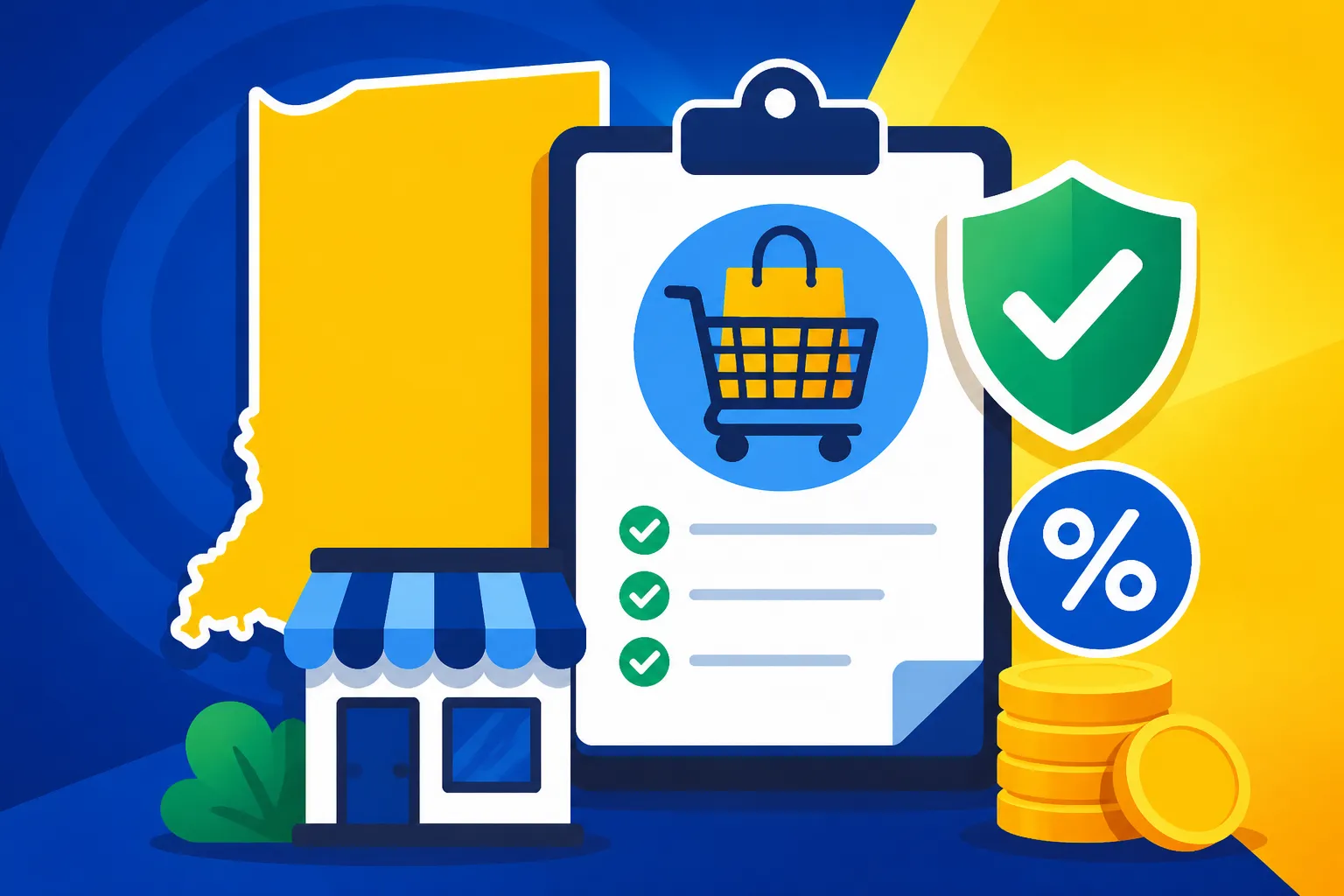
How to Get a Sales Tax Permit in Indiana
Getting your head around sales tax permits can feel like navigating a maze, especially when each state has its own rules and names for things. If you're running a business in Indiana, or planning to start one, and you're wondering how to properly collect and remit sales tax, you've landed in the right place. This comprehensive guide will walk you through everything you need to know about obtaining and managing your sales tax permit in the Hoosier State, saving you headaches down the line.
Understanding Indiana's Sales Tax Permit Landscape
Before you even think about filling out forms, it's really important to understand what Indiana's sales tax permit is and who exactly needs one. It's not just a piece of paper; it's your legal authorization to act as a tax collector for the state, and misunderstanding its nuances can lead to some sticky situations.
What is a Registered Retail Merchant Certificate RRMC?
In Indiana, what many states call a "sales tax permit" or "seller's permit" is officially known as a Registered Retail Merchant Certificate, or RRMC. Don't let the different name throw you off; its core purpose is exactly the same: it’s what allows you to legally collect sales tax from your customers on behalf of the state. When a customer buys something taxable from you, they're paying sales tax, and you, as the merchant, are responsible for holding onto that money and sending it to the Indiana Department of Revenue (DOR) at regular intervals. Think of yourself as an agent for the state, entrusted with this very important task.
Without an RRMC, you're not legally allowed to collect sales tax, and if you do collect it, you could face penalties for doing so without proper authorization. Conversely, if you should be collecting sales tax but aren't, the state will still expect you to pay what was due, often with interest and penalties added on. This is why getting your RRMC squared away right from the start is non-negotiable for most businesses selling tangible personal property or certain services in Indiana. It’s a fundamental step that ensures you’re operating above board and can fulfill your tax obligations accurately.
Who Needs an Indiana Sales Tax Permit?
The question of "who needs an Indiana sales tax permit?" boils down to whether your business has "nexus" in the state. Nexus essentially means a sufficient connection to Indiana that triggers a sales tax collection obligation. It’s not just about having a physical storefront anymore, especially in today’s e-commerce world.
Historically, nexus was primarily about physical presence. If you had a brick-and-mortar store in Indianapolis, employees working from a home office in Fort Wayne, or even regularly attended trade shows in Evansville, you likely had physical nexus. If your inventory was stored in a warehouse within the state, even if it wasn't your own, that could also create physical nexus. These traditional ties still absolutely trigger the need for an RRMC. For example, if you set up a small boutique in Carmel, you'll need this permit.
However, the game changed significantly with the 2018 Supreme Court decision in South Dakota v. Wayfair. This ruling introduced the concept of "economic nexus," meaning even if you don't have a physical presence, you can still be required to collect sales tax if your sales into a state meet certain thresholds. Indiana, like almost every other state, adopted economic nexus rules. For Indiana specifically, an out-of-state seller is considered to have economic nexus if, in the current or previous calendar year, they have:
- Gross revenue from sales into Indiana exceeding $100,000, OR
- 200 or more separate transactions into Indiana.
So, if you're an online seller based in, say, Ohio, but you ship enough products to Indiana customers that you hit either of these thresholds, you'll need to register for an RRMC. This applies whether you're selling directly from your own website or through a marketplace facilitator, though marketplace facilitators often handle the collection and remittance themselves for sales made on their platform. Still, understanding your own nexus obligations is key. If you're unsure about whether your business activities create a nexus, checking out a guide on Sales Tax Nexus Explained (Physical vs Economic) can provide a deeper dive into the different types of connections that trigger this requirement across the country.
Step-by-Step Guide to Applying for Your Indiana Sales Tax Permit
Applying for your Registered Retail Merchant Certificate in Indiana is generally a straightforward process, thanks to the state's online portal. However, like any government application, it requires a bit of preparation to ensure everything goes smoothly.
Gathering Your Essential Information
The biggest secret to a stress-free application process is preparation. Don't just jump onto the website and hope for the best! Take some time to gather all the necessary information beforehand. This will prevent you from having to stop, dig for a document, and potentially lose your place or time out of the system. Here's a checklist of what you'll typically need:
- Federal Employer Identification Number (FEIN): This is your business's tax ID number, assigned by the IRS. If you're a sole proprietorship without employees, you might use your Social Security Number (SSN) instead, but an FEIN is generally recommended for businesses.
- Legal Business Name: This should match the name registered with the Indiana Secretary of State or the name on your federal tax documents.
- Business Address: Your primary physical location in Indiana, or your mailing address if you're an out-of-state seller meeting economic nexus thresholds.
- Business Entity Type: Are you a sole proprietorship, partnership, LLC, S-Corp, C-Corp, etc.?
- Start Date of Business Operations: The date you began, or will begin, selling taxable goods or services in Indiana.
- North American Industry Classification System (NAICS) Code: This code classifies your business by industry. You can typically find this on your federal tax documents or by looking it up online.
- Contact Information: Name, title, phone number, and email for the primary contact person for the business.
- Bank Account Information: While not always required for the initial permit application, having your banking details handy is crucial for when you need to remit the collected sales tax.
Having these details neatly organized and readily accessible will make the online application a breeze. Many small business owners underestimate this step, only to get frustrated when they realize they're missing a piece of information halfway through the process.
Navigating the INBiz Portal
Indiana uses the INBiz portal, a one-stop business registration and filing platform managed by the Indiana Secretary of State, to handle sales tax permit applications. It's designed to be user-friendly, but knowing the path helps.
- Create an Account: If you don't already have one, your first step is to create an account on the INBiz website. This usually involves providing some basic personal information and setting up a username and password.
- Start a New Registration: Once logged in, look for an option like "Start a New Registration" or "Business Registration."
- Select Sales Tax Permit: You'll typically be given a list of various business registrations or licenses. You'll need to select the option pertaining to sales tax, which will likely be labeled as "Registered Retail Merchant Certificate" or simply "Sales Tax Permit."
- Complete the Application: This is where you'll input all the information you gathered in the previous step. Be meticulous and double-check everything for accuracy. The system will guide you through sections asking for business details, ownership information, and details about your selling activities. Pay close attention to questions about your anticipated sales volume, as this can influence your initial filing frequency (e.g., monthly, quarterly, or annually).
- Review and Submit: Before hitting the final submit button, review all the information one last time. Any errors could delay your application.
The INBiz portal is generally efficient, but like any online system, it can have its quirks. Make sure you have a stable internet connection and sufficient time to complete the application without interruption. If you're a business that anticipates needing to register for sales tax in multiple states, not just Indiana, you might consider using a dedicated sales tax compliance software. Brands like Avalara offer services that can streamline the process of Registering for Sales Tax in Multiple States by managing various state applications through a single platform, which can be a huge time-saver.
Understanding Application Review and Approval
After you’ve submitted your application through the INBiz portal, you're usually looking at a relatively quick turnaround for approval. For most online submissions, if all your information is accurate and complete, approval can be almost instantaneous or within a few business days. The Indiana Department of Revenue (DOR) will process your application, and you'll typically receive an email confirmation once your RRMC is approved.
Your official Registered Retail Merchant Certificate will then be mailed to the business address you provided. This physical certificate is what you should display at your place of business, if you have one, demonstrating your compliance with Indiana sales tax laws. It's a good idea to keep a digital copy too, just in case.
In some cases, the DOR might need additional information or clarification. Don't panic if this happens; it's a normal part of the process. They might send you a request via email or mail, asking for supporting documents or a clearer explanation of certain aspects of your business. Responding promptly and thoroughly to these requests is crucial to avoid further delays in getting your permit. Once approved, your RRMC will include your sales tax account number and details about your assigned filing frequency and due dates. This information is critical for your ongoing sales tax compliance.
Maintaining Compliance After Getting Your Indiana Sales Tax Permit
Getting your Indiana Registered Retail Merchant Certificate (RRMC) is a fantastic first step, but it's really just the beginning of your sales tax journey. The ongoing responsibilities of collecting, reporting, and remitting sales tax are where many businesses find themselves needing consistent attention to detail.
Sales Tax Collection and Remittance in Indiana
Once you have your RRMC, your primary responsibility is to accurately collect sales tax from your customers on all taxable sales. Indiana has a statewide sales tax rate of 7%. Unlike some other states, Indiana doesn't have local sales taxes on top of the state rate that vary by city or county. This simplifies things considerably compared to states like Louisiana or Colorado, where local rates can change dramatically based on address. While this statewide uniformity helps, ensuring your point-of-sale system or e-commerce platform is configured to apply the correct 7% rate is essential.
You must only charge sales tax on items that are legally taxable in Indiana. Generally, this includes tangible personal property (physical goods) and certain specified services. Groceries, prescription medicines, and many manufacturing components, for example, are often exempt. Understanding what's taxable and what's not for your specific products or services is paramount. For businesses selling a wide variety of items, or those operating in multiple states, utilizing a sales tax software solution like Avalara can be incredibly helpful. These platforms automatically calculate the correct sales tax rates based on location and product taxability, minimizing errors and saving you countless hours. If you want a more detailed breakdown of how to handle the actual calculation, our guide on How to Calculate Sales Tax (Step by Step) can walk you through the process.
Filing Your Indiana Sales Tax Returns
After collecting sales tax, your next big responsibility is to report and remit that money to the Indiana Department of Revenue. How often you do this depends on your assigned filing frequency, which is typically determined by your anticipated sales volume when you apply for your RRMC.
Common filing frequencies include:
- Monthly: Usually for businesses with higher sales volumes.
- Quarterly: For businesses with moderate sales volumes.
- Annually: For businesses with very low sales volumes.
The DOR will inform you of your assigned frequency upon approval of your permit. Most sales tax returns are due on the 20th day of the month following the close of the reporting period. For example, if you're a monthly filer, sales tax collected in January would typically be due on February 20th. If the 20th falls on a weekend or holiday, the due date usually shifts to the next business day. Keeping track of these deadlines is vital. Our Sales Tax Due Dates by State 2026 resource can help you stay current, and for a broader understanding of how these frequencies are assigned, you might find Sales Tax Filing Frequency Explained particularly insightful.
You can file your returns electronically through the INBiz portal or directly through the Indiana Taxpayer Information Management System (INTIME). Filing online is almost always the easiest and most secure method. For businesses dealing with complex sales tax scenarios or multiple state obligations, automated solutions offered by companies like Avalara can file returns for you, directly integrating with your sales data to ensure accuracy and timeliness.
Keeping Records and Staying Updated
Maintaining meticulous records is not just good business practice; it's a legal requirement for sales tax compliance. You should keep detailed records of all your sales, both taxable and non-taxable, as well as the sales tax collected and remitted for each filing period. This includes sales invoices, exemption certificates (if you make tax-exempt sales to qualifying organizations or for resale), and copies of all filed returns. These records are crucial in case of an audit by the Indiana Department of Revenue, allowing you to easily verify your collections and remittances.
Sales tax laws, while relatively stable in Indiana compared to some states, can change. Rates can be adjusted (though the state rate has been 7% for a while), and interpretations of taxability for certain goods or services can evolve. Staying informed about any 2026 Sales Tax Rate Changes by State or changes to taxability rules is essential to ensure ongoing compliance. Subscribing to updates from the Indiana Department of Revenue, following industry news, or leveraging compliance software that automatically updates with legislative changes can help you stay ahead. Embracing Sales Tax Automation: Is It Worth It? is a question many growing businesses ponder, and for good reason, as it can drastically simplify staying compliant with ever-evolving regulations.
Here's a quick reference table for Indiana sales tax permit essentials:
| Feature | Details |
|---|---|
| Permit Name | Registered Retail Merchant Certificate (RRMC) |
| Issuing Authority | Indiana Department of Revenue (DOR) via INBiz portal |
| State Sales Tax Rate | 7% |
| Local Sales Taxes | No local sales taxes applied on top of the state rate (unlike many other states) |
| Economic Nexus Threshold | $100,000 in gross revenue OR 200+ transactions into Indiana in current/previous calendar year |
| Application Cost | Generally no fee for the application itself |
| Filing Frequencies | Monthly, Quarterly, or Annually (assigned by DOR based on sales volume) |
| Due Date | 20th day of the month following the reporting period |
| Online Application Portal | INBiz.in.gov |
Common Pitfalls and How to Avoid Them
Even with the best intentions, sales tax compliance can be tricky. There are several common traps that businesses, especially new or growing ones, often fall into. Knowing these pitfalls ahead of time can help you steer clear of costly mistakes.
Misunderstanding Nexus Beyond Indiana
One of the biggest mistakes businesses make is assuming that once they've registered for a sales tax permit in Indiana, they're good to go for all sales, everywhere. This is a dangerous misconception. The world of sales tax is truly multi-state, and while your Indiana RRMC covers your sales tax obligations within Indiana, it does nothing for other states where you might also have nexus.
As your business grows, you might expand your physical presence, hire remote employees in other states, or, more commonly, trigger economic nexus thresholds in other states due to increasing online sales. Each state has its own specific economic nexus thresholds, which can vary significantly from Indiana's $100,000 or 200 transactions. For example, California also has a $500,000 threshold, while other states might have different rules entirely. It’s a constant dance to monitor where your business activities are creating a sales tax obligation. Ignoring nexus in other states can lead to significant back taxes, penalties, and interest if those states eventually catch up. A deep dive into Economic Nexus by State 2026: Thresholds Guide is highly recommended if you plan to sell across state lines. This is precisely why many businesses, even relatively small ones, opt for sales tax compliance software like Avalara, which can monitor nexus thresholds across all states for them, alerting them when they need to register elsewhere.
Incorrectly Calculating or Collecting Sales Tax
While Indiana's statewide 7% sales tax rate simplifies things compared to states with complex local rates, there are still ways to get the collection wrong. Charging too little sales tax means you, the business, will be on the hook for the difference when it comes time to remit. This directly eats into your profits. On the other hand, charging too much sales tax can lead to customer dissatisfaction, complaints, and even potential audits if customers report discrepancies.
The main culprits for incorrect calculations often involve:
- Misclassifying Products/Services: Is that specialized software you're selling considered a taxable tangible product or an exempt service? What about shipping charges? Sometimes, slight variations in product definitions can change taxability. Our guide on Is Shipping Taxable? Freight Sales Tax by State is a prime example of where these nuances can trip up sellers.
- Human Error: Manual calculations or data entry are always prone to mistakes.
- Outdated Systems: Using an old point-of-sale system that isn't regularly updated for tax changes can lead to incorrect rates, even if Indiana's state rate is stable.
To avoid these issues, invest in reliable accounting software or e-commerce platforms that have built-in sales tax calculation capabilities. For businesses with more complex needs, a comprehensive platform from a brand like Avalara can provide real-time, accurate sales tax calculations for every transaction, across all relevant jurisdictions. This automation is key to mitigating risk and ensuring you collect exactly what's required.
Missing Filing Deadlines
The Indiana Department of Revenue, like all state tax agencies, takes filing deadlines seriously. Missing a deadline for your sales tax return, even if it's just by a day or two, can result in penalties and interest charges. These can accumulate quickly and become a significant financial burden, especially if non-compliance becomes a pattern.
Life happens, and sometimes it's easy to lose track of due dates amidst running a busy business. This is particularly true if your filing frequency is quarterly or annually, making the deadlines less frequent and thus easier to forget. The penalties typically involve a percentage of the unpaid tax, and interest will be charged on the overdue amount from the original due date until it's paid.
To ensure you never miss a deadline:
- Set Reminders: Calendar alerts, recurring tasks in your project management tools, or even old-fashioned sticky notes can help.
- Automate: The most robust solution is to use sales tax compliance software that not only calculates but also files your returns automatically, ensuring timely submission. Many of the Best Sales Tax Compliance Software 2027 options include this feature, taking the burden of remembering off your shoulders.
- Understand Your Frequency: Make sure you know whether you're a monthly, quarterly, or annual filer and mark those specific dates clearly.
Consistent, timely filing protects your business from unnecessary financial hits and keeps you in good standing with the Indiana Department of Revenue.
Disclaimer
The information provided in this article is for general guidance and informational purposes only, and does not constitute professional tax advice. Sales tax laws are complex and subject to change. We highly recommend consulting with a qualified tax professional or the Indiana Department of Revenue directly for advice tailored to your specific business situation.