How Do I Register for Sales Tax Online?
Navigating the labyrinth of sales tax registration can feel like trying to solve a Rubik's Cube blindfolded, especially when you're just trying to run your business. Many online sellers and small business owners find themselves utterly bewildered about when, where, and how to even begin this essential process. This comprehensive guide is designed to demystify online sales tax registration, offering clear, actionable steps to get your business compliant without the usual headache.
Understanding When and Where to Register for Sales Tax Online
Before you even think about filling out forms, the absolute first step is understanding why you need to register and where. This isn't just bureaucratic red tape; it's about adhering to state laws that determine if your business has a significant enough connection, or "nexus," to a particular state to require sales tax collection. Get this wrong, and you could be facing penalties down the line.
What Triggers the Need to Register? Physical vs Economic Nexus
The concept of "nexus" is the bedrock of sales tax obligations. Historically, nexus was pretty straightforward: if you had a physical presence in a state – like a storefront, office, warehouse, or even an employee – you had physical nexus and therefore, a sales tax obligation. This made sense in a brick-and-mortar world. If your business, say, "Cornerstone Coffee Roasters," had a shop in Portland, Oregon, you knew you had to deal with Oregon's sales tax (or lack thereof, in Oregon's case, which is a state with no sales tax).
However, the game changed dramatically with the 2018 Supreme Court decision in South Dakota v. Wayfair. This ruling introduced "economic nexus," a game-changer for online sellers. Now, even if you don't have a single physical tie to a state, you can establish nexus simply by exceeding certain sales thresholds within that state. For example, if "Cozy Crafts Co." sells enough handmade blankets to customers in Texas, even if Cozy Crafts is based in Florida, they might suddenly have economic nexus in Texas and need to register there. These thresholds vary wildly by state, but they typically involve a certain dollar amount of sales (e.g., $100,000) or a specific number of transactions (e.g., 200 transactions), or both, within a calendar year. It's a complex topic, which is why we've put together a full guide on Sales Tax Nexus Explained Physical vs Economic.
Identifying Your Sales Tax Jurisdictions
Once you grasp the concept of nexus, the next crucial step is to identify all the states where your business has established a sales tax obligation. This often means more than just your home state. For instance, if you're an online retailer in California but frequently ship products to customers in New York, and your sales into New York cross their economic nexus threshold, then New York becomes a state where you need to register. You might also have physical nexus if you travel to trade shows, use third-party fulfillment centers (like Amazon FBA, which can create its own set of challenges regarding Amazon FBA Sales Tax Nexus Explained), or have remote employees working from other states.
It's not just states you need to worry about. Many states also have local sales taxes – city, county, and special district taxes – which stack on top of the state rate. For example, Louisiana is known for its high combined sales tax rates due to numerous local jurisdictions. While you generally register with the state tax authority, the rates you collect will depend on the exact address of your customer in a destination-based state, or your business location in an origin-based state. This nuance is why simply knowing you have nexus in "Texas" isn't enough; you need to understand the local implications. Tools designed for sales tax compliance can be immensely helpful here, as they can track these thresholds and help you identify where you're accumulating nexus.
Gathering the Essential Information for Online Registration
Before you dive into a state's online registration portal, gather all your business's vital statistics. Trying to find this information mid-application is a surefire way to get frustrated and make mistakes. Think of it like packing for a long trip; you wouldn't want to realize you forgot your passport at the airport. Having everything organized beforehand will make the process much smoother and faster.
Key Business Details You'll Need
Each state's application will ask for similar core pieces of information about your business. While the exact wording might differ, these are the common requirements:
- Federal Employer Identification Number (FEIN or EIN): This is your business's unique tax ID issued by the IRS. If you're a sole proprietor without employees, you might use your Social Security Number (SSN), but many states prefer or require an EIN for businesses.
- Legal Business Name: This should match the name registered with your state's Secretary of State or your IRS records.
- Doing Business As (DBA) Name (if applicable): If your business operates under a name different from its legal name, you'll need this.
- Business Address and Mailing Address: Your physical location and where you want to receive official correspondence.
- Contact Information: Names, titles, phone numbers, and email addresses for key individuals, usually an owner or officer.
- Business Start Date: The date your business began operations.
- Sales Start Date: The date you anticipate making your first taxable sale in that specific state. Sometimes this is the same as your business start date, but for economic nexus, it might be the date you crossed the threshold.
- Description of Business Activities: A brief explanation of what your business does and what types of products or services you sell. For instance, are you a retail clothing boutique, a SaaS provider, or a dropshipper? This helps states determine if you're selling taxable goods or services.
- Bank Account Information: For future sales tax payments and potential refunds. You'll often be asked for routing and account numbers.
Gathering these details in a single document or spreadsheet before you begin will save you significant time and prevent errors during the online application process.
Understanding Different Business Structures
The type of legal entity your business operates under can sometimes influence the registration process, though often it's more about how your federal taxes are handled. Whether you're a sole proprietorship, a partnership, an LLC (Limited Liability Company), or a corporation, the core requirement for a sales tax permit remains the same if you have nexus. However, the specific owner information you provide might differ.
For example, a sole proprietorship typically uses the owner's personal information and SSN (though an EIN is still advisable for sales tax purposes). An LLC or corporation will use the entity's EIN and list officers or members. Some states, like California, might refer to a sales tax permit as a "seller's permit," while others, like New York, call it a "Certificate of Authority." Understanding your specific business structure helps you correctly fill out the "owner details" or "responsible party" sections of the application, ensuring that the state has accurate legal information about who is ultimately accountable for sales tax compliance. This foundational knowledge is key to knowing How to Get a Sales Tax Permit by State without unnecessary hurdles.
Navigating the Online Registration Process by State
Okay, you've figured out where you need to register and you've got all your business information neatly organized. Now it's time to actually hit those state tax authority websites. While each state has its own unique portal, there's a general flow you can expect, and understanding it will make the journey less daunting.
Step-by-Step Walkthrough of a Typical State Portal
Let's imagine you've determined you need to register in, say, Texas. You'd head over to the Texas Comptroller of Public Accounts website. Here's a general roadmap of what you'll encounter:
- Find the "Sales Tax Permit" or "Business Registration" Section: This is usually clearly labeled on the state's Department of Revenue or Treasury website. Look for links like "Register a New Business," "Apply for a Sales Tax Permit," or "Online Services for Businesses." For Texas, you'd look for "Webfile" to apply for a new permit.
- Create an Online Account: Many states require you to create a user ID and password for their online services portal before you can start an application. This account will be used for future filings and managing your sales tax account. Make sure to keep these login credentials somewhere secure!
- Start the Application: Once logged in, you'll select the option to apply for a new sales tax permit or business license.
- Enter Business Information: This is where all those details you prepped come in handy. You'll input your EIN, legal business name, DBA (if applicable), addresses, and contact information. Be meticulous here; any typos could lead to delays.
- Provide Owner/Officer Information: You'll list the responsible parties for the business, including their names, titles, and sometimes their personal SSN or home address (depending on the state's security protocols).
- Describe Business Activities: Explain what you sell (e.g., "online retail of home goods," "SaaS subscriptions," "consulting services"). This helps the state classify your business and understand your tax obligations.
- Indicate Sales Start Date: Specify when you began (or will begin) making taxable sales in that specific state.
- Review and Submit: Before clicking "submit," carefully review every piece of information. It's much easier to catch an error now than to try and amend it later.
- Receive Confirmation: After submission, you'll usually get an immediate confirmation number. Some states might provide a temporary permit number right away, while others will send your official permit in the mail within a few business days or weeks. For instance, getting a Seller's Permit Explained What It Is & How to Get One in California can often provide an immediate temporary number.
Remember that each state will have its own quirks. Some might require additional documentation, while others might ask questions specific to their industries. For example, if you were setting up sales tax in a state like Colorado, you'd also need to be mindful of its Colorado Home-Rule Cities Sales Tax which adds another layer of complexity beyond the state registration.
Specific Considerations for Multi-State Registration
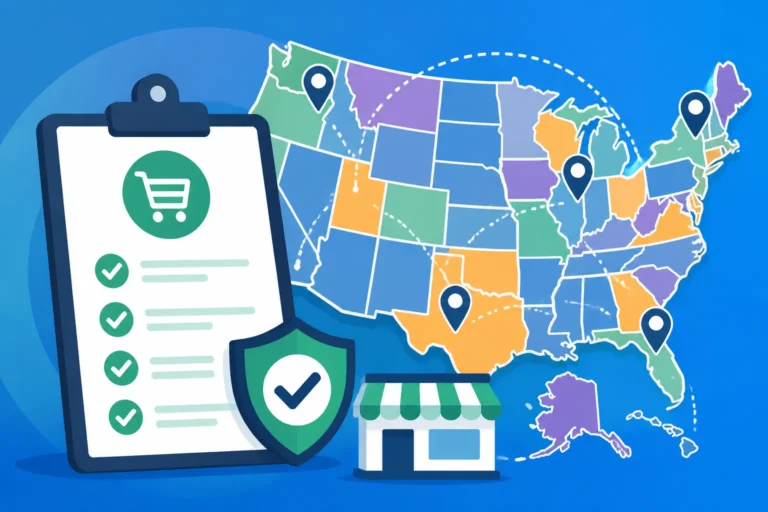
If your business has nexus in multiple states, you're not alone – this is the reality for most growing online businesses post-Wayfair. However, you can't register for all states through one central portal. Each state requires a separate registration process directly with its respective tax authority. This can be incredibly time-consuming, especially when you're dealing with varying interfaces and requirements.
Some states are part of the Streamlined Sales Tax (SST) Governing Board, which aims to simplify sales tax collection for businesses across member states. If you qualify and register through the SST system, you might be able to register in multiple SST states simultaneously. However, not all states are full members, and the process still involves its own learning curve. For businesses that are expanding rapidly, exploring options like Registering for Sales Tax in Multiple States becomes a critical task. This is where sales tax automation software often becomes invaluable, acting as a central hub to manage registrations and ongoing compliance across numerous jurisdictions.
Common Challenges and How to Overcome Them
Registering for sales tax, especially online and across multiple states, isn't always a walk in the park. There are specific hurdles that many businesses encounter. Being aware of these common challenges can help you prepare and mitigate potential issues before they cause significant headaches.
Dealing with State-Specific Nuances and Delays
Every state tax authority has its own set of rules, forms, and processing times. What works for registering in Florida might be completely different from registering in New York. For example, New York requires you to apply for a Certificate of Authority and has a specific set of rules for what is taxable, including clothing above a certain price point. Meanwhile, Florida has a state sales tax but also county surtaxes that need to be accounted for. These state-specific nuances can include:
- Varying Information Requirements: Some states might ask for shareholder information, while others are content with just an EIN and principal officer details.
- Unique Terminology: What one state calls a "sales tax permit," another might call a "seller's permit," "vendor's license," or "certificate of registration."
- Different Application Flows: While the general steps are similar, the layout and order of questions on online portals can differ significantly, making it easy to miss a required field or misunderstand a prompt.
- Processing Delays: While many online registrations are approved quickly, some states can take several weeks to process an application, especially if there are any discrepancies or if they require manual review. It's crucial not to start collecting tax until you have your official permit number, so factor in these potential delays. If you're wondering How Long Does It Take to Get a Sales Tax Permit?, the answer is almost always "it depends on the state."
The best way to overcome these challenges is to approach each state's registration as a distinct process. Don't assume what you learned from one state will perfectly apply to the next. Read instructions carefully, double-check all entries, and if you're unsure about something, contact the state's tax department directly for clarification.
Leveraging Sales Tax Software for Simplification
For businesses with nexus in more than a handful of states, or those experiencing rapid growth, manually tracking nexus thresholds, registering, collecting, and filing can quickly become overwhelming and prone to error. This is where dedicated sales tax compliance software truly shines. These platforms are designed to automate many of the tedious and complex aspects of sales tax.
Companies like Avalara offer comprehensive solutions that can integrate directly with your e-commerce platform (like Shopify or Amazon) or your accounting software. They automatically monitor your sales activity against each state's economic nexus thresholds, alerting you when you're approaching or have crossed a trigger point. Once nexus is established, these tools can:
- Assist with Registration: While they don't fill out the forms for you entirely, many platforms provide streamlined workflows and guidance on Sales Tax Registration for Online Sellers for each state, ensuring you have all the necessary information.
- Automate Rate Calculation: They accurately calculate sales tax rates in real-time based on the customer's address, taking into account state, county, city, and even special district taxes. This is incredibly valuable, especially for navigating the complexities of Combined State + Local Sales Tax Rates Explained.
- Manage Exemption Certificates: If you sell to tax-exempt organizations or have B2B sales with valid resale certificates, the software can manage and store these documents, preventing you from erroneously charging tax.
- Streamline Filing: Perhaps most importantly, they can prepare and often automatically file your sales tax returns in all the states where you're registered, ensuring you meet all Sales Tax Due Dates by State 2026 and frequencies.
While there's an investment involved, the time savings and reduced risk of errors can be invaluable, allowing you to focus on growing your business rather than drowning in sales tax paperwork. Choosing the Best Sales Tax Compliance Software 2027 is a big decision, but for many businesses, it's a game-changer.
Disclaimer
The information provided in this article is for general informational purposes only and does not constitute professional tax or legal advice. Sales tax laws are complex and constantly changing. Always consult with a qualified tax professional or refer to the official resources of the relevant state tax authority for advice tailored to your specific situation.