Is SaaS Taxable in Texas? (80% Rule)
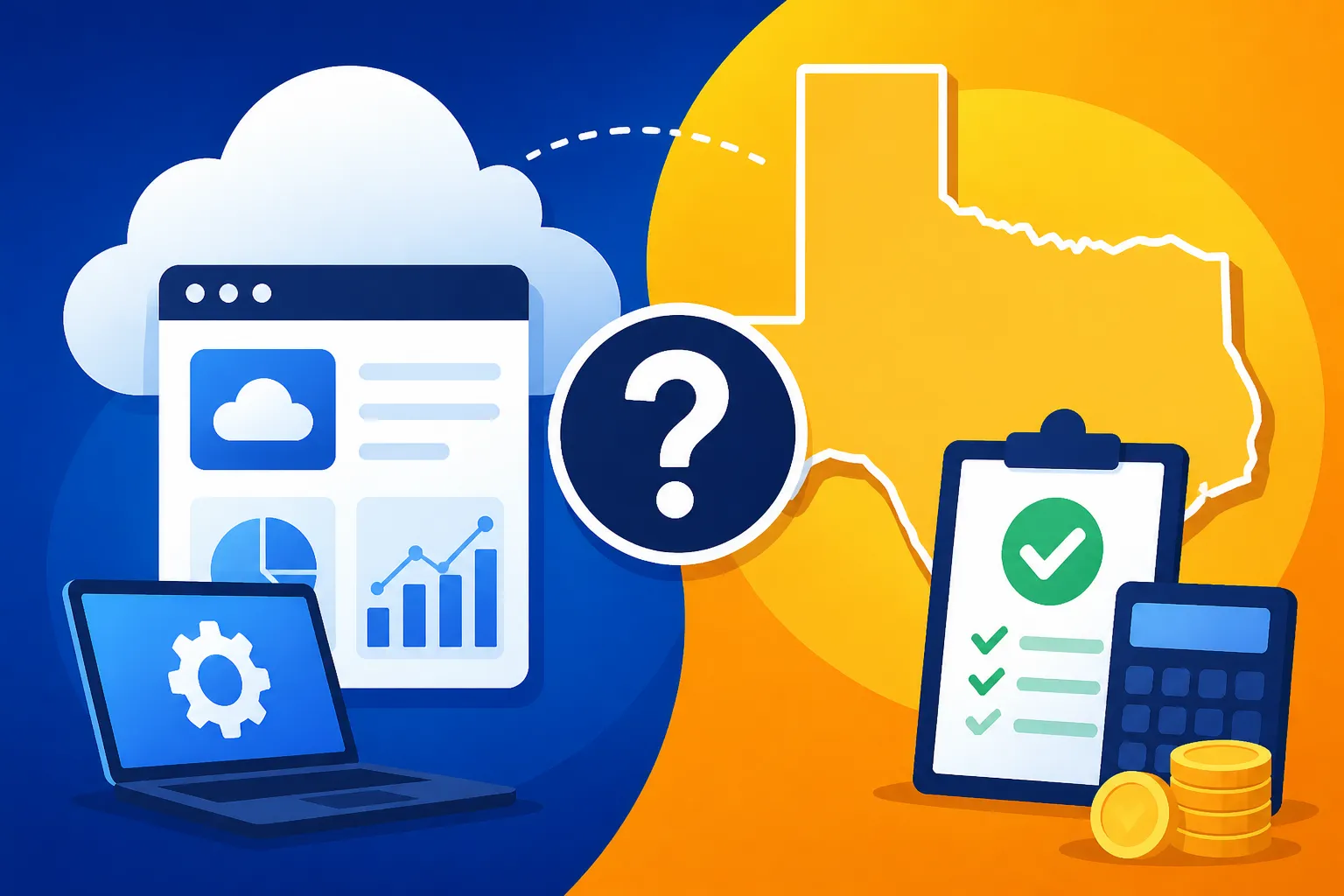
Navigating the ever-evolving world of sales tax for online businesses can feel like trying to hit a moving target, and when it comes to Software-as-a-Service (SaaS) in Texas, the rules often seem to add another layer of complexity. Many business owners are left scratching their heads, wondering if their digital subscriptions are taxable and how the infamous "80% Rule" plays into it all. This comprehensive guide will break down the intricacies of SaaS taxation in the Lone Star State, helping you understand when and how sales tax applies.
The Shifting Landscape of SaaS Taxation: Why Texas is Unique
For decades, sales tax was primarily straightforward: if you sold a physical product, you collected tax. But then the digital revolution happened, and states like Texas found themselves grappling with how to apply old laws to new, intangible services like SaaS. It's a journey that has left many a business owner feeling frustrated and confused.
The General Rule: Tangible vs. Intangible
Historically, sales tax was levied on tangible personal property – think a physical book, a car, or a piece of furniture. These items were easy to see, touch, and track, making them simple to tax. However, the rise of software, and particularly cloud-based software like SaaS, introduced a new challenge: how do you tax something that isn't physical? It doesn't arrive in a box, it's accessed over the internet, and often, it's never "owned" by the customer in the traditional sense.
Many states initially struggled to categorize software and digital products. Some considered them services, some tried to fit them into existing tangible property definitions, and others created entirely new categories. This piecemeal approach led to a patchwork of rules across the country, making multi-state compliance a significant headache for businesses. For anyone operating online, understanding these subtle differences is paramount, as a misstep can lead to unexpected liabilities and penalties.
Texas's Broad Definition of Taxable Services and Software
Texas is one of the states that has taken a proactive stance in taxing a wide array of services, including many digital offerings. Unlike some states that might exempt software or treat it differently based on delivery method, Texas generally considers computer software, even when delivered electronically, to be tangible personal property. This means that merely accessing software via a subscription is often treated as a taxable transaction, similar to buying a physical copy.
Beyond explicit software rules, Texas also taxes certain enumerated services, such as "information services" and "data processing services." Many SaaS platforms, by their very nature, can fall under these broad definitions. For example, a subscription to a platform that provides market analytics or customer insights could be seen as an "information service." Similarly, a service that processes data you upload could be classified as a "data processing service." This expansive view means that a significant portion of the SaaS landscape is within the state's tax net, requiring providers to carefully classify their offerings.
Texas's Approach to Software-as-a-Service (SaaS)
If you're selling SaaS to Texas customers, it's crucial to understand that the default position of the state is often to tax it. The complexity arises in how it's taxed, which sometimes brings in specific rules like the 80% rule, though its application to most modern SaaS is often quite limited.
SaaS as Electronically Delivered Software
The Texas Comptroller's office generally views "computer software" as tangible personal property. This definition extends to software that is accessed remotely, like SaaS. When you provide a customer with access to your software application over the internet, Texas often treats this as the sale or lease of computer software. The "electronic delivery" aspect doesn't make it exempt; rather, it's the method of providing the taxable item. This is a common point of confusion for businesses accustomed to thinking of digital goods as inherently exempt.
Consider a small business in Austin subscribing to a cloud-based CRM system. While they never physically "own" the software, they are paying for the right to access and use its functionalities. From Texas's perspective, this access constitutes a taxable transaction. The rationale is that the software itself, even when hosted and maintained by a third party, is the core product being consumed. This broad interpretation captures a vast number of SaaS products, from project management tools to marketing automation platforms.
SaaS Overlapping with Information and Data Processing Services
Many SaaS solutions inherently involve aspects of "information services" or "data processing services," which are also taxable in Texas. For example, a SaaS platform might:
- Provide information: Think of a subscription to a database of industry trends, a lead generation tool that pulls public contact information, or a service that aggregates news articles. These could fall under the umbrella of "information services."
- Process data: Imagine a payroll processing SaaS where clients upload their employee data, and the software calculates wages, deductions, and generates reports. This very much sounds like a "data processing service."
The lines can blur quickly. A single SaaS product might offer a combination of software access, data provision, and data processing. The key for Texas taxation often comes down to the "true object" of the transaction – what is the customer primarily paying for? If it's access to information compiled by the provider, it's an information service. If it's processing data furnished by the customer, it's a data processing service. And if it's generally just access to software functionalities, it's still often taxed as electronically delivered software. This is where understanding Is SaaS Taxable? Software-as-a-Service by State becomes incredibly important.
Demystifying the Texas 80% Rule and Its Limited Application to SaaS
The "80% Rule" in Texas is one of those sales tax provisions that sounds simple but, in practice, causes a lot of head-scratching. It's often misunderstood, especially when trying to apply it to the diverse world of SaaS.
The Foundation: Taxable Information and Data Processing Services
To truly grasp the 80% rule, you first need a solid understanding of Texas's definitions for "information services" and "data processing services."
- Information Services: The state defines an information service as furnishing general or specific information that has been collected, compiled, or processed. This can include everything from credit reports and stock market data to demographic studies and real estate listings. If your SaaS primarily gives customers access to this kind of pre-existing or compiled information, regardless of how it's presented or delivered, it's generally considered an information service.
- Data Processing Services: This refers to performing operations on data that is furnished by the customer of the service. Think about services like word processing, data entry, data conversion, or creating custom reports based on the specific data a client provides. The crucial element here is that the customer hands over their own raw data for the service provider to manipulate or transform.
Both information services and data processing services are taxable in Texas. However, the 80% rule specifically applies as a partial exemption to certain data processing services and particular kinds of information services that heavily involve processing customer-furnished data. This is a critical distinction, as many SaaS platforms, while dealing with data, don't necessarily fit this narrow definition.
How the 80% Rule Actually Works: Processing Customer-Furnished Data
Here's where the famous "80% Rule" (Texas Tax Code Rule 3.331 for data processing services) comes into play. It provides a limited sales tax break, but only under very specific circumstances.
The rule states:
"If 80 percent or more of the charge for a data processing service is for processing customer-furnished information, then only 20 percent of the charge is subject to sales tax. If less than 80 percent of the charge is for processing customer-furnished information, then the entire charge is taxable."
Let's break that down:
- It must be a "data processing service" (or a specific type of information service where customer data is processed): This is the first hurdle. Your SaaS offering must fit the definition of a service where you, the provider, are performing operations on data given to you by the customer.
- The "80% threshold": You then need to determine if 80% or more of the value of that service is attributable to processing the customer's specific data. This isn't always easy to quantify.
- The "20% taxable" outcome: If both conditions are met, then instead of taxing the full amount, only 20% of the charge for that specific service is subject to sales tax.
Consider a hypothetical scenario: A business uses a SaaS vendor to process their intricate payroll data. The client uploads all employee hours, salary adjustments, and deduction information. The SaaS vendor's system then performs complex calculations, generates pay stubs, and even files tax documents. If 80% or more of what the client is paying for is the actual processing of their specific payroll data (rather than general software access or aggregated data), then only 20% of the payroll service charge would be taxable. This nuanced application is why you often need detailed analysis, possibly with the help of experts or solutions like Avalara.
Why the 80% Rule Rarely Applies to Most SaaS
While the 80% rule sounds like a potential tax saver, for the vast majority of modern SaaS products, it rarely applies. Here's why:
- Focus on Software Access, Not Customer Data Processing: Most SaaS offerings are about giving customers access to a platform, a tool, or a set of features. Users input their own data into the software, but the software itself isn't necessarily processing customer-furnished data in the way the rule intends. The value is in the software's functionality and the user's ability to self-serve, rather than the provider performing the data processing.
- "Information Services" Distinction: Many SaaS applications that deal with data are actually providing "information services." If your SaaS delivers pre-compiled reports, analytics from aggregated data, or access to databases of information (e.g., a lead generation tool or market research platform), it's likely an information service. And for these, the 80% rule does not typically apply; the entire service is generally taxable.
- The "True Object" Test Again: Texas courts and the Comptroller often revert to the "true object" test. If the primary purpose of the transaction is to gain access to software or a database of information, rather than to have the provider process your unique, specific data that you furnished, the 80% rule is unlikely to apply.
For example, a project management SaaS like Asana or Trello allows users to input tasks, deadlines, and team members. While this is "data," the software itself is the core offering. The service isn't primarily about Asana processing your data for you; it's about providing you with the tools to manage your projects. Therefore, it would likely be fully taxable as electronically delivered software or an information service, with the 80% rule not applying. Understanding these distinctions is crucial, especially for businesses navigating Sales Tax Nexus Explained Physical vs Economic.
When Does SaaS Qualify as a Taxable Service in Texas?
Given Texas's broad definitions, many, if not most, SaaS offerings will be subject to sales tax. It's less about if it's taxable and more about how it's classified.
The "True Object" Test and SaaS
The Texas Comptroller often relies on the "true object" test to determine the taxability of a transaction that combines services and tangible personal property (which, in Texas, includes electronically delivered software). This test asks: what is the customer primarily intending to receive?
If the "true object" of the customer's purchase is:
- Access to software features and functionality: This is typically taxable as the sale of computer software, even when accessed remotely (SaaS).
- Pre-compiled information or data access: This is generally taxable as an "information service."
- Processing of specific data furnished by the customer by the provider: This is where it gets tricky and the 80% rule might apply if the processing represents 80% or more of the value. However, as discussed, most SaaS doesn't fit this perfectly.
For instance, if a customer subscribes to a graphic design software like Canva or Figma, the true object is access to the design tools, templates, and cloud storage features. Even though they are inputting their own designs and data, the primary purchase is the ability to use the software. This would generally be fully taxable.
Common SaaS Scenarios and Their Typical Taxability
Let's look at some common SaaS categories and how they are typically treated under Texas sales tax law:
- Customer Relationship Management (CRM) Software (e.g., Salesforce): This provides access to a database and tools for managing customer interactions. Generally taxable as electronically delivered software or an information service.
- Enterprise Resource Planning (ERP) Software (e.g., SAP, Oracle Cloud): Comprehensive business management tools. Taxable as electronically delivered software.
- Accounting and Financial Software (e.g., QuickBooks Online, Xero): Provides tools for managing finances. Taxable.
- Project Management Software (e.g., Asana, Monday.com): Provides features for organizing tasks and teams. Taxable.
- Marketing Automation Platforms (e.g., HubSpot): Offers tools for email marketing, lead management, etc. Generally taxable as electronically delivered software or information services.
- Video Conferencing Software (e.g., Zoom, Google Meet): Provides access to communication tools. Taxable as electronically delivered software.
- Cloud Storage Solutions (e.g., Dropbox, Google Drive): While appearing as a utility, these are often considered data processing services or information services, and thus taxable, especially if they include features beyond mere storage.
- Streaming Services (e.g., Netflix, Spotify): These are typically taxed as "information services" because they furnish content (information).
- Web Hosting Services: Considered a taxable data processing service or information service.
It's clear that Texas casts a wide net, meaning most SaaS businesses selling to customers in the state will have sales tax obligations. The challenge isn't usually if it's taxable, but correctly identifying the specific category and applying the right tax rate.
Practical Implications for SaaS Businesses in Texas
If you're a SaaS provider, understanding these rules isn't just academic; it has real-world consequences for your business operations, pricing, and compliance strategy.
Establishing Economic Nexus in Texas
Before you even think about calculating sales tax, you need to determine if you have a sales tax nexus in Texas. Nexus is the connection a business has with a state that requires it to collect and remit sales tax. After the landmark South Dakota v. Wayfair Supreme Court decision, states could impose sales tax obligations on out-of-state businesses based solely on their economic activity within the state, known as economic nexus.
In Texas, the economic nexus threshold for remote sellers is currently $500,000 in gross revenue from sales of tangible personal property or services into Texas in the preceding 12-month period. If your SaaS revenue to Texas customers exceeds this amount, you have established economic nexus and are required to register for a sales tax permit with the Texas Comptroller of Public Accounts. Failing to register and collect can lead to significant penalties, interest, and back taxes. Even if you don't hit the economic nexus threshold, physical presence (like an office, employees, or inventory in a third-party warehouse) will also create nexus. It's crucial to regularly review your sales into Texas, as exceeding this threshold means immediate compliance obligations. This also ties into the broader topic of Economic Nexus by State 2026: Thresholds Guide.
Calculating and Collecting Texas Sales Tax for SaaS
Once you've established nexus and registered for a sales tax permit, the real work of calculating and collecting begins. Texas has a statewide sales tax rate, but cities, counties, and special purpose districts can add their own local sales taxes. This means the total combined sales tax rate can vary significantly depending on the customer's location. For example, a customer in Houston might pay a different combined rate than one in Dallas, even though both are in Texas. This makes accurate rate determination crucial. You'll need to know Sales Tax by ZIP Code (and Why ZIP Isn't Enough) because some districts span multiple ZIP codes.
For SaaS, particularly if you're dealing with the rare instances where the 80% rule might apply, accurately applying the tax can be complex. You need systems in place that can:
- Identify the correct taxability: Is it electronically delivered software? An information service? A data processing service that qualifies for the 80% rule?
- Determine the precise local sales tax rate: This requires using sales tax software that can pinpoint the rate based on the customer's exact address, not just their ZIP code.
- Apply the rate correctly to the taxable portion: For SaaS that is fully taxable, it's straightforward. For the rare 80% rule scenario, you'd only apply the rate to 20% of the charge.
Manually managing these calculations, especially as your customer base grows, is incredibly time-consuming and prone to errors.
Streamlining Compliance with Automation
Given the complexities of sales tax for SaaS in Texas – from nexus determination to varied local rates and specific service classifications – sales tax automation software has become an invaluable tool for many businesses. Platforms like Avalara specialize in handling these intricate details, ensuring that businesses remain compliant without the constant headache of manual research and calculations.
An automation solution can:
- Track nexus: Monitor your sales activity in Texas (and other states) to alert you when you approach or exceed economic nexus thresholds.
- Automate taxability determinations: Apply the correct tax rules to your SaaS offerings based on Texas regulations.
- Calculate real-time rates: Use granular address data to apply the exact combined state and local sales tax rate for each customer.
- Manage exemptions: If a customer provides a valid resale certificate, the software can automatically apply the exemption.
- Prepare returns: Generate accurate sales tax returns, often even filing them on your behalf.
Leveraging technology for sales tax compliance isn't just about saving time; it's about mitigating risk and ensuring accuracy in a highly dynamic regulatory environment. It allows SaaS providers to focus on what they do best – developing and delivering innovative software – rather than getting bogged down in tax complexities. For a deeper dive, you might want to read about Best Sales Tax Compliance Software 2027 and Sales Tax Automation Is It Worth It?.
| SaaS Service Type | Typical Texas Sales Tax Treatment | 80% Rule Application |
|---|---|---|
| Electronically Delivered Software (e.g., CRM, ERP, Project Mgmt) | Taxable (as tangible personal property) | Rarely applies; not processing customer-furnished data |
| Information Services (e.g., Market Data, Lead Gen, News Aggregation) | Taxable (entire charge) | Rarely applies; focus is on furnishing information, not processing customer-furnished data |
| Data Processing Services (where customer provides data for processing) | Entire charge taxable, UNLESS… | …80% or more of charge is for processing customer-furnished data, then only 20% of charge is taxable |
| Cloud Storage/Hosting | Often taxable as data processing or information service | Depends on true object, but often not processing customer-furnished data in the narrow 80% rule sense |
| Streaming Services (e.g., Video, Music) | Taxable as information services | No |
This table provides a general overview, but always remember that the nuances of your specific SaaS product's features and how it's marketed can influence its taxability.
In conclusion, while the "80% Rule" exists for specific data processing services in Texas, it's generally a narrow exception that rarely applies to the broad spectrum of modern SaaS offerings. Most SaaS in Texas will be fully taxable, either as electronically delivered software or as a taxable information or data processing service without triggering the partial exemption of the 80% rule. Staying informed and utilizing reliable sales tax solutions are your best strategies for navigating the complexities of Texas sales tax compliance.
Disclaimer
Please remember that this article is intended for informational purposes only and does not constitute tax or legal advice. Sales tax laws are complex and constantly evolving. You should consult with a qualified tax professional or the Texas Comptroller of Public Accounts for advice specific to your business situation.