Nashville Sales Tax Rate
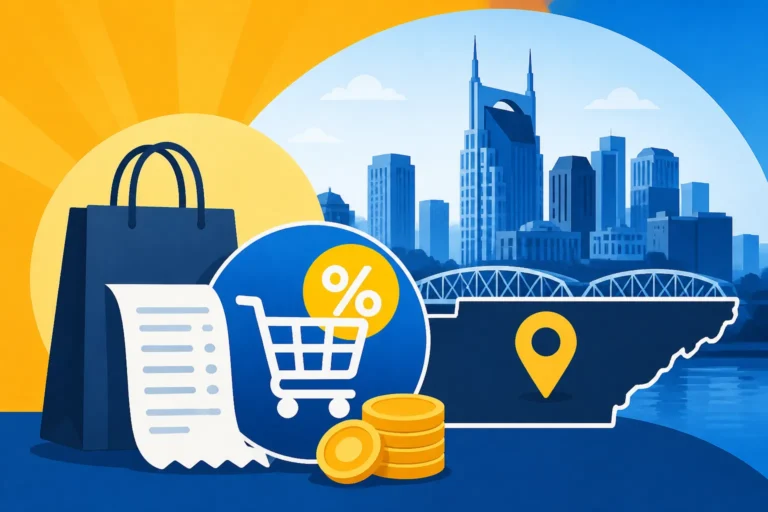
Trying to figure out the exact sales tax rate for Nashville, Tennessee, can feel like navigating a maze, especially with multiple layers of taxation at play. For small business owners and even residents making larger purchases, understanding how the state, county, and any potential district taxes stack up is crucial to avoid surprises or, worse, compliance headaches. This guide will meticulously break down the Nashville sales tax rate, explain the components, and provide practical insights to help you calculate and understand the true cost of sales tax in Music City.
Unpacking the Nashville Sales Tax Rate
When we talk about the sales tax rate in Nashville, we're not just discussing a single number. Like many places in the U.S., it's a combination of state and local taxes. In Tennessee, the state government sets a base sales tax rate, and then counties and cities have the option to add their own local sales taxes on top of that. Nashville, being the state capital and a major metropolitan area, definitely participates in adding a local component.
The State Sales Tax Component in Tennessee
First and foremost, every sale of taxable goods and services in Tennessee is subject to the statewide sales tax rate. As of late 2024 and looking into 2026, the Tennessee state sales tax rate stands at a steady 7%. This is a fixed percentage that applies across all 95 counties in the state. So, whether you're buying a guitar in Nashville, a pair of boots in Memphis, or a souvenir in Gatlinburg, that 7% state sales tax is the starting point for your calculation. This uniform state rate provides a foundational base, but it's the local additions that truly make the landscape complex. For a broader overview of how Tennessee's rate compares, you might be interested in our deep dive into the Tennessee Sales Tax Rate (7% + Local).
Davidson County and Metro Nashville's Local Additions
Beyond the state's 7%, Davidson County, which encompasses Nashville, imposes its own local sales tax. The local option sales tax in Davidson County is 2.25%. This rate is adopted by the metropolitan government of Nashville and Davidson County, and it applies throughout the entire county, including all areas considered part of Nashville. This local rate, when combined with the state rate, gives us the effective sales tax rate you'll typically pay on most purchases within Nashville.
It's important to note that Tennessee law caps the total local sales tax rate that any county or municipality can impose at 2.75%. Davidson County's 2.25% falls well within this limit, meaning they have the flexibility to adjust it if local needs change, though it has remained consistent for quite some time. This interplay between state and local rates is a common theme across the country, as explained further in our guide to Combined State + Local Sales Tax Rates Explained.
The Combined Sales Tax Rate for Nashville
So, when you put it all together, the sales tax rate in Nashville, Tennessee, is the sum of the state rate and the Davidson County local rate.
- Tennessee State Sales Tax Rate: 7.00%
- Davidson County Local Sales Tax Rate: 2.25%
- Total Combined Sales Tax Rate for Nashville: 9.25%
This 9.25% rate is what a customer in Nashville would generally expect to pay on a taxable purchase. This rate places Nashville's sales tax among the higher combined rates in the country, especially when compared to states with very low or no sales tax. For context, you might want to review the Highest & Lowest Sales Tax States 2026 to see where Tennessee generally ranks.
Let's look at an example:
| Item Price | State Sales Tax (7.00%) | Local Sales Tax (2.25%) | Total Sales Tax | Final Price |
|---|---|---|---|---|
| $10.00 | $0.70 | $0.23 | $0.93 | $10.93 |
| $50.00 | $3.50 | $1.13 | $4.63 | $54.63 |
| $100.00 | $7.00 | $2.25 | $9.25 | $109.25 |
As you can see, for every $100 you spend on taxable goods in Nashville, $9.25 goes towards sales tax. This breakdown makes it clear why understanding each component is so important for budgeting and business operations.
Why Sales Tax Varies Across Tennessee
It might seem strange that a short drive outside Nashville could mean a different sales tax rate, but that's precisely how Tennessee's sales tax structure is designed. The power granted to local jurisdictions to set their own sales tax rates creates a diverse landscape across the state. This means that while the state's 7% is constant, the total rate fluctuates significantly from one county or city to another.
The Local Option Sales Tax in Action
Tennessee is what's known as an "origin-based" sales tax state for intrastate sales, meaning that for sales made within Tennessee, the sales tax rate is determined by the seller's location. However, for interstate sales (sales shipped into Tennessee from out-of-state), it becomes "destination-based," meaning the rate is determined by the buyer's location. This nuance is critical for businesses to understand when calculating sales tax. The local option sales tax allows each of Tennessee's 95 counties to enact a local sales tax rate, ranging anywhere from 0% (though rare) up to the statutory cap of 2.75%. This is a key reason why you see variations.
For instance, while Nashville (Davidson County) has a 2.25% local rate, a neighboring county might have a lower or higher one, up to that 2.75% cap. This local control empowers county governments to generate revenue for local services, such as schools, public safety, and infrastructure, reflecting the unique needs and priorities of their communities. This localized approach is a common model, but it certainly adds a layer of complexity for businesses operating across county lines.
Impact of County Boundaries on Sales Tax
Consider a business located right on the border of Davidson County and, say, Williamson County to the south (which includes cities like Franklin and Brentwood). If a customer drives from Franklin to Nashville to make a purchase, they'll pay Nashville's combined rate of 9.25%. If a customer drives from Nashville to Franklin, they'll pay Franklin's combined rate. In Williamson County, the local rate is generally 2.25%, making the combined rate there also 9.25%. However, other counties might differ.
For businesses with physical storefronts, the sales tax rate is typically determined by their store's location. For online sellers shipping goods, it gets even more complicated, requiring a robust system to track and apply the correct destination-based rate for out-of-state sales. This is where tools that provide a precise Sales Tax Rate by ZIP Code (and Why ZIP Isn't Enough) become invaluable, as even within a single ZIP code, jurisdictional lines can shift, impacting the exact rate.
For example, a business in Memphis (Shelby County) would charge customers the combined state and local rate for Shelby County, which is different from Nashville's. This patchwork of local rates is why accurately determining sales tax is never a "one-size-fits-all" scenario in Tennessee. It truly underscores the importance of understanding the specific tax landscape of each location where you conduct business.
Navigating Taxable Goods and Services in Nashville
Beyond the rate itself, knowing what items and services are subject to sales tax is equally critical. Tennessee, like most states, has specific rules about what is considered taxable, and these rules can have significant implications for both consumers and businesses in Nashville. It's not always as straightforward as "everything tangible is taxed."
Standard Taxable Items and Services
Generally, in Tennessee, the sale of most tangible personal property is subject to the full combined sales tax rate (9.25% in Nashville). This includes items like clothing, electronics, furniture, books, and most other physical goods you'd buy in a store or online. When it comes to services, Tennessee is a bit more expansive than some other states in what it taxes. Many services that primarily involve the transfer of tangible personal property, or are tied to the sale of tangible goods, are taxable. For example, repair services for taxable items, certain types of installation, and even some digital products are subject to sales tax.
For businesses, this means carefully categorizing every product or service they offer. A small boutique in The Gulch selling handmade jewelry will collect the 9.25% on each piece. A tech company selling physical software licenses would also apply this rate. Understanding these classifications is crucial for accurate collection and remittance. Our guide on Is Services Taxable? What's Taxable by State provides more comprehensive information on the nuances of taxing services across different states.
Special Rules for Groceries, Prepared Food, and Digital Goods
Tennessee has specific rules for certain categories that deviate from the standard rate. This is where things can get particularly tricky.
- Groceries: Unlike many states that fully exempt groceries, Tennessee does tax food and food ingredients, but at a reduced state sales tax rate. As of 2024, the state portion of sales tax on groceries is 4%, not the usual 7%. However, the local sales tax rate of 2.25% (in Davidson County) still applies to groceries. So, the combined sales tax rate on groceries in Nashville is 4% (state) + 2.25% (local) = 6.25%. This reduced rate is intended to ease the burden on consumers for essential items. A trip to a Kroger or Publix in Nashville will reflect this lower rate on your cart of apples and bread, but not on your paper towels or cleaning supplies. You can learn more about these complexities in our article on Sales Tax on Groceries & Food by State.
- Prepared Food: This is where the distinction becomes important. While raw groceries enjoy a reduced state rate, "prepared food" sold for immediate consumption (think restaurant meals, food from a deli counter that's ready to eat, or even a hot coffee from a cafe) is subject to the full combined sales tax rate of 9.25%. So, your hot chicken from Hattie B's or a coffee from Frothy Monkey will incur the full 9.25% sales tax.
- Digital Goods and Software: Tennessee generally considers digital goods, such as downloaded software, e-books, music, and streaming services, to be taxable. This also extends to certain software-as-a-service (SaaS) products. The interpretation can vary, so it's always best for businesses dealing in digital products to verify their specific offerings with the Tennessee Department of Revenue.
| Item Type | State Rate | Local Rate (Davidson Co.) | Combined Rate (Nashville) |
|---|---|---|---|
| General Tangible Goods | 7.00% | 2.25% | 9.25% |
| Prepared Food | 7.00% | 2.25% | 9.25% |
| Groceries | 4.00% | 2.25% | 6.25% |
| Digital Goods/Software | 7.00% | 2.25% | 9.25% |
This table clearly illustrates the different rates you might encounter within Nashville, making it evident that precise tax calculation isn't just about knowing the general rate but also about categorizing the items correctly.
Practical Steps for Sales Tax Compliance in Nashville
For businesses, especially those new to the Nashville market or online sellers reaching customers in Tennessee, understanding the sales tax rate is just the first step. The real challenge lies in consistent and accurate compliance. This involves everything from determining nexus to calculating, collecting, and remitting the correct amounts.
Determining Sales Tax Nexus in Tennessee
Before you even worry about rates, you need to determine if you have a legal obligation to collect sales tax in Tennessee in the first place. This obligation is called "nexus." Traditionally, nexus was created by a physical presence, such as having a store, office, warehouse, or employees in the state. However, thanks to the South Dakota v. Wayfair Supreme Court decision, states can now also enforce "economic nexus" for remote sellers.
In Tennessee, the economic nexus threshold is met if a remote seller has over $100,000 in gross sales of tangible personal property or services into the state during the current or preceding calendar year. Once you cross this threshold, you establish economic nexus and are required to register with the Tennessee Department of Revenue and begin collecting sales tax. For a thorough understanding of this, take a look at our Economic Nexus by State 2026: Thresholds Guide. Remember, if you use a marketplace facilitator like Amazon or Etsy, they often handle the collection and remittance on your behalf, but it's still crucial to understand your own obligations, especially for sales made on your own website.
Accurate Sales Tax Calculation and Collection
Once you've established nexus, the next crucial step is calculating and collecting the right amount of sales tax. As we've seen, this isn't just one static rate. You have to consider:
- Location: The customer's exact location (for destination-based sales into TN) or your business's location (for origin-based sales within TN). While Nashville's 9.25% is common, rates outside Davidson County will differ.
- Product/Service Type: Whether the item is a standard taxable good, prepared food, groceries, or a digital product, as each can have a different effective rate.
- Exemptions: Whether the customer provides a valid exemption certificate (e.g., for resale, or if they're a tax-exempt organization).
Manually tracking these variables for every single transaction, especially if you have a high volume of sales or sell a variety of products, can be incredibly time-consuming and prone to error. This is where modern sales tax software solutions truly shine. Companies like Avalara specialize in automating these complex calculations, integrating directly with your e-commerce platform or point-of-sale system. Such tools can automatically determine the correct sales tax rate based on the shipping address and product type, providing a much-needed layer of accuracy and peace of mind.
Remitting and Filing Sales Tax Returns
Collecting sales tax is only half the battle; the other half is remitting it to the state. In Tennessee, businesses must file sales tax returns periodically, typically monthly, quarterly, or annually, depending on their sales volume. The Tennessee Department of Revenue outlines specific due dates for these filings. Missing these deadlines can result in penalties and interest, which can quickly add up.
Even if you had no sales tax to report for a given period, you are often still required to file a "zero return." This signals to the state that you're aware of your obligations and haven't simply forgotten to file. Staying organized with your sales data and knowing your filing frequency and due dates is paramount. Many businesses find that sales tax automation platforms can also help streamline the filing process, either by preparing ready-to-file reports or by directly remitting funds on their behalf. This ensures that the sales tax you collect in Nashville and across Tennessee makes its way to the state treasury accurately and on time, helping you stay compliant without constant manual effort. Our detailed guide on How to File a Sales Tax Return: Step by Step offers a general overview that can be adapted to Tennessee's specific requirements.
Disclaimer
The information provided in this article is for general informational purposes only and does not constitute tax, legal, or accounting advice. Sales tax laws are complex and subject to change. Always consult with a qualified tax professional or the Tennessee Department of Revenue for advice tailored to your specific situation.