Louisiana Sales Tax Rate 2026
The Bayou State is famous for its incredible food and vibrant culture, but if you are a business owner or a frequent shopper, the Louisiana sales tax system can feel more like a dense swamp than a celebration. Navigating the overlapping jurisdictions and varying local rates is a common frustration for many. This guide breaks down the Louisiana Sales Tax Rate 2026, helping you understand exactly what you owe, how local parishes add their own layers, and how to stay compliant without losing your mind.
Understanding the Louisiana Sales Tax Landscape
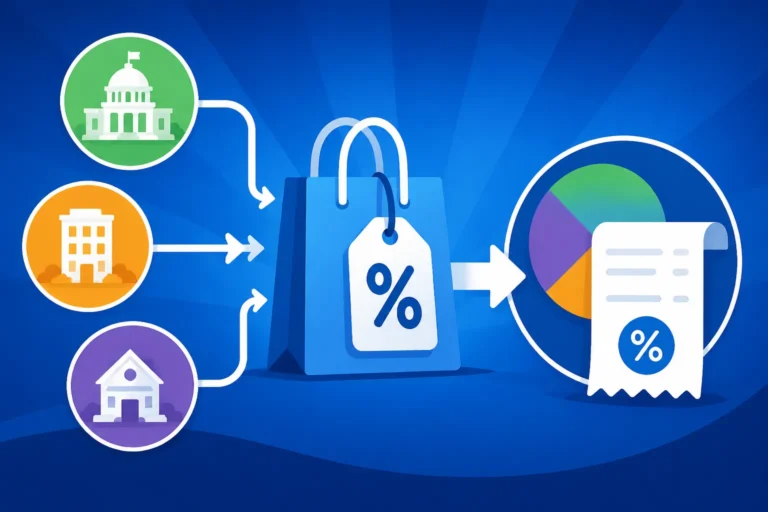
When you look at your receipt in Louisiana, the total tax you pay is rarely just one flat number. Instead, it is a combination of the state-level tax and a variety of local-level taxes. This "layered" approach is what makes Louisiana one of the most complex states in the country for tax compliance. For 2026, the base state sales tax rate remains at 4.45%, but that is only the beginning of the story.
The state rate was solidified several years ago to provide a stable baseline for the state's budget. However, because Louisiana grants significant power to its parishes and municipalities, the actual rate you pay at the register is often double that state base. It is not uncommon to see a Louisiana Sales Tax Rate (Highest Combined 10.11%) in certain areas where city, parish, and special district taxes all converge.
To make matters more interesting, Louisiana is a "Home Rule" state. This means that local jurisdictions have a high degree of autonomy in how they set their rates and, more importantly, how they collect them. While most states have a single point of filing through a state department of revenue, Louisiana has historically required businesses to deal with individual parishes. This Louisiana Parish Sales Tax Complexity is a major hurdle for growing businesses that sell across parish lines. If you are selling a product in Baton Rouge and shipping it to Shreveport, you are dealing with two entirely different sets of local rules and potential tax rates.
The Breakdown of the 4.45% State Rate
The 4.45% state rate is applied to most retail sales of tangible personal property. It also applies to certain services, though Louisiana is more selective about service taxation than some of its neighbors. In 2026, there is ongoing discussion in the state legislature regarding "tax swaps"—the idea of lowering the state sales tax in exchange for removing certain exemptions or adjusting income tax. However, as of now, the 4.45% remains the anchor.
When you are calculating your costs, you have to remember that this 4.45% goes directly to the Louisiana Department of Revenue (LDR). But if you’re a business owner, you can’t just send a single check to the LDR and call it a day. You also have to account for the parish collectors. This is where tools like Avalara can become life-savers, as they help automate the calculation of these overlapping rates based on the exact geolocation of the sale. Without automation, the margin for error is incredibly high.
Why the Combined Rate Often Exceeds 9%
If you’ve ever wondered why your $100 purchase ends up costing nearly $110, it’s because of the combined rate. In addition to the 4.45% state tax, you might be paying a 4% parish tax, a 1% city tax, and perhaps a 0.5% tax for a local law enforcement district or a school board.
Let's look at a real-world example. If you are shopping in New Orleans, you are dealing with the Orleans Parish Sales Tax Rate, which is notoriously high due to the city's reliance on tourism and the need to fund expansive municipal services. In many parts of the city, the combined rate sits at 9.45%. If you cross the line into a neighboring parish, that number might drop to 8.45% or spike even higher depending on whether you are within a specific "Economic Development District." These districts are small, localized areas where an extra penny of tax is added specifically to fund a shopping center's infrastructure or a local park.
Navigating the Complexity of Parish-Level Collections
One of the biggest headaches for anyone doing business in Louisiana is the decentralized nature of its tax administration. While the state has made strides toward modernization, many parishes still maintain their own independent collection offices. This means that a business with a physical presence in five different parishes might have to file five different local returns in addition to one state return.
For a small business owner, this is a logistical nightmare. You aren't just looking up the New Orleans Sales Tax Rate; you are also tracking the specific filing deadlines and forms for the Bureau of Revenue in New Orleans, the Sheriff’s Office in another parish, and perhaps a specialized tax board in a third. Each of these entities might have slightly different interpretations of what is exempt and what is taxable.
The Role of the Remote Sellers Commission
If you are an online seller with no physical location in Louisiana, your life is actually a little bit easier than a local brick-and-mortar shop, thanks to the Louisiana Sales and Use Tax Commission for Remote Sellers. Following the landmark Wayfair decision, Louisiana created this commission to serve as a single point of contact for out-of-state businesses.
If you meet the Economic Nexus Threshold in Louisiana, which is generally $100,000 in sales or 200 separate transactions into the state annually, you must register and collect tax. The Remote Sellers Commission allows you to file one return that covers all parishes, using a uniform local rate. This is a massive relief compared to the parish-by-parish system. However, the moment you have "physical nexus"—like a small warehouse, a sales rep living in Metairie, or even just storing inventory in an Amazon FBA center—you lose the ability to use the remote seller simplified filing and must jump back into the parish-level system.
Centralized vs. Decentralized Filing Challenges
Even with the state’s "Parish E-File" system, which attempts to centralize local reporting, the underlying rules remain fragmented. Some parishes are "Home Rule," meaning they can audit you independently of the state. Imagine the stress of being audited by the Louisiana Department of Revenue, only to finish that process and immediately receive a notice from a parish tax collector who wants to do their own deep dive into your records.
This is where a Sales Tax Registration Guide for Louisiana becomes essential. You need to know exactly which jurisdictions you are "nexus-active" in. If you are manually tracking this, you are likely spending hours every month on spreadsheets. Many veteran lifestyle bloggers and small business consultants recommend using a service like Avalara to handle the backend of these transactions, as it can pinpoint whether a specific address falls inside or outside a city's limits—a distinction that can change the tax rate by several percentage points.
| Jurisdiction | State Rate | Local Rate (Avg) | Total Combined Rate |
|---|---|---|---|
| New Orleans (Orleans Parish) | 4.45% | 5.00% | 9.45% |
| Baton Rouge (E. Baton Rouge) | 4.45% | 5.50% | 9.95% |
| Shreveport (Caddo Parish) | 4.45% | 4.60% | 9.05% |
| Lafayette (Lafayette Parish) | 4.45% | 4.00% | 8.45% |
| Lake Charles (Calcasieu Parish) | 4.45% | 5.75% | 10.20% |
What is Taxable and What is Exempt in 2026?
Louisiana is unique in its approach to exemptions. While some states like those mentioned in States With No Sales Tax (NOMAD Explained) avoid this issue entirely, Louisiana has a complex relationship with what it chooses to tax. One of the most common questions from both consumers and businesses is whether services and digital products are subject to the 4.45% state rate.
In 2026, the taxability of digital goods remains a hot topic. Traditionally, Louisiana focused on "tangible personal property"—things you can touch. But as the economy has shifted, the definition of "tangible" has expanded to include software and digital downloads. If you are selling software, you need to check Is SaaS Taxable in Louisiana? frequently, as the state recently changed its stance to treat Software-as-a-Service as a taxable service in many contexts. This was a major shift that caught many tech startups off guard.
Sales Tax Holidays: A Break for the Bayou
To provide some relief to residents, Louisiana occasionally hosts sales tax holidays. These are periods, often coinciding with back-to-school season or hurricane preparedness, where the state waives its 4.45% portion of the tax on specific items. It is important to note that parishes do not always participate in these holidays. You might get the state tax off your new generator, but you might still owe the 5% parish tax.
Staying updated with the Louisiana Sales Tax Holiday 2026 Guide is the best way to time your major purchases. Typically, items like clothing, school supplies, and emergency equipment are the focus. For businesses, these holidays are a double-edged sword. While they drive traffic, they also require careful configuration of your Point of Sale (POS) system to ensure you aren't accidentally collecting tax that has been waived, or worse, failing to collect parish tax that is still due.
Common Exemptions for Businesses and Individuals
Beyond the holidays, there are permanent exemptions you should be aware of. Food for home consumption (groceries) and prescription drugs are largely exempt from the state sales tax, but—and this is a big "but"—many parishes still tax them. This creates a confusing situation where your grocery bill has a small tax percentage (the local part) instead of the full 9% or 10%.
For businesses, the "sale for resale" exemption is the most important tool in your arsenal. If you are buying inventory to sell to someone else, you shouldn't be paying sales tax to your supplier. You must provide a valid Louisiana resale certificate to the vendor. If you are unsure of the process, you should look into How to Get a Sales Tax Permit in Louisiana to ensure your business is properly registered to issue these certificates.
Practical Strategies for Calculating and Managing Sales Tax
If you are feeling overwhelmed by the numbers, you aren't alone. Managing the Louisiana Sales Tax Rate 2026 requires a mix of good software, a clear understanding of your "nexus," and a bit of patience. The first step for any business is to determine exactly where you are making sales. In a world of mobile apps and delivery services, your "tax home" might be one parish, but your customers might be in twenty others.
You should use a Sales Tax Calculator: How to Calculate Sales Tax specifically designed for multi-rate states. A simple calculator that asks for a single percentage will fail you in Louisiana. You need a tool that looks at the full address—including the ZIP+4 code—because a single ZIP code in Louisiana can span multiple tax jurisdictions with different rates.
The Importance of Address Validation
In many states, a ZIP code is enough to get a "close enough" tax rate. In Louisiana, that approach is dangerous. A house on one side of a street might be in the city limits (paying a city tax), while the house across the street is in an unincorporated part of the parish (avoiding the city tax). If you are a retailer shipping goods, and you charge the wrong rate, you are either overcharging your customer or leaving yourself liable for the under-collected tax during an audit.
Using a service like Avalara integrated into your checkout process ensures that the tax is calculated based on precise longitude and latitude coordinates. This level of accuracy is the only real way to defend yourself in a "Home Rule" state where local collectors are diligent about finding missing revenue.
Staying Updated on Rate Changes
Sales tax rates are not static. Parishes and cities often vote on new tax levies or allow old ones to sunset. By the time we reach mid-2026, several jurisdictions in Louisiana will likely have adjusted their rates by a quarter or half percent. These changes usually happen on the first day of a quarter (January 1, April 1, July 1, or October 1).
If you are managing this manually, you must check the Louisiana Department of Revenue's "Table 1" (the master list of rates) every few months. However, the most successful businesses treat sales tax as an automated background process. By setting up your system correctly at the start of the year, you can focus on growing your brand in the Bayou State while the software handles the 4.45% and the varying parish add-ons.
To ensure you have the full picture of your obligations, always refer back to the Economic Nexus by State 2026: Thresholds Guide to see if your growth has triggered new requirements in other states as well. Louisiana may be your current focus, but in the world of modern commerce, the tax map is always expanding.
Louisiana Sales Tax Disclaimer
This guide is provided for informational and educational purposes only and does not constitute professional tax, legal, or financial advice. Sales tax laws, local parish rates, and state regulations in Louisiana are subject to frequent changes by legislative action or local ordinances. While we strive to provide accurate and up-to-date information, you should always consult with a qualified tax professional or the Louisiana Department of Revenue to confirm your specific tax obligations and ensure compliance with current laws. Use of any tools or software mentioned is at the user's discretion.