Idaho Sales Tax Rate 2026
Moving to a new state or scaling your business into a place like Idaho often brings a sudden realization: sales tax isn't nearly as simple as a single percentage on a receipt. Many people struggle to understand why their "6% state tax" suddenly looks different in a resort town or how to handle the state's unique grocery tax credit. This guide solves those frustrations by breaking down exactly how the Idaho sales tax system functions.
The Foundation of Idaho State Sales Tax Rate
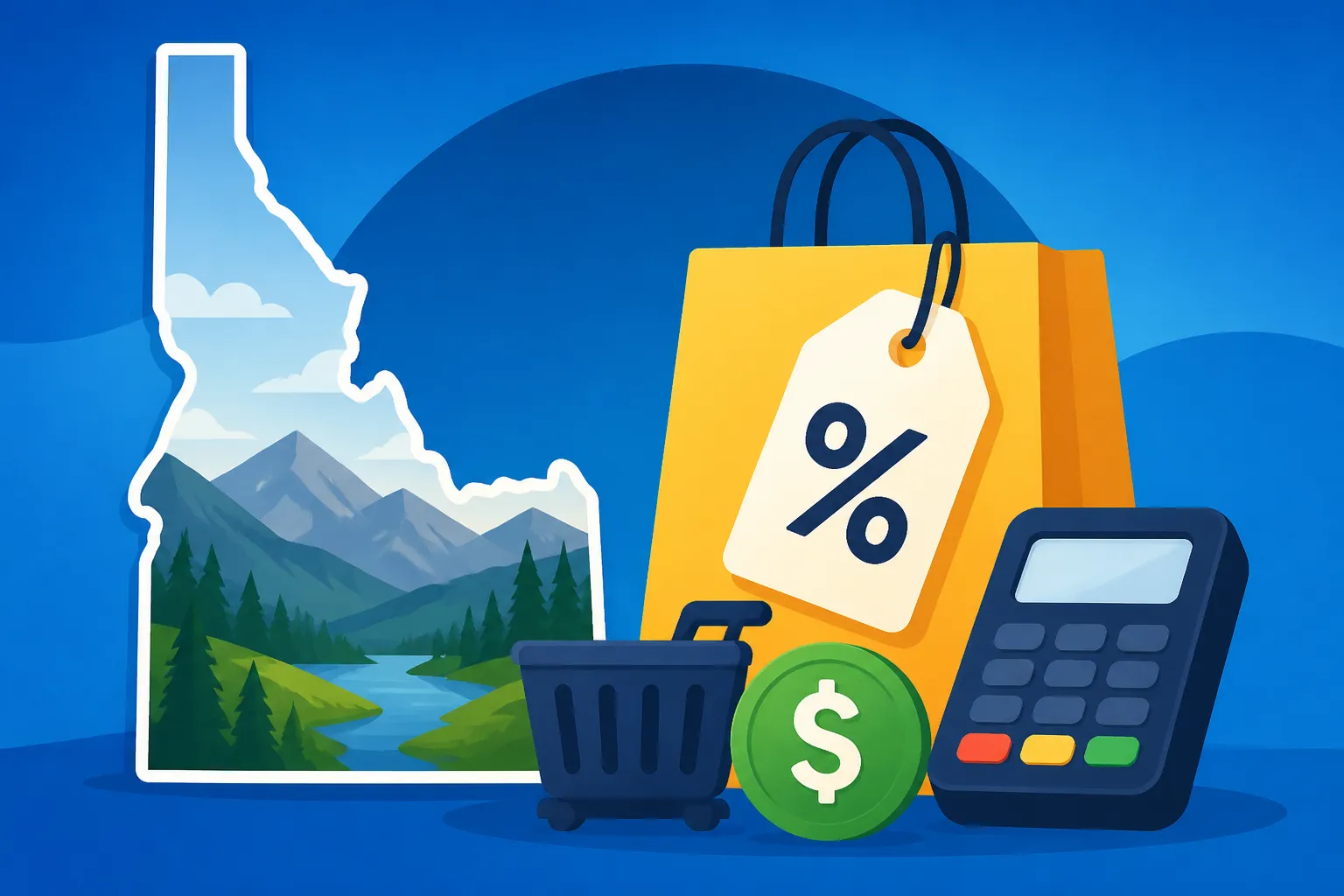
Idaho has long been known for its relatively stable tax environment, and as we look at 2026, the state continues to rely on its 6% base sales tax rate. Unlike some neighboring states that frequently tweak their base rates to balance the budget, Idaho has kept this number consistent for years. If you are buying a standard piece of furniture in a typical town like Meridian or Nampa, you are almost certainly going to see that flat 6% added to your total. For most shoppers, this makes the math easy, especially when compared to the headache of calculating Sales Tax Rates by State 2026: All 50 States where rates can fluctuate wildly.
However, "simple" is a relative term in the world of tax compliance. While the state takes its 6% cut, the way that money is collected and what it applies to can vary based on the nature of the transaction. For example, Idaho is a "destination-based" state. This means that if you are a business owner shipping a product from your warehouse in Coeur d'Alene to a customer in Idaho Falls, you must charge the sales tax rate applicable to the delivery address. This "sourcing" rule is a common pain point for new entrepreneurs who assume they should just charge the rate where their office is located.
Another layer of this foundation involves how the state handles "Use Tax." If you buy something from an out-of-state vendor who doesn't collect Idaho sales tax—perhaps a specialized piece of machinery for your garage or a high-end laptop—the state still expects its 6%. In these cases, you are responsible for reporting and paying that amount directly to the Idaho State Tax Commission. Staying on top of these nuances is essential, and you can learn more about the specifics in our guide on Use Tax Rules in Idaho.
Why the 6 Percent Rate Matters for Budgeting
For families and small business owners, a 6% rate is manageable, but it adds up quickly on large-scale purchases. If you are buying a $40,000 truck, that is $2,400 going straight to the state. In Idaho, there are very few "tax-free" loopholes for big-ticket items compared to states with no sales tax. When you are looking at your yearly expenses, it is helpful to use a How to Calculate Sales Tax (Step by Step) approach to ensure you aren't underestimating your true costs.
It is also worth noting that Idaho’s 6% is often lower than the combined rates in states like Washington or California. This makes Idaho an attractive place for certain types of retail business, though the trade-off is often found in how the state taxes everyday essentials like groceries—a topic we will dive into later. For now, just remember that 6% is your starting point for almost everything tangible.
The Stability of the Idaho Tax Code
One of the reasons I appreciate the Idaho tax system as a veteran blogger is the lack of "surprise" legislation. While some states pass mid-year rate hikes that leave businesses scrambling to update their point-of-sale systems, Idaho typically follows a predictable legislative calendar. Most changes are announced well in advance of their effective dates.
If you are a business owner using a platform like Avalara to automate your tax collection, these updates happen behind the scenes. Avalara tracks the minute changes in jurisdictional boundaries so you don't have to spend your Sunday nights reading tax bulletins. This type of automation is becoming a standard for anyone selling across multiple counties, especially given the "resort city" exceptions we are about to discuss.
The Resort City Exception Where Idaho Rates Get Tricky
This is where the "flat 6%" narrative starts to crumble. If you’ve ever spent a weekend in a beautiful mountain town like Sun Valley, McCall, or Sandpoint, you might have noticed the total on your dinner bill was a bit higher than 6%. Idaho law allows certain "resort cities"—specifically small cities that rely heavily on tourism—to implement a local option sales tax. This is a crucial distinction because it is one of the few ways a city in Idaho can exceed the state base rate.
These local option taxes are typically used to fund local infrastructure, emergency services, or "tourist-related" projects. For a visitor, it might only mean an extra 1% to 3% on their bill. But for a business owner, it means you have to know exactly which city limits your store sits in. You can't just set your software to 6% and call it a day. This is a classic example of Why Is Sales Tax Different in Every City? and how local needs can shift the tax burden onto consumers and visitors.
Identifying Resort Cities and Their Rates
Not every city in Idaho qualifies to be a resort city. To qualify, a city must have a population under a certain threshold and prove that its economy is driven by seasonal visitors. Because these cities are often in rural, scenic areas, the tax helps the local government maintain roads and services that are used by thousands of tourists who don't pay local property taxes.
Common resort cities with local taxes include:
- McCall
- Sun Valley
- Ketchum
- Driggs
- Donnelly
- Stanley
In these locations, the combined rate can climb as high as 9% for certain types of sales, like lodging or liquor by the drink. If you are operating a vacation rental or a boutique in these areas, your compliance requirements are much steeper than a shop in downtown Boise. Many retailers find that tools like Avalara are indispensable here because they can pinpoint the exact tax rate based on a GPS coordinate or a validated address, ensuring you never under-collect from a customer.
Local Sales Tax vs. The State Base
It is important to understand that these local taxes are usually administered locally or in cooperation with the state. This means the paperwork can sometimes feel doubled. You aren't just filing one return; you might be filing a specific resort city return alongside your state return. This complexity is why many people ask How Do I Find My Local Sales Tax Rate? before they ever open their doors for business.
The revenue from these taxes is vital for the survival of small Idaho mountain towns. Without them, the permanent residents would bear the entire cost of maintaining hiking trails, snow removal on public roads, and local police forces that see their workload triple during the ski season or the height of summer lake activities.
| City Type | State Rate | Local Option Max | Common Combined Rate |
|---|---|---|---|
| Standard City (e.g., Boise) | 6% | 0% | 6% |
| Resort City (e.g., McCall) | 6% | 1% – 3% | 7% – 9% |
| Audit-Heavy Zones | 6% | Varies | 6% + Local |
Taxability Deep Dive Groceries SaaS and Tangible Property
Perhaps the most frustrating part of the Idaho tax code for residents is the tax on groceries. Unlike many states that exempt food to help lower-income families, Idaho taxes groceries at the full 6% rate. This often leads to "sticker shock" for people moving from places like Oregon or Washington. However, there is a silver lining: the Idaho Grocery Tax Credit.
Instead of exempting the tax at the register, Idaho allows residents to claim a credit on their year-end state income tax return. This credit is designed to offset the sales tax paid on food throughout the year. While this helps at tax time, it doesn't change the fact that you need more cash on hand at the grocery store every week. You can see how this compares to other regions in our guide on Sales Tax on Groceries & Food by State.
SaaS and Digital Goods in Idaho
As the world moves toward digital products, Idaho has had to clarify its stance on Software as a Service (SaaS) and digital downloads. In 2026, the rule remains that if you are "remotely" accessing software that is hosted on a provider's server, it is generally considered a non-taxable service. However, if you download the software onto your local device, it is often treated as "tangible personal property" and becomes taxable.
This distinction is a nightmare for IT companies and digital creators. The "cloud" versus "download" debate determines thousands of dollars in tax liability. If you’re a business buying a subscription for a team of 50 people, you need to know if you’re being charged correctly. For more on this confusing topic, check out Is SaaS Taxable in My State? to see how Idaho stacks up against its neighbors.
Services and Tangible Personal Property
Generally speaking, Idaho does not tax services. If you hire a consultant to help with your business strategy or a lawyer to draft a contract, there is no sales tax applied to their hourly rate. However, there is a massive "unless" involved. If the service is part of the "production or fabrication" of a tangible item, the entire cost becomes taxable.
For example, if you take a piece of wood to a carpenter and ask them to build you a custom table, the labor they charge to build that table is taxable because it results in a tangible product. If you hire a gardener to mow your lawn, that is a pure service and is not taxable. This line between "service" and "tangible property" is a frequent focal point for state audits.
Managing Compliance Permits Filings and Nexus
If you are selling into Idaho from another state, you cannot ignore "Economic Nexus." Ever since the Supreme Court's Wayfair decision, Idaho has required out-of-state sellers to collect sales tax if they exceed $100,000 in total sales into the state during a calendar year. This is a relatively low bar for a growing e-commerce business. Once you hit that $100k mark, you are legally required to register for an Idaho seller's permit.
Navigating this threshold is where business owners often get overwhelmed. Keeping track of your sales volume in Idaho versus 49 other states is a full-time job. This is where a contextual brand like Avalara shines. By integrating directly with your Shopify, BigCommerce, or Amazon store, Avalara monitors your sales in real-time and alerts you when you are approaching a nexus threshold. This proactive approach prevents the terrifying experience of realizing you owed the state of Idaho money three years after the fact. You can read more about these rules in our Economic Nexus by State 2026: Thresholds Guide.
Registering for an Idaho Seller's Permit
The process of getting registered is fairly straightforward, but you must have your ducks in a row. You will need your EIN, your business structure details, and an estimate of your monthly sales. The state will then assign you a filing frequency—usually monthly, quarterly, or annually—based on your expected volume.
If you are a new business, you can follow our How to Get a Sales Tax Permit by State guide to see the general process, but for the specific Idaho portal, you'll be working with the "Taxpayer Access Point" (TAP). For a more localized walkthrough, see our Sales Tax Registration Guide for Idaho. Remember, once you have that permit, you must file a return even if you had zero sales during that period. Failing to file a "zero return" can still result in late fees and penalties.
Filing Deadlines and Staying Current
In 2026, Idaho maintains a strict deadline policy. Most returns are due by the 20th of the month following the reporting period. If you are a monthly filer, your January sales must be reported and paid by February 20th. Missing this deadline by even a day can trigger a 5% penalty, which scales the longer you wait.
To avoid these headaches, many of my readers set up automated filing. Between managing inventory and customer service, the last thing you want to worry about is a 20th-of-the-month deadline. Whether you use a manual calendar or a service like Avalara to handle the filing for you, consistency is key. For more details on the specific dates you need to circle on your calendar, check out Idaho Sales Tax Filing & Due Dates.
The Importance of Marketplace Facilitator Laws
If you only sell through platforms like Amazon, Etsy, or eBay, your life is significantly easier. Idaho has "Marketplace Facilitator" laws, which require these large platforms to collect and remit the sales tax on your behalf. In most cases, you don't even need a permit if 100% of your sales go through these facilitators. However, the moment you sell a single item through your own website or at a local craft fair, you are back in the world of independent compliance. You can learn more about this in our Sales Tax for Online Sellers: Complete Guide.
Disclaimer
This guide is intended for informational purposes only and does not constitute professional tax, legal, or financial advice. Sales tax laws and local rates are subject to frequent change by state and local authorities. While we strive to provide the most current information for 2026, you should always consult with a qualified tax professional or the Idaho State Tax Commission before making business decisions or filing tax returns. Use of third-party software like Avalara is at the discretion of the user, and we recommend verifying all automated settings against official state guidelines.