Texas Sales Tax Holiday 2026 Guide
Navigating the ever-changing landscape of sales tax can feel like a full-time job for shoppers and businesses alike. Trying to keep track of state-specific holidays and what truly qualifies can be confusing, often leading to missed savings or accidental overcharges. This comprehensive guide will walk you through everything you need to know about the Texas Sales Tax Holiday for 2026, ensuring you're fully prepared to maximize your savings.
Navigating the Texas Sales Tax Holiday 2026: Dates and Basics
Ah, Texas! Known for its big skies, friendly faces, and a sales tax holiday that offers a much-needed reprieve for families preparing for the school year. It's one of those annual events that everyone looks forward to, a little financial breather before the school bells ring. But understanding the ins and outs is crucial to truly benefit.
When to Mark Your Calendars: The Official Dates
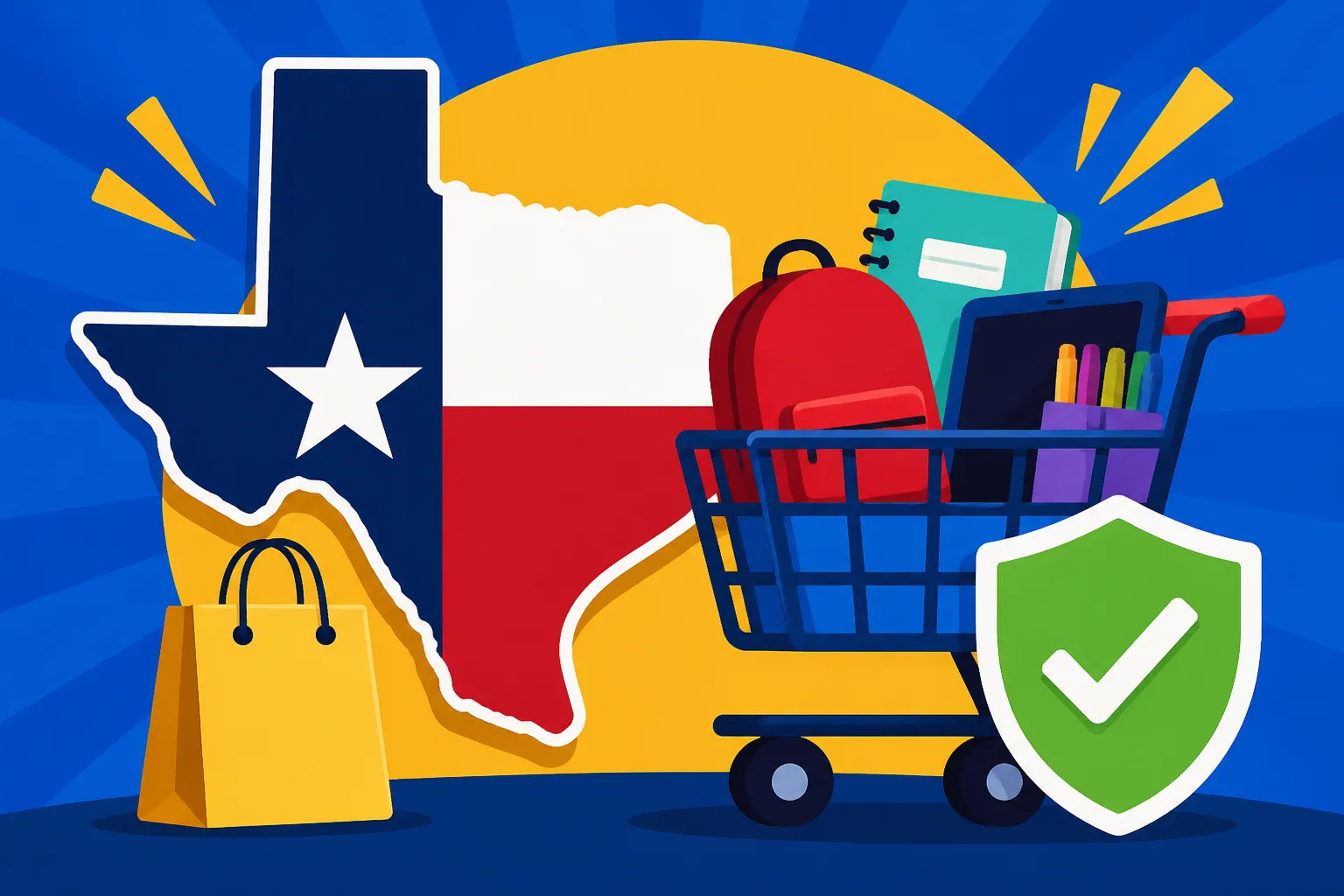
For 2026, the Texas Sales Tax Holiday is set to take place on Friday, August 7th, Saturday, August 8th, and Sunday, August 9th. That's a full weekend to stock up on essentials without having to factor in the sales tax, which, let's be honest, can really add up, especially when you consider the Texas Sales Tax Rate (6.25% + Local 8.25% Max) that applies outside of this special event. This timing is pretty consistent year after year, usually falling on the first full weekend of August. It's strategically placed right before most schools in Texas start their new academic year, making it incredibly convenient for parents and students alike to get everything they need. Imagine trying to outfit multiple kids for school; those savings become substantial!
How the Holiday Works: Understanding the Exemptions
During this three-day period, certain items are exempt from state and local sales taxes. This means that if an item qualifies, you simply pay the sticker price, and that extra percentage that usually goes to the taxman stays in your pocket. It's not just the state's 6.25% sales tax that disappears; any local city, county, or special district sales taxes are also waived for eligible purchases. This is a common feature among Sales Tax Holidays by State 2026: Full Calendar nationwide. For businesses, accurately applying these exemptions can be tricky, especially with various local rates. This is where tools from companies like Avalara can be incredibly helpful for ensuring compliance and avoiding errors during high-volume sales periods.
The key thing to remember is that the exemption applies to the purchase price of the item. So, if you're buying a $90 shirt, you pay $90. If you buy the same shirt on any other day, with an 8.25% combined sales tax, that shirt would cost you $97.43. Over an entire shopping cart of items, those small savings quickly become significant. The Texas Comptroller of Public Accounts does a good job of outlining the rules each year, but it's up to us shoppers to pay attention to the details, especially the price limits, which are super important.
What You Can Buy Tax-Free: Eligible Items and Price Limits
The Texas Sales Tax Holiday isn't a free-for-all; it's specifically designed to help families with back-to-school expenses. This means there are clear guidelines on what items qualify for the exemption. The general rule is that most clothing, footwear, school supplies, and school backpacks priced under $100 are exempt.
Clothing and Footwear: Dressing for Less
This is arguably the biggest draw of the tax holiday. You can purchase most articles of clothing and footwear tax-free, as long as the sales price is less than $100 per item. This isn't a per-transaction limit; it's a per-item limit. So, you could buy five shirts at $99 each, and all five would be tax-free, even though your total transaction is well over $100. This is a common question, and understanding that individual item price limit is key to maximizing your savings.
Think about all the necessities:
- Jeans, shorts, t-shirts, dresses
- Socks, underwear, pajamas
- Shoes, sneakers, sandals, boots (work boots and hiking boots generally qualify too, as long as they meet the price limit)
- Coats, jackets, sweaters
- Infant and children's clothing
However, there are exceptions even within clothing. Items like certain accessories or protective sports equipment don't typically make the cut. We'll delve into those exclusions in the next section. Many states have specific rules on Sales Tax on Clothing by State, and Texas's holiday is a great chance to bypass those for a short window.
School Supplies and Backpacks: Ready for Class
Beyond clothing, school supplies are the other major category for tax-free shopping. The list of eligible school supplies is quite extensive and covers most of what a student would need for the upcoming academic year. Similar to clothing, there's a $100 price limit per item. Backpacks are also specifically included and usually have the same $100 price limit.
Here's a look at common eligible school supplies:
- Binders, notebooks, loose leaf paper
- Pens, pencils, crayons, markers
- Erasers, rulers, compasses, protractors
- Scissors, glue sticks, cellophane tape
- Highlighters, colored pencils
- Folders, composition books
- School bags, backpacks, lunch boxes
The intent is to cover essential items for learning. It's a lifesaver for parents with multiple children heading back to school, especially when you consider how many pens, pencils, and notebooks can go through a single school year. Businesses using advanced sales tax solutions like Avalara find it easier to automatically apply these specific exemptions at checkout, reducing staff training burdens and errors.
Other Exempt Items: Beyond the Basics
While clothing, footwear, and school supplies are the primary categories, there are a few other specific items that sometimes get overlooked but also qualify for the exemption. These include items like certain school uniforms, specific types of work clothes, and even certain protective apparel like disposable gloves or lab coats.
It's important to remember the intent behind the holiday. The goal is to provide relief for back-to-school preparations. So, while a plain t-shirt might be tax-free, a fancy designer handbag, even if under $100, would not qualify because its primary purpose isn't school-related clothing. This nuance is part of What Qualifies for Tax-Free Weekend?, and it's always good to consult the official Texas Comptroller website for the definitive list if you have a niche item in mind.
Here's a handy table summarizing the main categories and their limits:
| Category | Price Limit (Per Item) | Common Examples | Exclusions (General) |
|---|---|---|---|
| Clothing & Footwear | Under $100 | Jeans, shirts, dresses, shoes, boots, socks, underwear | Accessories (jewelry, handbags, watches), protective gear (skate helmets), rented clothing |
| School Supplies | Under $100 | Pens, pencils, notebooks, binders, paper, crayons, glue | Art supplies (if not for school curriculum), sporting goods, computers, software |
| School Backpacks | Under $100 | Backpacks, messenger bags, lunch boxes (when sold with a qualifying backpack) | Briefcases, luggage, purses, duffel bags, athletic bags |
Items Not Covered: What to Leave Off Your Tax-Free List
Just as important as knowing what is included is understanding what isn't. Many shoppers get excited about the tax holiday and assume everything is fair game, leading to disappointment at the register. The Texas Sales Tax Holiday is very specific about its exemptions, and venturing outside those limits means you'll still pay the standard sales tax.
Accessories, Jewelry, and Specific Sports Gear
The $100 per item rule is usually what trips people up here. While a belt might be under $100, it's typically considered an accessory, not a core piece of clothing, and thus remains taxable. This often extends to items like:
- Jewelry and watches
- Handbags, briefcases, luggage
- Wallets and fanny packs
- Hair accessories (barrettes, hair ties)
- Gloves (except those used for protection during work, like industrial gloves)
- Face masks (unless specifically designated as clothing or a medical supply during the holiday, which is rare)
Similarly, protective sports equipment, even if worn, is generally excluded. So, while you can get tax-free sneakers, you won't get a tax break on:
- Baseball helmets, football pads, shin guards
- Skates or ski boots
- Specialized gloves for sports (like batting gloves or goalie gloves)
The distinction lies in the item's primary function. Is it primarily for general wear and comfort, or does it serve a specific protective or accessory role?
Computers and Electronics: Usually Not Included
This is a common misconception, especially with the "back-to-school" theme. While many students need laptops and tablets, these items are not exempt during the Texas Sales Tax Holiday. The exemption is very narrowly defined for clothing, footwear, and school supplies. So, don't plan on saving sales tax on that new MacBook, Chromebook, or even a simple calculator that costs more than $100. This differs from some other states, like the Florida Back-to-School Tax Holiday (All August), which sometimes includes certain electronics, so it's always critical to check state-specific rules.
This also applies to other electronic gadgets that students might use, such as:
- Cell phones, smartphones
- Video game consoles and games
- Printers, external hard drives
- Software (even educational software)
The technology exemption can be a complex area, and it's a good reminder that sales tax laws vary significantly. For businesses, keeping track of these distinctions across different product categories and states is a major undertaking, which is why many turn to automated solutions for sales tax compliance.
Textbooks, Software, and Other Educational Materials
While the holiday covers basic school supplies, it doesn't extend to textbooks, whether physical or digital. These items are generally taxable. Similarly, specialized educational software, even if required for a specific course, will still incur sales tax. This is another area where the strict interpretation of "school supplies" comes into play. Books of any kind, whether for school or leisure, are typically taxable. This means:
- College textbooks
- E-books or digital subscriptions for educational content
- Workbooks that exceed the general "school supply" definition
- Online courses or digital learning platforms
This might seem counterintuitive since they are clearly for educational purposes, but the Texas Sales Tax Holiday has specific criteria that these items usually don't meet. If you're looking for ways to reduce costs on these items, focus on used books or digital rentals rather than waiting for the sales tax holiday.
Maximizing Your Savings: Tips for a Smooth Tax-Free Shopping Spree
The Texas Sales Tax Holiday is a fantastic opportunity to save money, but with a little planning, you can make those savings go even further. It's not just about knowing what's exempt; it's about smart shopping strategies.
Online Shopping and Layaway Plans
Good news for those who prefer to shop from the comfort of their home: Does Online Shopping Count for Tax-Free Weekend? Yes, it absolutely does! Online purchases of qualifying items are exempt from sales tax during the holiday period. The key is that the order must be placed and paid for during the designated holiday window (August 7-9, 2026). This means you can browse, click, and purchase without leaving your couch, and the tax savings will be applied at checkout. Remember, shipping and handling charges may or may not be taxable, depending on how they're handled by the retailer and state law, so keep an eye on that.
What about layaway plans? Texas is one of the states that explicitly states how layaway sales should be handled. If you place an eligible item on layaway during the tax-free period, it will qualify for the exemption, even if you make the final payment after the holiday. Conversely, if you placed an item on layaway before the holiday and make the final payment during the holiday, it also qualifies. This flexibility is great for shoppers who like to plan ahead.
Combining Coupons and Discounts
The sales tax exemption is applied to the final sales price after any discounts or coupons have been applied. This is where strategic shopping really pays off. Imagine finding a pair of jeans originally priced at $120. If you have a 25% off coupon, that brings the price down to $90. Since $90 is under the $100 limit, those jeans would then be completely tax-free! If you only had a 10% off coupon, the price would be $108, which is over the limit, so sales tax would still apply. This highlights the importance of keeping the final discounted price in mind when determining eligibility under the Tax-Free Weekend Clothing Price Limits ($100).
So, definitely gather those coupons and watch for store sales running concurrently with the tax holiday. Many retailers actively promote sales during this weekend, knowing that shoppers are eager to combine savings. Checking store flyers and websites a week or two before the holiday can give you a significant advantage.
Returns and Exchanges After the Holiday
Life happens, and sometimes an item just doesn't work out. What happens if you need to return or exchange a tax-exempt item after the holiday has ended? Generally, if you return an item that was purchased tax-free, you'll receive a full refund, including the amount of sales tax you would have paid, because it was an exempt purchase.
For exchanges, it gets a little more nuanced:
- Exchanging for the exact same item in a different size or color: Usually, no sales tax is charged, assuming the original item qualified.
- Exchanging for a different, qualifying item (under $100): If the new item also meets the holiday criteria and price limit, it should remain tax-free.
- Exchanging for a non-qualifying item or an item over $100: In this scenario, sales tax would likely be applied to the new item, as it no longer fits the holiday's exemption rules.
It's always a good idea to keep your receipts and review the store's return and exchange policy beforehand, especially for items bought during a special tax event. For businesses, managing these post-holiday transactions correctly requires robust sales tax systems to ensure proper handling, another area where a solution like Avalara can streamline operations. This attention to detail is part of the larger picture of How to Calculate Sales Tax (Step by Step) accurately.
Remember, the goal of this holiday is to ease the financial burden of preparing for school. By understanding the rules and planning your purchases, you can make the most of this annual opportunity. It's truly amazing How Much Can You Save on Tax-Free Weekend? when you're well-informed!
Disclaimer
Please remember that this guide provides general information about the Texas Sales Tax Holiday for 2026. Sales tax laws are complex and can change. For the most accurate and up-to-date information, always consult the official website of the Texas Comptroller of Public Accounts or a qualified tax professional.