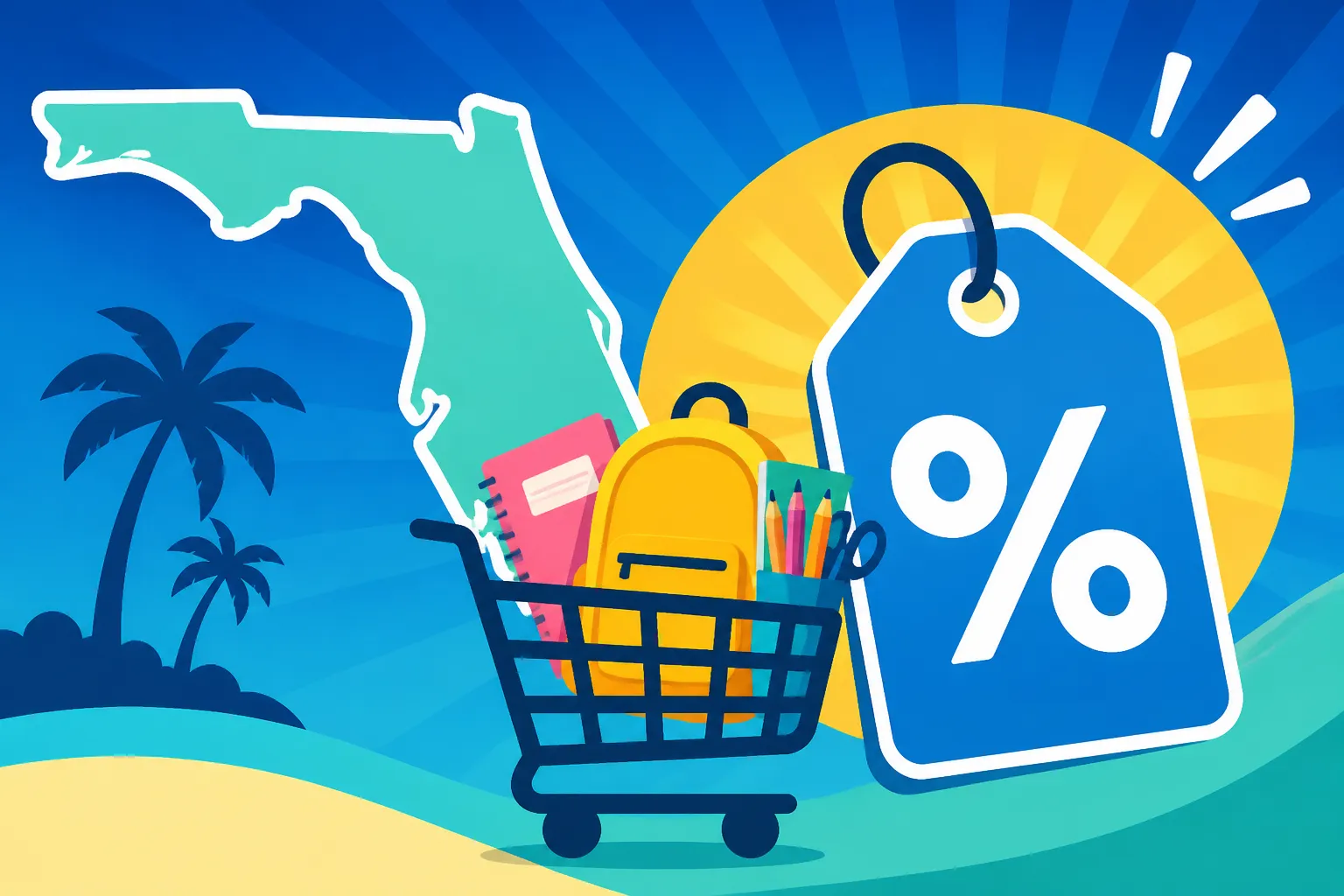
Florida Back-to-School Tax Holiday (All August)
The annual back-to-school shopping spree can feel like a marathon for parents, teachers, and even students, often leaving wallets significantly lighter. The constant juggle of finding the right supplies, durable clothes, and necessary tech, all while trying to stick to a budget, is a real challenge. Thankfully, states like Florida step in to offer a much-needed break, and this guide is here to walk you through everything you need to know about the Florida Back-to-School Tax Holiday, ensuring you make the most of those precious savings.
What is the Florida Back-to-School Tax Holiday?
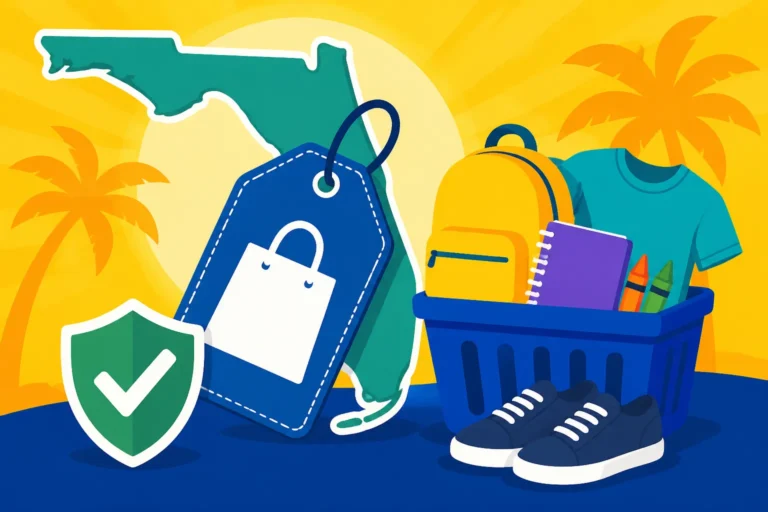
The Florida Back-to-School Sales Tax Holiday is a special period designated by the state legislature where certain items typically purchased for the upcoming school year are exempt from Florida's state sales tax, and often local sales taxes too. Think of it as a financial sigh of relief, allowing families and educators to stretch their budgets a little further during what can be one of the most expensive times of the year. This isn't just a small discount; it’s a temporary pause on taxation for essential items, directly reducing the cost of school preparation.
The Basics of the Tax Exemption
At its core, the tax holiday is about easing the financial burden on residents as they get ready for school. Florida, like many other states, recognizes the significant costs associated with equipping students for success, from elementary school all the way through college. By temporarily suspending sales tax on specific items, the state encourages economic activity while providing tangible savings to consumers. It's a win-win: retailers see an uptick in sales during what might otherwise be a slower period, and shoppers get more bang for their buck. The exemption applies to both brick-and-mortar purchases and qualifying online orders, which is a huge convenience in our digital age.
Historical Context and Evolution
Sales tax holidays aren't a new concept, but their scope and duration have evolved over time. Florida has been a consistent participant in offering these holidays, often with different themes throughout the year, like hurricane preparedness or energy-efficient appliances. The back-to-school holiday, however, is arguably one of the most anticipated. Over the years, lawmakers often fine-tune the eligible item lists and price thresholds based on consumer feedback, economic conditions, and changing educational needs. For instance, in earlier years, computer exemptions might have been less common or had lower price limits. As technology became integral to education, these categories expanded and thresholds adjusted to reflect real-world costs. This dynamic adjustment ensures the holiday remains relevant and impactful for Floridians. For a broader perspective, you can always check out the comprehensive list of Sales Tax Holidays by State 2026: Full Calendar.
Who Benefits from this Tax Holiday?
While the name "Back-to-School" might suggest only students and parents, the ripple effect of this tax holiday is much wider. Many different groups stand to benefit directly and indirectly from these savings, making it a truly community-wide event. From individual households to the local economy, the positive impact is noticeable.
Parents and Students Alike
Undoubtedly, parents are often at the forefront of benefiting from the Florida Back-to-School Tax Holiday. Imagine a family with two or three school-aged children. The cost of backpacks, notebooks, pens, crayons, and a new outfit or two for each child can easily add up to hundreds of dollars. Saving 6% (or more, depending on local county surtaxes like those in Miami-Dade County) on these purchases can mean keeping an extra $20, $30, or even $50 in their pockets. That money can then go towards other necessities, school fees, or even a well-deserved treat after all that shopping. For college students, who often bear their own expenses, these savings can be particularly impactful on pricier items like laptops. It really helps ease the strain of getting everything ready for the academic year.
Educators and Teachers
Let's not forget the unsung heroes of the classroom: teachers. Many dedicated educators often dip into their own pockets to buy supplies for their classrooms, whether it's extra paper, art supplies, or organizational tools to create a better learning environment. The sales tax holiday offers them a chance to stock up on these items without the added tax burden. While some school districts provide stipends, these funds often don't cover everything a teacher needs or desires for their students. Being able to purchase items tax-free means their personal contribution goes further, directly benefiting the students they serve. It’s a small but meaningful way to support those who dedicate their lives to education.
Small Businesses and Retailers
Beyond the direct consumer savings, the tax holiday also provides a significant boost to local businesses. During the tax-free period, stores typically see increased foot traffic and higher sales volumes. This surge in activity can be particularly beneficial for smaller, independently owned shops that might otherwise struggle to compete with larger retailers. Even big box stores like Target, Walmart, and Staples experience a noticeable uptick, but the overall economic activity helps the entire retail ecosystem. The increased sales translate to more hours for employees, potentially new hires, and ultimately, more tax revenue for the state from corporate profits and other taxes, even if sales tax isn't collected on individual transactions. It's a prime example of how a temporary tax break can stimulate economic growth and consumer spending. For businesses trying to keep track of these complex multi-state sales tax rules, especially if they sell online, solutions like Avalara can be incredibly helpful in ensuring compliance.
What Items Are Covered by the Exemption?
This is where the rubber meets the road: knowing exactly what you can buy tax-free. The Florida Department of Revenue publishes a detailed list each year, and it’s crucial to pay close attention, as the categories and price limits can sometimes change. Generally, the holiday focuses on three main categories: school supplies, clothing and footwear, and certain technology items.
School Supplies
When we talk about school supplies, Florida’s list is pretty extensive, covering the vast majority of what a student might need for their classes. This includes the usual suspects like pens, pencils, rulers, erasers, notebooks, paper, folders, and binders. But it often goes beyond that to include items like crayons, markers, highlighters, glue, scissors, calculators, construction paper, and even lunch boxes. It’s important to note the specifics: typically, items used primarily for school qualify. So, while a fancy art set might seem like a school supply, if it's considered more of a recreational item above a certain price point, it might not be included. Always check the official list, but generally, anything that fits neatly into a backpack for daily classroom use is a safe bet.
Clothing and Footwear
This is often one of the biggest categories for savings. The tax holiday typically covers most articles of clothing and footwear up to a certain price per item. This can include shirts, pants, shorts, dresses, socks, underwear, and shoes. It's not just basic school uniforms; casual wear for everyday activities often qualifies too. However, there are usually exclusions. Accessories like jewelry, watches, handbags (unless they're school backpacks), and sports equipment are generally not included. Also, certain items of clothing that are considered "costumes" or very specialized athletic gear might be excluded if they aren't part of general apparel. For example, if you're buying a pair of sneakers for daily wear, it's likely covered, but specialized cleats for a sport might not be. The price limit is key here, often set at $60 or $70 per item, which means you can pick up several new outfits without paying tax. Many states have specific rules on Sales Tax on Clothing by State, but Florida's holiday provides a broad temporary exemption.
Computers and Related Accessories
In today's digital learning environment, computers and related accessories have become indispensable. Florida's tax holiday often includes a significant exemption for these items, though usually with a higher price cap. For example, in past years, computers and certain accessories might be exempt up to $1,500. This is huge for families needing to purchase a laptop, desktop, or tablet for schoolwork. Beyond the main device, qualifying accessories typically include things like monitors, keyboards, mice, non-recreational headphones, and sometimes printers. Software is a trickier area, as Is Software Taxable? (Canned vs Custom) often depends on state definitions; however, educational software bundled with a computer might be included. Gaming systems, smartphones, and smartwatches are generally excluded, as they are not considered primarily for educational purposes in the same vein. This particular exemption acknowledges the necessity of technology for homework, online classes, and research.
Understanding the Price Limits
One of the most crucial aspects of the Florida Back-to-School Tax Holiday is understanding the price limits for eligible items. It’s not a free-for-all; each category typically has a maximum price per item to qualify for the exemption. Ignoring these limits is a common mistake that can lead to disappointment at the register.
Why Price Limits Exist
Price limits are put in place for a few key reasons. First, they help ensure that the tax holiday primarily benefits items that are genuinely considered "back-to-school essentials" and not luxury goods. It keeps the spirit of the exemption focused on affordability for the average family. Second, they manage the fiscal impact on the state's budget. While beneficial, sales tax holidays do reduce state revenue, and lawmakers need to balance consumer savings with the services that sales tax helps fund. Lastly, price limits simplify administration for retailers. They provide clear guidelines on what can and cannot be sold tax-free, minimizing confusion. Imagine if a $5,000 designer handbag was suddenly tax-free during a back-to-school holiday – it just wouldn't align with the program's intent!
Common Traps and Misconceptions
The most common trap shoppers fall into is assuming everything related to "school" is tax-free, or that items over the price limit are simply taxed on the difference. Neither is true. If an item exceeds the specified price limit, the entire purchase price of that item is subject to sales tax, not just the amount above the threshold. For example, if the clothing limit is $60 per item and you buy a shirt for $65, you'll pay sales tax on the full $65. This is a critical detail to remember. Another misconception is that items like sporting goods or art supplies automatically qualify. Unless explicitly listed and within their own potential price limits, these items are often still taxable. For retailers, having robust sales tax compliance software, such as that offered by Avalara, can help prevent miscalculations and ensure accurate taxation during these complex periods.
Example Scenarios for Clarification
Let's walk through a few examples to make this crystal clear:
- Scenario 1: Clothing: You buy two shirts, one for $45 and one for $55. If the clothing limit is $60 per item, both shirts are tax-free because each individual item is under the limit. If you then grab a third shirt for $70, that shirt alone would be fully taxable.
- Scenario 2: School Supplies: You purchase a backpack for $50 and a set of pens for $10. If the school supply limit is $50 per item (which is common for non-clothing items), the pens are tax-free. The backpack, however, would be fully taxable if its price ($50) equals or exceeds the threshold and the rule is "under $50" instead of "up to $50". Always check the exact wording for the year.
- Scenario 3: Computers: You buy a laptop for $1,200. If the computer limit is $1,500, your laptop is tax-free. If you decide to splurge on a $1,600 model, the entire $1,600 would be taxable.
- Scenario 4: Bundled Items: Some retailers might offer "back-to-school bundles," like a laptop with a free mouse and software. If the total value of the bundle stays within the computer price limit, and all components are eligible, it can be tax-free. However, if the bundle includes non-qualifying items (like a gaming console), or the value exceeds the computer limit, complexities arise. It's often safer to purchase qualifying items separately if there's any doubt.
Here's a quick summary table of common Florida Back-to-School Tax Holiday categories and typical price limits (always verify the official Department of Revenue release for the specific year):
| Category | Typical Item Examples | Common Price Limit (per item) | Notes |
|---|---|---|---|
| Clothing & Footwear | Shirts, pants, shorts, dresses, shoes, socks, underwear | $60 – $70 | Excludes accessories, jewelry, sports equipment |
| School Supplies | Pens, pencils, paper, notebooks, crayons, glue, calculators | $15 – $50 | Excludes art supplies for recreational use |
| Computers | Laptops, desktops, tablets | $750 – $1,500 | Excludes gaming consoles, smartphones |
| Computer Acc. | Keyboards, mice, monitors, non-gaming headphones | $750 – $1,500 (if bundled) | Often applies when sold with a qualifying computer |
How to Maximize Your Savings During the Tax Holiday
Simply knowing about the tax holiday is the first step; strategically planning your shopping trip is how you truly maximize those savings. With a little foresight and effort, you can make the most of this opportunity.
Planning Your Shopping List Ahead of Time
The key to maximizing your savings is preparation. Don't just show up at the store hoping for the best. Start weeks, or even a month, before the holiday. Go through your children's closets and school bags to see what they already have and what genuinely needs replacing. Check school supply lists released by their teachers or district. Create a detailed shopping list categorized by item type (clothing, school supplies, electronics) and note the estimated cost for each. This list will be your roadmap to staying organized and avoiding impulse buys of non-eligible or over-limit items. This early planning also allows you to compare prices across different retailers, so you're not just saving on tax, but also getting the best base price.
Combining Sales and Coupons
The sales tax holiday is a fantastic opportunity, but it's even better when combined with other deals. Retailers know this is a high-traffic period, and many will run their own back-to-school sales concurrently. Look for store-specific discounts, "buy one get one free" offers, or percentage-off coupons. Stacking these promotions with the tax exemption can lead to truly significant savings. For example, if you find a shirt originally priced at $70 marked down to $50, and the tax holiday limit for clothing is $60, that shirt now qualifies for the tax exemption, saving you even more on top of the sale price. Always check the fine print on coupons and sales to ensure they apply to the items you're purchasing and don't negate the tax holiday benefit.
Checking Local Store Policies and Ads
While the tax holiday is a statewide mandate, how individual stores promote and manage it can vary slightly. Some retailers might offer additional incentives, while others might have specific checkout procedures. Always check weekly ads and store websites in the days leading up to and during the holiday. Many stores will prominently feature "tax-free" signage, highlighting qualifying items. It's also a good idea to confirm with store associates if you're unsure about an item's eligibility, especially for less common school supplies or computer accessories. Being informed about store-specific nuances can prevent frustration at checkout and ensure you capture all eligible savings.
Online Shopping and the Tax Holiday
In an age where online shopping is king, it's a huge relief that the Florida Back-to-School Tax Holiday extends its benefits to internet purchases. This means you don't necessarily have to brave crowded stores to get your tax-free essentials.
Eligibility for Online Purchases
Just like with in-store purchases, online orders for qualifying items are eligible for the sales tax exemption. The key is that the order must be placed and fulfilled within the specified holiday period. This means the sale must be completed, and typically, the item shipped, during the tax holiday dates. You should see the sales tax automatically removed from your cart for eligible items at checkout on most reputable retailer websites. If you're a business selling online, managing sales tax for fluctuating state rules and holidays can be complex; this is where tools like Avalara become invaluable for accurate calculation and compliance.
Shipping Considerations
One important detail for online shopping during the tax holiday is how shipping and handling charges are treated. In Florida, if shipping and handling charges are part of the sale price of a taxable item, then the shipping charges are generally also taxable. However, if the item itself is exempt during the tax holiday, then typically the shipping charges associated with that exempt item are also exempt. The tricky part arises if your order contains both taxable and exempt items. Some retailers might calculate shipping proportionally, while others might tax the entire shipping charge. To be safe, try to group your tax-exempt items into a separate order if possible, or ensure the retailer’s system clearly shows the tax exemption applying to the entire cost, including associated shipping, for qualifying goods. For general understanding of these complexities, you might want to read more about Is Shipping Taxable? Freight Sales Tax by State.
Marketplace Facilitators and Online Sellers
The rise of marketplace facilitators like Amazon, eBay, and Walmart.com has simplified sales tax collection for many third-party sellers. These platforms are generally responsible for calculating, collecting, and remitting sales tax on behalf of their sellers. During a sales tax holiday, marketplace facilitators are also responsible for applying the exemption to qualifying items sold through their platforms to Florida customers. This means that whether you're buying directly from a major retailer's website or from a third-party seller on a platform like Amazon, the tax holiday benefits should still apply automatically at checkout, provided the items meet all the criteria. This greatly reduces the burden on individual small online sellers who might otherwise struggle to keep up with specific state-by-state tax holiday rules. If you're an online seller, understanding Marketplace Facilitator Laws by State is crucial.
Key Dates and Reminders for the Florida Back-to-School Tax Holiday
Missing the dates for a sales tax holiday is like missing out on free money! Being aware of when the holiday begins and ends is paramount to taking full advantage of the savings.
Specific Dates for 2026
The Florida Back-to-School Tax Holiday typically runs for an extended period, often through the entire month of August, or for a significant portion of it. While specific dates can shift slightly each year based on legislative decisions, it generally aligns with the traditional back-to-school season. For 2026, the Florida Back-to-School Tax Holiday is expected to cover a generous period, often starting in late July and running through most of August. It’s always best to consult the official Florida Department of Revenue website or their public announcements as the year progresses to get the precise start and end dates. They are the definitive source for this information. This extended timeframe gives families ample opportunity to shop without feeling rushed.
Preparing for Future Tax Holidays
Even after this year's holiday passes, it’s smart to start thinking about the next one. Many families use the current holiday as a chance to assess what worked and what didn't in their shopping strategy. Did you miss out on something because you forgot the price limit? Did you realize you could have saved more by combining more coupons? Keep a running list of items you anticipate needing for the following school year. For instance, if you know your child will need a new, more advanced calculator for algebra next year, and it’s a pricey item, you can factor that into your future tax holiday shopping plan. Staying organized with previous school supply lists and sales receipts can give you a head start.
Where to Find Official Information
Never rely solely on social media posts or anecdotal information for tax holiday details. The official source for all rules, dates, and eligible item lists is the Florida Department of Revenue (FDOR). Their website will publish detailed guidance, often in the form of a Tax Information Publication (TIP), well in advance of the holiday. You can also check trusted state government portals. These resources will break down the exact price limits, what specific items are included or excluded, and any special conditions (like for online sales). Local media outlets and major retailers will also usually promote the holiday heavily once the official details are announced. Making sure you have accurate, up-to-date information is the best way to ensure a smooth and tax-free shopping experience. For even more detailed insights into specific tax-free items, you might want to consult a Tax-Free Weekend Back-to-School Guide 2026.
Conclusion
The Florida Back-to-School Tax Holiday is a fantastic resource for families, students, and educators looking to lighten the financial load of preparing for a new academic year. By understanding the eligible items, their price limits, and how to effectively combine the exemption with other sales, you can truly maximize your savings. Whether you're hitting the stores or shopping online, a little planning goes a long way. So, mark your calendars, make your lists, and get ready to enjoy those tax-free purchases!
Disclaimer
The information provided in this article is for general informational purposes only and does not constitute tax advice. Sales tax laws are complex and subject to change. Readers should consult with a qualified tax professional or refer to the official Florida Department of Revenue publications for specific guidance regarding their individual circumstances.