Texas Tax-Free Weekend 2026 (Aug 7-9)
The annual sales tax holiday in Texas can feel like a fleeting opportunity, leaving many shoppers scrambling to remember what actually qualifies, what the price limits are, and how to make the most of those precious tax-free days. It’s a common frustration to get to the checkout only to find an item you thought was exempt still has sales tax applied. This comprehensive guide is designed to cut through the confusion, helping you understand exactly how to prepare for and conquer the Texas Tax-Free Weekend, so you can maximize your savings on back-to-school essentials and everyday items.
The Texas Tax-Free Weekend: A Timeless Tradition
Every year, families across Texas eagerly anticipate the sales tax holiday, a small but significant reprieve from the usual 6.25% state sales tax, plus any local taxes that can push the combined rate as high as 8.25% in some areas. This event isn't just about saving a few bucks; it’s a carefully orchestrated initiative by the state legislature to help ease the financial burden on families preparing for the new school year and to stimulate retail activity during what can sometimes be a slower shopping period.
The Annual Tradition and Its Purpose
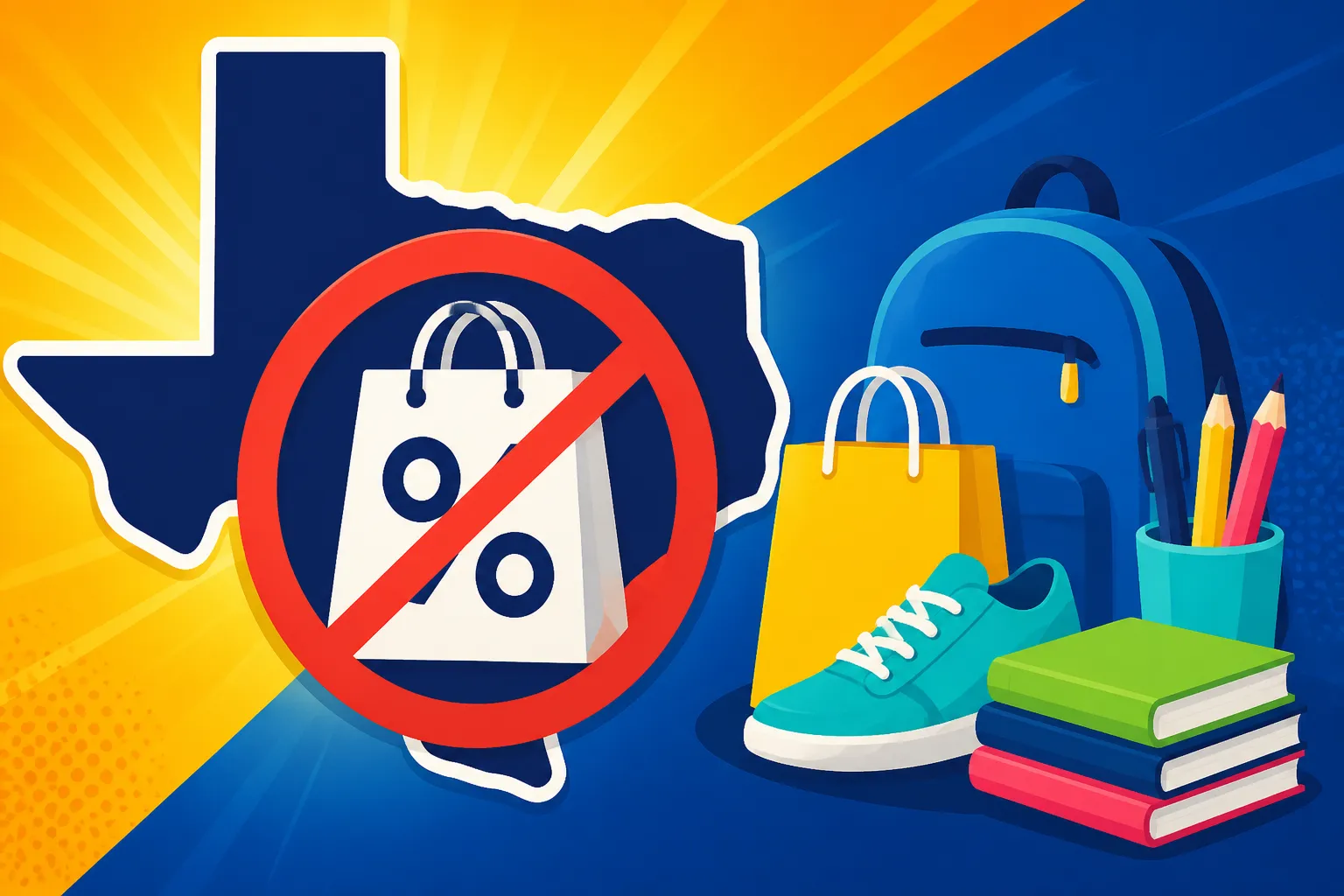
The Texas Comptroller of Public Accounts designates this period specifically to provide tax relief on certain items, primarily clothing, footwear, and school supplies. Think of it as a brief window where the state essentially steps aside from its usual sales tax collection for these categories. The primary purpose is clear: to make back-to-school shopping more affordable for parents, guardians, and students. With school expenses constantly on the rise, from uniforms to notebooks to calculators, any reduction in cost is a welcome change for household budgets.
Beyond the immediate benefit to consumers, the tax-free weekend also serves as a strategic boost for the retail sector. Local businesses, from large department stores to small boutiques, often see a surge in customer traffic and sales during these days. It encourages shoppers to buy locally, keeping more money circulating within the Texas economy. This dual benefit—consumer savings and economic stimulus—is why the tax holiday has become such a reliable fixture in the state’s calendar.
Key Dates and Times for 2026
Mark your calendars! The Texas Tax-Free Weekend for 2026 is officially set for Friday, August 7th, through Sunday, August 9th. This means the sales tax exemption begins at 12:01 a.m. on Friday and concludes at 11:59 p.m. on Sunday. These are crucial hours to remember, whether you’re planning an early morning dash to your favorite store or a late-night online shopping spree.
It's important to understand that these dates are firm and apply statewide. You won't find different dates or times for specific cities like Houston or Dallas; the rules are consistent across all of Texas. This consistency helps both consumers and retailers, as it simplifies planning and compliance. For businesses, ensuring their point-of-sale systems are correctly configured for these dates is vital. Solutions like Avalara can automatically adjust sales tax calculations based on location and date, making it much smoother for retailers to manage the tax holiday without manual errors.
What Items Are Included and Excluded During the Holiday?
Navigating the list of eligible and ineligible items is often the trickiest part of any sales tax holiday. While the general idea is "back-to-school," the specific rules can be quite granular. Understanding these details will prevent surprises at the register and help you plan your purchases more effectively.
Eligible Apparel and Footwear
The exemption for clothing and footwear is one of the biggest draws of the Texas Tax-Free Weekend. Most articles of clothing and footwear are exempt from sales tax, provided the sales price is less than $100 per item. This means you can pick up multiple shirts, pairs of jeans, or shoes, and each individual item under $100 will be tax-free.
However, there are some important distinctions. Certain accessories, even if worn, are generally not exempt. This includes items like jewelry, handbags, luggage, briefcases, watches, and hair accessories. Footwear specifically designed for athletic activity, such as cleated shoes or specialty ballet slippers, typically qualifies, but general "sporting goods" like shin guards or helmets usually do not. It's really about clothing and shoes for everyday wear, including school uniforms, casual attire, and basic athletic shoes. If you're wondering Is Clothing Taxable? Sales Tax on Apparel by State, Texas provides a generous, albeit capped, exemption during this period.
Qualifying School Supplies
This category is where many shoppers find themselves scratching their heads. For the 2026 holiday, most school supplies are exempt if sold for less than $100 per item. The Texas Comptroller publishes an official list of qualifying items each year, but it generally includes:
- Writing instruments: pens, pencils, highlighters, markers (excluding permanent markers that aren't for school use)
- Paper products: loose leaf paper, notebooks, composition books, binders, index cards, construction paper
- Art supplies: crayons, glue, watercolors, rulers, scissors
- Other essentials: pencil cases, erasers, protractors, calculators (non-scientific/graphing calculators are often the safest bet, though some basic scientific ones may qualify), lunch boxes, and basic backpacks.
It’s the phrase "intended for use by a student in the classroom" that often guides the exemption. A fancy, expensive backpack might qualify if it's under $100, but a hiking backpack specifically designed for outdoor expeditions likely would not, even if a student plans to use it for school.
Common Misconceptions and Exclusions
It's just as important to know what isn't included as what is. Here's where people often get tripped up:
- Electronics: Generally, items like computers, tablets, e-readers, or computer software are not exempt, even if they're essential for school. While some states include electronics in their tax holidays, Texas does not.
- Sporting Goods (beyond apparel): As mentioned, things like baseball bats, football pads, or specialized sports equipment are taxable.
- Textbooks: While crucial for students, textbooks and other instructional materials are typically not covered by the sales tax holiday.
- Items over $100: This is a critical point. If a single item of clothing or footwear costs $100 or more, it is fully taxable. The exemption isn't a discount; it's an "all or nothing" situation below the threshold. So, that $105 pair of sneakers will still incur the full sales tax, not just tax on the amount over $100.
- Household Goods: Basic household items like towels, bedding, or small appliances are also not part of the school supply or apparel exemptions.
This table provides a quick reference for some common items:
| Category | Eligible (Under $100) | Ineligible (Taxable) |
|---|---|---|
| Apparel | Shirts, pants, dresses, socks, underwear, uniforms | Jewelry, watches, handbags, briefcases, fur clothing |
| Footwear | Sneakers, sandals, boots, dress shoes | Cleated sports shoes (specialty only, check rules) |
| School Supplies | Pens, pencils, notebooks, binders, crayons, glue | Computers, tablets, e-readers, software, art easels |
| Other | Backpacks, lunchboxes (under $100) | Sporting equipment (bats, balls), textbooks, furniture |
Understanding these nuances is key to truly benefiting from the weekend. Retailers, especially, need to be very precise in their sales tax calculations, or they might face compliance issues down the line. Even if a marketplace facilitator collects the tax, sellers need to understand the rules. For complex scenarios, dedicated Sales Tax Calculator: How to Calculate Sales Tax tools can be invaluable.
Shopping Strategies for the Tax-Free Weekend
Making the most of the Texas Tax-Free Weekend requires a bit of strategy. It’s not just about knowing what to buy, but how and where to buy it. From dodging crowds to leveraging online deals, a smart approach can significantly enhance your savings and reduce stress.
Navigating In-Store Crowds
If you’ve ever ventured out during a tax-free weekend, you know it can be a wild ride. Stores, especially those catering to back-to-school shoppers, tend to be packed. The early bird definitely gets the worm here. Arriving right when stores open on Friday or Saturday can help you beat the rush and find items in stock before they're picked over.
Consider shopping at less popular times, like very late in the evening on Friday or Saturday, or early on Sunday if you can. Some stores even extend their hours to accommodate the increased traffic. Have a clear list of what you need, and stick to it. This isn’t the time for casual browsing if you’re trying to avoid the chaos. Knowing exactly what you’re looking for, in what sizes, and at which stores can make your trip much more efficient. Don’t forget to check store circulars and online ads in advance for any additional sales or promotions that can stack with the tax exemption for even bigger savings.
Making the Most of Online Shopping
One of the best ways to avoid the crowds is to shop online. The Texas sales tax holiday applies equally to purchases made online, by phone, mail, or in-store, as long as the item is purchased during the designated weekend. For online sales, the "purchase" occurs when you pay for the item. This means you need to complete your online transaction between 12:01 a.m. on August 7th and 11:59 p.m. on August 9th, 2026, for the exemption to apply.
Shopping online offers several advantages:
- Convenience: Shop from the comfort of your home, avoiding long lines and parking hassles.
- Wider Selection: Online stores often have a broader inventory than physical locations, making it easier to find specific items or sizes.
- Price Comparison: It's simpler to compare prices across multiple retailers to ensure you're getting the best deal, even before the tax savings.
Just be mindful of shipping costs. While the item itself might be tax-free, Is Shipping Taxable? Freight Sales Tax by State is a common question, and in Texas, shipping charges associated with a taxable item are generally taxable. However, if all items in your order are exempt during the tax holiday, then any separately stated shipping charges would also be exempt. If you have a mix of taxable and exempt items, it gets a bit more complicated, and shipping charges might be partially or fully taxable.
Planning Your Purchases in Advance
A little pre-planning goes a long way. Before the tax-free weekend, take inventory of what you already have and what your children truly need for school. Check school supply lists provided by districts or individual teachers. This will help you create a precise shopping list.
Consider organizing your list by store if you plan to visit multiple locations. For example, if you know Target has great deals on basic clothing and Office Depot is your go-to for notebooks, plan those stops strategically. Keep an eye out for sales that start before the tax holiday. Sometimes, an item might be on a deep discount a week earlier, making it cheaper even with tax than its price during the tax-free weekend without tax. Price comparison apps or browser extensions can be helpful tools in this regard.
For businesses, especially those handling sales for multiple states, managing these specific exemptions can be quite a task. Software like Avalara can be a lifesaver, ensuring that the correct sales tax (or lack thereof) is applied to each transaction based on the specific state's rules, dates, and item eligibility. This kind of automation is crucial for accurate compliance, especially when you're dealing with different rules for Sales Tax Holidays by State 2026: Full Calendar across the country.
Understanding the Price Limits and Exemptions
The $100 threshold is perhaps the most critical rule to grasp for the Texas Tax-Free Weekend. It dictates whether an item qualifies for the exemption, making or breaking your savings on certain purchases.
The $100 Rule for Most Items
The state of Texas stipulates that an eligible item of clothing, footwear, or school supply must have a "sales price" of less than $100 to be exempt. This means if you buy a shirt for $99, it's tax-free. If that same shirt is $100, it's also tax-free. But if it's $100.01, it's fully taxable. This isn't a partial exemption; it's a strict cutoff.
It's vital to remember this applies per item. You can buy 10 shirts, each priced at $90, and all 10 will be tax-free, totaling $900 in purchases without sales tax. The $100 limit is not for your total shopping cart, but for each individual qualifying product. This distinction is important for budgeting and making purchasing decisions, especially for larger families who might be buying many items. Knowing How Much Is Sales Tax on a $100 Purchase by State outside of the tax holiday can really highlight the savings.
Bundled Products and Sets
What happens if you buy items that are packaged together? Texas has specific guidance for "bundled transactions" during the sales tax holiday. If multiple eligible items are sold as a single unit, and the total price of that unit is less than $100, then the entire unit is exempt. For example, a package containing five pairs of socks sold together for $25 would be tax-free. A set of pens and pencils sold together for $12 would also be exempt.
However, if a taxable item is bundled with an exempt item, the waters get a bit murkier. Generally, if the sales price of the taxable item is separately stated, then only that item is taxable. If the price isn't separate, and the value of the exempt item is more than 50% of the total price, the entire bundle might be exempt (but check the latest comptroller guidance for specifics, as these rules can be complex). It's usually safest to assume that if a significant part of the bundle is taxable (like a school supply kit that includes an electronic dictionary), then the entire bundle might be taxable unless the exempt components are clearly priced under the threshold.
Manufacturer's Coupons and Discounts
Coupons and discounts can interact with the $100 limit in a way that often confuses shoppers. The key is whether the coupon is a manufacturer’s coupon or a retailer’s coupon.
- Manufacturer’s Coupons: If you use a manufacturer's coupon, the value of the coupon does not reduce the sales price for purposes of determining the $100 limit. For instance, if a pair of shoes costs $105, and you have a $10 manufacturer's coupon, bringing your out-of-pocket cost to $95, the shoes are still considered to have a sales price of $105 (the price before the manufacturer's coupon). Therefore, they would still be taxable because the original price was over $100.
- Retailer’s Coupons/Discounts: On the other hand, if a retailer offers a discount or a store coupon, this does reduce the sales price for purposes of the $100 limit. If those same $105 shoes are discounted by the store to $98, they would now be considered to have a sales price of $98 and would be tax-free.
This distinction between coupon types is critical. Always pay attention to whether a discount is from the store directly or from the product's manufacturer when you're trying to get an item just under the $100 threshold. For businesses, accurately tracking and applying these rules, especially with varied promotions, is where a robust sales tax compliance system becomes invaluable.
Why Does Texas Have a Tax-Free Weekend?
Beyond the immediate relief it offers, the Texas Tax-Free Weekend is a calculated move by the state, serving both social and economic purposes. It’s a policy designed with specific outcomes in mind, reflecting a balance between government revenue and citizen welfare.
Boosting Local Economies
One of the primary drivers behind sales tax holidays, including Texas's, is the desire to inject a surge of economic activity into the state. By temporarily removing the sales tax on popular items, the state incentivizes consumers to make purchases they might have otherwise delayed or even made out-of-state. This concentrated shopping period benefits retailers, many of whom are small local businesses.
Imagine the bustling shopping malls and crowded main streets during this weekend. This increased foot traffic doesn't just lead to sales of tax-exempt items; it also often encourages shoppers to buy taxable items while they're already in the store. A parent buying tax-free school supplies might also pick up a new piece of furniture (which is taxable) or have lunch at a local restaurant. This ripple effect helps various sectors of the economy. The boost in sales for retailers often translates to more work hours for employees, greater inventory turnover, and ultimately, a healthier local economy. It’s a short-term trade-off in sales tax revenue for a potentially larger overall economic gain. States also use these holidays to promote specific industries or types of purchases, such as disaster preparedness items or energy-efficient appliances, further tailoring the economic benefits. You can explore how other states manage this in our guide on Sales Tax Holidays by State 2026: Full Calendar.
Providing Relief for Families
Let's be real: back-to-school shopping can be expensive. For many families, especially those with multiple children, the costs associated with clothing, shoes, and school supplies can quickly add up, creating a significant financial strain. The tax-free weekend offers tangible relief. Even saving 6.25% (or more, if local taxes apply) on several hundred dollars worth of purchases can translate into meaningful savings that can be put toward other household necessities.
For a family spending $500 on eligible items, the savings could be around $31.25 just from the state portion, plus any local sales tax. While this might not seem astronomical, it can be the difference for a family deciding between new school shoes or deferring a utility bill. It's a gesture from the state that acknowledges the financial pressures on its citizens and aims to alleviate some of that burden during a peak expenditure period. This relief can be particularly impactful for lower and middle-income families, who feel the pinch of sales tax more acutely as it represents a larger percentage of their discretionary income. In states with high sales tax rates, like Louisiana or Tennessee, these holidays can offer even more significant savings.
Beyond Texas: Other States with Sales Tax Holidays
While Texas's sales tax holiday is a well-known event, it's far from unique. Many other states across the U.S. offer similar tax-free periods, each with its own set of rules, dates, and eligible items. These holidays represent a broader trend in state fiscal policy aimed at stimulating commerce and providing consumer relief.
A National Trend in Sales Tax Relief
Sales tax holidays have become an increasingly popular legislative tool. What started as an experiment in a few states has grown into a widespread practice, with a significant number of states now hosting at least one such event annually. While the specific items exempted can vary widely—some states focus solely on school supplies, others include hurricane preparedness items, and a few even cover energy-efficient appliances or firearms—the underlying motivations remain largely consistent: to boost local economies and provide tax relief to residents.
These holidays often occur during peak shopping seasons, such as the back-to-school period in late summer or before major holidays. The commonality among them underscores a shared understanding among state governments that a temporary suspension of sales tax can have a positive psychological effect on consumers, encouraging them to spend. However, for businesses operating across multiple states, navigating the patchwork of different tax holidays, eligibility rules, and dates can be a logistical nightmare without proper systems in place. This is where tools from companies like Avalara become essential for ensuring compliance and avoiding errors.
Comparing Texas to Other States' Offerings
Texas's sales tax holiday, with its focus on clothing, footwear, and school supplies under $100, is quite typical. However, other states offer variations that are worth noting:
- Florida: Florida often hosts multiple tax holidays throughout the year, including a prominent back-to-school event that frequently has higher price limits for clothing and may even include personal computers. Their "Disaster Preparedness" holiday is also popular, covering items like batteries and generators.
- Massachusetts: While Massachusetts usually has a sales tax holiday, it often covers all tangible personal property for personal use, with a much higher per-item price threshold (e.g., up to $2,500). This broader scope makes it appealing for larger purchases, though it doesn't always occur annually or on fixed dates.
- New York: New York State has a base sales tax rate, but many counties and cities have their own local sales taxes. New York City, for example, offers an exemption on clothing and footwear items under $110 year-round, not just during a specific holiday. This continuous exemption is different from a temporary holiday.
- Tennessee: Tennessee's sales tax holiday also focuses on clothing, school supplies, and sometimes computers, with varying price limits. In recent years, they've also added a "Food and Food Ingredients" tax holiday, offering temporary relief on groceries.
Understanding these differences is crucial for both consumers who might travel or shop online across state lines, and for businesses with a broader sales tax nexus. For instance, if you live near the border and often shop in a neighboring state, you'll need to know that state's rules. If you're running an online store, knowing Does Online Shopping Have Sales Tax? for various states and their holiday schedules is a fundamental part of compliance. The complexity highlights why a robust system that can track these changes, perhaps even automatically calculating Sales Tax Rates by State 2026: All 50 States and applying exemptions, is so valuable.
Disclaimer
The information provided in this article is for general guidance and informational purposes only, and does not constitute professional tax advice. Sales tax laws are complex and subject to change. Always consult with a qualified tax professional or the official website of the Texas Comptroller of Public Accounts for the most accurate and up-to-date information regarding your specific sales tax obligations and eligibility during sales tax holidays.