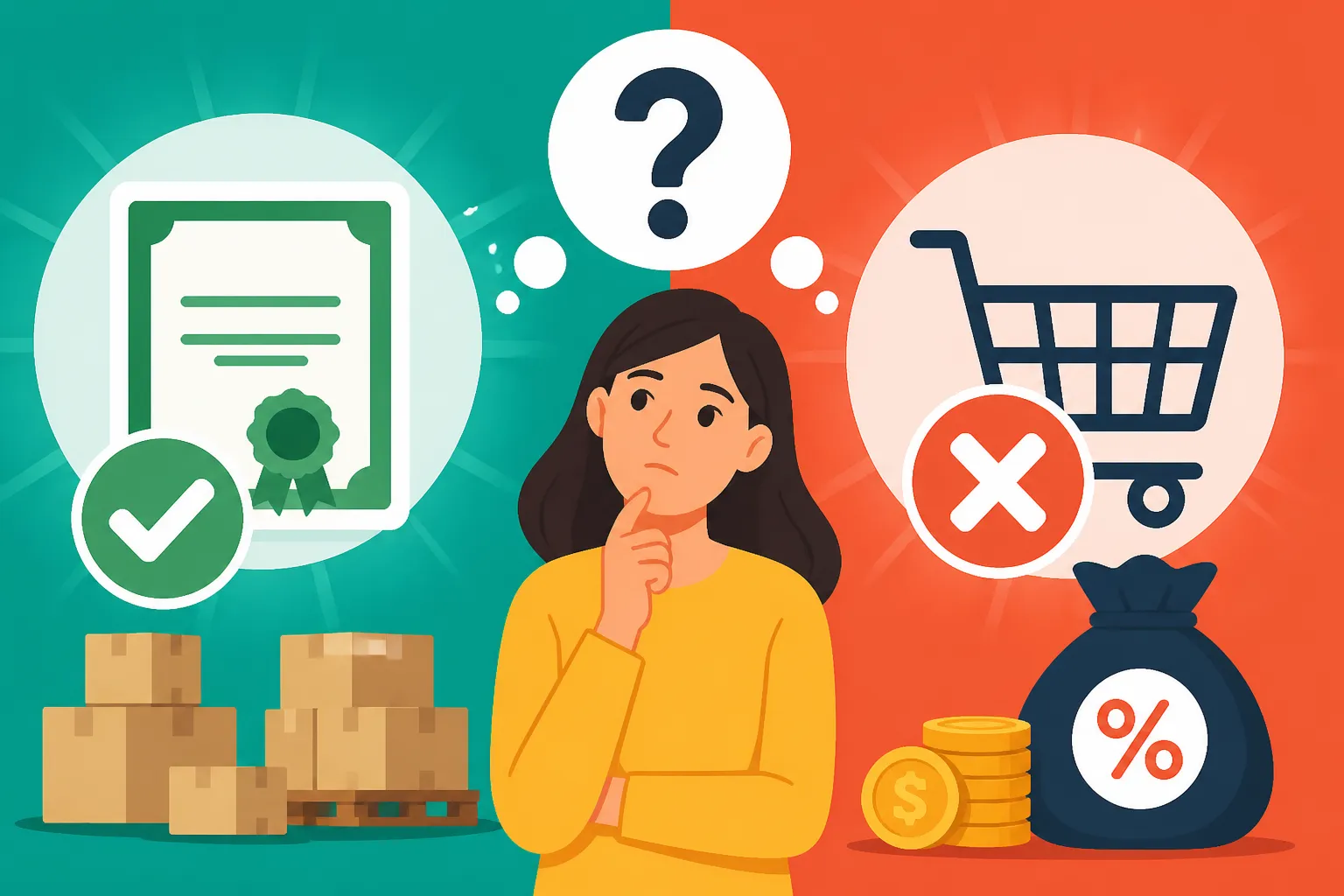
Do I Need a Resale Certificate to Buy Wholesale?
One of the most common headaches for new business owners, or even seasoned entrepreneurs expanding their product lines, is navigating the maze of sales tax when buying inventory. It feels counterintuitive, right? You're purchasing items to sell them, not to use them yourself, so why would you pay sales tax twice? This guide will clear up the confusion surrounding resale certificates and wholesale purchases, explaining why they're so vital and how to handle them correctly.
Understanding Resale Certificates and Wholesale Purchases
Let's begin by demystifying the core concepts that often trip people up. When you're running a business that sells physical goods, whether it's a bustling boutique or a thriving e-commerce shop, you're constantly dealing with inventory. The way sales tax applies to that inventory when you buy it is critical, and it all revolves around the resale certificate.
What Exactly is a Resale Certificate?
A resale certificate, sometimes called a seller's permit, certificate of authority, or reseller permit depending on the state, is essentially a document that exempts you from paying sales tax on items you purchase from a supplier that you intend to resell to your own customers. Think of it as a formal declaration to your vendor, stating, "Hey, I'm buying this for resale, so I shouldn't be charged sales tax at this stage because I'll be collecting it from the end consumer later."
The fundamental purpose behind these certificates is to prevent "double taxation." Imagine you buy a box of handmade soaps from a wholesaler. If you paid sales tax on that purchase, and then your customer also paid sales tax when they bought a bar of soap from you, the same item would have been taxed twice along its journey. States use resale certificates to ensure sales tax is only collected once, at the final point of sale to the end-user. For instance, if you're a small online boutique owner in Texas, ordering a new line of jewelry from a wholesaler, you'd provide your Texas Resale Certificate (Form 01-339) to them. This tells the wholesaler not to charge you the 6.25% state sales tax, plus any local rates, on that inventory.
The Basics of Buying Wholesale
Buying wholesale simply means purchasing goods in bulk, often directly from manufacturers or distributors, at a reduced price, with the explicit intention of reselling them for a profit. This is distinct from buying items at a retail store for your own personal use. When you visit a wholesaler or access a wholesale portal, they are typically set up to sell to businesses, not individual consumers.
The entire wholesale model is built around this resale intent. Wholesalers understand that their business customers are intermediaries in the supply chain. A clear example is a small bookstore owner in Portland, Oregon, ordering new titles from a book distributor. The bookstore isn't buying those books to fill their personal library; they're buying them to put on their shelves and sell to their patrons. The transaction is business-to-business, and the sales tax implications are entirely different from when a customer walks into that same bookstore and buys a book for themselves. Understanding these distinctions is key, because without the proper documentation, your wholesale purchases might look like regular retail transactions in the eyes of tax law, leading to unnecessary sales tax charges.
The Definitive Answer: Yes, You Absolutely Need One (Usually!)
When it comes to purchasing items wholesale, especially if you want to avoid paying sales tax on those purchases, the answer is a resounding yes: you almost always need a resale certificate. This isn't just a suggestion; it's a fundamental requirement in most states with a sales tax.
Why a Resale Certificate is Crucial for Wholesalers
From the wholesaler's perspective, demanding a resale certificate isn't about being difficult; it's about protecting themselves from tax liability. When a wholesaler sells you goods, they are typically required by their state's tax laws to collect sales tax on that transaction, unless a valid exemption applies. The resale certificate is the primary way for you to claim that exemption.
Without a resale certificate on file, the wholesaler is obligated to charge you sales tax, just as if you were an ordinary consumer buying an item for personal use. If they don't collect sales tax and you haven't provided a valid certificate, they could be held liable for that uncollected tax during a state audit. Imagine a large apparel distributor selling thousands of t-shirts to various businesses. If they didn't collect resale certificates from their buyers, the state tax authority could come knocking, demanding all the sales tax they "should" have collected, along with penalties and interest. That's a huge risk for any business. So, when a supplier asks for your resale certificate, they're simply ensuring they remain compliant and don't end up on the hook for someone else's tax obligation.
What Happens If You Don't Provide a Resale Certificate
If you don't provide a resale certificate to your wholesale supplier, one of two things will likely happen:
- You'll be charged sales tax: This is the most common outcome. The wholesaler will add the applicable state and local sales tax rates to your invoice. You'll pay it, and they'll remit it to the state. While this keeps you and the wholesaler compliant, it means you've unnecessarily tied up your working capital by paying tax on inventory you're going to resell. Getting that money back can be a convoluted process, often requiring you to apply directly to the state for a refund, which is typically time-consuming and cumbersome. It's far easier to provide the certificate upfront.
- The wholesaler might refuse the sale: Some diligent wholesalers, especially smaller ones who are hyper-aware of their compliance obligations, might simply refuse to sell to you at wholesale prices without a valid resale certificate. They might offer to sell at retail prices, or insist you obtain the proper documentation first, delaying your ability to get inventory.
Consider a scenario where you're a small Etsy seller, excitedly ordering craft supplies from a new online wholesaler based in Georgia. You forget to upload your New York Certificate of Authority. The wholesaler, following standard procedure, charges you Georgia's 4% sales tax plus any local taxes on your order. Now, you've paid tax on items you plan to turn into finished products and sell. This cuts into your profit margins and adds an extra layer of accounting complexity. To streamline this and many other sales tax processes, many businesses, even small ones, turn to compliance software. Solutions like Avalara can help manage exemption certificates, ensuring you have the right documents on file and presented correctly to your vendors. This prevents you from overpaying on inventory and keeps your records tidy for your own state tax obligations.
How to Obtain and Use Your Resale Certificate
Getting your hands on a resale certificate might sound like a bureaucratic nightmare, but it's generally a straightforward process once you understand the steps. The key is to remember that your resale certificate is often inextricably linked to your fundamental registration as a sales tax collector in your state.
Steps to Get a Resale Certificate (or Seller's Permit/License)
The process typically starts with registering your business with your state's tax authority. This is often the same step you take to get a "seller's permit," "vendor's license," or "certificate of authority"—the official document that allows you to collect sales tax from your customers. In many states, once you're registered to collect sales tax, that registration number or permit is your resale certificate or allows you to easily obtain one.
Here’s a general rundown of the steps:
- Register Your Business with the State: You'll typically go to your state's Department of Revenue, Department of Taxation, or similar agency website. For example, if you operate an e-commerce business out of California, you'd register with the California Department of Tax and Fee Administration (CDTFA) to get a seller's permit. This process establishes your business as a legal entity responsible for collecting and remitting sales tax.
- Complete the Application: The online application will ask for basic business information, such as your legal business name, address, Employer Identification Number (EIN) or Social Security Number (for sole proprietors), and the type of business you conduct.
- Receive Your Permit/Certificate: Once your application is processed and approved, the state will issue your sales tax permit or certificate of authority. This document typically contains your sales tax account number. Many states, including California and Texas, also offer specific forms that act as a dedicated resale certificate, which you can then fill out using your sales tax ID.
It's crucial to understand that the terminology can vary significantly from one state to another. What's called a "How to Get a Seller's Permit in California" might be a "Certificate of Authority" in New York or a "Vendor's License" in Ohio. Regardless of the name, the underlying purpose is the same: to identify you as a legitimate reseller. You can learn more about this state-by-state process by checking out comprehensive guides on How to Get a Sales Tax Permit by State.
Presenting Your Certificate to Wholesale Suppliers
Once you have your resale certificate or sales tax permit, the next step is to provide it to your wholesale suppliers. This usually involves:
- Providing a Copy: Most wholesalers will require you to submit a copy of your certificate during your account setup or first order. Many online wholesale platforms have a dedicated section where you can upload your certificate.
- Filling Out an Exemption Form: Some suppliers might have their own exemption forms, which you'll need to complete, referencing your state-issued sales tax ID number.
- Keeping Records: Always keep a copy of every resale certificate you provide and every exemption form you fill out. This is critical for your own audit protection. States like California provide a form (CDTFA-230) specifically for this purpose, and understanding How to Use a Resale Certificate (Form CDTFA-230) is key if you operate there.
It's also worth noting that some states participate in the Streamlined Sales Tax (SST) program or accept a uniform resale certificate, which can simplify matters if you buy from suppliers in multiple states. However, many states require their own specific forms. For a deep dive into the specifics of each state, a resource like Resale Certificate by State: Complete Guide can be incredibly helpful. Always ensure the certificate you provide is current and valid in the state where the supplier has nexus and where the sale is being made.
Common Misconceptions and Nuances
Navigating sales tax, especially with resale certificates, can feel like a minefield of "what-ifs" and common misunderstandings. It's not just about getting the document; it's about knowing when and how to properly apply it, and what its limitations are.
Resale Certificates vs. Business Licenses
This is a frequent point of confusion. Many new business owners get their general business license or registration with the city or county and assume they're all set for tax purposes. However, a business license and a resale certificate serve entirely different functions.
- Business License: A business license, or occupational license, is typically issued by your city or county government. It grants you permission to operate a specific type of business within that jurisdiction. For example, if you open a bakery in Atlanta, Georgia, you'd need a local business license to operate legally.
- Resale Certificate (or Sales Tax Permit): This document, issued by the state tax authority, is specifically for sales tax purposes. It allows you to buy items for resale without paying sales tax at the wholesale level and authorizes you to collect sales tax from your end customers.
The key takeaway? You can absolutely have a valid business license but still be required to pay sales tax on your wholesale purchases if you haven't obtained and provided a valid resale certificate. They are not interchangeable. A business license allows you to do business, while a resale certificate dictates how you handle sales tax on your inventory.
Interstate vs. Intrastate Purchases
The world of sales tax gets even more complex when you start buying from suppliers located in different states. If you're buying wholesale from a supplier within your own state, you simply provide your state's resale certificate. Easy enough.
However, what if your supplier is in a different state? The rule of thumb here depends on whether the supplier has what's called "nexus" in your state. Sales tax nexus means a business has a sufficient connection to a state to be legally required to collect sales tax there. This can be physical (like a warehouse or employee) or economic (exceeding a certain sales threshold into that state, like selling over $100,000 worth of goods).
If an out-of-state wholesaler has nexus in your state, they are required to collect sales tax from you. In this case, you would provide your resale certificate from your state to them. Many states accept the Multistate (MTC) Resale Certificate Explained, which is a standardized form designed to simplify this process for businesses operating in multiple states, or buying from out-of-state vendors. However, some states still insist on their specific forms. It’s always best to check with your supplier or the relevant state tax authority. Understanding Economic Nexus by State 2026: Thresholds Guide is crucial for sellers, but it's equally important for buyers to recognize when an out-of-state vendor might be required to collect tax. The complexity of sales tax nexus and knowing where you and your suppliers have obligations is why many businesses turn to automated compliance solutions.
What to Do If You Also Use Items Personally
Your resale certificate is a powerful tool, but it's not a blanket exemption for everything you buy. It only applies to items you intend to resell. What happens if you buy a bulk order of office supplies, some of which you use in your business operations, and some you plan to resell? Or perhaps you buy a product that initially was for resale, but you decide to keep it for personal use or as a display model that isn't sold.
In these situations, if you initially purchased the item using your resale certificate (meaning you didn't pay sales tax), but then diverted it for personal or business use (not for resale), you typically owe "use tax" on that item. Use tax is essentially a compensatory tax paid by the buyer when sales tax wasn't collected at the time of purchase. It's usually the same rate as the sales tax in your state.
For example, a clothing boutique owner buys a new sweater collection from a wholesaler. They provide their resale certificate and pay no sales tax. Later, the owner falls in love with one of the sweaters and decides to keep it for their personal wardrobe. At that point, the owner owes use tax on the purchase price of that sweater to their state. This is a critical nuance often overlooked, and mismanaging it can lead to issues during an audit. You can dive deeper into this concept by reading about Use Tax Explained: What It Is & When You Owe It. It’s a common scenario, and states are increasingly vigilant about businesses correctly accounting for use tax on items they consume rather than resell.
Essential Resale Certificate Information
To wrap things up, here's a quick reference table outlining the key elements and considerations regarding resale certificates when buying wholesale:
| Feature | Description | Importance |
|---|---|---|
| Purpose | Exempts sales tax on goods purchased for resale. Prevents double taxation. | Avoids unnecessary costs and cash flow drain; ensures correct tax collection at final sale. |
| Issuing Authority | State Department of Revenue, Taxation, or equivalent agency. | Must be state-issued and valid in the state where the transaction occurs or where the supplier has nexus. |
| Terminology | Varies by state (e.g., Resale Certificate, Seller's Permit, Certificate of Authority, Vendor's License). | Understand the specific name your state uses to ensure you apply for and provide the correct document. |
| Requirement for Sellers | Wholesalers must collect a valid certificate from buyers to avoid sales tax. | Protects the wholesaler from tax liability and penalties during audits. |
| Consequences of Not Providing | You will be charged sales tax on wholesale purchases, or the wholesaler may refuse the sale. | Increased costs, reduced profit margins, potential delays in obtaining inventory. |
| Usage Limitations | Only applies to items purchased for resale. Does not cover items for personal use, business use, or capital expenditures. | Misuse can lead to use tax obligations for the buyer and potential audit issues. |
| Validity | Certificates may have expiration dates or require renewal. Some are permanent unless revoked. | Always ensure your certificate is current when providing it to suppliers. |
| Record Keeping | Both buyers and sellers must keep accurate records of certificates exchanged. | Essential for proving compliance during state tax audits for both parties. |
This information should give you a clear roadmap for handling resale certificates in your wholesale buying endeavors. Remember, proactive compliance is always the best strategy to avoid costly errors and audits down the line.
Disclaimer
The information provided in this guide is for general informational purposes only and does not constitute professional tax or legal advice. Sales tax laws are complex and vary by state and locality, and they can change frequently. You should consult with a qualified tax professional or legal advisor for advice tailored to your specific business situation.