Tennessee Sales Tax Rate (7% + Local)
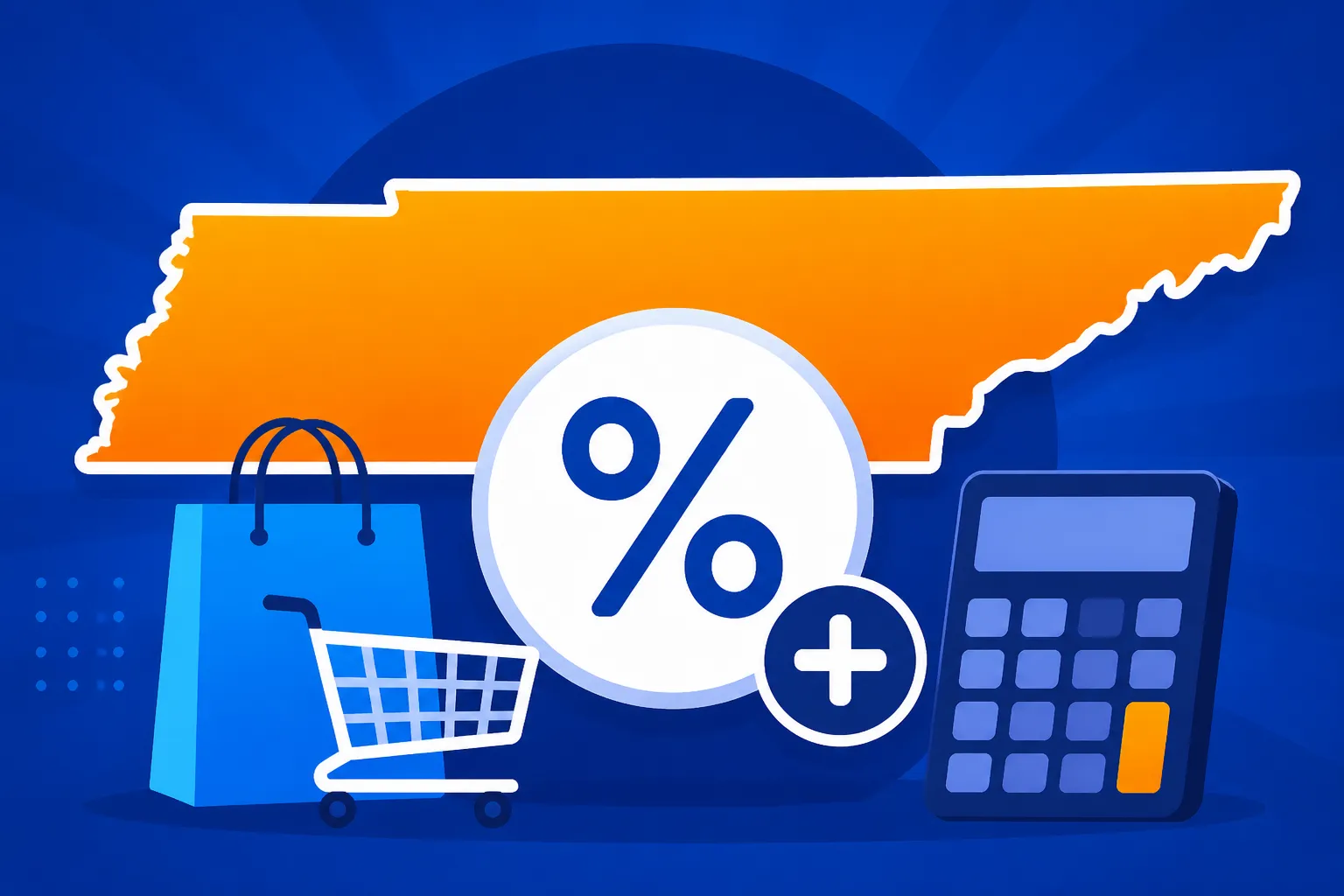
Navigating the checkout counter in Tennessee can feel like a game of high-stakes math. Whether you are a business owner trying to stay compliant or a shopper wondering why a big-ticket purchase cost more than expected, the Volunteer State’s tax structure is notoriously aggressive. This guide breaks down the 7% base rate, explains the local surtaxes that often push totals toward 10%, and clarifies the unique "Single Article" rules that catch everyone by surprise.
Understanding the Tennessee Sales Tax Landscape
Tennessee is famous for many things—hot chicken, country music, and the fact that it does not have a state income tax. However, that lack of income tax means the state has to generate revenue elsewhere, and the primary vehicle for that is one of the highest sales tax rates in the country. When you buy something in Nashville or Memphis, you aren't just paying for the item; you are funding the infrastructure of a state that relies heavily on consumption.
The 7% State Base Rate
At the heart of the system is the 7% state-level sales tax. This is the foundation for almost every transaction involving tangible personal property. Unlike states with a 4% or 5% base, Tennessee starts high. This 7% applies to everything from a new pair of boots on Broadway to the laptop you use for work. It is a flat, statewide rate that never wavers, regardless of which county you are standing in.
For businesses, this high base rate means there is very little room for error. If you fail to collect the correct amount, that 7% comes directly out of your margins. Many sellers look into Sales Tax Rate Lookup Tools Compared to ensure they aren't accidentally undercharging and leaving themselves vulnerable to an audit. The state is very protective of this revenue stream because it is the lifeblood of the Tennessee budget.
Local Options and the Combined Ceiling
The state rate is just the beginning. Tennessee allows its 95 counties and hundreds of municipalities to tack on their own "local option" sales tax. Most jurisdictions in Tennessee choose a local rate between 2.25% and 2.75%. When you add that to the state’s 7%, you frequently end up with a combined rate of 9.25% to 9.75%.
This is where the confusion starts for many. You might buy a coffee in one town and pay 9.25%, then drive five miles across a county line and pay 9.75% for the exact same drink. Understanding How Combined State + Local Sales Tax Rates Explained helps illustrate why Tennessee consistently ranks in the top five states for the highest average combined sales tax. It is a fragmented system where the "zip code" is often not enough to determine the exact rate, as many zip codes span multiple tax jurisdictions.
Tennessee Local Sales Tax Rates by City and County
If you are running a business with a physical presence in the state, or if you are an online seller with Economic Nexus Threshold in Tennessee, you have to track these local fluctuations meticulously. The difference of half a percent might seem small, but on a $10,000 equipment purchase, it’s fifty dollars that the Department of Revenue will expect to see.
Nashville and Davidson County
Nashville is the crown jewel of Tennessee’s economy, and it carries a tax rate to match. As of 2026, the local option tax for Davidson County sits at 2.25%. When combined with the state’s 7%, shoppers in Music City are looking at a 9.25% total. This applies to almost everything sold within the city limits.
However, Nashville is also a hub for tourism and entertainment. Because of this, certain "hospitality" taxes might apply to hotel stays or Broadway-specific attractions, but for general retail, the 9.25% is the standard. If you are an online seller shipping to a customer in the Gulch or East Nashville, your software—perhaps a robust tool like Avalara—will need to pinpoint the exact destination to ensure that 9.25% is recorded correctly.
Memphis and Shelby County
Head west to Memphis, and the math gets even heavier. Shelby County and the City of Memphis have a combined local option that often pushes the total rate to the state-allowed maximum of 9.75%. This makes Memphis one of the most expensive cities in the United States for sales tax, rivaling the Chicago Sales Tax Rate for the top spot.
The frustration for Memphis business owners often lies in the competition with neighboring states. With Mississippi and Arkansas just a short drive away, the 9.75% rate can drive customers across the border for high-value items. This is a classic example of why businesses must understand Why Is Sales Tax Different in Every City? and how those differences impact consumer behavior and local competition.
Knoxville and Chattanooga East Tennessee
In the eastern part of the state, Knoxville (Knox County) and Chattanooga (Hamilton County) generally hover around the 9.25% combined mark. These regions have seen massive growth in recent years, leading to a surge in new retail developments.
For contractors or service providers working in these areas, the tax can be tricky. While Tennessee primarily taxes tangible goods, certain services like installation or repair are also taxable. If you are installing a HVAC system in a Chattanooga home, you aren't just taxing the unit; you are often taxing the labor as well. This highlights the importance of knowing What's Taxable in Tennessee? Sales Tax Guide before you send out your first invoice.
| City | State Rate | Local Rate | Combined Rate |
|---|---|---|---|
| Nashville | 7.00% | 2.25% | 9.25% |
| Memphis | 7.00% | 2.75% | 9.75% |
| Knoxville | 7.00% | 2.25% | 9.25% |
| Chattanooga | 7.00% | 2.25% | 9.25% |
| Gatlinburg | 7.00% | 2.75% | 9.75% |
| Franklin | 7.00% | 2.75% | 9.75% |
Taxable Goods and Special Rates in Tennessee
One of the biggest pitfalls for newcomers to Tennessee—whether they are moving their family or their business—is the realization that the state does not follow the same "exemptions" list as its neighbors. In many states, essentials like food are tax-free. Tennessee takes a different approach.
Sales Tax on Groceries in Tennessee
Tennessee is one of the few states that still applies a significant sales tax to groceries. While there has been political movement to reduce this burden, as of 2026, the state rate for "food and food ingredients" is 4%. Crucially, the local option tax (usually 2.25% to 2.75%) is added on top of that 4% state rate.
This means that even though the state gives you a "break" compared to the 7% general rate, you are still paying 6.25% to 6.75% for a gallon of milk. It is vital to distinguish between Sales Tax on Groceries & Food by State rules, as Tennessee’s definition of "food" excludes things like prepared deli sandwiches, candy, and soda, which are all taxed at the full 7% plus local rate.
Tennessee Single Article Cap Rule
This is the most unique—and confusing—part of the Tennessee tax code. It is designed to prevent local governments from reaping a windfall on very expensive items, like cars, boats, or farm equipment. Here is how the "Single Article" rule works:
- The First $1,600: You pay the full 7% state tax plus the full local option tax (e.g., 2.75%).
- The Next $1,600 (from $1,601 to $3,200): You pay the 7% state tax, but you do not pay the local tax. Instead, the state adds an "additional state tax" of 2.75%.
- Everything Above $3,200: You pay only the 7% state tax. No local tax and no additional state tax apply to the portion of the price over $3,200.
If you are a car dealer or an equipment seller, getting this wrong is an absolute nightmare. Calculating the tax on a $50,000 truck requires three different layers of math. Many high-volume sellers use Avalara to automate this specific "Single Article" calculation because doing it manually on every invoice is a recipe for disaster. If you're curious about how this compares to other states, check out How Much Is Sales Tax on a Car by State.
Prepared Food vs. General Merchandise
If you walk into a gas station in Clarksville and buy a bag of flour, you are paying the lower grocery rate. If you buy a hot slice of pizza from the warmer, you are paying the full 9.5% combined rate. Tennessee draws a very hard line at "preparedness."
This creates a heavy compliance burden for restaurants and catering companies. If you provide napkins, utensils, or heat the food, it is prepared. This distinction is a major focus during state audits. Businesses must stay updated on 2026 Sales Tax Rate Changes by State to ensure they aren't using outdated logic for their point-of-sale systems.
Nexus and Compliance for Out-of-State Sellers
Since the landmark Wayfair decision, Tennessee has been very active in pursuing tax revenue from out-of-state "remote" sellers. You no longer need an office in Nashville to owe the Tennessee Department of Revenue money; you just need to sell enough to Tennessee residents.
Tennessee Economic Nexus Thresholds
If you are an e-commerce business based in California or New York, you have a "nexus" in Tennessee if your total sales to Tennessee customers exceed $100,000 in a calendar year. Tennessee previously had a transaction count threshold as well, but in line with recent trends, they have focused on the dollar amount.
Once you hit that $100,000 mark, you are required to register for a Sales Tax Registration Guide for Tennessee and start collecting tax on every subsequent sale. This catches many small Etsy or Shopify sellers by surprise. They hit a lucky streak, sell $105,000 worth of handmade furniture to Nashville, and suddenly find themselves on the hook for thousands in back taxes because they didn't realize they had triggered Economic Nexus Explained (Physical vs Economic).
Marketplace Facilitator Laws in TN
Fortunately for smaller sellers, Tennessee has "Marketplace Facilitator" laws. This means that if you sell exclusively through Amazon, Etsy, or Walmart, those platforms are responsible for collecting and remitting the Tennessee sales tax for you.
However, this does not always mean you are off the hook for filing. Many businesses still need to register and file a "zero return" to show the state that while they made sales, the tax was collected by a facilitator. Determining Do I Still Need a Permit If Amazon Collects? is one of the most frequent questions we see from new entrepreneurs. The state of Tennessee generally prefers that you maintain a permit if you have nexus, even if the net tax owed is zero.
Filing, Permits, and Deadlines
Once you realize you have to pay, the next hurdle is the paperwork. Tennessee’s Department of Revenue uses an online portal called TNTAP (Tennessee Taxpayer Access Point). It’s functional, but it can be intimidating if you aren't used to government interfaces.
How to Get a Sales Tax Permit in Tennessee
Registering for a permit is free in Tennessee, but you must provide a fair amount of information, including your Social Security Number or EIN, business structure, and an estimate of your monthly sales. The state will then assign you a filing frequency—usually monthly, though smaller businesses might be allowed to file quarterly.
Using a service like Avalara can help bridge the gap between your sales data and the TNTAP portal, especially if you are managing Registering for Sales Tax in Multiple States simultaneously. The goal is to get your permit before you make your first taxable sale, as Tennessee can be strict about "unregistered" collection.
Tennessee Sales Tax Due Dates 2026
In Tennessee, the magic number is 20. Sales tax returns and payments are due by the 20th day of the month following the reporting period. For example, all the tax you collected in June 2026 must be filed and paid by July 20, 2026.
If you miss that deadline, the penalties start piling up quickly. Tennessee charges a penalty of 5% of the unpaid tax for each month it is late, up to a maximum of 25%. On top of that, there is interest. It is far better to file a How to File a Zero Sales Tax Return on time than to file a late return with a large payment. Keeping a calendar of Tennessee Sales Tax Due Dates 2026 is a non-negotiable part of business ownership in the state.
Comparison with Neighboring States
To truly understand why Tennessee’s 7% + local rate feels the way it does, you have to look at the map. Tennessee is bordered by eight states, and it has a unique relationship with each of them regarding tax.
Tennessee vs. Kentucky and Alabama
To the north, the Kentucky Sales Tax Rate (6% No Local) is significantly simpler. Kentucky has a flat 6% rate with no local additions. For a Tennessee business near the border in Clarksville, this is a major competitive disadvantage. A customer can drive 20 minutes into Kentucky and save 3.5% on a large purchase.
To the south, the Alabama Sales Tax Rate 2026 is also complex, with state and local rates that can combine to exceed 10% in some areas. However, Alabama often has more frequent Sales Tax Holidays by State 2026: Full Calendar events than Tennessee, giving shoppers occasional relief that Tennesseans rarely see.
Why the Single Article Cap Matters
When comparing Tennessee to other states, the Single Article Cap is the great equalizer. While the initial 9.75% rate looks terrifying on a $40,000 boat, the cap actually makes Tennessee a "cheaper" place to buy high-value items than some states with a lower flat rate.
For example, in a state with a flat 8% rate and no cap, you’d pay $3,200 in tax on that $40,000 boat. In Tennessee (assuming a 9.75% area), you pay roughly $2,800 because the tax rate "drops" to 7% after the first $3,200 of the price. This is why it’s so important to understand How to Calculate Sales Tax (Step by Step) specifically for the Tennessee model—the math changes as the price goes up.
Tennessee Sales Tax Disclaimer
The information provided in this guide is for educational and informational purposes only and does not constitute legal, tax, or financial advice. Sales tax rates, laws, and regulations in Tennessee are subject to frequent change by state and local authorities. While we strive to provide the most accurate and up-to-date information, you should always verify current rates and compliance requirements with the Tennessee Department of Revenue or a qualified tax professional before making business decisions. Use of any third-party software mentioned is at the discretion of the user and does not guarantee compliance.