How to Get a Certificate of Authority in New York
Trying to navigate the labyrinthine world of sales tax for your business in New York State can feel like deciphering an ancient scroll written in a forgotten language. The rules, the forms, the worry of making a mistake – it’s enough to make any entrepreneur feel overwhelmed. This comprehensive guide is here to demystify the process of obtaining a New York Certificate of Authority, ensuring you understand exactly what it is, who needs it, and how to confidently get yours so you can focus on growing your business.
What Exactly is a New York Certificate of Authority?
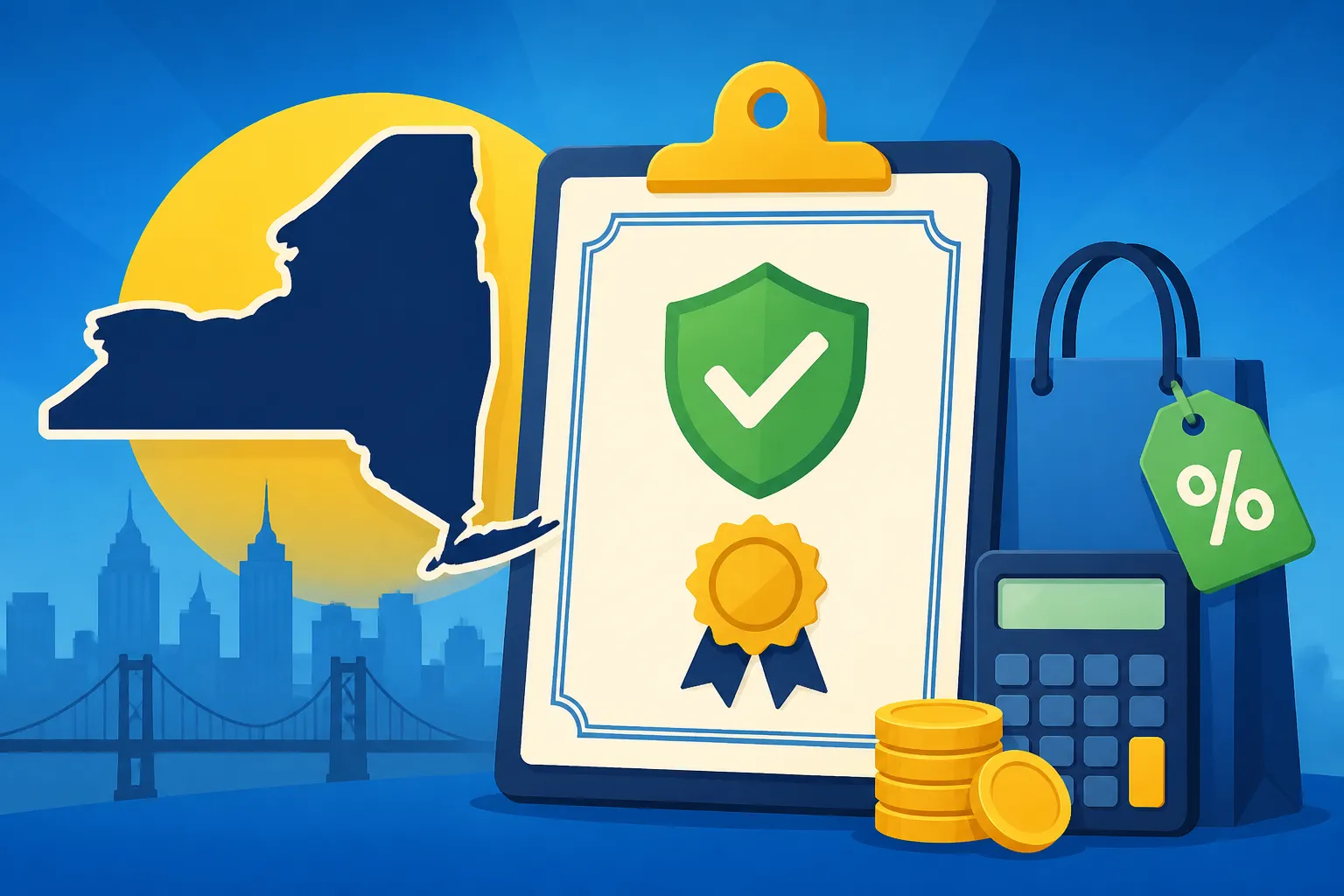
Before you even think about charging sales tax or reporting it, you need the official green light from the state. In New York, that "green light" comes in the form of a Certificate of Authority. It's not just a fancy piece of paper; it's your legal permission slip to engage in activities that require sales tax collection and remittance within the state.
More Than Just a Permit: Understanding Its Purpose
At its core, the New York Certificate of Authority is the state's way of saying, "Okay, we recognize you as a legitimate business that needs to collect sales tax on taxable goods and services, and then remit that tax to us." Without it, you are not legally permitted to collect sales tax from your customers. This is crucial because if you collect sales tax without the proper authorization, you could face penalties, and your customers might even question the legality of your charges. Think of it as your official license to be a tax collector on behalf of the state.
This certificate is fundamental for any entity, whether a sole proprietorship, partnership, corporation, or LLC, that sells or leases tangible personal property or performs taxable services in New York State. This includes everything from selling physical products in a brick-and-mortar store to operating an e-commerce website that ships to New York customers. It’s also required for businesses that are not physically located in New York but have established a sales tax nexus within the state, often through significant online sales. The Department of Taxation and Finance issues this certificate, and it ensures that you are properly accounted for in their system for sales tax purposes.
The Difference from Other Business Licenses
It’s easy to get confused with all the different licenses and permits a business might need. Many entrepreneurs mistakenly believe that if they have a general business license from their city or county, or even a federal Employer Identification Number (EIN), they're all set for sales tax. However, the New York Certificate of Authority is distinct and serves a very specific purpose.
Unlike a general business license, which might allow you to operate certain types of businesses within a specific municipality, or an EIN, which is for federal tax identification, the Certificate of Authority is solely focused on sales tax. It empowers you to charge and collect sales tax from customers and then requires you to report and pay those collected taxes to the state. Other licenses might cover health and safety regulations, professional qualifications, or zoning requirements, but none of them grant the authority to handle sales tax. For instance, a small boutique in Manhattan might need a general business license from the city, a Certificate of Occupancy, and a federal EIN, but none of those obviate the need for a New York Certificate of Authority if they plan to sell clothing or other taxable items. This distinction is vital for compliance, and understanding it is the first step toward getting your sales tax obligations in order. You might also want to understand the general concept of a Seller's Permit Explained: What It Is & How to Get One for a broader context.
Who Needs to Get a New York Certificate of Authority?
The question of "who needs one" boils down to whether your business has "sales tax nexus" in New York. This concept became a lot broader and more complex after the landmark South Dakota v. Wayfair Supreme Court decision, but essentially, if you have a significant enough connection to the state, you're on the hook.
Establishing Sales Tax Nexus in New York
Sales tax nexus is the legal term for having a sufficient presence in a state that obligates your business to collect and remit sales tax. Traditionally, this was all about physical presence. If you had a store, an office, a warehouse, employees, or even inventory stored in New York (like through an Amazon FBA arrangement), you automatically had physical nexus. For example, if you opened a small artisan bakery in Buffalo, you would clearly have physical nexus and need a Certificate of Authority from day one.
However, the game changed significantly with economic nexus. For remote sellers, New York established a threshold: if your sales into the state exceed $500,000 in the previous four sales tax quarters and you made over 100 separate transactions into the state during the same period, you’ve established economic nexus. This means an online retailer based in, say, California, that sells a significant volume of products to New York customers, would be required to register for a Certificate of Authority and begin collecting sales tax. It's a complex area, and many businesses are still trying to wrap their heads around it. For a deeper dive, read our guide on Economic Nexus in New York ($500k + 100 Sales). Understanding Sales Tax Nexus Explained Physical vs Economic can help clarify this further.
Common Business Scenarios Requiring a Permit
Let's look at some real-world examples to make this clearer. If you're running a small online shop selling custom-printed t-shirts from your home in Syracuse, you need a Certificate of Authority because you have a physical presence in New York. But what about a larger e-commerce business based out of Florida that ships thousands of orders to New York customers each year? If that Florida business crosses the $500,000 sales and 100-transaction threshold, they absolutely need to register.
Another common scenario involves service providers. While many services are exempt from sales tax in New York, certain types, like maintenance services, landscaping, or telecommunication services, are taxable. So, if you're a landscaper based in Long Island offering taxable services, you'll need the certificate. Drop shippers also need to be particularly careful. If your business has nexus in New York and you are facilitating sales of taxable goods, even if the goods are shipped directly from a third-party warehouse, you might still have a collection obligation. For comprehensive guidance on how sales tax impacts online businesses, our Sales Tax for Online Sellers: Complete Guide offers invaluable insights.
Step-by-Step Guide to Applying for Your Certificate of Authority
The application process for a New York Certificate of Authority might seem daunting at first glance, but it's quite manageable if you break it down. The state has made efforts to streamline the process, largely through its online portal.
Gathering Necessary Information and Documentation
Before you even log into the New York State Department of Taxation and Finance (NYSDTF) website, you'll want to have all your ducks in a row. Having this information readily available will prevent delays and make the application much smoother. Here’s a checklist of what you'll typically need:
- Employer Identification Number (EIN): If you're a sole proprietor, you might use your Social Security Number, but most other business structures (LLCs, corporations, partnerships) will need an EIN from the IRS.
- Business Legal Name and DBA (if applicable): The exact legal name of your business and any "Doing Business As" names you operate under.
- Business Address(es): Your primary business location and any additional locations in New York where you conduct sales activities.
- Contact Information: Phone number, email address, and mailing address.
- Business Activity Code: A description of your business type and the primary goods or services you sell.
- Owner/Officer Details: Names, addresses, and Social Security Numbers (or EINs) of all owners, partners, or corporate officers.
- Business Start Date: The date you began, or plan to begin, making taxable sales in New York.
- NAICS Code: The North American Industry Classification System code for your business.
Having this information organized in advance means you can swiftly move through the application forms without having to stop and search for details. It's like preparing your ingredients before you start cooking; it makes the whole process much more efficient.
Navigating the Online Application Process (NYS Business Express)
New York State has embraced digital convenience, and most businesses will apply for their Certificate of Authority through the NYS Business Express portal. This online platform is designed to be a one-stop-shop for various business registrations.
Here’s a general walkthrough: First, you'll need to create an account on the NYS Business Express website if you don't already have one. Once logged in, you'll typically look for an option related to "Register for Sales Tax" or "Apply for a Certificate of Authority." The system will then guide you through a series of screens where you input the information you gathered in the previous step. You’ll be asked to specify your business type (e.g., sole proprietorship, partnership, LLC, corporation), which impacts how certain information is requested and recorded. Pay close attention to dropdown menus and free-text fields to accurately describe your business activities. For example, if you sell both clothing and prepared foods, you'll need to indicate all relevant business types. After filling out all the required sections, you'll review your application for accuracy before submitting it electronically. The process is intuitive, but it requires careful attention to detail. This method is generally much faster than paper applications. For a broader understanding of how to obtain sales tax permits across different states, check out our guide on How to Get a Sales Tax Permit by State.
What Happens After You Apply?
Once you hit that "submit" button, the waiting game begins, but usually not for long if everything is in order. You'll typically receive an immediate confirmation that your application has been received. The New York State Department of Taxation and Finance generally processes online applications for a Certificate of Authority quite quickly, often within a few business days.
During this processing period, the state may verify the information you provided. In some cases, if there are discrepancies or missing details, they might reach out to you for clarification. It’s always a good idea to keep an eye on your email (including spam folders) and the NYS Business Express portal for any messages or status updates. Once approved, your official New York Certificate of Authority will be mailed to your business address. While you often get a temporary confirmation or a registration number instantly online, the physical certificate is what you'll want to display prominently at your place of business, if applicable. Remember, you should not begin collecting sales tax until you have received this approval and certificate.
Understanding Your Responsibilities Once Registered
Getting your Certificate of Authority is a huge first step, but it’s just the beginning. Once you’re officially authorized to collect sales tax in New York, you assume a critical role: you become a trustee for the state, responsible for properly collecting, reporting, and remitting those funds.
Collecting and Remitting Sales Tax
The fundamental responsibility is to collect the correct amount of sales tax from your customers on all taxable sales. In New York, this can be a bit tricky because the total sales tax rate isn't just a flat statewide percentage. It's a combination of the statewide rate (currently 4%) plus various local sales taxes imposed by counties and cities. For example, New York City has its own local rates, resulting in a significantly higher combined rate. This means you need to accurately determine the sales tax rate based on the point of sale or the customer’s location, depending on New York’s sourcing rules.
After collecting the tax, you must keep these funds separate and safe, as they technically don't belong to your business; they belong to the state. Remitting sales tax involves sending the collected funds to the NYSDTF by the specified due dates. It's not optional, and failing to do so can result in serious penalties. Businesses often use accounting software or specialized sales tax compliance platforms like Avalara to ensure accurate calculations and proper tracking of collected taxes. For detailed information on the rates, refer to our guide on the New York Sales Tax Rate (4% + Local). If you're unsure how to perform the actual calculations, our How to Calculate Sales Tax Step by Step article can walk you through it.
Filing Sales Tax Returns in New York
Collecting the tax is only half the battle; you also need to report all your sales tax activity to the state by filing regular sales tax returns. The New York State Department of Taxation and Finance assigns your business a filing frequency – usually monthly, quarterly, or annually – based on your anticipated or actual sales volume. Businesses with higher taxable sales will typically have a more frequent filing schedule (e.g., monthly), while smaller operations might qualify for quarterly or even annual filing.
It’s absolutely critical to be aware of your assigned filing frequency and the corresponding due dates. In New York, sales tax returns are generally due on the 20th day of the month following the end of your reporting period. So, if you're a monthly filer, your January sales tax return would be due on February 20th. Missing these deadlines can lead to penalties and interest charges. It’s highly recommended to set up reminders or use an automated system to ensure timely filing. Our guide on New York Sales Tax Due Dates 2026 provides a comprehensive overview of when you need to file, and for more general information, check out Sales Tax Filing Frequency Explained. Tools such as Avalara can be incredibly helpful here, automating the filing process and reducing the risk of human error.
Maintaining Records and Staying Compliant
Good record-keeping isn't just a suggestion; it's a legal requirement. Once you have your Certificate of Authority, you're obligated to keep meticulous records of all your sales, both taxable and non-taxable, any sales tax collected, and any exemptions claimed. This includes invoices, receipts, cash register tapes, sales journals, and any documentation related to sales tax returns.
These records are essential for two main reasons: first, they allow you to accurately prepare your sales tax returns and ensure you're remitting the correct amount. Second, they serve as crucial evidence if your business is ever selected for a sales tax audit by the NYSDTF. An auditor will want to see that you've been diligently collecting and remitting the correct tax, and proper records make this process much smoother. Staying compliant also means keeping up-to-date with any changes in New York’s sales tax laws or rates, which can happen periodically. Ignoring these responsibilities can lead to significant headaches, including fines, back taxes, and even legal action. Leveraging robust sales tax software can provide an audit trail and help maintain compliance.
Common Challenges and Troubleshooting
Even with a clear understanding and diligent efforts, businesses can encounter speed bumps on their sales tax journey in New York. From application delays to navigating complex local rates, it helps to know what to look out for.
Delays, Denials, and Correcting Errors
It can be incredibly frustrating to apply for your Certificate of Authority and then face delays or, worse, a denial. Common reasons for delays include incomplete information on the application, discrepancies between the information provided and existing state records, or issues with identity verification for the business owners. For instance, if the name on your application doesn't exactly match your federal EIN registration, it could trigger a hold.
If your application is delayed, the NYSDTF will usually reach out to request additional information or clarification. It's crucial to respond promptly and accurately to these requests. If your application is denied, the notice should state the reason, and you'll typically have an opportunity to appeal or reapply after addressing the issues. For existing businesses, errors can happen during filing—perhaps a wrong number was entered or an exemption was misapplied. Thankfully, the state usually allows you to amend a sales tax return to correct these mistakes. This process involves submitting a revised return, often with an explanation for the changes. While it's best to avoid errors, knowing how to fix them is a critical skill for any business owner. Our guide on How to Amend a Sales Tax Return offers specific steps if you find yourself in this situation.
Managing Multiple Jurisdictions (State and Local)
New York's sales tax system isn't just about the statewide 4% rate; it's a patchwork of county and city taxes that can vary significantly. This means that a sale made in Albany will have a different combined sales tax rate than a sale made in Rochester, and both will differ from a sale in New York City. The city portion of sales tax in NYC alone adds substantial complexity. For businesses selling across different parts of the state, especially online sellers, this presents a significant challenge. You can't just apply one rate to all New York sales.
You need to correctly identify the sales tax rate for each customer's specific location, often down to the street address, particularly in areas where district taxes apply. Relying solely on ZIP codes for sales tax can be misleading in New York because a single ZIP code can span multiple taxing jurisdictions with different rates. Imagine a customer in a small town that borders a county line – a slight difference in their street address could mean a different sales tax rate. This level of precision is difficult to manage manually, which is why many businesses turn to automated solutions. For example, our article on NYC Sales Tax Rate (8.875%) Explained demonstrates the complexities of just one major city, and our guide on Sales Tax by ZIP Code and Why ZIP Isn't Enough explains why relying on ZIP codes is often insufficient. Automated sales tax software, such as Avalara, is specifically designed to handle these intricate, address-specific calculations, taking a huge burden off your shoulders.
Tools and Resources for New York Sales Tax Compliance
Navigating sales tax compliance in New York doesn't have to be a solo mission. There's a wealth of resources available, from official state guidance to powerful software solutions designed to simplify the process.
Official New York State Resources
Your first and most authoritative source of information should always be the New York State Department of Taxation and Finance (NYSDTF). Their official website (tax.ny.gov) is a treasure trove of information, including:
- Publications and Forms: You can find detailed guides, tax bulletins, and all necessary forms for sales tax registration, filing, and exemptions. They have specific publications covering various industries and types of sales.
- Online Services: Beyond the initial application through NYS Business Express, the NYSDTF portal allows you to file returns, make payments, and manage your account online.
- Phone Support: If you have specific questions or need clarification, the NYSDTF offers phone lines for business tax inquiries. While sometimes busy, their agents can provide direct answers to your unique situations.
- Taxpayer Guidance: They often publish alerts and updates regarding changes in sales tax law, rates, or holiday exemptions. Subscribing to their mailing lists can keep you informed.
Regularly consulting these official resources will ensure you're always working with the most accurate and up-to-date information directly from the source.
Leveraging Sales Tax Automation Software
For many businesses, especially those with significant sales volume or those selling across multiple jurisdictions in New York, manual sales tax management quickly becomes a time-consuming and error-prone nightmare. This is where sales tax automation software truly shines. Companies like Avalara specialize in making sales tax compliance manageable, even for the most complex scenarios.
These platforms offer a range of features, including:
- Automated Rate Calculation: They integrate with your e-commerce platform (like Shopify or WooCommerce) or POS system to automatically calculate the correct sales tax rate at the point of sale, using precise address-based algorithms that account for all state, county, city, and special district taxes in New York. This eliminates the headache of trying to manually track Combined State + Local Sales Tax Rates Explained.
- Nexus Tracking: For businesses growing nationally, these tools can help monitor your sales into different states and alert you when you approach or cross economic nexus thresholds.
- Return Preparation and Filing: Once taxes are collected, the software can compile all the necessary data, prepare your sales tax returns, and even file them directly with the NYSDTF on your behalf, often with guaranteed accuracy.
- Record Keeping: They maintain a clear audit trail of all transactions, collected taxes, and filed returns, which is invaluable during an audit.
While there's an investment involved, the time savings, accuracy, and peace of mind offered by sales tax automation can be significant, especially as your business grows. It allows entrepreneurs to focus on their core business activities instead of getting bogged down in intricate tax calculations. To learn more about what options are out there, check out our guide on the Best Sales Tax Compliance Software 2027 or delve into whether Sales Tax Automation Is It Worth It?.
New York Sales Tax Registration Overview
To make it easier, here's a quick summary of key aspects regarding obtaining and managing your New York Certificate of Authority.
| Aspect | Description |
|---|---|
| What it is | Legal authorization from the NYS Department of Taxation and Finance to collect and remit sales tax. |
| Who Needs It | Any business with physical nexus (e.g., store, office, employees, inventory) in New York, or economic nexus (>$500k sales AND 100+ transactions in previous 4 quarters) for remote sellers. |
| Application Process | Primarily online via the NYS Business Express portal. Requires business details, EIN/SSN, owner information, and business activity description. |
| Estimated Processing Time | Typically a few business days for online applications, with official certificate mailed afterward. |
| Cost to Apply | Generally no fee to apply for the Certificate of Authority itself. |
| Key Responsibilities | 1. Collect correct state + local sales tax. 2. File sales tax returns by due dates (monthly, quarterly, or annually). 3. Remit collected tax to the state. 4. Maintain accurate records. 5. Stay updated on tax law changes. |
| Filing Frequency | Assigned by NYSDTF based on sales volume (e.g., monthly for high volume, quarterly/annually for lower). |
| Due Dates | Generally the 20th of the month following the end of the reporting period (e.g., January's monthly return due Feb 20th). |
| Key Challenges | Understanding varying local sales tax rates across New York, especially with district taxes; keeping up with frequent rate changes; managing economic nexus thresholds across states. |
| Helpful Resources/Tools | NYS Department of Taxation and Finance website (tax.ny.gov), NYS Business Express, sales tax automation software like Avalara, and professional tax advisors. |
Disclaimer
Please remember, the information provided in this guide is for informational purposes only and does not constitute professional tax or legal advice. Sales tax laws are complex and subject to change. It is always recommended to consult with a qualified tax professional or the New York State Department of Taxation and Finance directly for advice tailored to your specific business situation.