Do I Owe Use Tax in Tennessee?
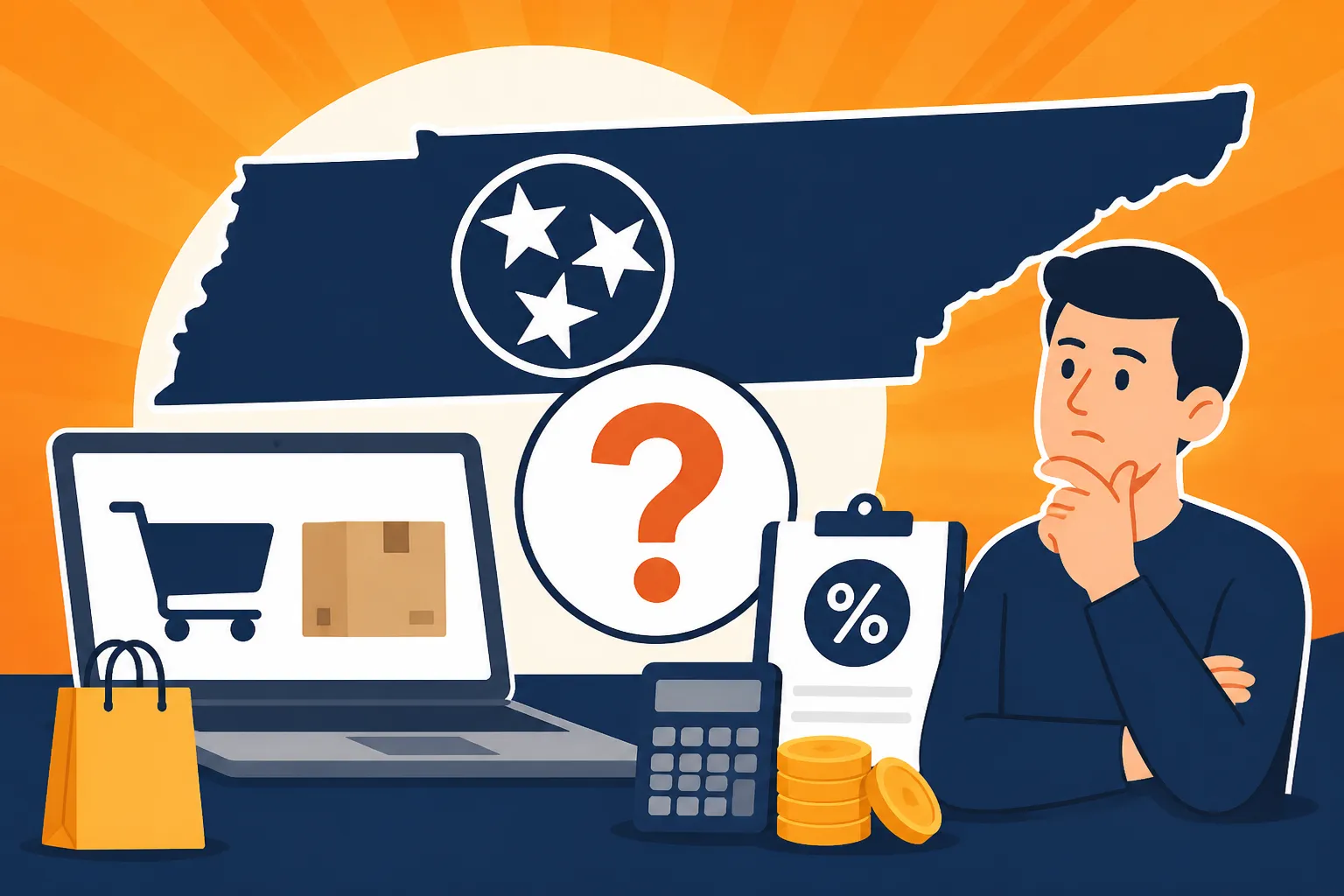
It’s a scenario many of us in Tennessee have faced: you ordered something fantastic online, maybe a unique piece of furniture or some specialized equipment for your small business, and when it arrived, you noticed something missing from the invoice – sales tax. A wave of relief might wash over you, thinking you snagged a deal, but then a little voice in the back of your head whispers, "Wait, am I actually supposed to pay tax on this?" This guide is here to clarify that exact conundrum, helping you understand Tennessee use tax and when it might apply to your purchases.
Understanding the Basics of Sales Tax vs. Use Tax in Tennessee
Let's be honest, sales tax can be confusing enough, with all its varying rates and rules across different states and even within Tennessee itself. But then we throw "use tax" into the mix, and suddenly it feels like we're navigating a labyrinth. Many folks assume that if they don't see sales tax on their receipt, they're off the hook. Unfortunately, that's not always the case, and understanding the subtle but significant distinction between sales tax and use tax is crucial.
The Fundamental Difference: Sales Tax vs. Use Tax
Think of it this way: sales tax is what the seller collects from you at the point of purchase. They act as an agent for the state, gathering those funds and then remitting them to the Tennessee Department of Revenue. This is the tax you see added to your bill when you buy a new pair of shoes at your local mall in Nashville or pick up groceries (which are generally subject to sales tax in Tennessee) from a supermarket in Memphis. It's a visible, upfront cost that's usually included in the transaction.
Use tax, on the other hand, is a self-assessed tax that you, the buyer, owe directly to the state when sales tax wasn't collected by the seller on a taxable item or service that you're now "using, storing, or consuming" in Tennessee. It's designed to level the playing field, ensuring that purchases made from out-of-state vendors aren't unfairly advantaged over those made from local Tennessee businesses that do collect sales tax. It also captures tax on goods brought into the state that weren't taxed elsewhere, or weren't taxed at the same rate. This is precisely why understanding the difference between Use Tax vs Sales Tax: What's the Difference? is so important.
Why Tennessee Cares About Use Tax
You might wonder why Tennessee, or any state for that matter, would bother with something like use tax, especially when it seems like such a hassle for individual consumers to track. The answer boils down to two main things: fairness and revenue. From a fairness perspective, the state wants to ensure that local businesses aren't at a disadvantage. Imagine a small bookstore in Chattanooga competing with a giant online retailer located in a state with no sales tax, like Oregon. If customers could always buy from the out-of-state retailer without paying any sales tax, it would put immense pressure on local businesses. Use tax helps to mitigate this.
From a revenue standpoint, sales tax is a significant source of income for Tennessee, funding everything from schools to infrastructure. If a substantial amount of purchases went untaxed simply because sellers didn't have a physical presence or "nexus" in Tennessee (before the Wayfair decision), the state would lose out on crucial funds. The South Dakota v. Wayfair: What It Means for Sellers Supreme Court decision changed how states can require out-of-state sellers to collect sales tax, but even with those changes, gaps can still exist, and that's where use tax steps in. Tennessee's state sales tax rate is 7%, one of the higher state rates, and local sales tax can add even more, reaching up to 2.75% in some areas. The use tax rate typically mirrors these combined Tennessee Sales Tax Rate (7% + Local) rates that would have been collected if the purchase had been made in-state.
Common Scenarios Where You Might Owe Tennessee Use Tax
It's easy to dismiss use tax as something that only applies to businesses, but individuals can absolutely find themselves in situations where they owe it. The key is understanding when those situations arise. It's not about being tricky or trying to catch people out; it's about ensuring the tax system is applied equitably. Most often, use tax comes into play when you're making purchases that cross state lines, either physically or digitally.
Online Purchases from Out-of-State Sellers
This is, by far, the most common scenario for individuals. You’re browsing a niche website for a custom-made item, or maybe an independent artist's shop based out of state. You add it to your cart, go through checkout, and notice there's no sales tax added to your total. Score, right? Not necessarily. If that seller doesn't meet Tennessee's Economic Nexus by State 2026: Thresholds Guide threshold (which currently stands at $100,000 in sales or 200 separate transactions into Tennessee in the current or preceding calendar year), they aren't obligated to collect sales tax from you. In this case, even though they didn't collect it, you, as the Tennessee resident, are technically responsible for remitting the Consumer Use Tax: Do I Owe It? to the state.
For example, let's say you're a big fan of vintage synthesizers and you find a perfect, rare model on a small, independent online music store based in Delaware (a state with no sales tax). The store has only sold a handful of items to Tennessee customers over the year, well below the state's economic nexus threshold. They ship the synthesizer to your home in Knoxville, and you pay $1,500 for it, with no sales tax. Since you are now "using" that taxable item in Tennessee, and no sales tax was collected, you would owe Tennessee use tax on that $1,500 purchase. While large platforms like Amazon, Etsy, and eBay generally act as Marketplace Facilitator Laws by State and collect sales tax on behalf of their third-party sellers, there are still countless smaller online retailers where this isn't the case. This is why Sales Tax for Online Sellers: Complete Guide is a critical resource for businesses.
Bringing Items into Tennessee from Out-of-State
Another frequent scenario involves purchasing an item in another state and then bringing it back to Tennessee for your personal use. Perhaps you drove down to Georgia for a weekend trip, bought a gorgeous new patio set because it was on sale, and then transported it back home to your backyard in Franklin. If you paid a lower sales tax rate in Georgia than you would have in Tennessee, or if you somehow managed to purchase it completely tax-free, you could owe use tax.
Tennessee allows a credit for sales tax legally paid to another state. So, if Georgia's sales tax rate was, say, 4% (just for example, their actual rate is higher), and Tennessee's combined state and local rate in your area is 9.25%, you would owe the difference of 5.25% to Tennessee as use tax. This is particularly relevant for large purchases like vehicles. If you buy a car from a dealership in Mississippi (which has a lower state sales tax rate than Tennessee's 7%) and then title and register it in Tennessee, you'll likely pay the Tennessee sales or use tax on that vehicle. The Department of Revenue calculates this difference when you register the vehicle, ensuring that you pay the appropriate amount for your Tennessee residency.
Business Purchases for Your Own Use
This scenario applies more to entrepreneurs and small business owners. Let’s say you run a graphic design studio in Murfreesboro. You decide to upgrade your computer software, subscribing to a specialized design application from a company based in another state. If this software provider doesn't have nexus in Tennessee and therefore doesn't charge you sales tax on the subscription, you, as the business, would be responsible for remitting the use tax on that purchase.
This also extends to office supplies, equipment, or any other tangible personal property your business buys from an out-of-state vendor without being charged sales tax, provided these items are for your business's internal use and not for resale. For example, if your marketing agency buys new desks and chairs from a supplier in North Carolina who doesn't collect Tennessee sales tax, you would owe Tennessee use tax on those items. This is a common oversight, and it’s where tools like Avalara can really help businesses keep track of their purchases and potential use tax liabilities, especially as they grow and deal with more varied suppliers. It’s a vital part of staying compliant and avoiding Sales Tax Penalties & Late Filing by State down the road.
How to Calculate and Remit Tennessee Use Tax
Now that we’ve explored the "why" and "when" of Tennessee use tax, let's talk about the practical side: "how." Calculating and remitting use tax doesn't have to be intimidating, especially once you understand the components involved. The good news is that the use tax rate generally mirrors the sales tax rate you would have paid if you had purchased the item in Tennessee.
Figuring Out the Rate: State and Local Components
In Tennessee, the state sales and use tax rate is a flat 7%. On top of that, most counties and cities levy a local sales and use tax, which can be up to 2.75%. This means your combined state and local rate could be as high as 9.75% in many areas.
A crucial point to remember for Tennessee is the cap on local sales and use tax for single items. The local sales tax applies only to the first $1,600 of the sales price of any single item of tangible personal property. This means if you buy an item for more than $1,600, the local sales tax is applied only to that initial $1,600. So, for an item costing $5,000 in an area with a 2.75% local tax:
- State Use Tax: $5,000 * 0.07 = $350.00
- Local Use Tax: $1,600 (the cap) * 0.0275 = $44.00
- Total Use Tax Due: $350.00 + $44.00 = $394.00
This cap is important for larger purchases and prevents an excessively high local tax burden on expensive single items. You can use a Sales Tax Calculator: How to Calculate Sales Tax to get a clearer picture of what combined rates might look like in specific Tennessee localities.
Reporting and Paying Your Use Tax
For individual consumers, reporting use tax often isn't as straightforward as it is for businesses. Tennessee does not have a state income tax on wages, which is often where other states provide a line item for reporting consumer use tax. However, the state does have a Hall income tax on interest and dividends for certain individuals, and use tax can be reported via the Tennessee Taxpayer Access Point (TNTAP) portal directly to the Tennessee Department of Revenue. This is the primary online system for managing various state taxes. It's designed to be user-friendly, allowing you to register, file returns, and make payments electronically.
For businesses, the process is usually integrated with their regular sales tax filing. If your business is already registered to collect and remit sales tax in Tennessee, you'll typically report any accrued use tax on the same How to File a Sales Tax Return: Step by Step return form. There's usually a dedicated line for "consumer use tax" or "purchases subject to use tax." Businesses are expected to track these purchases throughout the filing period (which could be monthly, quarterly, or annually, depending on their sales volume) and report them accordingly. If you're a small business just getting started, it's worth familiarizing yourself with these forms or looking into software solutions that can help automate this tracking and reporting, like those offered by Avalara.
Here’s a quick overview of how different situations might require you to act:
| Scenario | Item Type | Sales Tax Paid Elsewhere? | Tennessee Use Tax Owed? | How to Report |
|---|---|---|---|---|
| Online purchase, out-of-state seller | Taxable Goods/SaaS | No | Yes, if seller didn't collect and no nexus | Individual: Directly to TN Dept. of Revenue via TNTAP. Business: On your regular TN Sales & Use Tax Return (if registered). |
| Purchased in another state, brought to TN | Tangible Goods (e.g., furniture, car) | Yes, but lower rate | Yes, the difference between what was paid and TN's combined state/local rate. (Credit given for tax paid). | Individual: Often handled at vehicle registration; for other goods, directly to TN Dept. of Revenue. Business: On your regular TN Sales & Use Tax Return. |
| Purchased in another state, brought to TN | Tangible Goods | No | Yes, full TN combined state/local rate. | Individual: Directly to TN Dept. of Revenue. Business: On your regular TN Sales & Use Tax Return. |
| Business supplies from out-of-state | Office supplies, software | No | Yes, if seller didn't collect and the items are for your business's own use (not resale). | Business: On your regular TN Sales & Use Tax Return. |
| Digital Products | E-books, streaming | No | Yes, if the service/product is generally taxable in TN and the seller didn't collect. (Many digital services are taxable in TN). | Individual: Directly to TN Dept. of Revenue. Business: On your regular TN Sales & Use Tax Return. |
Understanding What Happens If You Don't Pay Use Tax? is important too, as ignoring this obligation can lead to penalties and interest. While individual consumers might fly under the radar for small, infrequent purchases, businesses, especially, are expected to be diligent. It's far better to proactively manage your use tax obligations than to face an audit later on. For further reading, explore Use Tax Explained: What It Is & When You Owe It.
Disclaimer
Please remember that this article provides general information and should not be considered legal or tax advice. Sales tax laws are complex and constantly evolving. It's always a good idea to consult with a qualified tax professional or the Tennessee Department of Revenue for advice specific to your situation.