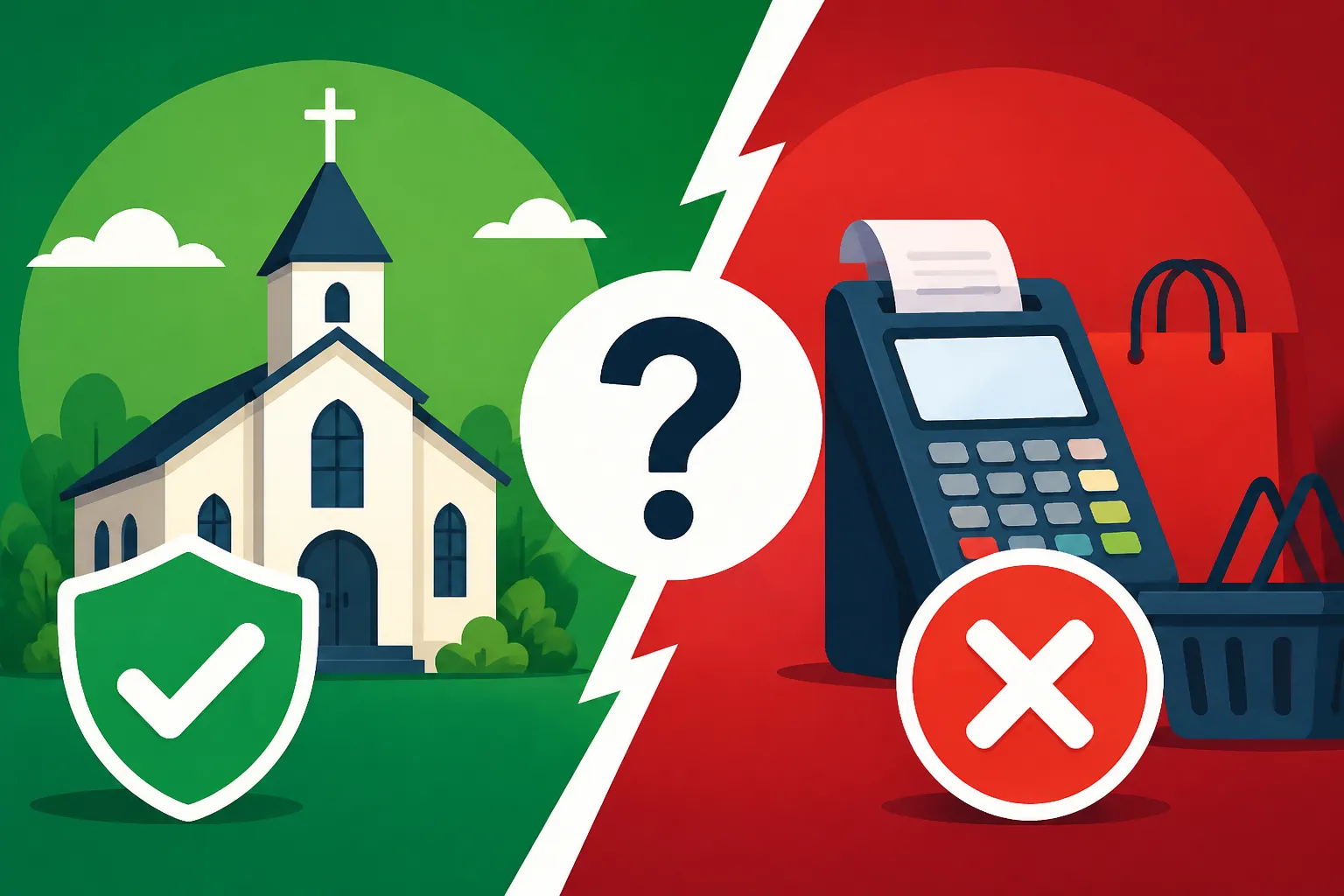
Are Churches Sales Tax Exempt?
Navigating the labyrinth of sales tax can be incredibly confusing, especially for organizations like churches that often operate under the assumption of blanket tax exemption. Many religious institutions wrestle with knowing whether their purchases, sales, or even utility bills are subject to sales tax, leading to unnecessary headaches and potential non-compliance. This comprehensive guide aims to demystify sales tax exemptions for churches, providing clarity on state-specific rules and offering practical advice to ensure your organization stays compliant without overpaying.
Understanding Sales Tax Exemptions for Churches
It's a common misconception that because a church is recognized as a non-profit organization under federal 501(c)(3) law, it automatically means they are exempt from all state and local sales taxes. This simply isn't the case, and it's where many religious leaders and administrators find themselves scratching their heads. The reality is far more nuanced, varying significantly from one state to another, and even depending on the specific type of transaction.
The General Rule: Federal vs. State Recognition
Federally, churches are typically categorized as public charities under Section 501(c)(3) of the Internal Revenue Code. This status grants them exemption from federal income tax. However, states operate under their own tax laws and regulations, and while many states do extend sales tax exemptions to 501(c)(3) organizations, it's not a universal given, nor is it always a full exemption. Each state decides individually whether to grant sales tax exemption, what that exemption covers, and how a church can apply for and maintain it.
Think of it this way: federal recognition is like getting a passport, but each state is like a different country with its own visa requirements. Just because you have a passport doesn't mean you can waltz into every country without a specific visa. For churches, a federal 501(c)(3) status is your passport, but you still need to apply for the "sales tax exemption visa" in each state where you operate or make purchases. Some states are very welcoming, offering broad exemptions, while others are much more restrictive, or perhaps don't offer any at all for sales tax. For a deeper dive into the general landscape, you might want to read our article on Nonprofit & Government Sales Tax Exemptions.
Who Qualifies as a "Church" for Exemption Purposes?
Even in states that offer sales tax exemptions for religious organizations, there's often a specific definition of what constitutes a "church" or "religious organization" for the purposes of tax exemption. It's not always as simple as having a building with a cross or a steeple. States generally want to ensure that the entity is genuinely organized and operated for religious purposes.
Common criteria states might consider include:
- Organized for Religious Worship: The primary purpose must be the advancement of religion or the celebration of religious worship.
- Regular Worship Services: The organization should hold regular, pre-scheduled religious services or meetings. This helps distinguish a true church from a private club or an individual's personal belief system.
- Distinct Legal Entity: The church is typically required to be incorporated or formally recognized as a legal entity within the state, not just an informal gathering.
- Absence of Private Inurement: No part of the net earnings should benefit any private shareholder or individual. This is a standard 501(c)(3) requirement and usually carries over to state exemptions.
- Established Place of Worship: While not always strictly a requirement, many states look for a physical location regularly used for religious activities.
For instance, a small, informal Bible study group meeting in someone's home, while certainly religious in nature, might not qualify for sales tax exemption in a state that requires formal organization and regular public worship services. On the other hand, a large, established synagogue, mosque, or temple would almost certainly meet the criteria in most states that offer these exemptions. Understanding these nuances is crucial, especially when you're just starting out or expanding your ministry.
State-by-State Breakdown of Church Sales Tax Exemptions
The sales tax landscape for churches is, frankly, a patchwork quilt across the United States. What's exempt in one state might be fully taxable in another, leading to significant confusion and administrative burdens for churches that might have operations or purchases spanning state lines.
States Where Churches are Generally Exempt
Many states offer broad sales tax exemptions for purchases made by qualified religious organizations, provided these purchases are for the organization's tax-exempt purposes. This means when your church buys hymnals, new pews, office supplies, or even materials for a new building, you likely won't pay sales tax on those items.
States like Texas, Florida, Illinois, and New York are good examples where churches, once they've applied for and received their state-specific exemption certificate, can make many purchases without incurring sales tax.
- Texas: Religious organizations are generally exempt from sales tax on items used primarily for their religious purposes. They apply for a Texas Sales and Use Tax Exemption Certificate through the Comptroller of Public Accounts.
- Florida: Churches and other non-profits apply to the Florida Department of Revenue for a Consumer's Certificate of Exemption (Form DR-14). This exempts them from sales tax on purchases of tangible personal property or services used for their exempt purposes.
- New York: Religious organizations can apply for an exempt organization certificate (Form ST-119.2) from the Department of Taxation and Finance. This allows them to make tax-exempt purchases. However, it's important to remember that not everything is always clear-cut; even in New York, special rules apply to certain services or goods. You can learn more about specific state rates in articles like New York Sales Tax Rate 4% + Local.
- Illinois: Religious organizations generally qualify for sales tax exemption on purchases of tangible personal property for their own use or consumption. They need to apply for a tax exemption identification number from the Illinois Department of Revenue.
The application process usually involves submitting your federal 501(c)(3) determination letter, along with state-specific forms and information about your organization's purpose and activities. Once approved, you'll receive an exemption certificate or number that you can present to vendors at the time of purchase. This is a critical document, and vendors will typically require it on file to justify not charging sales tax. Without it, they're obligated to collect tax. For a comprehensive overview of how to get these essential documents, see our guide on How to Get a Sales Tax Permit by State and Sales Tax Exemption Certificates Complete Guide.
States Where Exemptions are Limited or Non-Existent
While many states are generous with church sales tax exemptions, others are more constrained. It’s vital not to assume uniformity. Some states might not offer a blanket exemption, or they might have very specific limitations on what can be purchased tax-free.
For instance, Hawaii does not have a general sales tax (they have a General Excise Tax, or GET, which is applied differently and is typically passed on to the consumer), and religious organizations are not broadly exempt from the GET. While some specific activities or certain types of organizations might have limited exemptions, a church generally pays the GET on its purchases and may need to collect GET on its sales, just like any other business. This is a stark contrast to states like Texas or Florida.
Even in states that do offer a general exemption, there can be tricky situations where a church might still owe tax:
- Unrelated Business Activities: If a church engages in activities that are not directly related to its exempt purpose and are regularly carried on like a business (e.g., operating a commercial parking garage, running a for-profit gift shop), sales from these activities are usually taxable.
- Personal Use: Exemption certificates are strictly for purchases made by the church for the church's exempt purposes. A pastor buying groceries for their personal home, even if they plan to use some items for a church potluck, generally cannot use the church's exemption certificate.
- Certain Services: While tangible goods purchased by a church are often exempt, the taxability of services varies widely by state. In some states, repair services, landscaping, or consulting might still be taxable, even if performed for an exempt organization. Our article on Sales Tax on Services What's Taxable by State provides more detail on this complex area.
It's crucial for churches in these states, or those engaging in borderline activities, to consult with their state's Department of Revenue or a qualified tax professional to ensure compliance. Relying on anecdotal information or assumptions can lead to significant penalties down the road. This complexity is why some organizations opt for sales tax automation solutions, even for managing exemptions.
Practical Steps for Churches to Navigate Sales Tax
The complexities of sales tax exemptions for churches can feel daunting, but with a clear understanding of the rules and a proactive approach, your religious organization can navigate these waters with confidence. It's about being prepared, knowing your state's specific requirements, and having the right systems in place.
Obtaining and Using Exemption Certificates
This is arguably the most critical step for churches to ensure they are not overpaying sales tax on eligible purchases. An exemption certificate is your golden ticket to tax-free transactions, where applicable.
-
Application Process:
- Identify Your State's Department of Revenue: This is usually the first point of contact. Each state has a specific agency responsible for sales tax administration (e.g., California Department of Tax and Fee Administration, Texas Comptroller of Public Accounts, Florida Department of Revenue).
- Gather Required Documentation: Typically, you'll need your federal 501(c)(3) determination letter from the IRS, your church's Employer Identification Number (EIN), Articles of Incorporation, bylaws, and a description of your religious activities.
- Complete State-Specific Forms: Each state will have its own application form for non-profit or religious exemptions. Fill these out meticulously. For example, in Texas, you'd be looking for information related to "exempt organizations."
- Submit and Await Approval: Once submitted, the state will review your application. Approval times can vary, so it's wise to apply well in advance of needing to make tax-exempt purchases.
-
Using Your Certificate:
- Present to Vendors: When making a purchase for the church's exempt purposes, present your valid exemption certificate to the vendor before the transaction is finalized. Many vendors, especially larger retailers like Office Depot or Lowe's, have systems in place to record these certificates and apply the exemption at the point of sale.
- Keep Records: Both the church and the vendor should keep copies of the exemption certificate. For the church, this is crucial for audit purposes, proving why sales tax wasn't paid.
- Distinguish Church Use from Personal Use: It cannot be stressed enough: the certificate is for the church's use, not for individuals associated with the church to make personal tax-free purchases. Misusing an exemption certificate can lead to severe penalties for both the individual and the church.
Remember, the goal is to make sure your church's funds are used for its mission, not unnecessarily diverted to sales tax. Understanding your state's rules is the first step, and obtaining the correct certificate is the practical execution. Our guide on Sales Tax Exemption Certificates Complete Guide offers a broader perspective on this topic.
What If a Church Sells Goods or Services?
This is where sales tax can become particularly complex for churches. While many purchases by a church might be exempt, sales from a church often fall under different rules. Churches engage in a variety of activities to raise funds or serve their community, and not all of these are automatically exempt from sales tax.
- Fundraisers and Events: If your church holds bake sales, craft fairs, rummage sales, or events where admission is charged, the sales of these goods or tickets could be taxable. Some states offer limited exemptions for occasional or small-scale fundraising activities by non-profits, but there are often thresholds (e.g., a certain number of days per year, or total revenue limits). Exceeding these limits could trigger sales tax obligations. For example, if your church hosts a community carnival and charges for rides and food, those sales might be subject to sales tax, even if a portion of the proceeds goes to charity.
- Church Bookstores or Thrift Stores: If your church operates a permanent bookstore selling religious texts, merchandise, or a thrift store selling donated goods, these activities are often treated like any other retail business. Sales from these ventures might be fully taxable, requiring the church to obtain a sales tax permit, collect sales tax from customers, and remit it to the state. This is especially true if the prices are comparable to commercial establishments and the sales are frequent.
- Cafeterias or Coffee Shops: If your church has a café or cafeteria that is open to the public and sells food and beverages, those sales are generally taxable, similar to any restaurant. The rules around Prepared Food Sales Tax Explained apply here.
- Unrelated Business Income (UBI) Implications: Beyond sales tax, if these selling activities are substantial and not directly related to your primary religious mission, they might also trigger federal Unrelated Business Income Tax (UBIT) liabilities. It's a good reminder that tax compliance isn't just about sales tax; it's a holistic view of your organization's financial activities.
If your church is involved in selling goods or services, it's highly recommended to consult with a tax advisor specializing in non-profit and religious organizations. They can help you determine your obligations, whether you need to obtain a sales tax permit, and how to properly collect and remit sales tax. You might also want to look at how to file these taxes, as covered in How to File a Sales Tax Return Step by Step.
The Role of Sales Tax Software and Experts
Let's be real: trying to manually keep track of all these state and local sales tax rules, especially if your church has multiple locations, runs a thriving online store, or participates in many different types of fundraising, can quickly become a monumental task. The complexity can be overwhelming, leading to errors, missed deadlines, and potential penalties.
This is where technology and expert guidance truly shine. For organizations that find themselves engaging in taxable activities, even occasionally, sales tax compliance software can be an invaluable tool. Solutions like Avalara are designed to automate sales tax calculations, collection, and remittance. While often associated with for-profit businesses, a church that operates a significant online store or a chain of thrift shops across different jurisdictions might find such a system incredibly beneficial. It can help determine the correct sales tax rates based on the buyer's location (considering the nuances of Sales Tax by ZIP Code and Why ZIP Isn't Enough) and ensure that all necessary information is captured for filing.
Furthermore, leveraging the knowledge of experienced tax professionals is crucial. An accountant or tax attorney who specializes in non-profit organizations can:
- Interpret State Laws: Help you understand the specific nuances of your state's sales tax laws for religious organizations.
- Ensure Proper Registration: Guide you through the process of obtaining the necessary exemption certificates or, if applicable, sales tax permits.
- Advise on Taxable Activities: Help you classify your church's various revenue-generating activities to determine what is taxable and what is exempt.
- Audit Support: Provide assistance if your church ever faces a sales tax audit.
While investing in software or professional advice might seem like an added expense, the cost of non-compliance (penalties, back taxes, and reputational damage) can far outweigh these upfront investments. Being proactive and properly managing your sales tax obligations allows your church to focus more on its mission and less on administrative burdens.
Here’s a quick glance at how a few states handle general church sales tax exemptions:
| State | General Sales Tax Exemption for Churches? | Needs Exemption Certificate? | Exempts Sales By Churches? | Notes |
|---|---|---|---|---|
| Texas | Yes, for purchases for religious purposes | Yes | Generally No | Purchases for religious purposes are exempt. Sales by churches (e.g., fundraisers) are generally taxable unless specific small-scale exemptions apply. |
| Florida | Yes, for purchases for religious purposes | Yes | Generally No | Purchases of tangible personal property and services for religious purposes are exempt. Sales by churches are typically taxable, though limited exemptions for occasional sales may exist. |
| Hawaii | No (GET applies) | Not typically for GET | Generally No | Hawaii has a General Excise Tax (GET) which is a tax on gross receipts of businesses. Churches generally pay GET on purchases and may need to collect GET on sales, similar to other entities. No broad sales tax exemption. |
| New York | Yes, for purchases for religious purposes | Yes | Generally No | Purchases by religious organizations for their exempt purposes are exempt. Sales made by churches are usually taxable, with some minor exceptions for occasional sales. |
| California | Yes, for purchases for religious purposes | Yes | Generally No | Purchases of tangible personal property by religious organizations for their exempt purposes are generally exempt. Sales by churches are taxable, especially if regular commercial activity. Check California District Taxes Explained for nuances. |
Disclaimer: This table provides a general overview and is not exhaustive. State laws are subject to change, and specific situations may vary. Always consult official state tax resources or a qualified tax professional.
Remember, the goal is clarity and compliance. Don't let the complexities of sales tax overshadow your church's vital work in the community. With the right information and processes, you can ensure your resources are dedicated to your mission.
Disclaimer
The information provided in this article is for general informational purposes only and does not constitute professional tax advice. Sales tax laws are complex and vary significantly by state and locality, and they are subject to change. While we strive to provide accurate and up-to-date information, we make no guarantees regarding the completeness, accuracy, or reliability of any information presented herein. Always consult with a qualified tax professional or your state's Department of Revenue for advice tailored to your specific situation. Relying on this information without professional consultation is at your own risk.