Are Backpacks Tax-Free During Tax Holiday?
Figuring out exactly what qualifies for a sales tax holiday can feel like trying to solve a riddle, especially when you're rushing to get everything ready for back-to-school. It’s frustrating when you think you’re snagging a deal, only to find out a specific item isn't included. When it comes to essential items like backpacks, the rules aren't always straightforward. This guide will walk you through the ins and outs of sales tax holidays, clarifying whether backpacks typically make the cut, what conditions might apply, and how you can stay informed.
Understanding Sales Tax Holidays and Their Purpose
Sales tax holidays are a little slice of relief offered by states, typically for a weekend or a longer period, where certain purchases are exempt from sales tax. The idea is to give consumers a break, often coinciding with major shopping seasons like the return to school or preparedness for severe weather. It sounds simple, but the devil is in the details, and those details change from state to state and even year to year.
The General Idea Behind Tax-Free Weekends
Think of a sales tax holiday as a temporary pause button on the usual tax you'd pay at the register. States introduce these holidays to stimulate economic activity and lighten the financial load on families, especially those with children heading back to school. During these designated periods, shoppers can buy qualifying items without paying state sales tax, and often local sales tax too, which can add up to significant savings on a big shopping trip.
The types of items typically included often revolve around tangible personal property that's deemed "essential" or beneficial. For back-to-school holidays, this usually means clothing, school supplies, and sometimes even computers or other electronics. It’s easy to get lost in the fine print, however, because what one state considers a "school supply," another might not, or they might impose strict price limits. You can find a comprehensive list of these events in our guide to Sales Tax Holidays by State 2026: Full Calendar.
Common Categories Included in Back-to-School Holidays
Most back-to-school sales tax holidays focus on a few key categories. "School supplies" is almost always on the list, encompassing things like pens, pencils, notebooks, paper, crayons, binders, and calculators. Then there's "clothing and footwear," which typically includes everyday apparel items. Some states also extend the holiday to "computers and related accessories," and even "preparedness items" in other types of holidays.
The challenge comes with items that bridge categories or have multiple uses. For instance, is a lunchbox considered a "school supply"? What about a tablet that could be used for schoolwork but also for entertainment? Each state crafts its own definition, and what is tax-exempt in Florida might not be in Texas. This variability is why it's so important to dig into the specifics for your particular state, which we cover in detail in our Tax-Free Weekend Back-to-School Guide 2026. Without checking, you might miss out on savings or, worse, budget for a discount that doesn't materialize.
Are Backpacks Specifically Covered? Decoding the Rules
This is where the rubber meets the road for many parents and students. Backpacks are a quintessential back-to-school purchase, but their tax-exempt status during holidays isn't uniform across all states that offer these breaks. You can't just assume they're included; you need to know the specific rules.
State-by-State Breakdown: Where Backpacks are Explicitly Tax-Free
The good news is that many states do include backpacks in their back-to-school sales tax holidays. They often fall under the "school supplies" category, or sometimes even "clothing accessories," depending on how the state defines things. However, this inclusion almost always comes with a caveat: a price limit.
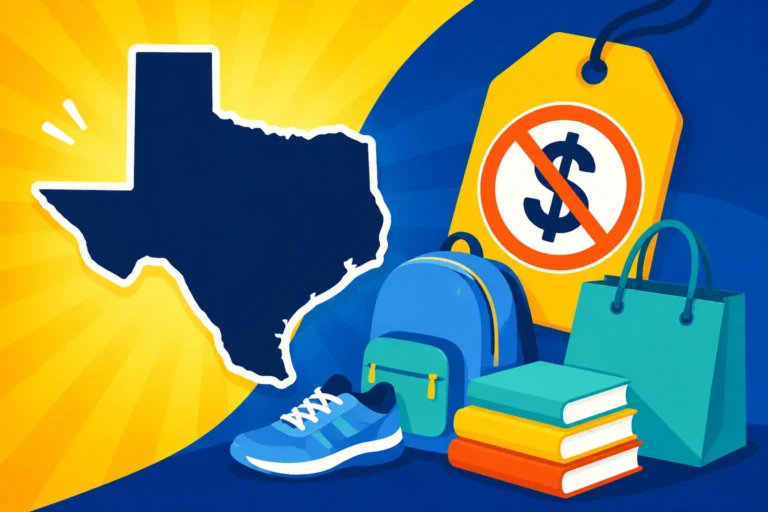
For example, states like Florida often list "backpacks" explicitly under their school supply exemption, typically with a price cap, perhaps $50 or $60 per item. This means that if you're shopping for a standard, functional backpack within that price range, you're likely in the clear. Similarly, the Texas Tax-Free Weekend 2026 (Aug 7-9) often includes backpacks as part of its general clothing and footwear exemption, provided they meet certain price criteria and are generally considered school-use items.
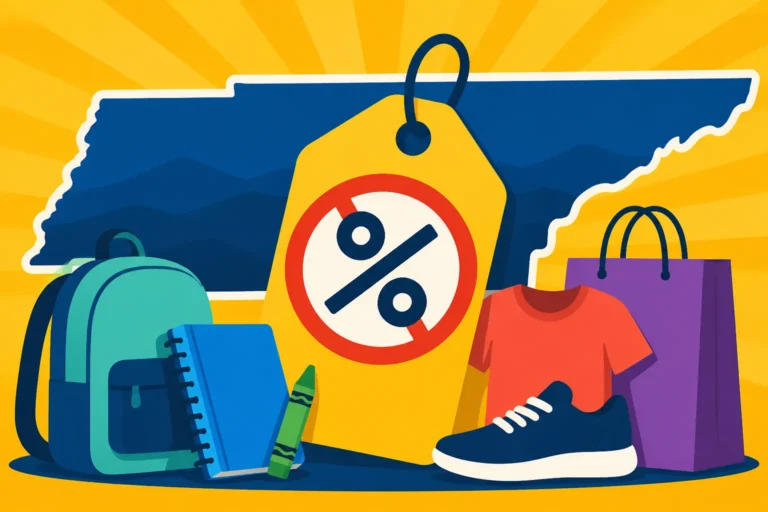
Other states that frequently include backpacks are Alabama, Arkansas, Maryland, Missouri, New Mexico, Oklahoma, South Carolina, and Tennessee. However, it's crucial to check the specific details for your state's current year, as these rules can shift. Sometimes, a state might specify that a backpack must be "designed to carry school supplies" to qualify, excluding more fashion-oriented bags that don't fit the functional definition. Always consult your state's Department of Revenue website or specific holiday guidance. For instance, the Tennessee Tax-Free Weekend 2026 (Jul 24-26) has clear guidelines for what constitutes eligible school supplies.
Price Limits and Other Conditions for Backpack Exemptions
It's rare to find a blanket exemption for all backpacks, regardless of cost. The most common condition states impose is a price limit per item. This is designed to ensure the tax holiday primarily benefits families purchasing necessary items rather than luxury goods. These limits can vary widely, from as low as $50 to as high as $100 or even $175 in some cases, although the higher limits are typically for clothing or footwear. Our guide on Tax-Free Weekend Clothing Price Limits ($100) gives a good overview of how these caps work.
Imagine you're in Florida Back-to-School Tax Holiday (All August), where backpacks might have a $50 limit. If little Timmy wants that super durable, ergonomic backpack with all the bells and whistles for $150, you'd only save tax on the first $50 if the state's rule applies only up to that threshold, or more likely, the entire purchase would be taxable since it exceeds the per-item cap. It's not a pro-rated discount; it's an all-or-nothing deal based on whether the item's price falls within the limit.
Beyond price, some states might also consider the item's primary use. Is it a backpack specifically for carrying school books and supplies, or is it a designer handbag that could theoretically hold a notebook? States generally aim to exempt items clearly intended for educational purposes. So, while a basic canvas backpack is usually safe, a high-end leather tote might not be, even if a student plans to use it for school.
Here's a simplified look at how some states typically handle backpacks during tax holidays, keeping in mind that specific rules and dates change annually:
| State | Backpack Inclusion (Typical) | Common Price Limit (Approx.) | Notes |
|---|---|---|---|
| Alabama | Yes, as school supply | $50 | Part of a broader school supply exemption. |
| Arkansas | Yes, as school supply | $50 | Often specified for use by students. |
| Florida | Yes, as school supply | $50 or $60 | Explicitly listed during their August holiday. |
| Maryland | Yes, as clothing accessory | $100 | Often falls under clothing, subject to cap. |
| Missouri | Yes, as school supply/clothing | $50 (supplies), $100 (clothing) | Can vary based on how it's categorized. |
| New Mexico | Yes, as school supply | $50 | Specific to school supplies list. |
| Oklahoma | Yes, as clothing/footwear | $100 | Often grouped with clothing items. |
| South Carolina | Yes, as clothing/school supply | No set limit, broad categories | Generally broad; check state list for specific year. |
| Tennessee | Yes, as school supply/clothing | $100 | Specific to school supplies and clothing. |
| Texas | Yes, as clothing/footwear | $100 | Usually part of their general clothing & footwear list. |
| Virginia | Yes, as school supply/clothing (Expiring) | $20 (school supplies), $100 (clothing) | Historically had a holiday, but the consolidated holiday is expiring after July 2026. |
Disclaimer: This table provides typical examples. Always verify the most current rules, dates, and item lists directly with your state's Department of Revenue prior to making purchases, as tax laws and holiday inclusions are subject to change.
What to Do If Your State Doesn't Explicitly Exempt Backpacks
If you find that your state's sales tax holiday doesn't explicitly include backpacks, don't despair! While it's certainly a bummer to miss out on those savings, there are still strategies you can employ to minimize your costs and ensure you're getting the best value for your back-to-school budget.
Exploring Other Potential Exemptions for School Supplies
Even if "backpacks" aren't explicitly named, some general "school supplies" categories might offer a loophole for certain types of bags. For instance, a very basic drawstring bag, often used for gym clothes or lighter items, might occasionally be categorized as a general school supply in some states if its primary function is clearly for school-related transport, rather than as a primary backpack. This is a rare occurrence and highly dependent on state-specific definitions, so it's not something to bank on, but it's worth a quick check of the detailed list of What Qualifies for Tax-Free Weekend? for your state.
Beyond backpacks, remember that the vast majority of traditional school supplies are almost always exempt. So, stock up on pens, notebooks, folders, glue sticks, and art supplies. Don't forget that items like certain textbooks or even computer software for educational use might also be included in some states' exemptions. Maximize your savings on these guaranteed items, even if the backpack doesn't make the cut.
Smart Shopping Strategies Beyond Tax Holidays
Let's be realistic: sometimes, the sales tax holiday savings aren't the biggest discount you can get. Retailers know when these holidays are happening, and they often run their own sales promotions concurrently or just before/after the tax-free period.
Here are a few smart shopping strategies:
- Compare Store Sales vs. Tax Savings: A 20% off coupon from your favorite department store might save you more than a 6-8% sales tax exemption on a higher-priced item like a backpack. For instance, if you're looking at a $80 backpack, saving 7% in sales tax is $5.60. But a 20% off coupon on that same backpack saves you $16! Always do the math. Our article on How Much Can You Save on Tax-Free Weekend? can help you calculate potential savings.
- Utilize Loyalty Programs and Credit Card Rewards: Don't forget to stack savings! Use store loyalty points, cash-back apps, or credit cards that offer bonus rewards on back-to-school categories.
- Consider Off-Season Shopping: While back-to-school sales are great, sometimes the best deals on essentials like quality backpacks can be found during end-of-season clearances or holiday sales later in the year, assuming you don't need it immediately.
- Look for Bundles and Promotions: Retailers might offer "buy one, get one half off" on school supplies or a free smaller item with a backpack purchase. These can often yield better overall value than just the tax exemption.
- Shop Smart Online: Many online retailers participate in sales tax holidays, but confirm their policy before checkout. Ensure the tax is removed from qualifying items in your cart.
Staying Informed About Tax Holiday Rules
The world of sales tax is anything but static. Rules are constantly evolving, and what was true last year might not hold true for the current year's tax holiday. Staying on top of these changes is essential for both consumers hoping to save and businesses striving for compliance.
The Ever-Changing Landscape of Sales Tax Holidays
State legislatures are always tweaking tax laws. A state might decide to add new items to its tax holiday list, remove others, or adjust price caps based on economic conditions or lobbying efforts. For example, some states, like Virginia, have made significant changes to their tax holiday structure, with their consolidated sales tax holiday set to expire after July 2026. This means that future back-to-school shoppers in Virginia will need to be aware that the landscape is shifting. Keeping an eye on broader 2026 Sales Tax Rate Changes by State can sometimes provide hints about upcoming adjustments to exemptions as well.
These changes can sometimes be subtle – perhaps a backpack needs to be below $50 this year instead of $60, or a new category like "athletic footwear" is added. It's easy to overlook these minor adjustments, but they can directly impact whether your planned purchases qualify for the tax exemption. Relying on outdated information is a common pitfall that can lead to unexpected charges at the register.
Tools and Resources for Accurate Information
The best place to start for accurate, up-to-the-minute information is always your state's Department of Revenue (or equivalent tax authority) website. They are the official source and will publish detailed guidance well in advance of any sales tax holiday. Look for specific publications or FAQs related to the "back-to-school" or "sales tax holiday" events for the current year.
For businesses, tracking these ever-changing rules across multiple states is a monumental task. That's where sales tax compliance solutions come into play. Companies like Avalara specialize in helping businesses calculate, collect, and remit sales tax accurately across thousands of jurisdictions. While primarily for businesses, their existence ensures that when you shop, the system is designed to correctly apply (or not apply) sales tax based on the latest rules. If a retailer uses robust software, you can be more confident that the tax holiday exemption will be correctly applied at checkout, without you having to argue the point.
Additionally, various online platforms and news outlets often provide summaries of upcoming tax holidays. However, always double-check these against the official state sources. Many excellent Sales Tax Rate Lookup Tools Compared exist for general sales tax rates, but for holiday specifics, the state's direct guidance is king. For a deeper dive into the technological side of sales tax, exploring options from our list of the Best Sales Tax Compliance Software 2027 can provide valuable insights into how these complex rules are managed behind the scenes, benefiting both sellers and savvy shoppers.
Disclaimer
Please remember that sales tax laws and holiday exemptions are subject to change. The information provided in this article is for general guidance only and does not constitute professional tax advice. Always consult your state's official Department of Revenue website or a qualified tax professional for the most current and accurate information pertaining to your specific situation.