Are Digital Products Taxable in California?
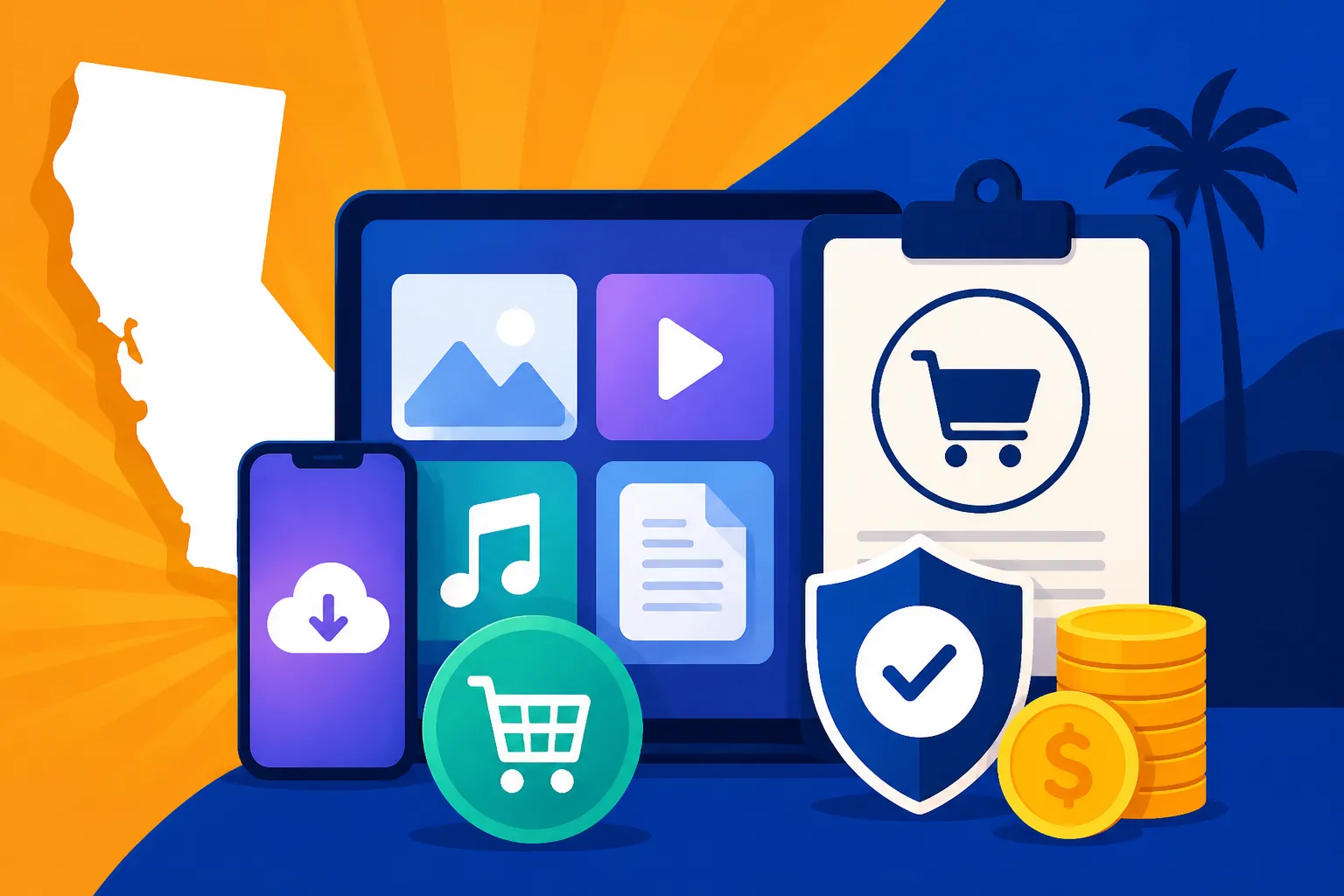
Selling digital products is the modern gold rush, but when it comes to sales tax, many business owners feel like they're panning in a muddy river. The rules around digital goods, especially in a complex state like California, can be incredibly murky, leaving you wondering if you're collecting enough, too much, or even when you need to collect at all. This guide is here to help you understand California's approach to taxing digital products, so you can navigate the landscape with confidence.
Understanding Digital Products in the Golden State's Tax Landscape
California's sales tax laws are rooted in the concept of "tangible personal property." This means that generally, if something isn't a physical item you can touch, hold, or possess in a traditional sense, it might not be subject to sales tax. This fundamental principle is key to understanding how digital products are treated in the state.
What Qualifies as a "Digital Product" for Sales Tax Purposes?
When we talk about "digital products," we're really encompassing a huge range of items that are delivered electronically. This could be anything from a downloadable e-book or a piece of software you install on your computer, to a subscription for streaming music or videos, an online course, or even digital art files. The common thread is that there's no physical medium exchanged in the primary transaction.
In California, the distinction boils down to whether the customer receives a tangible item. For instance, if you purchase an e-book and download it directly to your tablet, it’s a purely digital transaction. However, if that same e-book came pre-loaded on a USB drive that was then mailed to you, the physical USB drive would introduce a tangible component. This seemingly small difference can dramatically alter its sales tax status.
Many states have proactively updated their laws to specifically address the taxation of digital goods, recognizing the shift from physical to digital consumption. California, however, tends to rely on its long-standing definition of tangible personal property, which often places purely digital products outside the traditional sales tax net unless other factors come into play. It's a nuanced area, and understanding these definitions is your first step.
The Core Rule: California's Tangible Personal Property Focus
California's sales tax, administered by the California Department of Tax and Fee Administration (CDTFA), applies primarily to the retail sale of "tangible personal property." Think of tangible personal property as something you can see, weigh, measure, feel, or touch, and which is not real estate. This includes physical goods like clothing, furniture, electronics, or even a printed book.
Because purely digital products – like a music file you download or a streaming movie you watch – are not considered "tangible personal property" by the CDTFA when delivered electronically, they are generally not subject to sales tax in California. This is a significant distinction from many other states that have enacted specific laws to tax digital goods or services, regardless of their tangibility.
For example, if you sell a digital template that a customer downloads instantly, California typically sees this as the sale of an intangible right or service, not a tangible product. The challenge for businesses, especially those selling nationwide, is that what's non-taxable in California might be fully taxable in a neighboring state like Texas or Washington. This difference often leads to much confusion and frustration for online sellers.
When Purely Digital Products Can Become Taxable in California
While the general rule in California leans towards not taxing purely digital products delivered electronically, there are crucial exceptions and scenarios where sales tax absolutely applies. These usually involve situations where a digital product somehow becomes intertwined with tangible personal property or a service that results in a tangible outcome.
The "True Object" Test and Mixed Transactions
One of the most common ways a digital product becomes taxable in California is through what's often referred to as a "mixed transaction" or by applying the "true object" test. This test asks: "What is the true object the buyer is seeking?" If the buyer is ultimately seeking a tangible piece of property, even if digital elements are involved, then sales tax might be due on the entire transaction.
Consider a scenario where you sell custom-designed digital art. If you simply email the digital file to your client, it's typically not taxable. However, if your client hires you to create that digital art, and then you print that art onto a canvas or poster and ship it to them, the transaction becomes taxable. The "true object" of the sale, in that case, was the physical, printed artwork, not just the digital design service. The digital component is incidental to the tangible product. Similarly, if you sell software that can be downloaded, but also offer the option to receive a physical backup disc, the sale of the physical disc (and potentially the entire bundled transaction, depending on how it's priced) would be subject to sales tax. This principle is why understanding how combined sales tax rates work can be so important for businesses that offer a mix of products.
Another example: an online course that includes a physical textbook or workbook mailed to the student. If the physical materials are a significant part of the value proposition, the entire package might become taxable, or at least the tangible portion would be. The CDTFA scrutinizes these bundled transactions to determine if the digital elements are merely incidental to a larger sale of tangible personal property.
Specific Digital Services and Their Tax Implications
Beyond the "true object" test, it's also important to differentiate between digital products and digital services, as California treats them differently. For instance, Software-as-a-Service (SaaS) is a popular offering where users access software remotely over the internet without downloading it. In California, SaaS is generally considered a service, and services are typically not subject to sales tax unless specifically enumerated in the law. This means most SaaS subscriptions are not taxed.
However, the line can get blurry. What if you sell pre-written, "canned" software that customers download directly to their computers? If that software is delivered electronically (e.g., via download link), California generally considers it an intangible and therefore non-taxable. But if that exact same software is delivered on a CD-ROM or USB drive, it becomes tangible personal property and is taxable. This highlights how critical the delivery method is in California. This is a key difference when considering if software is taxable as a service or a product.
Custom software development is another area that frequently comes up. When a developer creates unique software tailored specifically for a client, this is considered a service and is generally not taxable. The client isn't buying a pre-existing tangible item; they are paying for the expertise and labor to create something new. This contrasts sharply with buying a licensed copy of Microsoft Office, for example, which, if delivered physically, would be taxable. Understanding these nuances is crucial for businesses selling a mix of digital solutions.
Navigating the Gray Areas and Common Pitfalls
The digital economy is constantly evolving, and sales tax laws, even in states like California that are slow to adapt, struggle to keep pace. This creates gray areas that can be challenging for businesses to navigate. The key is to pay close attention to the details of each transaction and how the state defines "tangible personal property."
The Importance of Delivery Method
In California, the method by which a digital product reaches your customer is arguably the most critical factor in determining its taxability. If the item is delivered solely through electronic means, such as a direct download, streaming access, or email attachment, it generally remains untaxed. The moment a physical medium enters the picture, even incidentally, the tax rules can flip.
Imagine you sell high-resolution digital photographs. If a customer buys a license to download the digital file and print it themselves, it's typically not taxable. However, if you offer to print that photograph for them and mail it, the transaction becomes taxable. The CDTFA's guidance emphasizes that the sale of digital content downloaded by the customer is not a sale of tangible personal property. This rule is a lifeline for many online creators and digital content providers operating solely in the digital realm within California. This also ties into the discussion around Is Shipping Taxable in California?.
This also applies to pre-written software. If a customer downloads the software from your website, it's likely non-taxable. But if they receive the same software on a USB drive through the mail, even if the software itself is identical, the presence of that tangible storage device makes the sale taxable. It’s a subtle but powerful distinction that often catches businesses off guard. Always consider the pathway the product takes from your business to the customer.
Staying Compliant with Shifting Regulations
While California has historically maintained a consistent stance on taxing tangible personal property, tax laws are never static. Economic Nexus by State 2026: Thresholds Guide highlights how states are constantly updating their regulations to capture revenue from online sales, and digital product taxation is a hot topic across the nation. What's not taxable today might be tomorrow, or existing interpretations might be clarified in a way that impacts your business.
For businesses operating in California and beyond, staying on top of these potential changes is paramount. Ignoring the nuances could lead to significant liabilities, penalties, and interest down the line. It's not uncommon for states to issue new guidance, update their administrative codes, or even pass new legislation that specifically addresses digital goods. This is why many businesses opt for sales tax automation software. Solutions like Avalara constantly monitor these changes, update tax rates, and help categorize products correctly, ensuring that businesses remain compliant without needing to be tax law experts themselves.
The complexity only grows for businesses that have Sales Tax Nexus Explained Physical vs Economic in multiple states. Each state has its own definitions and rules for what constitutes a digital product and whether it's taxable. A proactive approach involves regular review of CDTFA publications, consulting with tax professionals, and leveraging technology to manage sales tax obligations accurately. This will help you focus on your business rather than constantly worrying about ever-changing tax codes.
| Digital Product Category | California Sales Tax Status (General) | Notes |
|---|---|---|
| Downloadable E-books | Generally Not Taxable | Unless delivered on physical media. |
| Streaming Music/Video | Generally Not Taxable | Considered a service or intangible. |
| Downloadable Software | Generally Not Taxable | Unless delivered on physical media. |
| Software-as-a-Service (SaaS) | Generally Not Taxable | Considered a service. |
| Online Courses (digital only) | Generally Not Taxable | If no tangible components are included. |
| Digital Art/Photos (download) | Generally Not Taxable | Unless printed and shipped by seller. |
| Digital Games (download) | Generally Not Taxable | Unless delivered on physical media. |
| Custom Software Development | Generally Not Taxable | Considered a service. |
| Digital Templates (download) | Generally Not Taxable | For design, documents, etc. |
| Website Hosting Services | Generally Not Taxable | Considered a service. |
Disclaimer
The information provided in this article is for general informational purposes only and does not constitute tax advice. Sales tax laws are complex and subject to change. Always consult with a qualified tax professional or the California Department of Tax and Fee Administration (CDTFA) for advice specific to your business situation.