Los Angeles Sales Tax Rate
Navigating the labyrinth of sales tax rates can feel like a full-time job, especially when you're doing business in a bustling, diverse region like Los Angeles. One minute you think you have it figured out, and the next you realize a customer just across the street has a different rate. This guide is here to untangle the complexities of the Los Angeles sales tax rate, breaking down the state, county, and district components so you can confidently understand and apply the correct tax.
Understanding the Los Angeles Sales Tax Rate
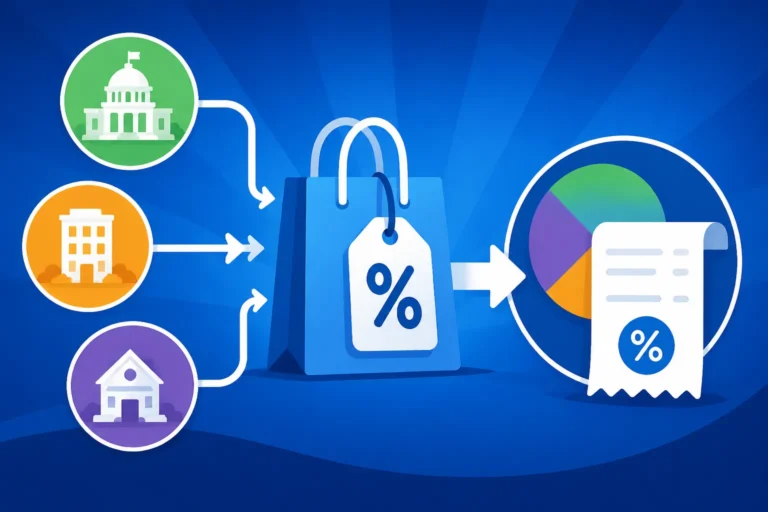
When you talk about the "Los Angeles sales tax rate," it's not just one simple number you can always rely on. It's a layered cake, a combination of state, county, and various local district taxes, which can make it feel like you need a detective agency just to figure out what to charge. But once you understand the components, it starts to make a lot more sense.
The California State Base Rate
At the very foundation of any sales tax calculation in Los Angeles, or anywhere else in the Golden State for that matter, is the statewide base rate. This is the rate that the State of California imposes across all its jurisdictions, and it's pretty consistent. As of 2024, the statewide base sales tax rate is 7.25%. This portion of the tax helps fund essential state services, from education to infrastructure projects, impacting every resident and business equally. It’s the fixed starting point from which all other local taxes are added, making it critical to know.
Think of this 7.25% as the bedrock. No matter if you're selling artisanal coffee in Venice Beach, high-end fashion in Beverly Hills, or car parts in the Valley, this piece of the puzzle remains constant. You can learn more about this foundational element in our article on the California Sales Tax Rate (7.25% Base + Districts). It's designed to be straightforward, but the real fun begins when local jurisdictions start adding their own slices to the pie.
Los Angeles County and District Add-ons
Here's where things get interesting, and frankly, a bit more challenging for businesses. On top of that 7.25% state rate, Los Angeles County tacks on its own uniform county rate. For Los Angeles County, this rate is an additional 1.00%. This brings the combined state and county rate to 8.25% right off the bat for most of the county. But wait, there's more! Various cities and special districts within Los Angeles County impose their own district taxes, which are often the culprit behind the widely varying rates you encounter.
These district taxes are typically approved by local voters to fund specific initiatives like public transportation improvements, local school programs, or other community projects. For instance, many areas within Los Angeles County, including a significant portion of the City of Los Angeles itself, have a combined rate that often sits around 9.5%. This typically includes the 7.25% state rate, the 1.00% county rate, and an additional 1.25% in various district-specific add-ons. However, some cities within Los Angeles County, like Santa Monica or Culver City, might have additional layers of district taxes, pushing their local combined sales tax rate even higher, sometimes to 10.25% or beyond. It’s a patchwork, and it’s why just knowing you’re "in LA" isn't enough. Our guide on California District Taxes Explained dives deeper into how these unique local levies impact your bottom line.
Why Sales Tax Varies So Much in Los Angeles
The sheer size and complexity of Los Angeles County, with its dozens of incorporated cities and unincorporated areas, means that a "one-size-fits-all" approach to sales tax simply doesn't work. What you collect in downtown Los Angeles might be different from what your competitor collects in Pasadena, even though both are relatively close geographically and within the same county. This variability is a huge pain point for businesses, especially those operating across multiple locations or selling online.
The Role of Special District Taxes
The primary reason for the diverse sales tax landscape in Los Angeles is the existence of special district taxes. These aren't just arbitrary numbers; they are specific levies approved by the voters within a defined geographic area to fund particular local services. For example, Measure R in Los Angeles County, passed in 2008, added a half-cent sales tax to fund transportation projects. More recently, Measure M in 2016 further extended and expanded these transportation funding efforts, adding another half-cent to the county's sales tax. These cumulative additions contribute significantly to the overall rate.
It’s not uncommon to see rates climb higher in certain pockets because of these local measures. Imagine a hypothetical scenario: a small apparel shop in the heart of Hollywood might have a 9.5% sales tax rate. But if that shop moved a few miles west into Santa Monica, they might find themselves collecting at a 10.25% rate due to additional local transportation or public safety district taxes. These differences, while seemingly small, can add up quickly for businesses processing hundreds or thousands of transactions a day. Understanding which district taxes apply where is crucial, and it’s a constant challenge for even the most diligent business owners.
How to Find the Exact Rate by Address or ZIP Code
Given this intricate web of district taxes, you might think you can just look up a ZIP code and get your answer. And while a ZIP code can give you a general idea, it's often not precise enough in areas like Los Angeles. A single ZIP code can span multiple taxing jurisdictions, meaning two businesses within the same ZIP code could actually be subject to different sales tax rates! This is because district boundaries don't always align neatly with ZIP codes.
The most accurate way to determine the sales tax rate for a specific transaction in Los Angeles is to use the full street address. Many states, including California, recommend or require address-level accuracy for sales tax calculation. There are various sales tax lookup tools, including those offered by compliance software providers like Avalara, that can pinpoint the exact rate based on a street address. Relying solely on a ZIP code is a common pitfall that can lead to incorrect collections, either overcharging customers or under-collecting, which could result in your business owing the difference to the state. Our comprehensive article on Sales Tax by ZIP Code (and Why ZIP Isn't Enough) elaborates on why this level of detail is so critical.
Calculating Sales Tax for Businesses and Consumers in LA
Once you grasp the various components, actually calculating the sales tax for a purchase in Los Angeles becomes more manageable. However, for businesses, especially those selling across state lines or online, the process involves more than just simple multiplication. It requires understanding sourcing rules and applying the correct rate at the point of sale.
Step-by-Step Calculation for a Typical Purchase
Let's walk through an example. Imagine you're buying a new gadget from an electronics store in a part of the City of Los Angeles where the combined sales tax rate is 9.5%.
- Identify the Product Price: Let's say the gadget costs $200.
- Determine the Applicable Sales Tax Rate: In our example, it's 9.5%, or 0.095 as a decimal.
- Calculate the Sales Tax Amount: Multiply the product price by the sales tax rate: $200 x 0.095 = $19.00.
- Calculate the Total Price: Add the sales tax amount to the product price: $200 + $19.00 = $219.00.
So, for a $200 item, you'd pay $19.00 in sales tax, making your total $219.00. This seems straightforward, right? But remember, if that same gadget were purchased in a different part of the county with a 10.25% rate, the tax would be $20.50, and the total would be $220.50. This is why accuracy is paramount. For a deeper dive into the mechanics, check out our guide on How to Calculate Sales Tax (Step by Step).
Implications for Online Sellers and Local Businesses
For local brick-and-mortar businesses in Los Angeles, collecting the correct sales tax usually means applying the rate that's effective at their store's physical location. It’s relatively simple: the customer pays the rate specific to where the transaction occurs.
However, for online sellers, things get significantly more complex due to "sales tax nexus" and sourcing rules. If an online seller has a physical presence (nexus) in California, they are generally required to collect sales tax from California customers. The challenge then becomes which local rate to apply. California is an origin-based state for intrastate sales (sales within California) and a destination-based state for interstate sales (sales from outside California into California). This means if your business is located in California, and you sell to a customer also in California, you generally collect the sales tax rate of your business's location. If your business is outside California but you have economic nexus here (meaning you've met certain sales thresholds, like California's $500,000 threshold), and you sell to a California customer, you would typically collect the sales tax rate of the customer's shipping address (destination-based).
This distinction is massive. Imagine an online clothing retailer based in San Diego selling a shirt to a customer in Los Angeles. If the retailer is based in California, they'd apply the San Diego rate (origin-based). But if a retailer in Arizona with California economic nexus sells that same shirt to the Los Angeles customer, they'd apply the Los Angeles destination rate. It's a key difference that can profoundly affect how much sales tax you need to collect and remit. Our article on Origin vs Destination Sales Tax Sourcing offers a comprehensive explanation of these rules. Compliance tools like Avalara can automate these complex calculations, ensuring that online sellers, regardless of their location, apply the precise Los Angeles rate based on the customer’s shipping address when applicable.
Key Considerations for Sales Tax in Los Angeles
Beyond just knowing the rate, there are other critical aspects of sales tax that businesses operating in or selling into Los Angeles need to keep in mind. From understanding what's taxable to staying on top of filing requirements, these details can significantly impact your compliance and financial health.
Taxable vs. Exempt Items
It’s not enough to know the rate; you also need to know what to apply it to. In California, tangible personal property is generally taxable. This includes most goods you'd buy in a store – clothing, electronics, furniture, books, and so on. However, not everything falls under this umbrella. Groceries, for instance, are generally exempt from sales tax in California, though prepared food sold at restaurants is usually taxable. Services are typically not subject to sales tax unless they are part of the sale of tangible personal property (like assembly charges for a taxable item) or specifically enumerated as taxable by law.
Consider the classic example of clothing. While most clothing is taxable, some states have specific exemptions. For instance, in New York, clothing and footwear under $110 per item are exempt from state sales tax, though local taxes may still apply. California doesn't have such a blanket exemption based on price, so pretty much all clothing is taxable at the full combined rate. Our guide, Is Clothing Taxable in California?, provides a detailed look at how this applies specifically in the state. Keeping track of these distinctions is crucial, as misclassifying items can lead to under-collection or over-collection, both of which can cause headaches with the California Department of Tax and Fee Administration (CDTFA).
Staying Compliant with LA's Complexities
Given the dynamic nature of sales tax rates, particularly with district taxes changing and being introduced, staying compliant is an ongoing challenge. Businesses need to ensure their point-of-sale (POS) systems, e-commerce platforms, or manual processes are updated with the most current rates for every applicable jurisdiction within Los Angeles County. This is where automation really shines. Sales tax software like Avalara constantly monitors rate changes and updates, providing businesses with accurate, real-time rates for every transaction.
Beyond just collecting, businesses also have the responsibility to properly file their sales tax returns with the CDTFA. This involves knowing your filing frequency (e.g., monthly, quarterly, annually) and adhering to strict due dates. Failing to file on time or remitting incorrect amounts can result in penalties and interest. For new businesses, the process begins with obtaining a seller's permit from the CDTFA. You'll need this before you even start making taxable sales. Our guide on How to Get a Seller's Permit in California walks you through the steps. Moreover, understanding your filing frequency, as explained in Sales Tax Filing Frequency Explained, and knowing the specific California Sales Tax Due Dates 2026 are vital pieces of information for maintaining good standing with the state. Businesses also need to be prepared to provide a Resale Certificate in California (CDTFA-230) if they are buying goods for resale, ensuring they don't pay tax on inventory they plan to sell to end consumers.
Los Angeles Sales Tax Rate Breakdown Table
To help visualize the layered nature of sales tax in Los Angeles, here’s a simplified breakdown showing how the different components can add up to the common rates seen in Los Angeles County. Keep in mind that specific district taxes can vary widely.
| Sales Tax Component | Rate | Cumulative Rate (Example 1: Common LA) | Cumulative Rate (Example 2: Higher District) |
|---|---|---|---|
| California State Base Rate | 7.25% | 7.25% | 7.25% |
| Los Angeles County Rate | 1.00% | 8.25% | 8.25% |
| LA County Transportation | 0.50% | 8.75% | 8.75% |
| LA County Transportation | 0.50% | 9.25% | 9.25% |
| Other District Add-ons | 0.25% | 9.50% (Common LA Rate) | 9.50% |
| Additional Local District | 0.75% | N/A | 10.25% (e.g., Santa Monica, Culver City) |
| Total Combined Rate | Varies | 9.50% | 10.25% |
This table illustrates how the total rate is built, piece by piece, depending on the exact location of the transaction. The "Other District Add-ons" line is a simplified representation, as actual district taxes often come from specific measures.
Final Thoughts on Sales Tax in Los Angeles
The sales tax landscape in Los Angeles is undeniably intricate, a true reflection of the diverse and sprawling nature of the region. From the statewide base to the county-wide add-ons and the specific district taxes that vary from neighborhood to neighborhood, it's a lot to keep track of. Businesses operating here, whether brick-and-mortar or online, face the ongoing challenge of ensuring accuracy in their collections and remittances.
Ignoring these complexities isn't an option. The California Department of Tax and Fee Administration (CDTFA) is diligent, and penalties for non-compliance can be costly. Investing in reliable sales tax solutions, like those provided by Avalara, can alleviate a significant portion of this burden, ensuring that you're always collecting the right amount from your customers and remitting it correctly. By understanding the components, utilizing accurate lookup tools, and staying informed about changes, you can confidently navigate the Los Angeles sales tax environment and focus on what you do best: running your business.
Disclaimer
The information provided in this guide is for general informational purposes only and does not constitute professional tax advice. Sales tax laws are complex and subject to change. Always consult with a qualified tax professional or the relevant state tax authority for advice tailored to your specific situation.